
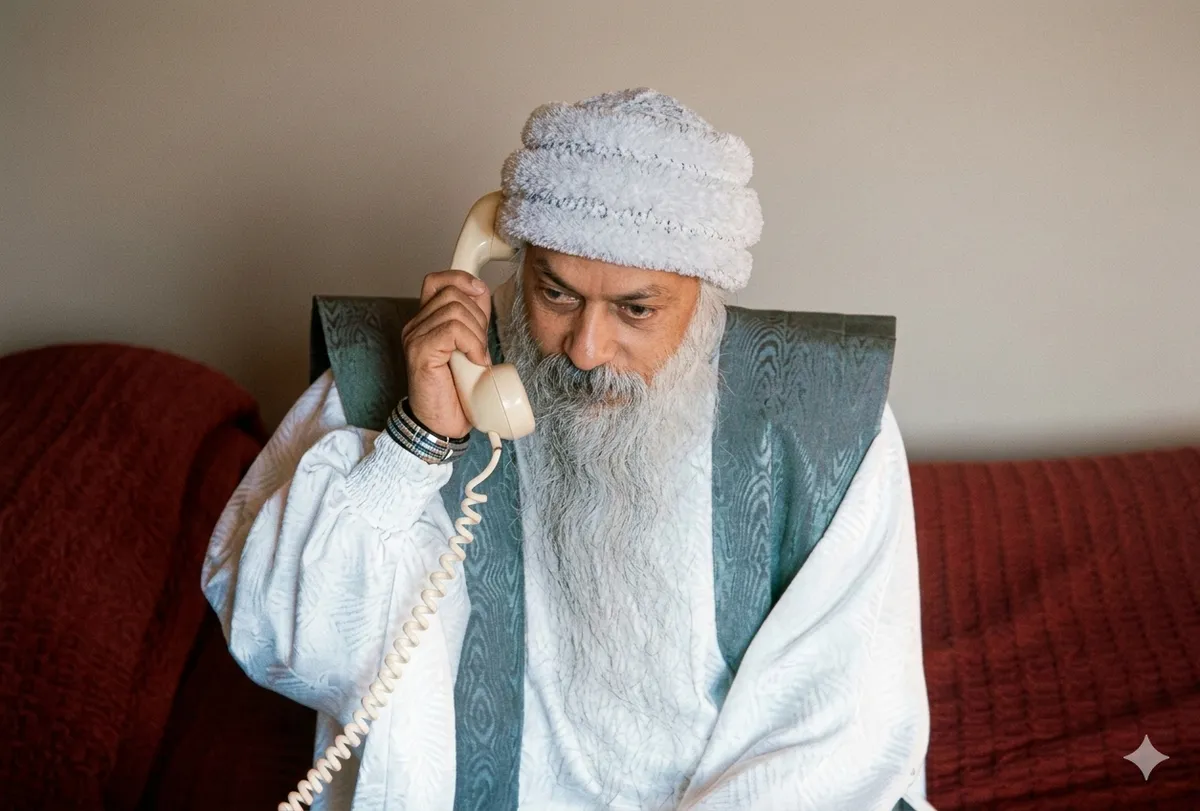
We avoid real happiness because we won’t stop the habits that make us unhappy, and that frightens the ego that wants control.
From the Discourses
Passages where Osho speaks to this question — each links to the complete discourse.
Why should people suppress the sublime? What is so threatening about paradise?
But when a man is in love, suddenly he has wings. Again dreams, again poetry, arise. There is not a single man or woman on the earth who has not become poetic when she or he was in love. In fact the people who are called poets are people who are in love continuously. Their object of love may be anything -- maybe nature, maybe God, maybe a woman, maybe just humanity -- but the people who are known as poets are the people who are continuously in love. Hence, they remain poetic. Otherwise everybody is poetic -- you just lose track of love, and the poetry is lost. Attention is food, very subtle food. Remember it: Don't pay attention to the negative, don't pay attention to your misery. Don't talk about it, don't magnify it -- you are destroying yourself, it is self-destructive. Neglect it, and neglected it dies.…
Question: BELOVED MASTER, WHY DOES MISERY FEEL SO SAFE AND HAPPINESS SO THREATENING? Deva Surabhi, happiness is threatening and misery is safe; safe for the ego. Ego can exist only in misery and through misery. Ego is an island surrounded by hell; happiness is threatening to the ego, to the very existence of the ego. Happiness rises like a sun and the ego disappears, evaporates like a dewdrop on the grass leaf. Happiness is the death of the ego. If you want to remain a separate entity from existence as almost everybody is trying to do, you will be afraid of being blissful, cheerful. You will feel guilty in being blissful. You will feel suicidal because you are committing a suicide on the psychological level -- the level of the ego. It almost always happens that people enjoy a few moments and then afterwards they feel very guilty.
Why do people choose misery to be their foundation? It is really amazing. But there is a reason; misery is helpful for one thing, it helps your ego. And bliss is dangerous for the ego, it kills the ego. And we are all brought up in such a way that we become ego-oriented. Our whole education is to enhance the ego, to make us ambitious -- and ambition is insanity. Ego is nothing but sheer madness, and the egoist is bound to live in misery because he will be afraid of bliss. People talk about bliss; they say "We want bliss," but they are really afraid of bliss. Whenever bliss comes they close their doors, they shrink back, they withdraw into themselves. They close themselves like turtles, they go into their shells -- they hide in their shells -- because the moment bliss happens your ego simply evaporates.
Osho, I want to be happy. Whatever I do, I do it in the hope of being happy. Now I have come to practice religion also in that same hope. You say: dissolve the ego. It seems to me that if I dissolve the ego, I myself will be dissolved; then I won’t be there—so how will I be happy? Wouldn’t a miserable existence be preferable to losing my very existence?
They entered the city; people began removing turbans and caps, bowing. But the farmer said nothing. He remained silent. The emperor asked, “What is the matter? Do you understand?” The farmer said, “I am in a fix. You don’t remove your turban—and I don’t remove mine. So who is the emperor—you or I? This is a serious tangle.” Ego is such a delusion. Ego mistakenly believes itself to be the soul. Ego is not the soul—but both ride the same horse, very close. As a man rides a horse, his shadow too rides the horse. Similarly, with the soul rides the ego’s shadow. If the soul does not remove its hat, how will the shadow remove hers? The shadow too has a hat; she too struts, enjoying the full fun. You have taken the shadow to be yourself. When the shadow disappears, you will not. And the shadow must vanish…
पहला प्रश्न: ओशो, मैं सुखी होना चाहता हूं। मैं जो भी करता हूं, सो सुखी होने की आशा में ही करता हूं। अब मैं धर्म साधने आया हूं, सो भी उसी आशा में। आप कहते हैं: अहंकार को मिटाओ। इससे मुझे ऐसा प्रतीत होता है कि अहंकार को मिटाने से मैं स्वयं ही मिट जाऊंगा; फिर मैं रहूंगा ही नहीं, तो सुखी कैसे होऊंगा? अस्तित्व खोने की अपेक्षा दुखमय अस्तित्व ही क्यों न ठीक होगा?
राजधानी आ गई, शहर में प्रवेश भी हो गया और लोग पगड़ियां और टोपियां उतार-उतार कर नमस्कार भी करने लगे; लेकिन किसान कुछ बोला नहीं। चुप्पी साधे रहा। सम्राट ने पूछा कि बात क्या है? समझ में आया कि नहीं? उसने कहा: मैं बड़ी मुश्किल में पड़ गया हूं, आप भी पगड़ी नहीं उतारते, मैं भी पगड़ी नहीं उतारता, पता नहीं सम्राट कौन है? आप हैं कि मैं हूं? यह तो बड़ी झंझट हो गई। अहंकार ऐसी ही भ्रांति है। अहंकार को भ्रांति है आत्मा होने की। अहंकार आत्मा नहीं है। मगर एक ही घोड़े पर दोनों सवार हैं। बहुत करीब-करीब एक ही घोड़े पर सवार हैं। जैसे आदमी घोड़े पर सवार हो, तो उसकी छाया भी तो घोड़े पर सवार होती है। बस, ऐसे ही आत्मा के साथ अहंकार की छाया भी घोड़े पर सवार है। न आत्मा अपनी टोपी उतारती, तो छाया की कैसे उतरेगी? छाया की भी टोपी लगी हुई है। छाया भी अकड़ी हुई है। छाया पूरा मजा ले रही है। तुम छाया को समझ लिए हो कि यही मैं हूं। छाया के मिटने से तुम न मिटोगे। …
Osho, the siddha Saraha spoke of the Great Bliss. What is the Great Bliss?
Happiness is found in emptiness. Misery is found in “I.” Ego is a thorn. Ego is pain. Emptiness is musical. But you never ponder this. Squeeze the essence out of your experiences of happiness—trace their root. What is happiness? Can you tell? The delicate wing of the panduk, or the red beak of the myna? The shepherd’s flute? Or the echo of that waterfall whose banks are tended by green, fragrant deodars? Is happiness a delicate hand which, when we hold it in ours, pricks and thrills us both? Or is it that eye that speaks the language of love brimming with mystery? Or is happiness that thing whose touch sends a tremor through the heart and silent tears slide from the eyes and rest upon the cheek? Where does happiness dwell? Happiness? Ah—surely it is not a glow-worm that hides all day in the shade of the leaves? Or…
चौथा प्रश्न: ओशो, सिद्ध सरहपा ने महासुख की बात कही। महासुख क्या है?
मैंने कभी देखा नहीं तुमको। इसलिये प्यारे! तुम्हें अब तक नहीं पहचानता हूं। पर,कहो, तुम, सत्य ही, सुंदर बहुत हो? पुष्प से, जल से, सुरभि से और मेरी वेदना से भी मधुर हो? तुमने जानकर भी सुख जाना नहीं है। अंधे की तरह कभी सोचा कि सांझ का डूबता सूरज सुख दे रहा है। कभी सोचा कि प्रेयसी से मिलन हुआ, सुख मिल रहा है। कभी सोचा मित्र घर आया है इसलिये सुख मिल रहा है। कभी सोचा सुस्वादु भोजन से। कभी सोचा इससे, कभी सोचा उससे। मगर तुमने कभी मूल बात न पकड़ी।