
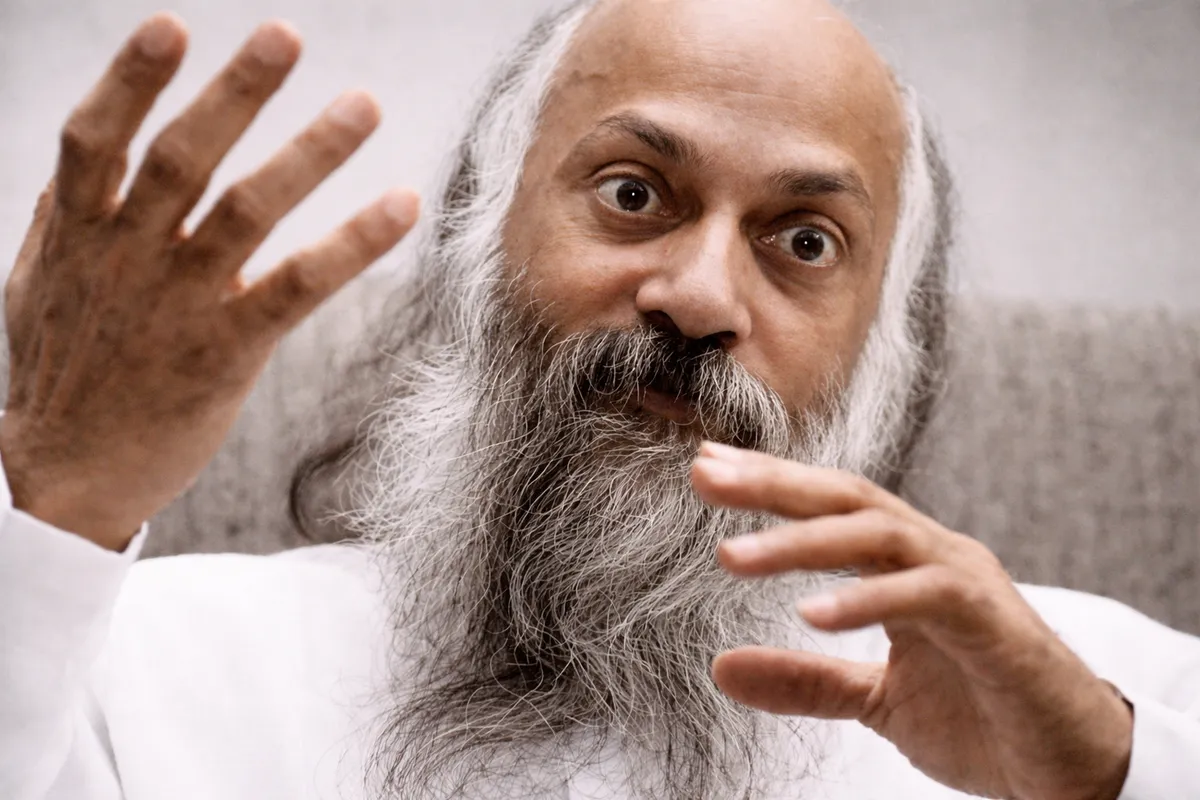
True teachers travel to meet seekers so their silent presence can help in ways words can’t.
From the Discourses
Passages where Osho speaks to this question — each links to the complete discourse.
Beloved Osho, gautam buddha, mahavira, j. Krishnamurti were traveling from one place to another for their whole lives. It was reported about j. Krishnamurti that before he left india for california for the last time he told someone that if the doctor in california said, "no more travel, no more talk," then all would be finished; he would be gone in four weeks -- and that's exactly what actually happened. Osho, what is the insight of all the masters who were traveling all the time and didn't stay in one place like raman maharshi?
Raman Maharshi is a mystic, but not a master. The mystics have never traveled because the mystics are not making any effort of any kind to transfer their experience to others. They have decided that what they have experienced is untransferable, that it cannot be communicated. So the mystics all through the ages have remained in one place. What is the point of moving around, going from village to village or country to country -- for what? The mystic's experience is expressed in the ancient saying that "The well remains in its own place; it is the thirsty who should go to the well, the well cannot go to the thirsty." Buddha, Mahavira, Bodhidharma, Shankara, Nagarjuna, Mohammed, Jesus, J. Krishnamurti, they were all traveling, going continuously.... Mohammed has countered the proverb about the well and the thirsty, and countered it in such a beautiful way. He says, "If the mountain…
Beloved Osho, please throw light on the difference between a mystic and a master.
He gave Gandhi a blank check; whatever he wanted to spend, whatever he wanted to do with the money, he could do. He never asked, "Where does the money go? What happens to it?" And because Mahatma Gandhi was in Wardha, all the great freedom fighters in India, writers, poets, were going to see Gandhi, to meet Gandhi. And for them Jamnalal Bajaj had made a special guest house for five hundred people to stay together at one time. Chiranjilal was his manager, so he was the link between Mahatma Gandhi and Jamnalal Bajaj, Jawaharlal Nehru, Motilal Nehru, Madan Mohan Malaviya. All these people were respectful towards the old man. He was the man who invited me to Bombay. I had spoken at a Jaina conference, and as I came down from the stage -- it was a cold night, he was covering himself with a blanket -- he threw…
Osho, true masters are different, and a follower of one master cannot accept another. But we find ourselves bowing to Buddha, Mahavira, Lao Tzu, Jesus, Krishna—everyone. Perhaps it is because you yourself have oriented us toward them. Even on seeing the living master Krishnamurti, our hearts overflowed with joy, our feet began to dance. Why? And we cannot understand why Krishnamurti’s lovers cannot accept you?
True masters are certainly different. Broadly, three kinds can be seen. First is the kind of master like Krishnamurti; Mahavira and Buddha belong to the same line. Such a master has one central message: become utterly free, do not depend on anyone. Your liberation lies in your freedom. Liberation is not a final event waiting at the end; you must learn freedom from the very first step—only then will it flower at the last. Krishnamurti’s famous book is The First and the Last Freedom: the first freedom is the last freedom; the very first step of freedom is already the last step. So: do not go into anyone’s refuge, do not surrender anywhere, do not bind yourself to any ideology; avoid belief. Mahavira called this the state of ashraya-shunyata—no refuge. Take no shelter. Buddha’s last message at the time of his death—Ananda asked for a final word to treasure forever—was:…
पहला प्रश्न: ओशो, सदगुरु अलग-अलग होते हैं और किसी एक सदगुरु को मानने वाला दूसरे सदगुरु को स्वीकार नहीं कर सकता। लेकिन हम बुद्ध, महावीर, लाओत्से, जीसस, कृष्ण, सभी के प्रति झुक जाते हैं। इसकी वजह यह हो सकती है कि आपने ही हमें उनके उन्मुख किया। जीवित गुरु कृष्णमूर्ति को देखकर भी हमारा हृदय आनंदविभोर हो उठा है, पैर थिरक उठे हैं। क्यों? और समझ में नहीं आता कि कृष्णमूर्ति के प्रेमी आपको क्यों स्वीकार नहीं कर सकते?
सदगुरु निश्चित ही भिन्न-भिन्न हैं। विशेषकर तीन वर्ग किए जा सकते हैं। एक वर्ग है कृष्णमूर्ति जैसे सदगुरुओं का; महावीर, बुद्ध उसी पंक्ति में आते हैं। इस प्रकार के सदगुरु का एक ही उपदेश है कि तुम परिपूर्ण रूप से स्वतंत्र हो जाओ, निर्भर न रहो। तुम्हारी स्वतंत्रता में ही तुम्हारा मोक्ष है। मोक्ष कोई अंतिम घटना नहीं है। पहले कदम से ही मुक्त होना सीखना पड़ेगा, तो ही अंतिम कदम पर मुक्ति फलित होगी। कृष्णमूर्ति की प्रसिद्ध किताब है, दि फर्स्ट एंड दि लास्ट फ्रीडम--पहली और अंतिम मुक्ति। पहली मुक्ति ही अंतिम मुक्ति है और पहला कदम ही, स्वतंत्रता का, अंतिम कदम है। तो न तो किसी की शरण जाना, न कहीं समर्पण करना, न किसी विचार से बंधना, श्रद्धा से बचना। महावीर ने इसी बात को अशरण-भाव कहा है, किसी की शरण मत जाना।
Question: BELOVED OSHO, THE ZEN MASTER HOTEI USED TO TRAVEL AROUND WITH A BAG ON HIS SHOULDER, GIVING OUT SWEETS TO CHILDREN AND PLAYING WITH THEM. IF A ZEN DEVOTEE WERE TO MEET HIM ON THE ROAD, HOTEI WOULD SIMPLY BOW DOWN TO HIM AND SAY, "GIVE A PENNY!" AND IF HE WERE ASKED TO GO TO A TEMPLE TO GIVE A DISCOURSE, AGAIN HOTEI WOULD SAY THE SAME THING: "GIVE A PENNY!" ONCE HE WAS PLAYING WITH SOME CHILDREN, AND ANOTHER ZEN MONK MET HIM AND ASKED, "WHAT IS THE MEANING OF ZEN?" IN SILENT ANSWER, HOTEI PUT HIS BAG ON THE GROUND. THE MONK THEN ASKED HIM, "WHAT IS THE ACHIEVEMENT OF ZEN?", AT WHICH THE SMILING BUDDHA PICKED HIS BAG UP AGAIN, PUT IT ON HIS SHOULDER, AND SET OFF. THE OTHER MONK ALSO LATER BECAME A FAMOUS ZEN MASTER.
Osho, I am amazed to see how people are coming to your place of pilgrimage from countries far and wide, undertaking long journeys. And you, it seems, never even step out of your room! What is this miracle? Please explain.
So from the outside it seems that people are coming to this pilgrimage place from distant lands. They are coming because something within their hearts has begun to happen—and the heart recognizes no distances. The heart has never acknowledged distance. Distance is a measuring of the mind. But the heart can cross seven seas, for the heart knows how to dare. The intellect is a coward; it fears, it hesitates; it ties the boat with a strong chain to the shore, lest the boat slip away unknowingly. There are storms on the ocean—and there are always storms on the ocean, sometimes less, sometimes more. And the boat is small, the ocean vast; and the other shore is not visible. But at times the voice of that unseen shore can be heard. At times a glimpse of that unseen shore begins to descend within. At times the beauty of that unseen…
पहला प्रश्न: ओशो, मैं चकित हूं यह देख कर कि आपके तीर्थ में किस भांति देश-देश से दूर-दूर की यात्राएं करके लोग आ रहे हैं। और आप हैं कि कभी अपने कक्ष से भी बाहर नहीं जाते! यह चमत्कार क्या है? समझावें।
इसलिए ऊपर से लगता है कि इस तीर्थ में देश-देश से, दूर-दूर से यात्राएं करके लोग आ रहे हैं। वे आ रहे हैं इसीलिए कि उन्होंने कुछ अपने हृदय में होते देखा है, और अब हृदय कोई दूरी नहीं मानता। हृदय ने कभी दूरी मानी नहीं। दूरी तो नाप-जोख है मस्तिष्क का। और हृदय तो सात समुंदर लांघ सकता है, क्योंकि हृदय दुस्साहस करना जानता है। बुद्धि तो कायर है; डरती है, झिझकती है; नाव की जंजीर को किनारे से जोर से बांध लेती है, कि कहीं नाव जाने-अनजाने छूट न जाए। सागर में तूफान है। और सागर में सदा तूफान है--कभी कम, कभी ज्यादा। और नौका तो छोटी है और सागर बहुत बड़ा है। …