
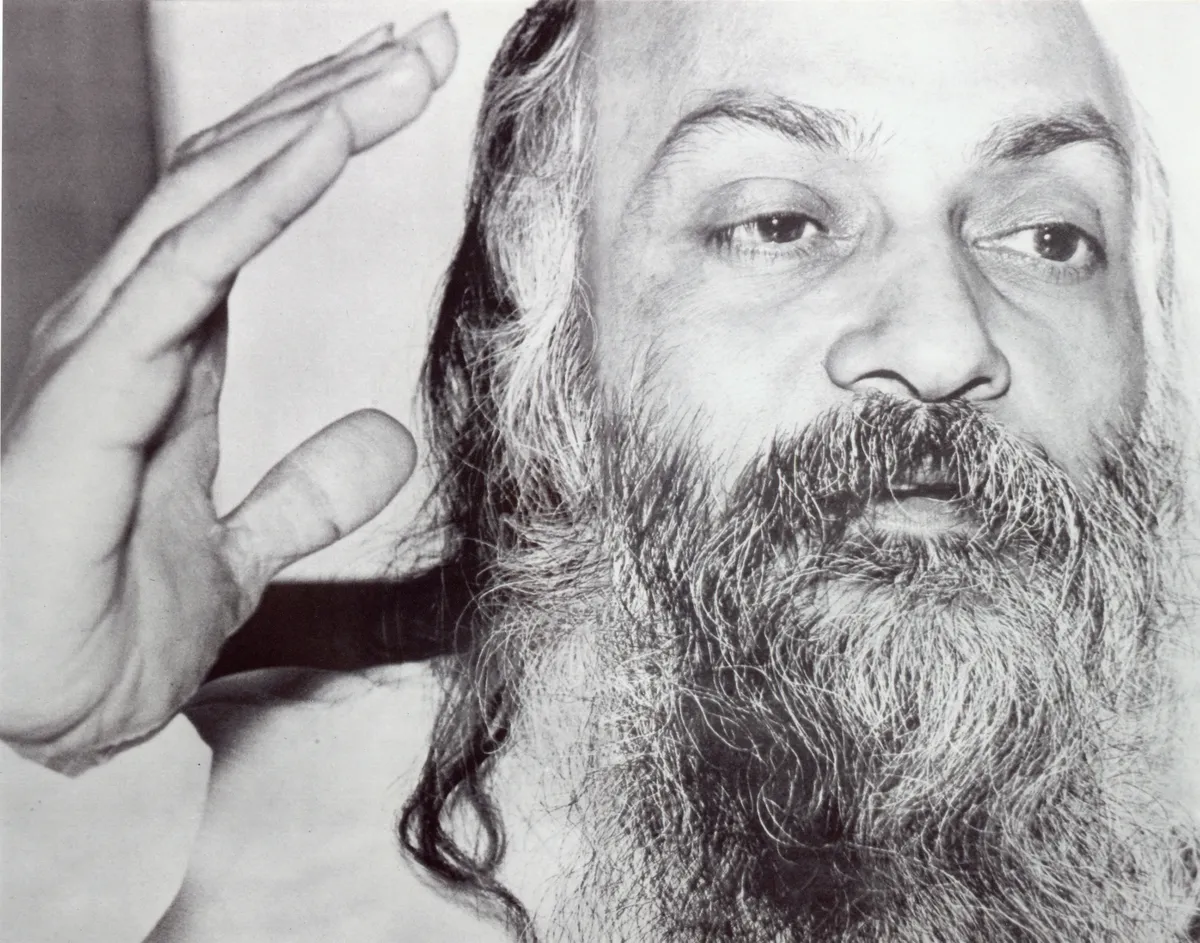
Seers keep appearing to share a living taste of the mystery beyond thinking, keeping real spirituality fresh and alive.
From the Discourses
Passages where Osho speaks to this question — each links to the complete discourse.
Osho, the Nirukta contains this verse: manuṣyā vā ṛṣisūtkramatsu devān abruvan ko na ṛṣir bhaviṣyatīti, tebhya etaṁ tarkamūṣim prāyacchan. “When, from this world, the seers began to depart, when their lineage began to end, human beings said to the gods: ‘Then who will be our ṛṣi?’ In that situation the gods gave them Reason as a ṛṣi in their stead. That is, the gods told humans: henceforth consider Reason to stand in the place of the ṛṣi.” Osho, please explain the purport of this saying of the Nirukta.
Sahajanand! First thing: the seers never left; they cannot leave. If there is night, there will be stars in the sky. If there is earth, somewhere flowers will bloom. If human consciousness is present, the ṛṣi cannot vanish. Somewhere a spring will burst forth, somewhere a song will arise, somewhere a flute will play. Man is not so barren that the lineage of seers could ever end. It has never ended. But the one who wrote the Nirukta was not a seer—he was a linguist, a grammarian. His allegiance is to logic, not to poetry; to thought, not to meditation. And people justify their allegiance by a thousand clever devices. Nirukta is not a scripture of religion. It is a science of language, and language as a science rests on logic. Grammar is mathematics. Therefore the mathematician will not wish for seers to exist; for the mathematician, the greatest threat…
Osho, “laukikānām hi sādhūnām artha vāg anuvartate; ṛṣīṇām punar ādyānām vācam artho’nudhāvati.” The speech of worldly saints follows meaning; but in the case of the ancient rishis, meaning followed their speech. Osho, out of compassion please explain this aphorism of Vashistha. Were the ancient rishis really so superior?
And the cause of the fight? When the police investigated, it became even more amusing. The picchī stick—bamboo—had been hollowed out and stuffed with hundred-rupee notes! That was their wallet. If you ever see a Jain monk’s picchī, look closely at the stick—there is nothing else they can use. Man is inventive: they had filled bundle upon bundle of notes inside. The fight was over division—the elder monk wanted more than the younger, a question of seniority! The younger insisted on equal halves: “This is conspiracy, not a government office!” They thrashed each other; the money was found. The community hushed it up with bribes lest it come out. They came to me: “What should we do?” I said, “Publish it in the newspapers—with photos!” They cried, “What are you saying! We came to ask how to hush it up. It is the prestige of the monk—of our religion.” I…
पहला प्रश्न: ओशो, लौकिकानां हि साधूनामर्थ वागनुवर्तते। ऋषीणां पुनराद्यानां वाचमर्थोऽनुधावति।। लौकिक साधुओं की वाणी अर्थ का अनुसरण करती है; लेकिन जो आदि ऋषि थे, उनकी वाणी का अनुसरण अर्थ करता था। ओशो, वसिष्ठ के इस सूत्र को समझाने की अनुकंपा करें। क्या आदि ऋषि वास्तव में इतने ही श्रेष्ठ थे?
… जब पुलिस ने पूछताछ की, तो जो झगड़े का कारण था वह और भी बड़ा मजेदार था! वह जो पिच्छी का डंडा था, बांस का डंडा, उसको भीतर से पोला करके उसमें सौ-सौ के नोट भरे हुए थे! वह उनका बटुआ था, वह जो डंडा था! अगर जैन मुनियों की पिच्छी देखो, तो डंडा जरूर गौर से देख लेना! क्योंकि वही है उनके पास। और कोई उपाय नहीं है मगर। आदमी इतना होशियार है कि उसको डंडे को पोला करके अंदर उसमें गिड्डियों पर गिड्डियां उन्होंने भर रखी थीं! झगड़ा यह हो गया कि बंटवारा, जो बड़े मुनि थे वे ज्यादा चाहते थे छोटे मुनि से। सीनियारिटी का सवाल था! और छोटे मुनि भी बराबर चाहते थे; नहीं तो, वे कहते थे, हम पोल-पट्टी उखाड़ देंगे! …
Osho, what is the definition of God?
Words are very small. If you say God is light, then what of darkness? The scriptures have said that God is light. Suppose we accept this as a definition—then what about darkness? Where will darkness go? Darkness is too; in fact it is far more than light. Light sometimes is and sometimes is not; darkness is always, eternal. Where will you place darkness? If you say God is light, darkness is left out. If you say God is darkness, then light is left out. If you say God is both darkness and light, a contradiction arises: they cannot be together. Try to have both darkness and light in the same room. If you bring in light, darkness disappears; if you preserve darkness, you cannot have light. Then how can both be together? That becomes an impossibility. So you cannot say “both” either. Then the fourth device is to say: it…
पहला प्रश्न: ओशो, परमात्मा की परिभाषा क्या है?
शब्द तो बड़े छोटे-छोटे हैं। अगर कहो परमात्मा प्रकाश है, तो फिर अंधेरे का क्या होगा? ऐसा कहा है शास्त्रों में कि परमात्मा प्रकाश है। चलो मान लें इसे परिभाषा, फिर अंधेरे का क्या होगा? फिर अंधेरा कहां जायेगा? अंधेरा भी है, प्रकाश से कहीं ज्यादा है। प्रकाश तो कभी होता है कभी नहीं भी होता; अंधेरा सदा है, शाश्वत है। अंधेरे को कहां रखोगे? अगर कहा परमात्मा प्रकाश है, तो अंधेरा बाहर पड़ गया। अगर कहा परमात्मा अंधेरा है, तो प्रकाश बाहर पड़ गया। अगर कहो परमात्मा अंधेरा प्रकाश दोनों है, तो विरोधाभास होता है। दोनों एक साथ हो नहीं सकता। एक ही कमरे में अंधेरा और प्रकाश करके दिखाओ। प्रकाश करोगे, अंधेरा खो जायेगा; अंधेरा बचाओगे, प्रकाश न कर सकोगे। तो दोनों साथ कैसे होंगे? तब एक असंभव बात हो गई। तो यह भी नहीं कह सकते कि दोनों है।
Osho, this verse is from the Mundaka Upanishad: Satyam eva jayate nānṛtam, satyena panthā vitato devayānaḥ; yenākramanti ṛṣayo hyāptakāmā, yatra tatra satyasya paramaṁ nidhānam. That is: Only truth is victorious, not untruth. The path by which the desireless seers go, and where the supreme treasure of truth abides—that divine path opens to us only through truth. Is truth both the goal and the means? Kindly grace us with direction.
Devayāna means the realization and proclamation of one’s own divinity; freedom from tradition; freedom from the past; the art of living in the present. “Satyena panthā vitato devayānaḥ”—this path of truth is Devayāna; it is the road of rebellion; it is revolt. It is not Pitṛyāna. You cannot say, “My father believed, therefore I believe.” No—you must know. Knowing comes first. And one who has known has no need to believe. For the believer, the blessing of knowing never arises. The believer dies. The day he believes, he dies—because the search ends, inquiry ceases. Belief means: What’s left to do? I have believed. And this is what you have been taught: believe, have faith. Thus the whole earth is filled with hollow “religious” people—believers, not truly religious. Belief is always hollow. What is not your own experience, how can it be truth for you? I may say it is my…
पहला प्रश्न: ओशो, यह श्लोक मुंडकोपनिषद का है: सत्यं एव जयते नानृतम् सत्येन पन्था विततो देवयानः। येनाक्रमन्ति ऋषयो ह्याप्तकामा यत्र तत्र सत्सस्य परमं निधानम्।। अर्थात सत्य की जय होती है, असत्य की नहीं। जिस मार्ग से आप्तकाम ऋषिगण जाते हैं और जहां उस सत्य का परम निधान है, ऐसा देवों का वह मार्ग हमारे लिए सत्य के द्वारा ही खुलता है। क्या सत्य साध्य और साधन दोनों है? हमें दिशा-बोध देने की अनुकंपा करें!
देवयान का अर्थ होता है: अपनी दिव्यता की अनुभूति और घोषणा; परंपरा से मुक्ति; अतीत से मुक्ति और वर्तमान में जीने की कला। ‘सत्येन पन्था विततो देवयानः।’ यह जो सत्य का मार्ग है, यह देवयान है; यह बगावत का रास्ता है; यह विद्रोह है। यह पितृयान नहीं है। तुम यह नहीं कह सकते कि मेरे पिता मानते थे, इसलिए मैं मानता हूं। नहीं, तुम्हें जानना होगा। जानना पहले। और जिसने जान लिया उसे मानने की जरूरत ही नहीं आती। और जिसने माना, उसके जीवन में जानने का सौभाग्य कभी पैदा नहीं होता। जिसने माना, वह तो मर ही गया। जिस दिन माना, उसी दिन मर गया। क्योंकि उसी दिन खोज समाप्त हो गई, अन्वेषण बंद हो गया। मानने का अर्थ ही होता है कि अब क्या करना है, मैंने तो मान लिया। और तुम्हें यही सिखाया गया है कि मानो, विश्र्वास करो। और इस भांति सारी पृथ्वी पर थोथे धार्मिक लोग पैदा किए गए हैं। विश्र्वासी हैं, मगर धार्मिक नहीं।
Osho, in India today, on the spiritual plane, is there any ongoing lineage of figures like Ramakrishna, Vivekananda, or Aurobindo? In these past two or three hundred years, has there been anyone like that?
Yes. Here, in the past two–three centuries, the most influential figures have been Ramana and Krishnamurti. But no lineage could form behind Ramana, and behind Krishnamurti it will not form either. Krishnamurti is opposed to creating one. And behind Ramana it could not form. A man of that caliber was not found who could carry the matter forward or add something to it. Ramakrishna found Vivekananda. Vivekananda is a very powerful person, but not experienced. Because of his power he did set the wheel in motion, but there isn’t much life in that wheel, so it is not going to go far. Ramakrishna is deeply experienced, but he is not in the position of being a teacher, of being a Tirthankara. He cannot be a teacher. So for the first time... It happens many times that when someone cannot be a teacher, he places the work of teaching on another’s…
प्रश्न: ओशो, हिंदुस्तान में अभी कोई आध्यात्मिक तल पर ऐसी कोई श्रृंखला रामकृष्ण, विवेकानंद या अरविंद, इनके जैसे व्यक्तियों की कोई श्रृंखला चल रही है? इन दो सौ, तीन सौ साल में ऐसा कोई हुआ है?
हां, यहां सबसे ज्यादा प्रभावशाली आदमी इन दो-तीन सौ वर्षों में रमण और कृष्णमूर्ति हैं पीछे। लेकिन न तो रमण के पीछे श्रृंखला बन सकी, और कृष्णमूर्ति के पीछे भी नहीं बनेगी। कृष्णमूर्ति बनाने के विरोध में हैं। और रमण के पीछे बन नहीं सकी। उस कीमत का आदमी नहीं मिला जो बढ़ा सके आगे बात को या कुछ जोड़ दे सके। रामकृष्ण को विवेकानंद मिले। विवेकानंद बहुत शक्तिशाली व्यक्ति हैं, अनुभवी नहीं हैं। तो शक्तिशाली होने की वजह से उन्होंने चक्र तो चला दिया, लेकिन चक्र में ज्यादा जान नहीं है, इसलिए वह जाने वाला नहीं है। रामकृष्ण बहुत अनुभवी हैं, लेकिन टीचर होने की, तीर्थंकर होने की कोई स्थिति उनकी नहीं है। शिक्षक वे नहीं हो सकते। इसलिए पहली दफा...ऐसा कई दफा होता है कि जब कोई व्यक्ति शिक्षक नहीं हो सकता तो वह दूसरे व्यक्ति के कंधे पर रख कर शिक्षण का काम करता है। तो रामकृष्ण ने विवेकानंद के कंधे पर रख कर हाथ शिक्षण का काम विवेकानंद से ले लिया है।