
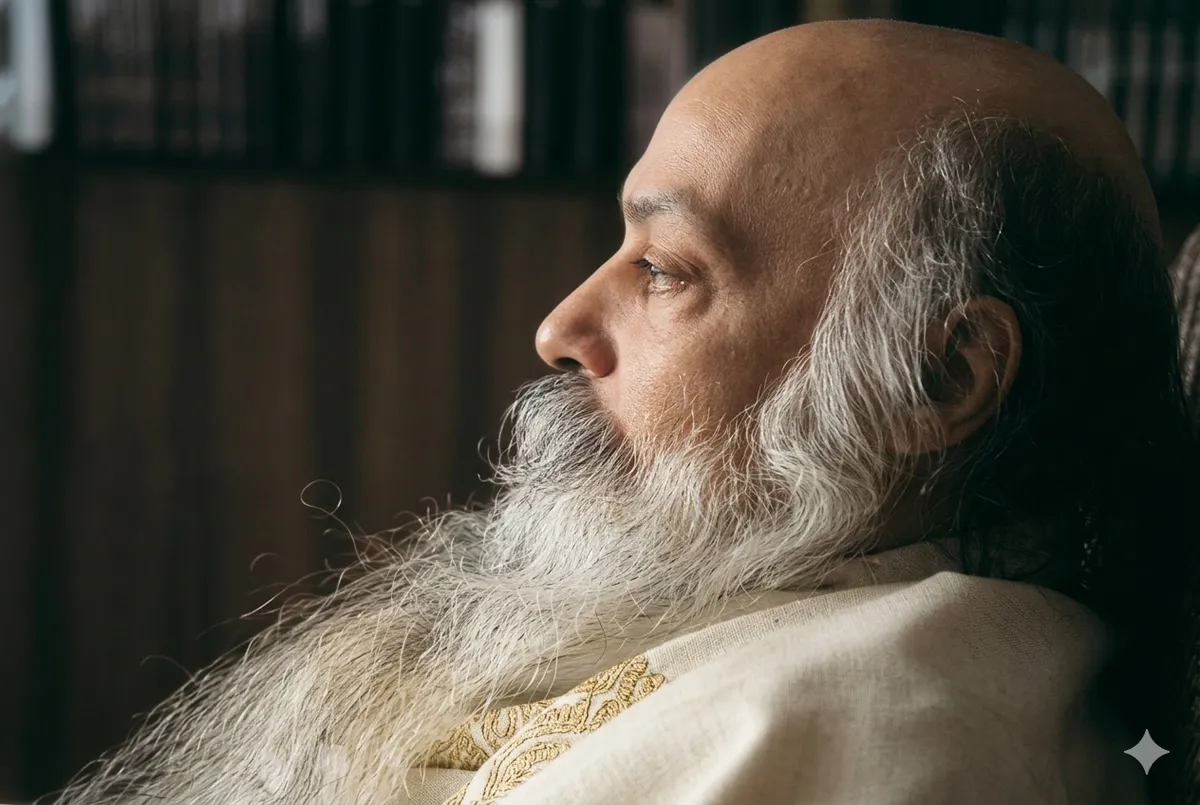
Titles are just reminders to master yourself and live your spirituality in everyday life without feeling special.
From the Discourses
Passages where Osho speaks to this question — each links to the complete discourse.
Why do you give us these religious titles? They seem absurd. Outside the ashram indians seldom call me swami with a straight face.
You must be hankering for it. I have not called you swami to be swami for others. The word 'swami' means lord. Don't hanker for others to call you lord. I have called you swami just to indicate your path -- so that you become lord of yourself. It is not to make others slaves to you, it is just to make a master of you. The word 'swami' is intended for self-mastery. So don't feel frustrated if nobody calls you swami. In fact, if somebody calls you swami, be alert, because there is danger. You may start thinking that you are a swami, you may start thinking that you are some holy man or something. Don't carry that type of nonsense. I am not here to make you holy or saintly or anything. You ask why I give you these religious titles, because they seem absurd. They are. Really…
Beloved Osho, indian people particularly ask the question again and again, that just as you have dropped the religion of rajneeshism -- freed the sannyasins from the mala and red clothes -- are you one day going to drop the title of "Osho" too? It prevents many people from coming to you.
It has been raised in many articles and many books written against me, so it is good to go into it in a little detail. First, "Bhagwan" is not a title. Nobody can give that title. Nor is "Bhagwan" a degree, that you can pass an examination and the degree can be conferred on you. Nor is "Bhagwan" some position that can be appointed by a committee or by some people. Nor is "Bhagwan" an elected post, that you fight an election and whosoever has the majority of votes becomes Bhagwan. The critics who have been writing against me, they have always made it a point that I am "self-appointed" Bhagwan. And I have always wondered, do they have anybody -- Rama, Krishna, Buddha, Mohammed -- appointed by somebody else? If Rama is appointed by somebody else as Bhagwan, then certainly the appointing authority is higher -- and if you…
Osho, do you accept the title of Acharya? You could negate this label if you wish, so that emotional people don’t take you as “religious” in a narrow sense. We were just discussing this a moment ago. Your dress and appearance also reinforce the image of a religious acharya—that’s why I say this.
Yes. I have nothing to do with “Acharya.” Is it an imposition? Even “imposition”—what is it? It’s just convention. When I was a professor in a college, in that region they called a professor “acharya” in Hindi. Don’t they say adhyapak–pradhyapak? No! Here “acharya” means the principal. There the principal is called “pracharya.” There the principal is “pracharya” and the professor is “acharya.” Because of that, “Acharya” got attached after my name. It’s neither an imposition nor any such issue; it’s simply convention. It should be ended altogether. We should find a way to drop it. Because, as you say, it creates confusion—so it should be dropped. To explain the glory and importance of silence, for an entire hour… Yes, and your point about dress and appearance remains—that part of your question was left. I wear the kind of clothes that feel blissful to me. I should wear only what…
ओशो, आपको आचार्य की उपाधि कबूल है। इस लेबल को आप चाहें तो निगेट कर सकते हैं, जिससे भावुक लोग संकीर्ण अर्थ में आपको धार्मिक न समझ लें। अभी आगे ही बात हुई। आपका वेश-परिवेश भी धर्माचार्य की इमेज को पुष्ट करता है, इसलिए मैं कहता हूं।
हां। आचार्य से मुझे कुछ लेना-देना नहीं है। आरोपण है? आरोपण भी क्या है, सिर्फ प्रचलन है। मैं जिस कालेज में प्रोफेसर था, तो उस इलाके में तो प्रोफेसर को हिंदी में आचार्य कहते हैं। अध्यापक-प्राध्यापक, ऐसा नहीं कहते? नहीं! आचार्य यहां प्रिंसिपल को कहते हैं। वहां प्रिंसिपल को प्राचार्य कहते हैं। वहां प्रिंसिपल को प्राचार्य कहते हैं और प्रोफेसर को आचार्य कहते हैं। वह उसकी वजह से आचार्य लग गया पीछे। न तो आरोपण है, न उसका कोई सवाल है, वह सिर्फ प्रचलन है। उसे बिलकुल ही खत्म कर देना चाहिए। उसे खत्म करने का उपाय करना चाहिए। क्योंकि जो आप कहते हैं उससे भ्रम पैदा होता है, उसे खत्म ही कर देना चाहिए। मौन का महिमा-महत्व समझाने के लिए, एक घंटे तक... हां, और वेश-परिवेश की बात भी आपकी रह गई है, वह आपकी बात रह गई है। मुझे जो आनंदपूर्ण है वैसा वेश मैं पहनता हूं। मुझे जो आनंदपूर्ण है वैसा ही मुझे पहनना चाहिए। …
Osho! Basically, you are a herald of religion—of the original, essential religion. You yourself seem to be religion. But the surprising thing is that right now your strongest opposition comes from the religious establishment itself! The recent statements by two Shankaracharyas are fresh examples. Would you kindly shed some light on this?
The death of his father shook Shankaracharya utterly. But the mother, already in grief, would be left alone if Shankara took sannyas. She refused. The story says: Shankara went to bathe in the river, and a crocodile caught his leg. A crowd gathered on the ghat; the mother came running. Shankara said, “The crocodile says it will let go if you allow me to take sannyas.” What could the mother do? With tears she said, “All right, then become a sannyasin—at least live. If you live, even as a sannyasin, I will see you some day.” And the story says the crocodile let go. That is just a story; crocodiles were not that wise then, nor now! If man is not so wise, what of crocodiles! I spoke of Mulla—he did marry. Fourteen-year-old girl, eighty-year-old groom. The next day friends asked, “How was the wedding night?” “Don’t ask—great joy! Only…
पहला प्रश्न: ओशो! बुनियादी रूप से आप धर्म के प्रस्तोता हैं--वह भी मौलिक धर्म के। आप स्वयं धर्म ही मालूम पड़ते हैं। लेकिन आश्चर्य की बात है कि अभी आपका सबसे ज्यादा विरोध धर्म-समाज ही कर रहा है! दो शंकराचार्यों के वक्तव्य उसके ताजा उदाहरण हैं। क्या इस पर कुछ प्रकाश डालने की कृपा करेंगे?
शंकराचार्य को पिता की मृत्यु ने ऐसा झकझोरा...। लेकिन मां तो वैसे ही दुखी थी, शंकराचार्य संन्यास लें तो और दुखी हो जाए, बिलकुल अकेली छूट जाए। उसने कहा, मैं आज्ञा नहीं दूंगी। तो कहानी कहती है: शंकराचार्य नदी पर नहाने गए हैं और एक मगर ने उनका पैर पकड़ लिया। भीड़ इकट्ठी हो गई है घाट पर। मां भी भागी आई। और शंकराचार्य ने कहा कि यह मगर मुझसे कहता है कि अगर तेरी मां तुझे संन्यास ले लेने दे तो मैं तेरा पैर छोड़ दूं। ऐसी हालत में मां भी क्या करे! आंख से आंसू टपकते हुए उसने कहा कि ठीक है, तो तू ले लेना संन्यास, किसी तरह बच तो जा, कम से कम बचेगा तो, संन्यासी ही रहेगा तो कभी देख तो लूंगी। और कहानी कहती है कि मगर ने पैर छोड़ दिया। यह तो कहानी ही है। मगर इतने समझदार न पहले होते थे न अब हैं। आदमी नहीं है इतना समझदार, तो मगर की क्या कहना!
Osho, you have said that adopting personalities and faces from the outside is a subtle theft and gives birth to hypocrisy and irreligion. But it is being seen that these days many new sannyasins are gathering around you, and without any special preparation or maturity you are recognizing their sannyas. Are you not thereby causing great harm to religion? Please explain.
First thing: if someone tries to become like me, I will stop him; I will tell him that trying to be like me is self-destruction. But if someone sets out on the journey of trying to become himself, I have no hesitation in giving him my blessings. Those sannyasins who want me to be a witness to their journey toward God—to be a witness on their path—I have no objection to becoming their witness. But I am no one’s guru. I have no disciples. I am only a witness. If someone wants to take a resolve in my presence that he is setting out on the journey of sannyas, I have no objection to becoming a witness. But if someone comes to become my disciple, I have a grave objection. I cannot make anyone a disciple, because I am not a guru. If someone comes to walk behind me, I…
ओशो, आपने कहा है कि बाहर से व्यक्तित्व व चेहरे आरोपित कर लेने से सूक्ष्म चोरी है तथा इससे पाखंड और अधर्म का जन्म होता है। लेकिन देखा जा रहा है कि आजकल आपके आस-पास अनेक नये-नये संन्यासी इकट्ठे हो रहे हैं और बिना किसी विशेष तैयारी व परिपक्वता के आप उनके संन्यास को मान्यता दे रहे हैं। क्या इससे आप धर्म को भारी हानि नहीं पहुंचा रहे हैं? कृपया इसे समझाइए।
पहली बात, अगर कोई व्यक्ति मेरे जैसा होने की कोशिश करे, तो मैं उसे रोकूंगा; उसे मैं कहूंगा कि मेरे जैसा होने की कोशिश आत्मघात है। लेकिन अगर कोई व्यक्ति स्वयं जैसा होने की कोशिश की यात्रा पर निकले, तो मेरी शुभकामनाएं उसे देने में मुझे कोई हर्ज नहीं है। जो संन्यासी चाहते हैं कि मैं परमात्मा के उनके मार्ग पर उनकी यात्रा का गवाह बन जाऊं, विटनेस बन जाऊं, उनका गवाह बनने में मुझे कोई एतराज नहीं है। लेकिन मैं गुरु किसी का भी नहीं हूं। मेरा कोई शिष्य नहीं है। मैं सिर्फ गवाह हूं। अगर कोई मेरे सामने संकल्प लेना चाहता है कि मैं संन्यास की यात्रा पर जा रहा हूं, तो मुझे गवाह बन जाने में कोई एतराज नहीं है। लेकिन अगर कोई मेरा शिष्य बनने आए, तो मुझे भारी एतराज है। मैं किसी को शिष्य नहीं बना सकता हूं, क्योंकि मैं कोई गुरु नहीं हूं। अगर कोई मेरे पीछे चलने आए, तो मैं उसे इनकार करूंगा; लेकिन कोई अगर अपनी यात्रा पर जाता हो और मुझसे शुभकामनाएं लेने आए, तो शुभकामनाएं देने की भी कंजूसी करूं, ऐसा संभव नहीं है।