
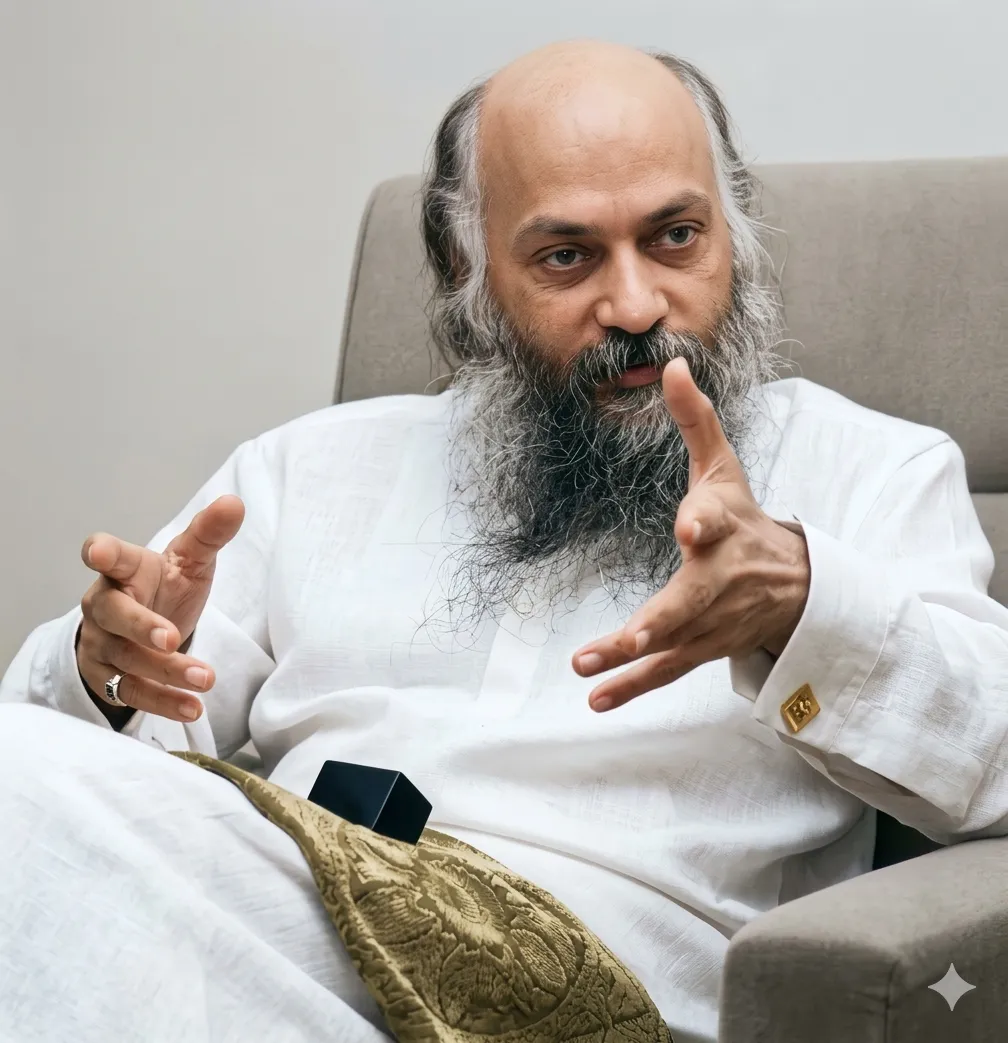
He loves Kachchh like a final home, expects cheers and a few boos, and sees that lively mix as a healthy sign.
From the Discourses
Passages where Osho speaks to this question — each links to the complete discourse.
Osho, paan Kachchh halonta? (Shall we go to Kachchh?) Truly, the fortunes of Kachchh are strong! Blessed will the land be by your going there! Until now Kachchh has been the most neglected—even by Kachchhis themselves. But the moment talk began of the ashram going there, suddenly Kachchh’s well‑wishers have awakened to love of the land, security, who knows what all feelings! Most of those who are now running protests against the ashram’s entry into Kachchh were deeply moved by your discourses on Mahavira. But now…! Kindly bestow a message! (Aun Kachchhi aniya.—I am Kachchhi.)
Morarji tried to stop me and himself went away. I kept waiting; I said, fine. I took Saswad as a pretext—so it would seem I had dropped the idea of going to Kachchh. But I did not go to Saswad either. You went to do the inauguration; I did not set foot there. If I go, I will go to Kachchh—paan Kachchh halonta. Saswad is no distance—twenty‑twenty‑five miles—I did not even go to see it. You went and inaugurated it, you went and held the ceremony. But I knew that Morarji and company were not going to last long. It was like a pot breaking by a cat’s luck, the rafters giving way—pure accident that Morarji sat on the country’s chest. Otherwise there was neither merit nor purpose nor any benefit to the nation from him. How long could he sit on our chest? His going was certain. A year…
तीसरा प्रश्न: ओशो, पांण कच्छ हलोंता? (हम कच्छ चलेंगे?) सचमुच कच्छ प्रदेश के भाग्य बलशाली हैं! धन्य होगी भूमि आप के वहां पधारने से! अब तक कच्छ सबसे--कच्छियों से भी--उपेक्षित रहा है। पर आश्रम के वहां जाने की बात से अचानक कच्छ के हितेच्छुओं को भूमिप्रेम, सुरक्षा, पता नहीं और क्या-क्या भाव जाग जाते हैं! जो लोग अभी आश्रम के कच्छ-प्रवेश की बात पर विरोध-आंदोलन चलाते हैं, वे अधिकांश लोग आपकी महावीर-वाणी के प्रवचन से बहुत प्रभावित थे। पर अब...! आप कुछ संदेश देने की अनुकंपा करें! (आंउ कच्छी अंइया।--मैं कच्छी हूं।)
मोरार जी मुझे रोकने की कोशिश में खुद चले गए। मैं प्रतीक्षा करता रहा, मैंने कहा: ठीक। सासवड़ का तो मैंने बहाना ले लिया था कि चलो, नजर बचेगी, यह लगेगा कि मैंने कच्छ जाने का खयाल ही छोड़ दिया। मगर सासवड़ मैं गया भी नहीं। तुम जरूर उदघाटन करने गए, मैंने कदम नहीं रखा। मैं जाऊंगा तो कच्छ--पांण कच्छ हलोंता। सासवड़ कोई दूर नहीं है, कुल बीस-पच्चीस मील, मैं देखने भी नहीं गया। तुम जाकर उदघाटन भी कर आए, तुम जाकर समारोह भी मना आए। लेकिन मैं जानता था कि मोरार जी एंड कंपनी कोई ज्यादा देर टिकने वाली तो है नहीं। यह तो बिलकुल बिल्ली के भाग्य से हंडी टूट गई थी, छींका टूट गया था, संयोग की बात थी कि मोरार जी छाती पर बैठ गए। अन्यथा न तो योग्यता थी, न कोई प्रयोजन था, न कुछ उनसे देश का हित था। तो कितनी देर छाती पर बैठे रह सकते थे। उनका उतरना निश्चित था। साल-दो साल मैंने कहा प्रतीक्षा कर लो, कोई हर्जा नहीं। अब कच्छ जाने का समय करीब आया जा रहा है। उनके विरोध वगैरह से कुछ होने वाला नहीं है। उन्हीं का हाथ है पीछे। …
Osho, any message for kutch?
I AM coming! And I am coming with my whole world of orange people. We are going to change the whole color of Kutch -- we are going to make it orange! First ten thousand sannyasins will arrive, then more will be coming. Within five years fifty thousand sannyasins will be there and within ten years one hundred thousand sannyasins will be there. So, Navin Mehta, tell the people of Kutch: Get ready! We are certainly going to destroy many things -- many things which need to be destroyed, which should have been destroyed long ago. The whole of India is suffering from many stupidities, many superstitions. We are not going to leave a single stone unturned! We are going to destroy every nonsense, howsoever ancient and old it may be. We are going to bring a totally new vision to Kutch. I have chosen Kutch for the simple reason…
Osho, in Jainism the principles of ahimsa, aparigraha, anekantavada, co-existence, etc., have a special place. But today in a newspaper I read a statement about you by a Jain muni, Shri Bhadragupta Vijayji, and was surprised. This monk is calling people to sacrifice everything and organizing them in protest against your entry into Kutch. For those who profess aparigraha, why this attachment to the Kutch region? And within their anekantavada, why opposition to your vision of life? Does it befit a muni to incite people in this way?
What of a Jain muni’s claim on Kutch! But it makes no difference; if “my India” is possible, why not “my Kutch”? Then “my district, my tehsil, my village.” Then what trouble with “my house”? It’s the same thing. Then why such difficulty with “my wife” and “my children”? If “mine” must remain, what fault is the wife’s and the children’s that you ran away, leaving them? It’s not that the wife wasn’t from Kutch—she must have been a Kutch woman. The children too were Kutchis—they were born of two Kutchis. You left your wife—no shame at leaving a Kutch woman! You left your children—the little Kutchis—no shame! And still: “My Kutch”? But I understand. It is a flock of the blind—led by the blind. The blind lead the blind, and both fall into the well. They keep falling—day after day. But if it is “my own well,” why not…
पहला प्रश्न: ओशो, जैन धर्म में अहिंसा, अपरिग्रह, अनेकांतवाद, सह-अस्तित्व आदि सिद्धांतों का विशेष स्थान है। लेकिन आज एक समाचार-पत्र में आपके संबंध में एक जैन मुनि, श्री भद्रगुप्त विजय जी का वक्तव्य पढ़ा तो आश्चर्य हुआ। ये मुनिश्री आपके कच्छ-प्रवेश के विरोध में लोगों को सब-कुछ बलिदान कर देने के लिए आह्वान कर रहे हैं, संगठित कर रहे हैं। अपरिग्रह मानने वालों को कच्छ प्रदेश पर परिग्रह क्यों? और उनके अनेकांतवाद में आपकी जीवन-दृष्टि का विरोध क्यों? क्या मुनिश्री का लोगों को इस तरह भड़काना शोभा देता है?
इसमें क्या, जैन मुनि का क्या कच्छ! मगर कोई फर्क तो नहीं पड़ता, अगर ‘मेरा भारत’ हो सकता है तो फिर ‘मेरा कच्छ’ भी हो सकता है। फिर मेरा जिला, मेरी तहसील, मेरा गांव...। फिर ‘मेरे घर’ में ही क्या तकलीफ है? बात तो वही है। फिर ‘मेरी स्त्री’ और ‘मेरे बच्चे’ में क्या इतनी अड़चन आ रही है! जब ‘मेरा’ बचना ही है तो स्त्री और बच्चों का ऐसा क्या कसूर है कि इनको छोड़ कर भाग गए? ऐसा तो नहीं था कि स्त्री कच्छी नहीं थी। स्त्री भी कच्छी रही होगी। और बच्चे भी कच्छी रहे होंगे। जब दोनों के मेल से ही पैदा हुए थे तो कच्छी ही रहे होंगे। स्त्री को छोड़ कर भाग गए--कच्छी को छोड़ते शर्म न आई! बच्चों को छोड़ कर भाग गए--छोटे-छोटे कच्छी, उनको छोड़ कर भाग गए, शर्म न आई! और अभी भी ‘कच्छ मेरा?‘
Osho, it is surprising that among animals there is hardly any hypocrisy or deceit, and among indigenous people it is also very little, whereas in the so-called educated and civilized society it is at its peak. Has humanity’s long and arduous journey from barbarism to civilization then gone in vain? And in that case, is the tribal order preferable?
Animals are without falseness, without hypocrisy—not because they have achieved something, but because they are incapable. They cannot be hypocrites; there is no way for them to be. They have no facility for being bad, no possibility of falling. But precisely because an animal cannot fall, it also cannot ascend to divinity. One who cannot fall cannot rise. And where there is no possibility of sin, there is no possibility of the divine either. The animal is in a kind of stupor; it does as nature makes it do. Its journey is mechanical. It has no free will. Therefore an animal cannot do evil, but it cannot do good either. It simply does what nature impels. It has no individuality of its own. Hence an animal can be neither wicked nor virtuous, neither a great sinner nor a great saint. An animal remains an animal. The animal is born complete.…
पहला प्रश्न: ओशो, आश्चर्य की बात है कि पशुओं में पाखंड या मिथ्याचरण नाममात्र भी नहीं है और आदिवासियों में भी अत्यल्प है, जब कि तथाकथित शिक्षित व सभ्य समाज में सर्वाधिक है। तो क्या बर्बरता से सभ्यता की ओर मनुष्य की लंबी व कठिन यात्रा व्यर्थ ही गई? और तब क्या आदिवासी व्यवस्था वरेण्य नहीं है?
पशुओं में मिथ्याचरण नहीं है, पाखंड नहीं है, इसलिए नहीं कि पशुओं की कोई उपलब्धि है, बल्कि इसलिए कि पशु असमर्थ हैं, पाखंडी हो नहीं सकते, होने का उपाय नहीं है; बुरे होने की कोई सुविधा नहीं है; पतित होने की कोई संभावना नहीं है। लेकिन चूंकि पशु पतित नहीं हो सकते, पशु दिव्यता का आरोहण भी नहीं कर सकते। जो गिर नहीं सकता, वह ऊपर भी उठ नहीं सकता। और जिसके जीवन में पाप की संभावना नहीं है, उसके जीवन में परमात्मा की संभावना भी नहीं है। पशु मूर्च्छित है; प्रकृति उससे जैसा कराती है, वह करता है। यंत्रवत उसकी यात्रा है। उसकी कोई स्वेच्छा नहीं है। इसलिए बुरा भी पशु कर नहीं सकता; भला भी नहीं कर सकता। प्रकृति जो कराती है, वही करता है। पशु की अपनी कोई निजता नहीं है। इसलिए पशु न तो असाधु हो सकता है न साधु; न महापापी हो सकता है न महा संत। पशु पशु ही रहेगा।
Osho, you say there is no need to go to the Kaaba or to Kashi. In your view, does place have no significance at all?
Swadesh, Yes, brother—place matters? Why wouldn’t it! Chandulal was telling me, “I’m ruined—ever since I got married, I’m ruined.” I asked him, “Where did you meet your wife?” He said, “On Chowpatty beach.” I said, “Then of course you’re ‘chopat’—kaput! Place! At least think where you meet. Meeting your future wife for the first time is risky anyway—and that too on Chowpatty!” But I told him, “Your wife says something else. She goes around saying, ‘Since I married him, Chandulal has become a lakhpati.’ And you say you’re ruined.” Chandulal slapped his forehead. “She’s right too.” I said, “This is quite a riddle! You say you’re ruined, and your wife says you’ve become a lakhpati.” He said, “Yes, she’s right. Earlier I was a crorepati.” Now you ask, Swadesh, whether a place has any value or not? What mad questions! The whole earth is one. What Kaaba, what Kashi! Wherever…
तीसरा प्रश्न: ओशो, आप कहते हैं न आवश्यकता है काबा जाने की, न काशी जाने की। क्या आपकी दृष्टि में स्थान का कोई भी महत्व नहीं है?
चंदूलाल मुझसे कह रहे थे कि चौपट हो गया, जब से विवाह किया तब से चौपट हो गया। मैंने उनसे पूछा कि पत्नी से मिले कहां थे? उन्होंने कहा, चौपाटी पर! मैंने कहा, होगा ही चौपट। स्थान! अरे सोच-समझ कर मिला करें। पत्नी से पहली दफे मिले, एक तो वैसे ही खतरा, और वह भी मिले चौपाटी पर! मगर मैंने उनसे कहा कि तुम्हारी पत्नी कुछ और ही कहती है। वह तो कहती फिरती है कि जब से मेरा विवाह हुआ, तो चंदूलाल लखपति हो गए। और तुम कहते हो चौपट हो गया। चंदूलाल ने सिर से हाथ मार लिया। कहा, वह भी ठीक कहती है। मैंने कहा कि यह तो बड़ी पहेली हो गई! तुम कहते हो चौपट हो गए और पत्नी कहती है कि लखपति हो गए। वह कहने लगे, हां, ठीक कहती है। पहले मैं करोड़पति था। अब तुम पूछते हो, स्वदेश, कि स्थान का कोई मूल्य होता है कि नहीं? कहां की पागलपन की बातें पूछते हो! सारी पृथ्वी एक है। इसमें क्या काबा और क्या काशी? जहां झुके परमात्मा के प्रेम में, वहां काबा, वहां काशी! और ऐसे तुम काबा में ही बैठे रहो और न झुको, तो क्या खाक काबा कर लेगा! …