
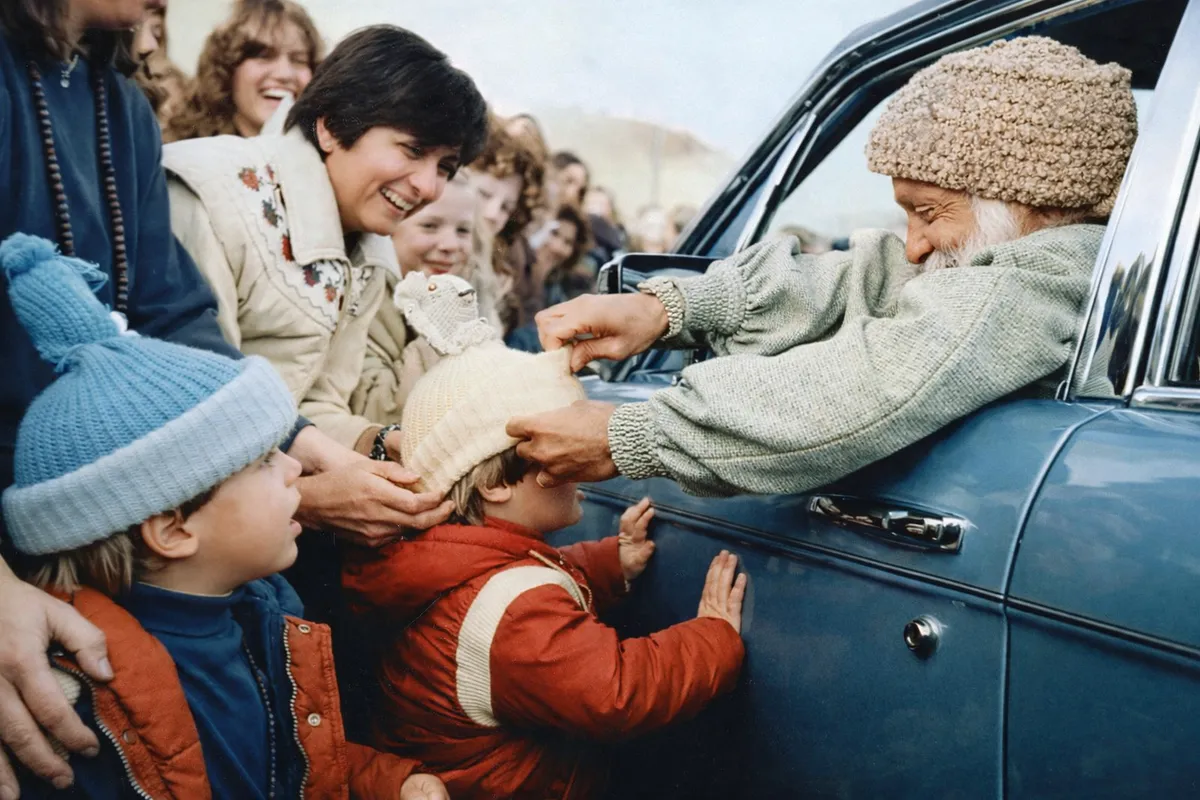
Don’t put anyone on a pedestal; it makes you feel small and copy them instead of becoming your own true self.
From the Discourses
Passages where Osho speaks to this question — each links to the complete discourse.
Osho, are you in favor of hero-worship? Does hero-worship bring understanding or exaggeration?
Third, I oppose it because hidden within the feeling of worship is the notion that someone else will do something for me. That through worship, something will be done for me. If I worship Rama, Rama will do something for me. If I call out to Christ, Christ will do something for me. In this world, no one can do anything for anyone else. And those who get the idea that someone else will do something for them become deprived of what they themselves could have done. They fall into deep laziness and negligence. All devotees, all worshipers, ultimately fall into inertia; they themselves do nothing. They say, “There is God, there is the guru, there is the tirthankara, the avatar—when he does it, it will happen.” Unknowingly, what they could have done becomes impossible, because their mind clings to a prop: someone will do it. Fourth and finally, I…
ओशो, आर यू इन फेवर ऑफ हीरो-वर्शिप ओशो? ड़ज हीरो-वर्शिप ब्रिंग द अंडरस्टैंडिंग ऑर एग्जेज़रेशन?
और तीसरा, मैं इसलिए विरोध में हूं कि पूजा के भाव में कहीं न कहीं यह बात छिपी हुई है कि दूसरा कुछ मेरे लिए कर देगा। उसकी पूजा से कुछ मेरे लिए हो जाएगा। कि अगर मैं राम को पूज रहा हूं तो राम कुछ मेरे लिए कर देंगे। कि क्राइस्ट की चिल्लाहट लगा रहा हूं तो क्राइस्ट मेरे लिए कुछ कर देंगे। दुनिया में कोई आदमी किसी के लिए कुछ नहीं कर सकता है। और जिन लोगों को यह खयाल पैदा हो जाता है कि कोई और मेरे लिए कुछ कर देगा, वे खुद जो कर सकते थे उससे वंचित रह जाते हैं। तो गहरे आलस्य में प्रमाद में पड़ जाते हैं। सब भक्त, सब पूजक अंततः इनर्शिया में पड़ जाते हैं, वह खुद कुछ भी नहीं करते हैं। वे कहते हैं, भगवान है, गुरु है, तीर्थंकर है, अवतार है, कुछ करेगा; तो होगा। तो जाने-अनजाने वे जो कर सकते थे, वह असंभव हो जाता है; क्योंकि उनका मन एक सहारा पकड़ लेता है, कोई करेगा, कोई कर देगा।
Osho, does worship have no value at all? And if it does have value, then why oppose it?
But this is exactly your condition at the crossroads of life. From where do you come? Who are you? Where are you going? What is the purpose of your being? No—there is not even the leisure to think of such things. Worship means: to sit near someone, in someone’s presence, where these matters are pondered, contemplated, meditated upon; where life’s fundamental questions pierce your very being like arrows. Therefore worship—lest you forget! You asked: Does worship have no value at all? It has value; but what you take to be worship has no value. What is your worship? You go to the temple, hastily ring the bell, knock your head before a stone idol, and run! You have done this so many times—what has it given you? Worshipping stones, you often become stone-like. Naturally so. You become like what you worship. So choose your object of worship carefully, for the…
दूसरा प्रश्न: ओशो, क्या उपासना का कोई भी मूल्य नहीं है और यदि मूल्य है तो फिर विरोध क्यों?
लेकिन यही तो तुम्हारी जीवन के चौराहे पर दशा है। कहां से आते हो? कौन हो? कहां जा रहे हो? क्या है प्रयोजन तुम्हारे होने का? नहीं, फुरसत ही कहां है इस सब बात को सोचने की? उपासना का अर्थ है: जहां किसी के पास बैठकर किसी की सन्निधि में इन बातों पर विचार हो, इन बातों पर चिंतन हो, इन बातों पर ध्यान हो। ये जीवन के मौलिक प्रश्न जहां तीर की तरह तुम्हारे प्राणों में छिद जायें! इसलिए उपासना कि तू न कहीं भूल जाये! पूछा तुमने: क्या उपासना का कोई भी मूल्य नहीं है। मूल्य है; लेकिन तुम जिसे उपासना समझते हो उसका कोई भी मूल्य नहीं है। तुम्हारी क्या है उपासना? गए मंदिर में, जल्दी से घंटी बजा दी, सिर पटक दिया पत्थर की मूर्ति के सामने, भागे! यह तो तुम कितनी बार कर चुके, क्या हुआ? पत्थरों की पूजा करते-करते अकसर तुम पत्थर हो गए। स्वाभाविक है। जिसकी पूजा करोगे वैसे ही हो जाओगे। जरा पूज्य को सोचकर चुनना, क्योंकि पूज्य का अर्थ होता है, वह निर्धारक होगा। कोई पीपल के झाड़ की पूजा कर रहा है, इसको उपासना कहता है! …
Today I would request Osho to guide us on idol worship.
A Japanese seeker from Soto Zen told me of a practice: twenty-four hours a day the disciple intones “Muuuu… muuu…” After days, the sound storms inside; thoughts drop. By three weeks, the roaring “Muuuu!” possesses him. Food, sleep fall away; guards must watch him. At the final climax, a last thunderous roar—and suddenly all is still. For days he lies in deep quiet. When he returns, the old man is dead; a new man stands—continuity with the past broken. Om is such a sound; every religion has its own. As worship deepens, sound transforms consciousness. Repetition is crucial. If you sing one hymn one day, another the next, there will be no results. Continuous blows on one point drive the nail. But beware of mechanical repetition—then it is wasted labor. If the sound becomes your very life, every cell, bone, blood crying it—then sound can open the door. And all…
Instead of only worshipping Mahavira and Buddha, if we contemplated upon their great achievement we would perhaps be able to stop distorting their true images. But are busy performing pujas. Pujas cause distortions. We not only kill what we worship but we cover it up with our own images and ideas, weave our own stories around them. The original thing slowly turns into ashes and loses all its individuality. This is all very unfortunate and we are helpless with our long established habits. Almost everybody in the world has got 'Moses' flute' with him, but no tune is corning out of it. Buddha used to tell the people, 'Don't worship me.' Mahavira says 'You yourself are God'. The man who is telling others, 'You yourself are God,' is emphasising the fact 'Don't worship me.' That man says 'you yourself are that whom you worship.
When a master dies, suddenly a myth springs up around him, man makes stone or wooden idols of him, the master becomes a distant god to be worshipped and becomes unattainable to ordinary man. The thought of the master being an example of what we should and can be disappears. Why does this phenomenon happen time and time again?
Jesus must have been a very human master. It is because of his great humanity that he had to suffer, that he had to be crucified -- it is because of his great humanity. If he had lived just like a god, just like a holy saint, chanting mantras, fasting, living in a cave, the same rabbis would have worshipped him. Before Jesus they had not killed anybody else. Why Jesus? This is strange. The Jewish history has no precedent for it. What was his sin? What was his crime? His crime was that he was trying to live a very ordinary life. He wanted to show you that you can live an ordinary life and yet you can be enlightened. You can move with prostitutes and gamblers and drunkards and yet you can be absolutely holy. He wanted to show you this paradox, he wanted to become an example…