
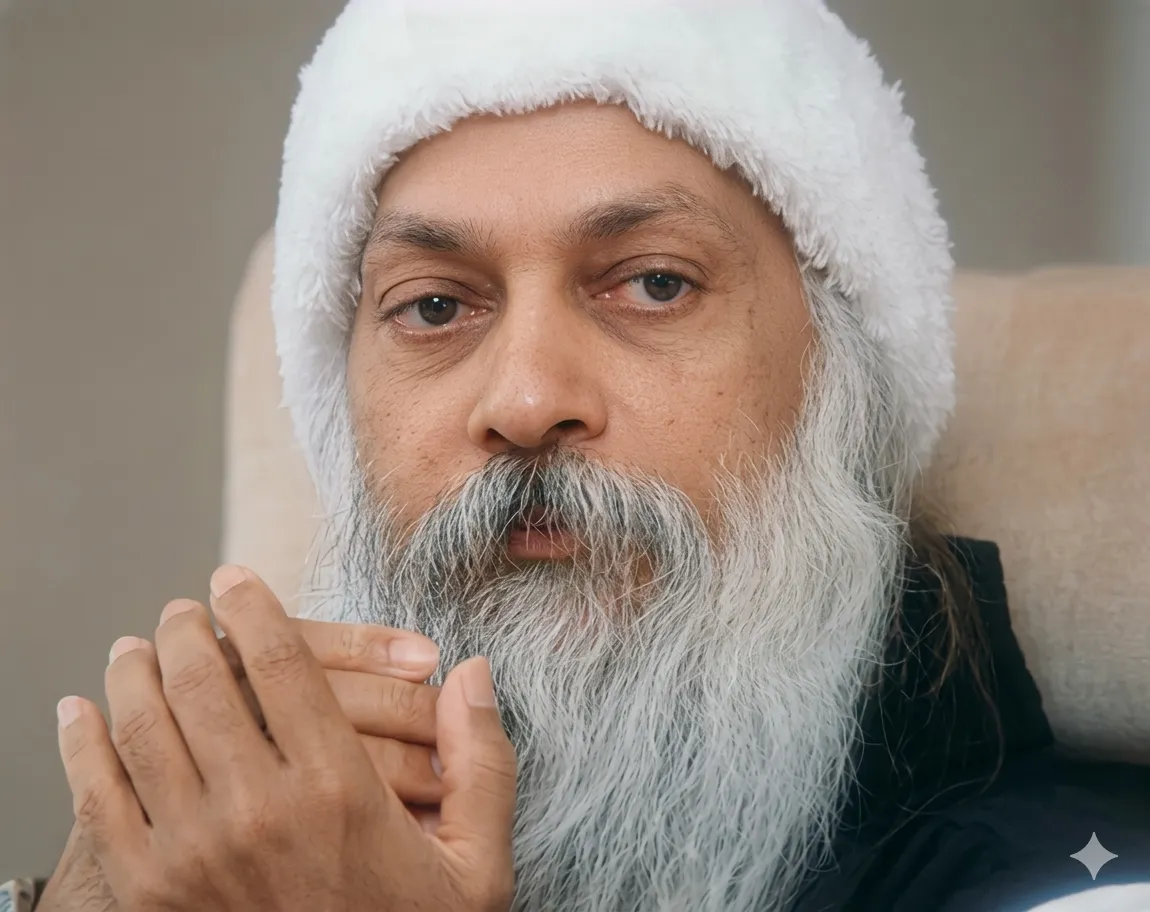
A pub just helps you forget yourself; real joy comes from being awake inside, not from drinks.
From the Discourses
Passages where Osho speaks to this question — each links to the complete discourse.
Question: Third question: Osho, why do you call your ashram a tavern? ... They fear truth—for truth is fiery. Come close and you will burn, be reduced to ashes. But from that very ash a new life is born. Under compulsion I had to forbid disrobing—not because in such a moment it is wrong to be naked; to stop someone then is inhuman, indecorous—but because spectators gather; they bring cameras; they will photograph someone—and that picture becomes “important. A German magazine, Stern, printed two or three nude photographs. Such is people’s curiosity! Those pictures then appeared in papers all over the world. There is hardly a language they didn’t reach—Dutch, Italian, French, Spanish—everywhere. A year has passed since that magazine printed them, and still they keep appearing in new languages. No one asks in what inner moment these people were nude, in what state this bareness happened.
साधना-शिविरों में बड़े बेमन से मुझे रोक लगानी पड़ी कि लोग वस्त्र न उतारें। ऐसी घड़ी आती है जब वस्त्र उतर जाते हैं। एक ऐसी घड़ी आती है आह्लाद की, निर्दोषता की, जब वस्त्र भी बोझ मालूम पड़ते हैं। और मन होता है, गहन मन होता है कि सब परदे गिरा दो! परमात्मा और अपने बीच कुछ भी न रखो। ये हवाएं इस शरीर के साथ खेलें और ये सूरज की किरणें इस शरीर पर नाचें! और इस आकाश और शरीर के बीच कोई भी आवरण न हो। ऐसी घड़ी आती है मस्ती की! लेकिन जो बाहर से आकर देख लेता है वह समझता है: ‘अरे! यहां नग्नता सिखाई जा रही है।’ ये वे ही लोग हैं जिन्होंने महावीर को पत्थर मारे थे, क्योंकि वे नग्न थे; हालांकि अब पूजा कर रहे हैं। और मैं तुमसे कहता हूं: ये ही लोग पूजा करेंगे। लेकिन सदियों बाद ये पूजा करते हैं। इनकी पूजा झूठी। इनकी पूजा मुर्दा। जब कोई मधुशाला मर जाती है, मधु-धाराएं सूख जाती हैं, सिर्फ याददाश्त रह जाती है, तब ये पूजा शुरू करते हैं। …
Osho, for the rinds the tavern is equal to the Kaaba; every round through the murshid’s lane equals a Hajj.
But a politician arranges for everything! If the Hindus are pleased by it—then Ramayana; if it brings votes—Ramayana. If Muslim votes are needed—“Allah-Ishwar tere naam, sabko sanmati de Bhagwan.” And sanmati—“right sense”—means: give me your vote. If you give it to another, that is not “right sense.” Such things make those who have tasted a little of the Divine break into laughter. Morarji Desai discoursing on the Ramayana—will no paramahansa laugh seeing this? A great joke! The blind giving sermons on light. The deaf critiquing classical music. Those who have never known love writing love poems and epics. Their words will be worthless, not worth a penny. But their words pass—because the rest are blind too. Among the blind, the blind prevail. In truth, among the blind the one‑eyed hardly prevails. What the seeing say—the blind cannot agree. When a blind man speaks, the blind agree, because their experience is…
दूसरा प्रश्न: ओशो, रिंदों के लिए तो मयखाना काबे के बराबर होता है मुर्शिद की गली का हर फेरा इक हज के बराबर होता है
मगर राजनेता हर तरह के इंतजाम करता है! हिंदू इससे खुश होते हैं तो चलो रामायण; चलो इससे वोट मिलती है तो रामायण। मुसलमान की वोट लेना हो तो अल्ला-ईश्वर तेरे नाम, सबको सन्मति दे भगवान। सन्मति का मतलब होता है--मुझे वोट देना। किसी और को दी, तो वह सन्मति नहीं है। ये बातें...जिन्होंने परमात्मा का थोड़ा सा स्वाद लिया है, उन्हें बड़ी हंसी आएगी। मोरारजी देसाई रामायण पर बोल रहे हैं, यह देख कर कोई परमहंस न हंसेगा क्या? बहुत हंसी आएगी। यह तो खूब मजा हो गया। ये तो अंधे प्रकाश पर प्रवचन दे रहे हैं। ये बहरे शास्त्रीय संगीत की आलोचना कर रहे हैं, समालोचना कर रहे हैं, विश्लेषण कर रहे हैं। जिन्होंने कभी प्रेम नहीं जाना, वे प्रेम के काव्य लिख रहे हैं, महाकाव्य लिख रहे हैं। इनकी सब बातें व्यर्थ होंगी, दो कौड़ी की होंगी। मगर इनकी बातें भी चल जाती हैं, क्योंकि बाकी भी अंधे हैं। तो अंधों में अंधों की चल जाती है। सच तो यह है कि अंधों में आंख वाले की चलना मुश्किल हो जाती है। …
Osho, I have seen many taverns and many drinkers dead drunk. But what can one say of your tavern! Never seen, never heard. In your tavern I have seen drinkers lost in ecstasy. And those who do not wish to drink—I see a strange ecstasy in them too. If one drinks and gets intoxicated, that I can understand. But seeing the non-drinkers in rapture—that I do not understand. Whenever I remember your tavern, a kind of heady swoon comes over me. This is even more astonishing! Is it really so, or is it my illusion? Kindly shed light on my doubt.
In the still water of that lake, the young lion saw he was not a sheep. Until now he had only seen sheep. In the world of sheep there are no mirrors. He had never seen his own face. Now he saw his own face, saw himself, and saw also that there was no difference between him and the old lion—save youth and age. Without any explanation, without any instruction, a roar—long buried in his chest since birth—burst forth, echoing through the hills. In a single instant he was no longer a sheep; he became a lion. The old lion said, “My work is done. Now it is up to you. Do you wish to return to your old family, or come with me?” He said, “What old family? A mistake has broken, a sleep has shattered, a dream has dissolved.” Do not stand outside. Do not think about those…
प्रश्न: ओशो, बहुत सी मधुशालाएं देखीं, पीने वालों को नशे में धुत देखा। मगर आपकी मधुशाला का क्या कहना! न कभी देखी, न कभी सुनी। आपकी मधुशाला में पीने वालों को मस्त देखा। जो पीना नहीं चाहते, उनकी भी मस्ती अजीब देखी। पीएं और नशा आए, यह बात समझ में आती है। बिन पीने वालों को मस्ती में मस्त देखता हूं, यह बात समझ में नहीं आती। आपकी मधुशाला की जब भी याद आती है, खुमारी सी आ जाती है। यह तो और भी गजब की बात है! यह वास्तव में ऐसा है या मेरा भ्रम है? मेरे संशय पर प्रकाश डालने की अनुकंपा करें।
… आज अपने चेहरे को भी देखा, अपने को भी देखा, और साथ ही यह भी देखा कि इस बूढ़े सिंह और उसके चेहरे में कोई अंतर नहीं है। जवानी और बुढ़ापे का अंतर है। और बिना कुछ समझाए, बिना कुछ बुझाए, एक हुंकार, एक दबी हुई हुंकार, जो जन्म के साथ ही उसकी छाती के भीतर दबी थी, पहाड़ियों को हिलाती हुई चारों तरफ गूंज गई। एक पल भर में वह भेड़ न रहा, सिंह हो गया। उस बूढ़े सिंह ने कहा: मेरा काम पूरा हुआ। अब तेरी मर्जी। अब तेरा क्या इरादा है? अपने पुराने परिवार में लौट जाना है या मेरे साथ आना है? उसने कहा: कैसा पुराना परिवार? एक भूल टूट गई, एक नींद टूट गई, एक सपना मिट गया।
Osho, we saw the cupbearer weeping in the tavern—ever since we saw the revelers turning Rajneeshee.
So I give sannyas to alcoholics too. And I tell them, take it without anxiety! You are better than the pundits—at least you are humble. At least you ask, with your head bowed, “Am I also eligible? Do I too have the worth? Will you accept me?” That pundit with the tilak does not bow his head; he stands stiff with pride. He is worthy already! He is a “fit vessel”! He was born in a Brahmin home! He was born knowing Brahman! The drunkard is a hundred thousand times better than that. At least his head is bowed; he is humble. He makes no claim to worthiness. There is no ego, no self-importance. I accept him. And it has been my experience that as soon as a person begins to descend into meditation, alcohol begins to drop away. I am not an advocate of prohibition. I want people to…
तीसरा प्रश्न: ओशो, मयकदे में साकी को हमने रोते देखा। रिन्दों को जबसे रजनीशी होते देखा।।
तो मैं शराबियों को भी संन्यास देता हूं। और उनसे कहता हूं, बेफिकरी से लो! पंडितों से तो तुम बेहतर हो। कम से कम विनम्र तो हो। कम से कम यह तो पूछते हो सिर झुका कर कि क्या मैं भी पात्र हूं? क्या मेरी भी योग्यता है? क्या आप मुझे भी अंगीकार करेंगे? वह जो तिलकधारी पंडित है, वह सिर नहीं झुकाता, वह अकड़ कर खड़ा है। वह तो पात्र है ही! वह तो सुपात्र है! वह तो ब्राह्मण घर में पैदा हुआ है! वह तो जन्म से ही ब्रह्म को जानता पैदा हुआ है! शराबी उससे लाख दर्जा बेहतर है। कम से कम सिर तो झुकाए है, विनम्र तो है। अपनी पात्रता का दावा तो नहीं कर रहा है। अहंकार तो नहीं है, अस्मिता तो नहीं है। मैं उसे अंगीकार करता हूं। और यह मेरे अनुभव में आया है कि जैसे ही व्यक्ति ध्यान में उतरना शुरू करता है, शराब छूटनी शुरू हो जाती है।
Osho, the presence of a person seems indispensable for the experience of bliss. But if all around is only the expansion of me, then who will experience bliss? Just as sannyas seems essential for life to become blissful, isn’t the person equally essential for the experience of bliss?
It is precisely because of the person that bliss is not happening. The person is necessary for the expectation of bliss; for the experience of bliss, he is a barrier. For the longing and the craving for bliss, the person is needed; for the realization of bliss, the person is not needed at all. When bliss happens, you are scarcely there. In fact, only when you are not, bliss is. You yourself have tasted this, at least in unpremeditated moments: whenever you were not, a glimpse flashed. Your beloved comes home; you sit hand in hand. For a moment the presence of the beloved absorbs you so totally that you disappear—no thought of yourself remains. A drop slips in, the nectar begins to flow. Have you ever watched the sun rise? You sit on the riverbank. The sun begins to climb. This morning breeze, the coolness of the water, the…
पांचवां प्रश्न: ओशो, आनंद के अनुभव के लिए व्यक्ति का होना अनिवार्य-सा लगता है। लेकिन अगर सब तरफ मेरा ही विस्तार है तो फिर आनंद को अनुभव कौन करेगा? जीवन आनंदित हो सके, इसके लिए जैसे संन्यास अनिवार्य है वैसे ही आनंद के अनुभव के लिए व्यक्ति अनिवार्य नहीं है क्या?
व्यक्ति के कारण ही आनंद नहीं हो पा रहा है। आनंद की अपेक्षा के लिए व्यक्ति अनिवार्य है; आनंद के अनुभव के लिए बाधा है। आनंद की आकांक्षा के लिए व्यक्ति की जरूरत है, आनंद की वासना के लिए व्यक्ति की जरूरत है; लेकिन आनंद की अनुभूति के लिए व्यक्ति की कोई भी जरूरत नहीं है। जब आनंद होता है तो तुम थोड़े ही होते हो! तुम नहीं होते हो तभी आनंद होता है। और इसे तुमने भी कभी-कभी किन्हीं अनायास क्षणों में पाया होगा: जब तुम नहीं होते तब थोड़ी-सी झलक मिलती है। प्रेमी घर आ गया है तुम्हारा, तुम हाथ में हाथ ले कर बैठ गये हो। एक क्षण को प्रेमी की उपस्थिति तुम्हें इतना लीन कर देती है कि तुम मिट जाते, कुछ खयाल नहीं रह जाता अपना। एक बूंद सरक जाती है। रस झरता है। कभी सूरज को उगते देखा है? बैठ गये नदी तट पर, उठने लगा सूरज। यह सुबह की हवा, यह नदी की शीतलता, यह शांति, यह खुला आकाश, यह सूरज का उठना, यह सूरज की किरणों का फैलता हुआ सौंदर्य का जाल--क्षण भर को तुम ठगे रह गये! भूल गये कि तुम हो। …