
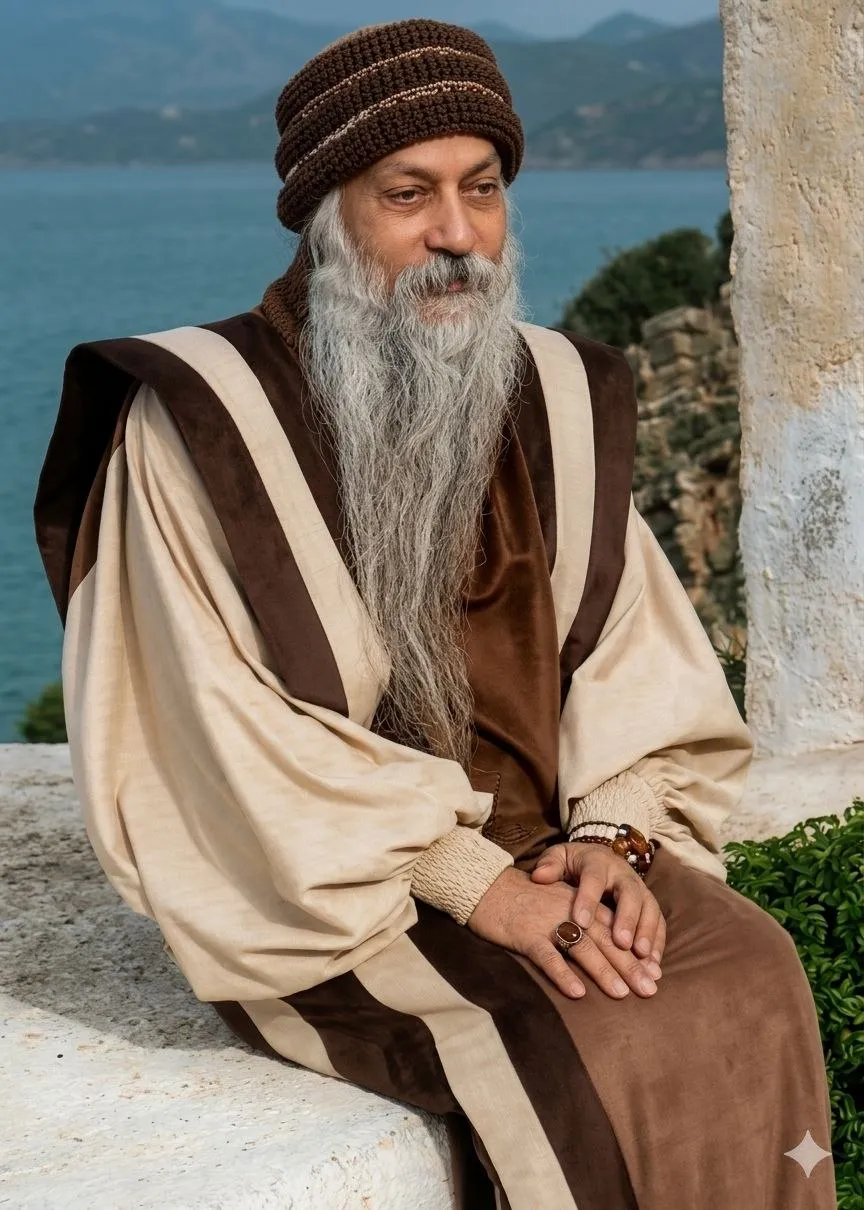
Remember that everyone dies, but use that memory to dance and enjoy today—not to be scared.
From the Discourses
Passages where Osho speaks to this question — each links to the complete discourse.
Question: BELOVED OSHO, I HAVE HEARD THAT YOUR SANNYASINS CELEBRATE DEATH. ... In the past there have been materialists who denied the soul, and there have been spiritualists who denied the body. Both were agreed on one point: that only one can be accepted, either the body or the soul. They were either/or people. They were not ready to accept the whole as it is; they were choosers. My sannyasins live in choiceless awareness. We are not choosers; we simply accept whatsoever is the case. The materialists -- the Charvakas in India and the Epicureans in Greece -- denied the soul. They said, "There is no soul. The soul is just imagination. The soul is illusion. And the spiritualists -- Shankaracharya in India and Berkeley in Europe -- these people said that matter is illusory, maya. The body does not exist really, it is only your imagination.
Osho, you said the truth of life is death. Then what is the truth of death?
Buddha called this the state of suchness—accepting what is, as it is. No yes-and-no. No imposing your desire that it be like this or like that. As it is, let it be as it is. Kabir said: Just as it is—accept it as such. Because as long as you reject, you are fighting life—you are contending with God. You are trying to impose your will. You are not a seeker of truth; your ego is still thick. In accepting what is, as it is, the ego dissolves; there remains no place for it. The struggle is gone, the ego is gone. Ramana lay down. He consented: If death comes, it comes. What is in my hands? “Jih vidhi rākhe Rām, tih vidhi rahiye”—In whatever way Ram keeps you, remain that way. If death has come, it has come. This is how Ram wishes to take me—so be it. He was…
पहला प्रश्न: ओशो, आपने कहा कि जीवन का सत्य मृत्यु है। फिर मृत्यु का सत्य क्या है?
इसको बुद्ध ने तथाताभाव कहा है। जो हो, उसे वैसा ही स्वीकार कर लेना। उसमें ना-नुच न करना। ऐसा हो, वैसा हो, ऐसी अपनी आकांक्षा न डालना। जैसा हो, वैसा का वैसा। कबीर ने कहा है--जस का तस, जैसा का तैसा, वैसा ही स्वीकार कर लेना। क्योंकि जब तक तुम अस्वीकार करते हो, तब तक तुम जीवन से लड़ रहे हो, तब तक तुम परमात्मा से संघर्ष कर रहे हो। तब तक किसी न किसी भांति तुम अपनी आकांक्षा आरोपित करना चाहते हो। तब तक तुम सत्य के खोजी नहीं हो। तब तक तुम्हारा अहंकार प्रगाढ़ है। जो है, जैसा है, उसे वैसा ही स्वीकार कर लेने में अहंकार समाप्त हो जाता है। अहंकार के खड़े होने की जगह नहीं रह जाती। संघर्ष गया, अहंकार गया। रमण लेट गए। राजी हो गए, मौत आती है तो मौत आती है! अपने बस क्या है! जिहि विधि राखे राम तिहि विधि रहिए। …
Osho, in other religions death is almost never spoken of and when it is mentioned the tones are grave and fearful. In your religion, death is talked about freely and happily is this significant?
They said, "He has fallen sick. He is very sorry that he has not come, but don't be worried: he has talked about you to every man of any importance in Bombay. But we were expecting that you would be very old because of the way he described you and said,'Nobody speaks like this man.' We were not thinking of just a young man, a thirty -- year old." At that meeting naturally, among those twenty, thirty thousand people nobody knew about me. Chitrabhanu spoke first and he talked about one of the most significant things about Mahavira, the only things that can be called a miracle in Mahavira's life. A snake, a cobra, bites him; Mahavira is standing naked in meditation and a cobra bites him. Instead of blood, milk comes out of the wounds on his feet. Jainas have always believed that -- there is no problem. When…
Osho, on the one hand Doolandas sings of life’s transience, and on the other, after drinking the nectar of love he plunges into carefree ecstasy where time becomes infinite! Please explain this paradox to us.
Narendra! A moment too is a fragment of the eternal—just as the drop belongs to the ocean, the atom to the vast. In a single small leaf the sap of the whole tree is flowing. In a tiny flower the entire existence has poured its beauty, its color, its fragrance—its all. The great poet Tennyson has said: if we could fully understand even a single flower, we would understand the whole of existence. For what appears small from the outside is, by unending pathways, joined to the whole. This flower would have no fragrance if it were not of the earth. It would have no colors if it were not linked with the sun. It would have no life if the breath of air did not move through it. The deeper you inquire, the more you will find the flower has already disappeared; little by little, the whole cosmos has…
पहला प्रश्न: ओशो, दूलनदास एक ओर तो जीवन की क्षणभंगुरता का राग अलापते हैं और दूसरी ओर प्रेम-रस पीकर अल्हड़ मस्ती में डूब जाते हैं, जहां समय अनंत हो जाता है! कृपा करके उनके इस विपर्यास को हमें समझाएं।
नरेंद्र! क्षण भी शाश्वत का अंश है, वैसे ही जैसे बूंद सागर का; जैसे अणु विराट का। एक छोटे से पत्ते में भी समग्र वृक्ष का ही रस प्रवाहित हो रहा है। एक छोटे से फूल में भी सारे अस्तित्व ने अपना सौंदर्य, अपना रंग, अपना रस, सब कुछ डाल दिया है। महाकवि टेनिसन के प्रसिद्ध वचन हैं कि अगर हम एक छोटे फूल को भी पूरा-पूरा समझ लें तो सारा अस्तित्व समझ में आ जाएगा। क्योंकि एक छोटा फूल भी ऊपर से ही छोटा मालूम पड़ता है, अनंत-अनंत मार्गों से समस्त से जुड़ा है। इस फूल में गंध न होती अगर पृथ्वी का अंग न होता। इस फूल में रंग न होते अगर सूरज से न जुड़ा होता। इस फूल में जीवन न होता अगर वायु इसमें श्वास न लेती होती। इसको जितना गहरे में खोजोगे उतना ही पाओगे कि फूल तो कब का खो गया, धीरे-धीरे सारा ब्रह्मांड तुम्हारे हाथ में आ गया है।
Christianity lost the joy, and the reason is only because they could never really understand what happened on the cross. Resurrection is the real story. The cross is part of it, but Jesus' life does not end on the cross; it culminates in resurrection -- and that is the meaning of the word 'riktam': emptying oneself totally. So carry your cross on your shoulders. Don't wait for some pontius pilate Everybody has to carry his own cross -- everybody is. Carry it deliberately, knowingly, and accept it -- its misery, its suffering, its pain, its anguish. They will purify you, and go on emptying you. The day you find that the ego is no more there, and your inner house is totally silent -- nobody there -- then suddenly you will find that something is descending from the above. That descending energy is god.