
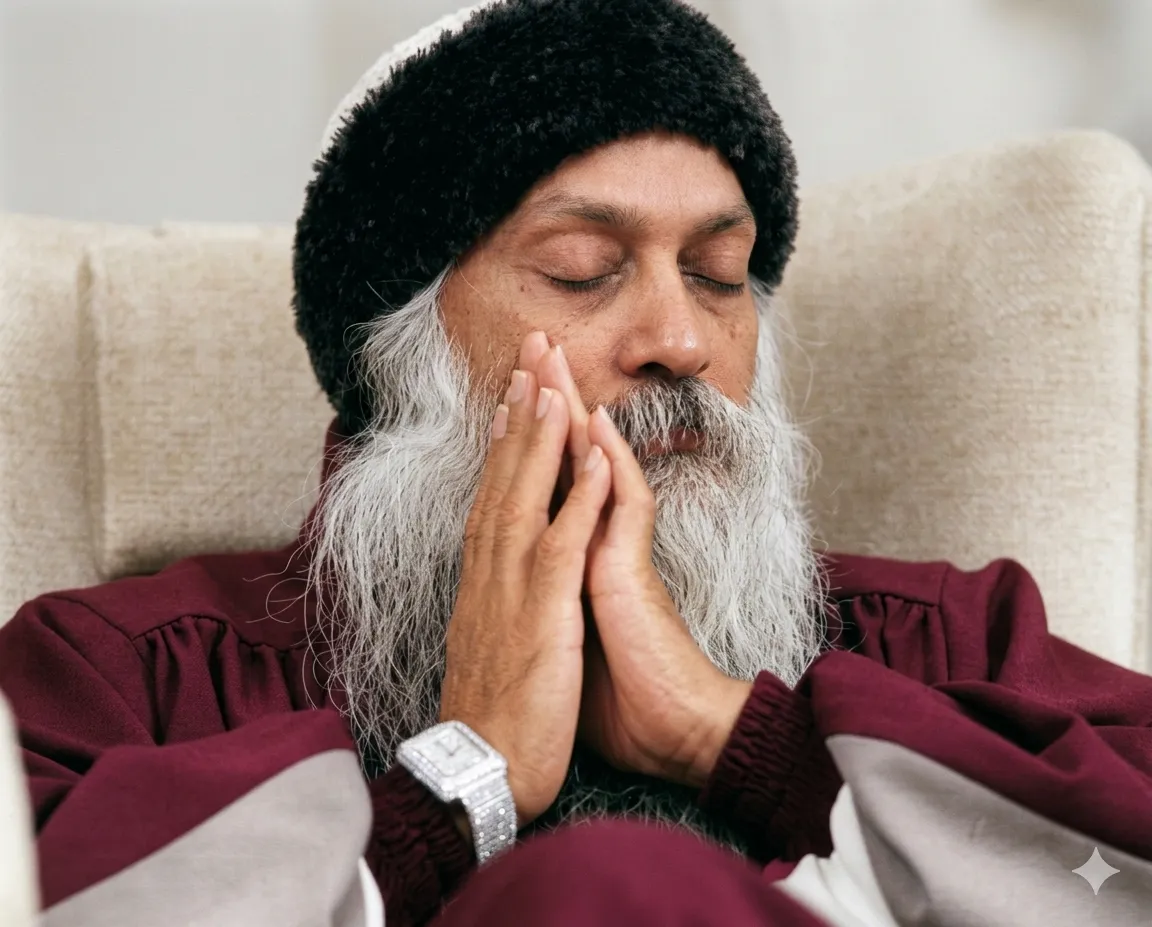
Raw food needs a very hot, strong tummy; since most people don’t have that, cooking helps do the tummy’s work.
From the Discourses
Passages where Osho speaks to this question — each links to the complete discourse.
And what about raw eating—is there any difference?
As for raw eating, in your case there will be no harm; that’s why I didn’t say anything to you—no harm will come to you. But if a person were fed it from birth, there could be some harm. And if it were continued for two or three generations, there could be a lot of harm. It’s all so strange: in fact, the hair on the human body has fallen off, become sparse—and one reason is the stopping of raw eating. Otherwise, if raw eating had continued—if it had continued—humans would have hair like a bear all over the body. Because with raw eating the elements that greatly promote hair growth remain intact. So hair fell from human bodies; it didn’t from other animals. The basic reason is that animals eat everything raw, and humans eat cooked. In cooking, the elements that give excessive hair growth are destroyed. So there…
प्रश्न: और यह रॉ-ईटिंग का भी कुछ थोड़ा फर्क है?
रॉ-ईटिंग का ऐसा है, आपको तो कोई नुकसान होने वाला नहीं, इसलिए मैंने आपसे कुछ कहा नहीं, आपको कोई नुकसान होने वाला नहीं। लेकिन अगर किसी व्यक्ति को जन्म से ही खिलाया जाए, तो थोड़े नुकसान हो सकते हैं। और दो-तीन पीढ़ियों तक खिलाया जाए, तो बहुत नुकसान हो सकते हैं। इतना अजीब सब है, असल में आदमी के शरीर पर से बाल गिर गए हैं, कम हो गए हैं, उसका भी हाथ रॉ-ईटिंग बंद होने की वजह से। नहीं तो आदमी के पूरे शरीर पर भालू जैसे बाल होंगे, अगर रॉ-ईटिंग जारी रहे तो। अगर रॉ-ईटिंग जारी रहे तो। क्योंकि रॉ-ईटिंग में वे तत्व चले जाते हैं जो बालों को बहुत बड़ा कर देते हैं। तो आदमियों के शरीर से बाल गिर गए हैं, बाकी जानवरों के नहीं गिरे, उसका कुल कारण है कि उनका सब ईटिंग रॉ है और आदमी का पक्के। तो पकने में वे तत्व मर जाते हैं जो बालों को अति ग्रोथ देते हैं।
Please comment on these statements: "survival of the fittest," and "you are what you eat."
But you don't think the same way when somebody kills a lion or a deer, because you don't think that the deer has as much life as you have. The deer may have a beloved; the deer may have children. You don't think of the lion, when you kill him, that he may have a family. His small cubs will be orphans. He is as alive as you are -- in fact more alive than you are. Destroying him only for a few taste buds on your tongue, for the taste... It seems to me that killing animals for eating is not very far away from killing human beings. They differ only in their body, in their shape, but it is the same life that you are destroying. With new technology the earth is perfectly capable of giving you food. You can make it as tasteful as you want, and…
In tracing bodily evolution they found man’s body is a link after the ape. The human body has come through the monkey—this is true. But in India, where for thousands of years people reflected on man’s evolution, no one concluded the body came from the monkey. Why? One reason: India never cared for bodily heredity. India asks not whence the body, but whence the soul. And seekers in India, searching the soul, discovered that the first link of man’s soul came through the cow. Man’s soul evolved through the lineage of the cow, and man’s body through the lineage of the ape. Man carries the monkey’s body and the cow’s soul. Like a blacksmith forges the iron blade and a carpenter fashions the handle—together an axe is made. From one side, nature evolved the body—through the ape—and through that journey the finest body emerged.
एक कारण है, और वह यह कि हिंदुस्तान ने बॉडिली हेरिडिटी की कोई फिकर ही नहीं की। हिंदुस्तान कहता है, शरीर कहां से आया, यह महत्वपूर्ण नहीं है। महत्वपूर्ण यह है कि आत्मा कहां से आई है। और हिंदुस्तान के खोजी जब आत्मा की खोज में गए, तो उन्होंने पाया कि आत्मा की, आदमी की आत्मा की पहली कड़ी गाय से आई है। आदमी की आत्मा का विकास तो गाय की परंपरा से हुआ है और आदमी के शरीर का विकास बंदर की परंपरा से हुआ है। और आदमी के पास बंदर का शरीर है और गाय की आत्मा है।
Osho, I had said something about fasting. People have asked: Are you opposed to fasting? Don’t the senses grow weak through fasting, bringing detachment? Didn’t Mahavira, Buddha, and others do their sadhana through fasting? In this way, many questions have come related to fasting.
The body is an amazing mechanism. The flesh and fat stored in our body are not without purpose. If we stop eating, the body starts digesting its own fat and flesh—a kind of carnivory. We begin to eat our own meat. That is why your weight drops. If you don’t eat for a day, a pound can drop—you’ve digested a pound of your own flesh. The body has to work every day and needs to digest flesh; ordinarily you supply it from food and all goes on. If you stop eating, the stock of flesh you carry begins to be consumed. Within four or five days, the body drops the habit of taking new food and starts digesting its own tissues. You must have seen frogs—they almost come alive in the rains and spend the rest of the time almost like dead, buried in the earth; they dry up and…
ओशो,मैंने उपवास के संबंध में कुछ कहा। पूछा है: क्या उपवास से मेरा विरोध है? पूछा है: क्या उपवास के द्वारा इंद्रियां शिथिल नहीं होतीं और विरक्ति नहीं आती? पूछा है कि क्या उपवास के माध्यम से ही महावीर ने, बुद्ध ने और दूसरे लोगों ने साधना नहीं की है? इस तरह बहुत से प्रश्न उपवास से संबंधित हैं।</cr>
शरीर तो बड़ा अदभुत यंत्र है, हमारे शरीर में जो मांस और चर्बी इकट्ठी है, वह अकारण नहीं है। अगर हम भोजन बंद कर दें, तो शरीर अपनी चर्बी पचाना शुरू कर देता है, वह मांसाहार है एक तरह का। हम अपना ही मांस खाने लगते हैं। इसलिए आपका वजन गिरने लगता है। आप एक दिन भोजन नहीं करेंगे, एक पौंड वजन गिर जाएगा। आपने अपने शरीर का एक पौंड मांस पचा लिया। शरीर ने दिन भर काम किया, शरीर ने मांस पचा लिया। मांस को पचाना रोज ही पड़ता है। आप भोजन से उसे पूरा कर देते हैं, तो काम चलता जाता है। …
Osho, the Gita certainly emphasizes sattvic food for seekers, but nowhere does it explicitly forbid meat. And you have said meat is easy to digest—and that’s what doctors say, too. Then what obstacle does meat-eating create? For spiritual practice you have strongly stressed the usefulness of a vegetarian diet. But books indicate that many saints who attained through Sufi, Zen, and Tantra paths did not remain vegetarian. And in our own country, Paramhansa Ramakrishna always ate non-vegetarian food. What is the reason for this contradiction?
Then my vision is this: Ramakrishna is an exceedingly pure man. Therefore such a small impurity could not obstruct him. You may not be able to conceive this. Exceedingly pure. If you permit me, I would say: purer than Mahavira. Had Mahavira eaten meat or fish, he could not have attained the supreme. But Ramakrishna did. This means only this: the man is so pure that such a small impurity could not hinder him. Despite that impurity he crossed beyond. Understand it like this: you climb a mountain. The rule for mountain-climbing is that the less the load, the better. If you climb with loads of weight on your head, climbing becomes hard. You may abandon the idea or stop at some midway camp. But then a very powerful man, a Hercules, climbs the mountain with a heavy weight—and reaches the top. This man is not the rule. This Hercules…
आखिरी प्रश्न: ओशो, गीता में साधकों के लिए सात्विक भोजन पर बल अवश्य दिया गया है, लेकिन उसमें कहीं मांसाहार का स्पष्ट निषेध नहीं है। और आपने मांसाहार को सुपच बताया और यही डाक्टरों का मत भी है। फिर मांसाहार से क्या बाधा आती है? धर्म-साधना के लिए आपने निरामिष भोजन की उपादेयता पर बहुत बल दिया। लेकिन पुस्तकों से पता चलता है कि प्रायः ही सूफी, झेन और तंत्र मार्ग से सिद्ध हुए संतों का भोजन निरामिष नहीं रहा। और अपने ही देश में परमहंस रामकृष्ण सदा आमिष भोजन लेते रहे। इस विरोध का क्या कारण है?
मेरी अड़चनें बहुत गहरी हैं। सीधे उत्तर मेरे पास नहीं हैं, क्योंकि उत्तर मैं किसी सिद्धांत को देखकर नहीं चलता। मैं स्थिति को देखता हूं। देखता हूं, रामकृष्ण ज्ञान को उपलब्ध हुए और यह होना तो नहीं चाहिए; लेकिन हुआ है। इसलिए जाल थोड़ा जटिल है। तब मुझे मेरी जो दृष्टि है, वह यह है कि रामकृष्ण अत्यंत शुद्ध पुरुष हैं। इसलिए इतनी थोड़ी-सी अशुद्धि उन्हें बाधा न डाल पाई। यह तुम्हारे खयाल में न आ सकेगा। अत्यंत शुद्ध पुरुष हैं। अगर तुम मुझे आज्ञा दो, तो मैं कहना चाहूंगा, महावीर से ज्यादा शुद्ध पुरुष हैं। महावीर अगर मांसाहार करते या मछली खाते, परम ज्ञान को उपलब्ध नहीं हो सकते थे। लेकिन रामकृष्ण हुए हैं। इसका अर्थ केवल इतना ही है कि यह व्यक्ति इतना शुद्ध है कि इतनी-सी अशुद्धि इस पर कुछ बाधा नहीं डाल पाई। यह उस अशुद्धि के बावजूद भी पार हो गया। ऐसा ही समझो कि पहाड़ पर तुम चढ़ते हो। तो पहाड़ पर चढ़ने का नियम तो यही है कि जितना कम बोझ हो, उतना ठीक। …