
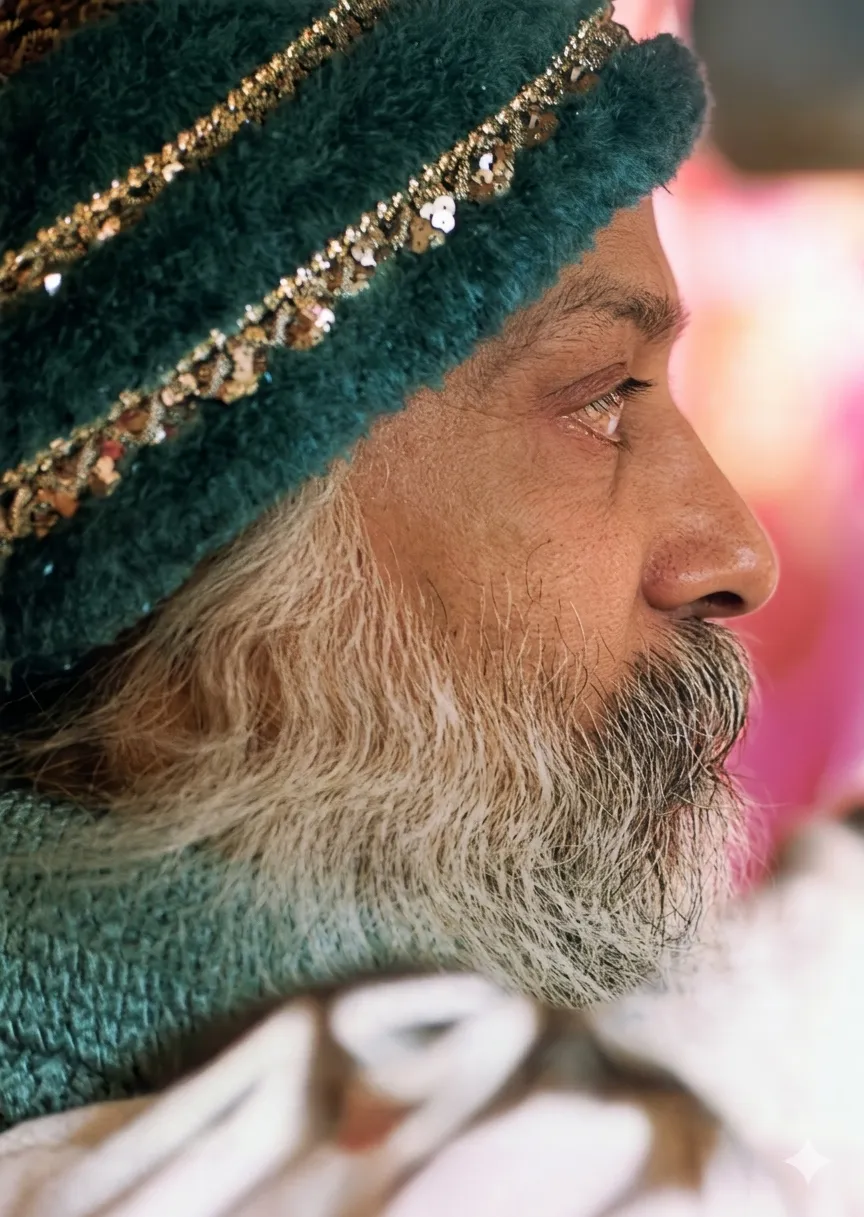
Helpless is like wanting a float and crying when it is missing; refuge-less is learning to swim and enjoying the water by yourself.
From the Discourses
Passages where Osho speaks to this question — each links to the complete discourse.
Osho, what is the proof of God’s existence?
And you still ask for proof? There have been people who offered proofs, and all their proofs are futile. No proof works. All the proofs for God so far are not worth a penny. Someone says: everything that is made must have a maker; such a vast world—surely it must have a maker. But that proof commits suicide; the moment it meets an atheist, it goes lame. The atheist says: If every made thing must have a maker, if God is needed to make the world, then who made God? With that he tightens the noose around your neck. Who made God? You protest: No, no one made God. Then the atheist says: If God can be without being made, why can’t the world be without being made? The argument collapses; it falls flat. You say: just as the potter makes the pot, so that Great Potter made this world.…
आखिरी प्रश्न: ओशो, ईश्वर-अस्तित्व का प्रमाण क्या है?
और तुम प्रमाण पूछ रहे हो? और प्रमाण देनेवाले लोग हुए हैं। और उनके सब प्रमाण व्यर्थ हैं। कोई प्रमाण कारगर नहीं है। अब तक जितने प्रमाण दिये गये हैं परमात्मा के, सब दो कौड़ी के हैं। जैसे कोई कहता है कि हर चीज को बनानेवाला होना चाहिए; इतना बड़ा जगत तो इसका बनानेवाला कोई होगा। मगर उसका प्रमाण आत्मघात कर लेगा, नास्तिक के सामने जाते ही हाथ-पैर उसके लंगड़ा जायेंगे। क्योंकि नास्तिक कहता है, अगर हर बनाई गयी चीज का बनानेवाला होना चाहिए, अगर संसार को बनाने के लिए परमात्मा चाहिए तो फिर परमात्मा को किसने बनाया? बस उसने अटका दी तुम्हारी फांसी! परमात्मा को किसने बनाया है? तुम नाराज होने लगे कि नहीं, परमात्मा को किसी ने नहीं बनाया। तो नास्तिक कहता है, जब परमात्मा बिना बनाये हो सकता है तो संसार क्यों नहीं हो सकता? टूट गया तर्क, पोचा निकला।
Beloved Osho, I am seeing a certain helplessness arising in me. It is a feeling that I had feared and always tried to avoid in the past. Yet, as it begins to overwhelm me, it brings a sense of freedom I have seldom, if ever, experienced before. Beloved master, does this helplessness have something to do with what you call "let-go"?
The rabbi finished quickly -- rabbis are very efficient people -- and he came in his Cadillac, but the bishop was still in the confession booth. It has a small window, and the bishop or the pope or anybody who is representing God is on one side, and on the other side, the person who confesses. A device that the person does not feel awkward, embarrassed; he is not seen by the priest. But there was a long queue. So from the other side, the rabbi entered the cabin and said to the bishop, "It is getting late, and I don't see that you will be able to finish till Judgment Day! Because the queue is so long... and you don't seem to be very efficient. You don't know business." The bishop said, "I am doing it as quickly as possible, but these idiots are such that they don't confess…
Man is weak and helpless what can he do to find strength?
Imagination has the power to take you somewhere. If you just allow it to go, it will move into the future. It will go to the moon and to planets and to stars and anywhere. This is one dimension of movement: Call it the dimension of time. Ordinarily our imagination travels only in one dimension: the dimension of time. It goes into the future or the past. It moves in time. With observation, there is a change. Imagination begins to move in space not in time. That is the change that observation creates. The arrow of imagination moves from 'there and then' to 'here and now'. Space is always here and now: it has no expansion in time. So imagination has two dimensions to develop in. Without observation, it goes from the past to the future and from the future to the past. With observation, it goes into space. If…
Question: SADHU, CONSIDER THIS: RIDE IN A BOAT AND DROWN MIDSTREAM; HELPLESS, GET ACROSS. REACH THE TOWN BY SOME BACK WAY; GET LOOTED ON THE HIGHWAY. BY ONE ROPE ALL GET TIED, BOTH THE BOUND AND THE FREE. ENTER YOUR TEMPLE; BE BATHED FROM ALL SIDES. WHO REMAINS WITHOUT STAYS DRY. CHOP OFF THE HEAD FOR ETERNAL JOY; AN UNCHOPPED HEAD IS SUFFERING. THE WHOLE WORLD LOOKS WITHOUT SEEING, EYES REMAINING BLIND. SAYS KABIR: I UNDERSTAND, SEEING THE WAYS OF THE WORLD. ... Once a Zen disciple was bidding farewell to his master. The night was dark and he was a little afraid; the road was deserted and he had to pass through a dense forest where there were many wild animals. He looked so nervous his master remarked, "You seem afraid. The disciple replied, "I am afraid.
Osho, inside me there seems to be a kind of stunned stillness, a hush. It feels empty, as if a void has spread over everything. And at the same time, the assault of good and bad thoughts keeps overpowering me. What should I do? I feel as if I’ve gone a bit mad. I find myself very helpless, alone, and insecure. I am afraid.
It is Saroj’s question. This happens. It is natural. Because the moment we turn within, we become alone. That is why people are afraid to go inside. Outside there are others; inside there is no one. Inside it is you, and only you. Outside are countless people, bustle and stir; inside, silence. Outside there is so much fullness; inside, the void. And for lifetimes we have lived outside—lived in relationships, with others, in the crowd and the marketplace, the house and household—thousands of occupations! So when you begin to move within, you suddenly start to feel: all that is left far behind, and into this inner space not even your nearest and dearest can come. This is your utterly solitary space. It is so private that you cannot invite even your lover into it. Here there is only you—simply you. In the beginning this great stillness, this hush, this emptiness…
दूसरा प्रश्न: ओशो, मेरे भीतर जैसे स्तब्धता, सन्नाटा-सा लग रहा है। खाली-खाली, शून्यता जैसे छा गई हो। और साथ ही अच्छे-बुरे विचारों का आक्रमण भी हावी होता रहता है। मैं क्या करूं? मैं बावरी-सी हो गई हूं। मैं अपने को बहुत असहाय, अकेली और असुरक्षित पा रही हूं। भय लगता है।
‘सरोज’ का प्रश्न है। ऐसा होता है। ऐसा होना स्वाभाविक है। क्योंकि जैसे ही हम भीतर जाते हैं, हम अकेले हो जाते हैं। इसीलिए तो लोग भीतर जाने से डरते हैं। बाहर हैं और लोग, भीतर तो कोई भी नहीं। भीतर तो तुम हो और बस तुम हो। बाहर अनंत लोग हैं, चहल-पहल है। भीतर तो सन्नाटा है। बाहर बहुत भरावट है, भीतर तो शून्य है। और जन्मों-जन्मों तक हम बाहर जीए, संबंधों में जीए, औरों के साथ जीए, भीड़-बाजार, घर-गृहस्थी--हजार व्यस्तताएं! तो जब भीतर चलना शुरू करोगे तो अचानक अनुभव में आना शुरू हो गया, वह सब तो दूर छूट गया और इस भीतर तो तुम्हारा निकटतम प्रियजन भी नहीं आ सकता। यह तो तुम्हारा नितांत एकांत है। यह तो इतना निजी है, इतना प्राइवेट है कि तुम अपने प्रेमी को भी इसमें निमंत्रित न कर सकोगे। यहां तो बस तुम हो और तुम हो। …