
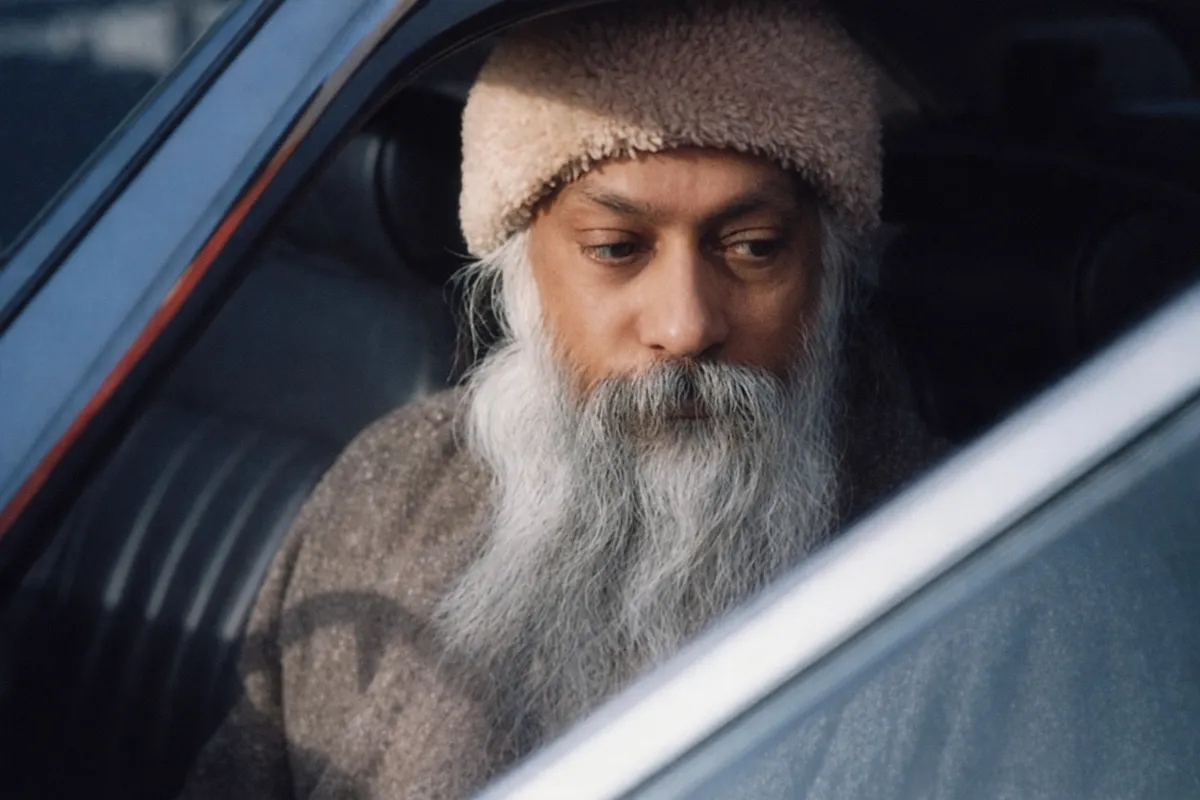
A pramadi is like someone dreaming they’re steering the car; in truth the car is on autopilot—only the awakened realize it.
From the Discourses
Passages where Osho speaks to this question — each links to the complete discourse.
Osho, a curiosity has arisen. You have said, in the context of apramad (alertness), that a pramadi (negligent) person does nothing; things happen without his will or choice. So please tell us: what is the difference between the “doer” in a sleeping state and the “doer” in an awakened state? Gurdjieff says that an awakened man becomes crystallized—what does that mean? And doesn’t the awakened man’s ego dissolve rather than crystallize?
The sleeping man is not a doer; things happen to him too. But the sleeping man thinks, “I am doing.” The sleeping man is not a doer, yet he believes he is. The awakened man also is not a doer, but he understands that he is not the doer. That is the only difference. The sleeping man thinks, “I am the doer.” He does nothing; it happens. The awakened man also does nothing; everything happens—but the awakened man knows that everything happens, I am not the doer. Between the sleeping and the awakened there is no difference in doing; the difference is in knowing. Their actions do not differ; what differs is the sense of doership. A Buddha walks, and a non-Buddha also walks. A man filled with awareness walks, and a man filled with unawareness also walks. The unawake walks from the center of “I”—“I am.” The awake walks…
ओशो, एक जिज्ञासा उठ खड़ी हुई, आपने कहा है अप्रमाद के प्रसंग में कि प्रमादी आदमी कुछ करता नहीं है, चीजें घटित होती हैं बिना उसकी इच्छा अथवा चुनाव के। तो कृपया बताइए कि सोए हुए कर्ता, डुअर में और जागे हुए कर्ता में क्या अंतर है? गुरजिएफ कहते हैं कि जागा हुआ आदमी क्रिस्टलाइज्ड हो जाता है, इसका क्या अर्थ है? और क्या जागे हुए आदमी का अहंकार क्रिस्टलाइज होने के बदले विसर्जित नहीं हो जाता है?
… सोया हुआ आदमी सोचता है, मैं कर्ता हूं। करता कुछ भी नहीं है, होता है। जागा हुआ आदमी भी कुछ नहीं करता है, सब होता है, लेकिन जागा हुआ आदमी यह जानता है कि सब होता है, मैं कर्ता नहीं हूं। सोए हुए और जागे हुए आदमी में करने में फर्क नहीं है, जानने में फर्क है। उनके कृत्य में फर्क नहीं है, उनके कर्तृत्व के बोध में फर्क है। बुद्ध भी चलते हैं, अबुद्ध भी चलते हैं। होश से भरा हुआ आदमी भी चलता है, गैर-होश से भरा हुआ आदमी भी चलता है। गैर-होश से भरा हुआ आदमी चलता है ‘मैं’ के केंद्र पर--‘मैं हूं’। होश से भरा हुआ चलता है ‘शून्य’ के केंद्र पर--‘मैं नहीं हूं’, चलने की क्रिया है।
Krishna tells Arjuna: “That which is night for all beings, therein the disciplined one is awake. That wherein beings are awake, therein the seer sleeps.” Where the ignorant are awake, the wise sleeps; where the ignorant sleeps, the wise is awake. You are awake in the senses and asleep in yourself; the knower is awake in himself and asleep in the senses. His senses quiet into emptiness. His witnessing awakes. It is the same energy. When witnessing awakens, the senses have no need to be lit; energy no longer flows into them. Where you are awake, the knower is asleep; where you sleep, he is awake. Your day is his night; your night, his day. “He neither wakes nor sleeps. He neither opens nor closes his eyelids. Ah! What an excellent, supreme state abides in the liberated consciousness!” Understand this.
Osho, when you speak of non-doing, people get the impression that in non-doing there are still dreams—of doing and non-doing. Such an impression tends to arise.
Many times it does. Many times this notion arises—many times this notion arises. Non-doing has nothing at all to do with outer doing. And the irony is that many people drop the outer doing and run away, yet continue the inner doing. Outwardly someone becomes a sannyasin—leaves the shop—but keeps the inner work going. That keeps running all the time. It is difficult, yes; but once the understanding dawns...
ओशो, लेकिन जब आप नॉन-डूइंग बोलते हैं तब लोग का खयाल हो जाता है कि नॉन-डूइंग में सपने जो देखता है कि क्रिया और नो-क्रिया, ऐसा ही जरा इम्प्रेशन हो जाता है।
कई दफा हो जाता है। कई दफा खयाल हो जाता है, कई दफा खयाल हो जाता है। बाहर की डूइंग से कोई वास्ता ही नहीं है। और मजा यह है कि कई लोग बाहर की डूइंग छोड़ कर भाग जाते हैं और भीतर की डूइंग जारी रखते हैं। लेकिन बाहर तो कोई संन्यासी हो जाता है दुकान छोड़ कर, लेकिन भीतर का काम जारी रखता है। वह जारी रहता है पूरे वक्त। कठिन है, लेकिन एक दफा खयाल में आ जाए।
“In this world, knowledge is the essential meaning. Those who sleep lose their meaning. By remaining continuously awake, shake the previously accumulated karmas. It is better for the religious to be awake, and better for the irreligious to sleep.” So spoke Lord Mahavira to Jayanti, the sister of King Shatanika of Vatsa. “Pramada (heedlessness) is called karma (asrava), and apramada (heedfulness) is called akarma (samvara). By pramada a man is ignorant; by the absence of pramada he is wise.” “Pramada is karma.” Pramada means intoxication within; a stupefaction; a sleepy-so-ness. “Pramada is called karma.” It is not what you do—that is not the question—it is why you do it. The very same act can be done differently, can be done with awareness—and then it is not karma. Understand. You are involved with your children, steeped in attachment. You have placed great ambitions upon their shoulders.
‘इस जगत में ज्ञान आदि सारभूत अर्थ हैं। जो पुरुष सोते हैं उनका अर्थ खो जाता है। सतत जागते रहकर पूर्वार्जित कर्मों को प्रकंपित करो। धार्मिकों का जागना श्रेयस्कर, अधार्मिकों का सोना श्रेयस्कर है। ऐसा भगवान महावीर ने वत्स देश के राजा--शतानीक की बहन जयंति से कहा था।’ ‘प्रमाद को कर्म (आस्रव) और अप्रमाद को अकर्म (संवर) कहा है। प्रमाद, होने से मनुष्य अज्ञानी होता है; प्रमाद के न होने से ज्ञानी होता है।’
Osho, before discussing the process of entering a conscious death, I would like to ask: what is the difference between stupor and awakening? What do we call the state of unconsciousness? In other words, in wakefulness and in unconsciousness, what is the state of the jivatma’s consciousness?
Religion is a search for attention; so, in their own way, are gambling, battle, hunting. The man who enters the forest to hunt a lion is also seeking attention; so is the yogi in a cave striving at the ajna chakra. The search may be noble or ignoble, desirable or undesirable, successful or futile—but the underlying hunger is one. Attention means: the knowing power within me becomes fully manifest—no part left potential or dormant. Whatever capacity to know I carry turns from potential into actual. In the moment a person is fully awake, in that very moment he fully is. Awakening and being happen together. Think of a seed: the tree is hidden in the seed, but only potentially. The seed can die without becoming a tree; the tree is not a necessity, only a possibility. When the tree manifests, it is the seed in its expressed form. Sleep is…
ओशो, सजग मृत्यु में प्रवेश की प्रक्रिया पर चर्चा करने के पहले मैं पूछना चाहूंगा कि मूर्च्छा और जागृति में क्या भेद है? बेहोशी चेतना की किस स्थिति को कहते हैं? अर्थात होश और बेहोशी में जीवात्मा की चेतना की कौन-सी स्थिति होती है?
धर्म भी ध्यान की तलाश है और जुआ भी। और जो आदमी युद्ध के मैदान पर तलवार लेकर लड़ने गया है, वह भी ध्यान की तलाश में गया है। और जो आदमी जंगल में शेर का शिकार करने चला गया है, वह भी ध्यान की तलाश में गया है। और जो आदमी गुफा में बैठकर आंख बंद करके आज्ञा चक्र पर श्रम कर रहा है, वह भी ध्यान की तलाश में गया हुआ है। यह तलाश शुभ और अशुभ हो सकती है, लेकिन यह तलाश एक है। कोई तलाश वांछनीय और कोई अवांछनीय हो सकती है, लेकिन तलाश एक है। और कोई तलाश असफल हो सकती है और कोई सफल हो सकती है, लेकिन तलाश की आकांक्षा एक है। ध्यान का अर्थ है कि मेरे भीतर जो जानने की शक्ति है, वह पूरी प्रकट हो। उसमें कोई भी हिस्सा मेरे भीतर पोटेंट न रह जाए, बीज-रूप न रह जाए। …