
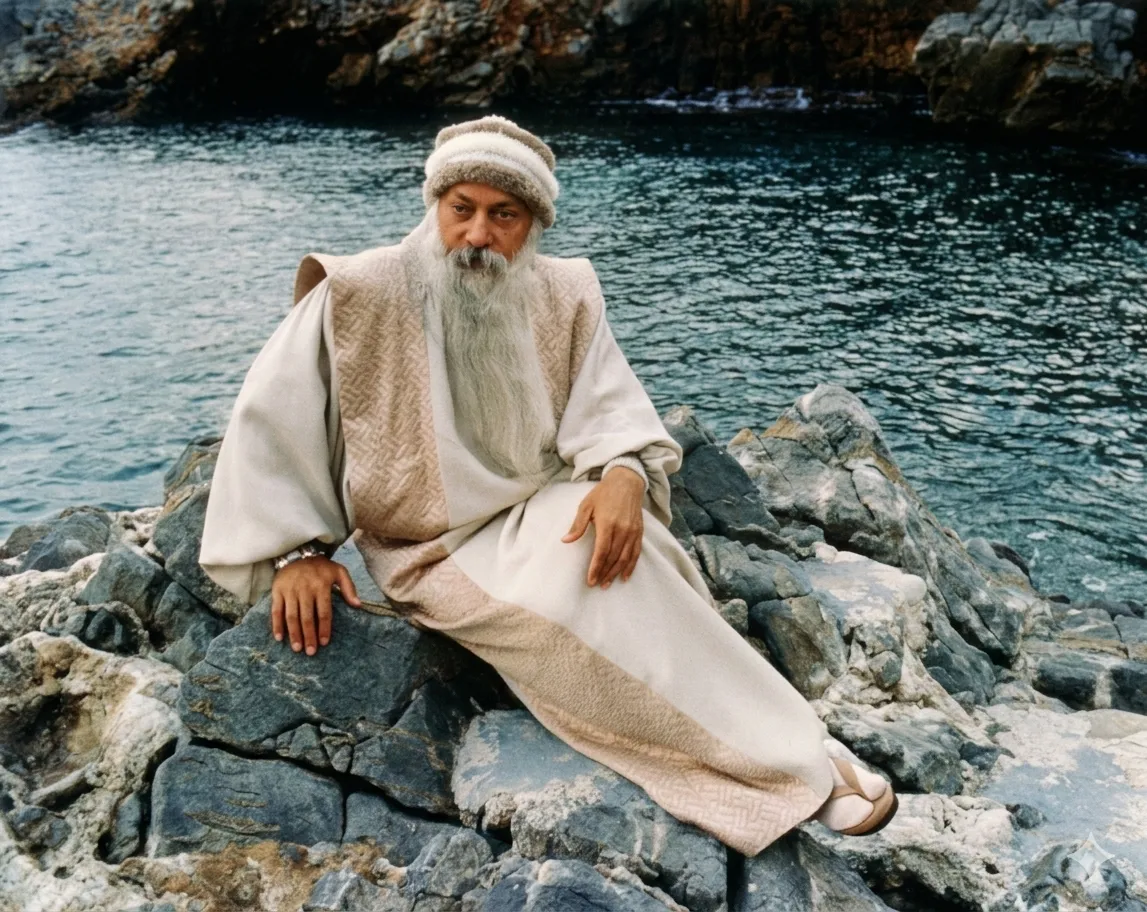
If you see something that looks unfair here, don’t jump in—trust the master’s plan and keep working on yourself.
From the Discourses
Passages where Osho speaks to this question — each links to the complete discourse.
Beloved master, you talk so much about the witness, but what is the witness and what is the judge? How can we tell which is which -- the witness or the judge?
Out of that witnessing a response arises -- a response which is total because your whole heart is behind it, a response which is total because it is your own response, not a repetition of somebody else's teachings; a response which you will never regret, a response which will not make you feel guilty, that "I have done something wrong," which will not make you feel egoistic, that "I have done something great." A response is a simple response, it neither makes you feel inferior nor superior. It is simply the requirement of the moment. It comes out of your witnessing and it is finished. It leaves no trace behind. The witnessing soul is like the sky. The birds fly in the sky but they don't leave any footprints. That's what Buddha says, that the man who is awakened lives in such a way that he leaves no footprints. He…
Then you asked: “One thing still pricks me: if someone comes to harm us when it is not our fault...”
That has never happened. You cannot be an exception. Why would anyone come to harm you without your fault? Who would bother? Maybe the fault was not today—it could be from yesterday, the day before, from this life or some other life—but a fault there will have been. Without it, who would bother? Who has so much interest in you that they would harass you and themselves be harassed? A man once spat on Buddha. Buddha wiped his face with his robe and said, “Brother, do you have anything more to say?” The man was stunned, because he had expected a quarrel, a fight. He had come prepared, had even posted thugs outside to call in if things went wrong. But Buddha said again, “Brother, anything more to say?” He replied, “Nothing more.” Then Buddha said, “Namaskar.” Buddha’s disciple Ananda asked, “What is this? You didn’t say anything.” Buddha said,…
फिर, तुमने पूछा है कि ‘एक बात मुझे खटकी हुई है कि अगर हमारी गलती के बिना कोई हमें नुकसान पहुंचाने आए...’
ऐसा कभी हुआ नहीं। तुम अपवाद नहीं हो सकते। तुम्हारी गलती के बिना कोई तुम्हें नुकसान पहुंचाने आएगा ही क्यों? किसको पड़ी है? गलती, हो सकता है, आज न की हो, कल ही हो, परसों की हो, इस जन्म में न की हो, किसी और जन्म में की हो, मगर गलती की होगी। गलती के बिना किसको पड़ी है? किसको तुम में इतना रस है कि तुम्हें परेशान करे और खुद परेशान हो? एक आदमी बुद्ध के ऊपर थूक गया। बुद्ध ने चादर से मुंह पोंछ लिया और उससे कहा: भाई, कुछ और कहना है? वह तो हक्का-बक्का रह गया, क्योंकि वह तो सोचता था झगड़ा-फसाद होगा, मार-पीट होगी। वह तो तैयारी करके आया था, गुंडों को बाहर बिठा कर आया था कि अगर मामला बिगड़ जाए तो बुला लूंगा।
Osho, to go beyond the gunas you have suggested the practice of witnessing. It seems the central element of all your teaching is witnessing. For years I have been listening to you, and perhaps I have also been practicing witnessing. But like the horizon, it seems to stay just where it is—always at a distance. Please tell me where I am going wrong.
Just this one mistake: you have turned witnessing into a doing. You think you are practicing witnessing. Witnessing appears to you as something to do. That is the mistake. Witnessing is not an act; it is the awareness toward all acts. Therefore witnessing itself is not a doing. Nothing needs to be done for witnessing. Whatever you do, simply see it. And if you make witnessing into a deed, then you will have to watch that too. Behind that you would again have to be a witness. The witness is final; there is no going behind it. So do not make witnessing a doing—let it be natural. It is a little difficult, because we turn everything into doing. We try to “practice” witnessing as well. It is like telling a man that nothing needs to be done to bring sleep. And he does not get sleep. He asks me, “That…
तीसरा प्रश्न: ओशो, गुणातीत में जाने के लिए आपने साक्षीभाव का प्रयोग बताया। लगता है, आपकी सारी शिक्षा का केंद्रीय तत्व साक्षीत्व है। वर्षों से मैं आपको सुनता हूं और संभवतः साक्षीत्व का प्रयोग भी करता हूं। लेकिन क्षितिज की तरह वह मुझसे जहां का तहां खड़ा मालूम होता है। कृपा करके बताएं कि मेरी भूल क्या है?
बस इतनी ही भूल है कि यह साक्षीभाव को भी आप क्रिया बना लिए हैं। आप सोचते हैं, आप साक्षीभाव साधते हैं। साक्षीभाव भी आपको कुछ करने जैसा मालूम होता है। एक भूल। साक्षीभाव कृत्य नहीं है, समस्त कृत्यों के प्रति बोध का भाव है। इसलिए साक्षीभाव स्वयं कृत्य नहीं है। साक्षीभाव के लिए कुछ करना नहीं पड़ता। जो भी आप करते हैं, उसको देखना है। और साक्षीभाव को अगर आप कर्म बना लेंगे, तब तो फिर आपको इसको भी देखना पड़ेगा। इसके पीछे फिर आपको पुनः साक्षी होना पड़ेगा। साक्षी अंतिम है, उसके पीछे जाने का कोई उपाय नहीं है। इसलिए आप साक्षीभाव को कर्म मत बनाएं, उसे सहज रहने दें।
Osho, you say, “Don’t run, wake up! Be a witness!” But in a job where there is bribery, and among relatives where there is meat and liquor, one feels like running away. Without being a witness, living in a coal mine will surely blacken you with soot. Please be kind enough to explain!
Haven’t you noticed—when you speak truth you blossom like a flower; when you lie you are shut into a dark cell. One lie begets ten more. One to protect another, and so on—an endless chain. Truth has one delight: it is barren—it has no offspring. Truth practices birth control beforehand! Say it once—the matter ends. No descendants. Lies, however, are thoroughly Indian: they produce whole lineages! The father brings forth sons, the sons produce more sons—one big joint family of lies. One lie drags in another; as you are encircled by lies, it becomes hard to get out. Notice: one lie leads to a bigger one, then bigger still—to cover the last. You get buried under a mountain of lies; you begin to rot. Get angry and see. When you love, a fragrance arises within you, a music—anklets begin to tinkle—you are in heaven for a moment. When anger arises,…
चौथा प्रश्न: ओशो, आप कहते हैं कि ‘भागो मत, जागो! साक्षी बनो!’ लेकिन नौकरी के बीच रिश्वत से और रिश्तेदारों के बीच मांस-मदिरा से भागने का मन होता है। साक्षी बने बिना कोयले की खान में रहने से कालिख तो लगेगी ही। हमें समझाने की मेहरबानी करें!
तुमने खयाल नहीं किया कि जब सत्य बोलते हो तो फूल जैसे खिल जाते हो! जब झूठ बोलते हो तो कैसी कालकोठरी में बंद हो जाते हो! एक झूठ बोलो तो दस बोलने पड़ते हैं। फिर एक को बचाने के लिए दूसरा, दूसरे को बचाने के लिए तीसरा--एक सिलसिला है, जिसका फिर कोई अंत नहीं होता। सच के साथ एक मजा है। सत्य बांझ है, उसकी संतति नहीं होती। सत्य पहले से ही बर्थकंट्रोल कर रहा है। एक दफा बोल दिया, मामला खत्म। उनकी कोई पैदाइश नहीं है कि फिर उनके बच्चे और उनके बच्चे! झूठ बिलकुल हिंदुस्तानी है, लाइन लगा देता है बच्चों की! और बाप पैदा कर रहा है और उनके बेटे भी पैदा करने लगते हैं और उनके बेटे भी पैदा करने लगते हैं--और एक संयुक्त परिवार है झूठ का, उसमें काफी लोग रहते हैं। और एक झूठ दूसरे झूठ को ले आता है। तुम जब झूठ से घिरते हो तो निकलना मुश्किल हो जाता है। तुम खयाल करना, देखना, एक झूठ दूसरे में ले जाता है। और पहला झूठ छोटा होता है, दूसरा और बड़ा चाहिए; क्योंकि बचाने के लिए बड़ा झूठ चाहिए। फिर झूठ बड़ा होता जाता है। …
Question: BELOVED OSHO, WHY DO I JUDGE SO MUCH? ... I said, "Yes! That's why I am keeping out of it, because then you will call me and ask. It is better -- include me out. Don't put me in this game. There are many who are mad, who want to compose question papers because that brings money, who want to examine answer copies because that brings money. I am simply refusing money -- anybody else will be happy to have it. Make somebody happy. He looked at me and he said, "I have always thought that in your eccentricities, there is always something of truth. Yes, I agree. It hurts to give a zero to somebody, if you are not just mechanically judging but seeing the person behind the answer. With great hope he has given this answer -- it may be wrong but his hope... what about his hope?