
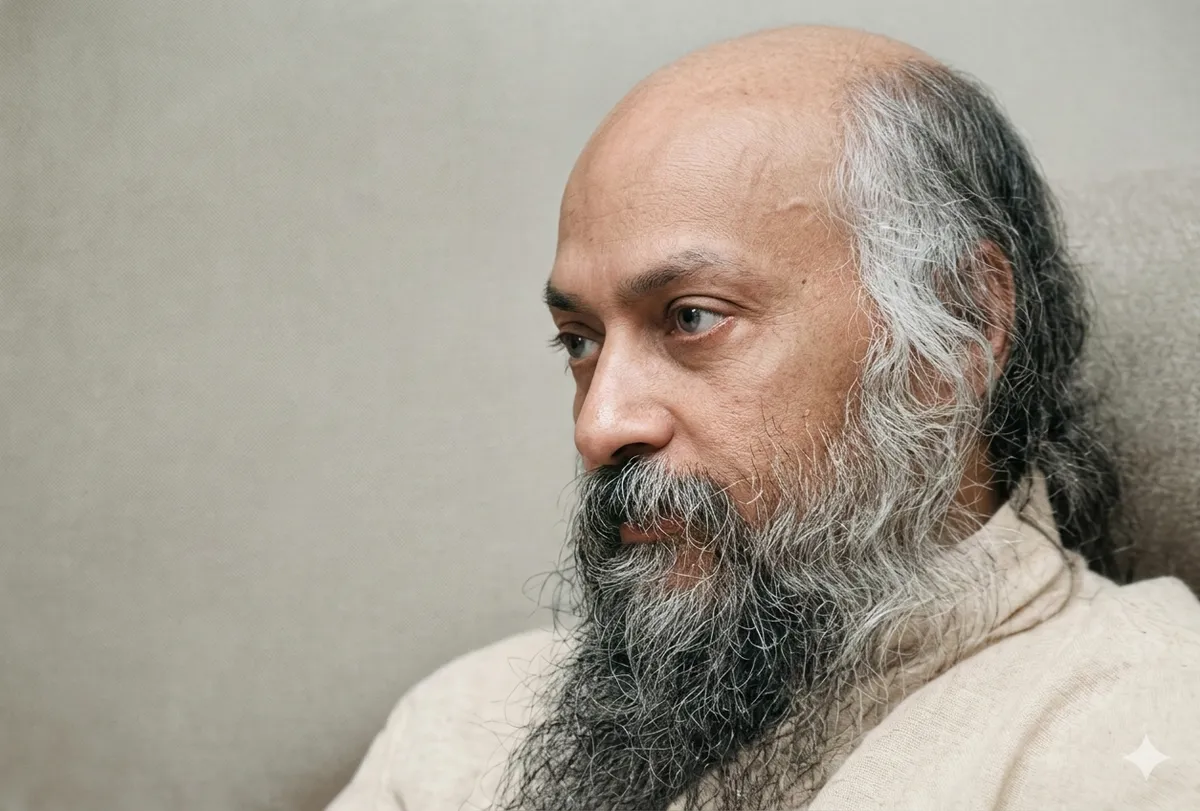
According to Osho, parental threats like 'we will die' are emotional blackmail; in history no parent has actually killed themselves over a child taking sannyas. Don’t panic or submit—once you yield, you’ll be controlled forever. If your calling is real, no one can stop you; if you hesitate, admit you’re stopping yourself. Take responsibility and choose.
If you truly want sannyas, do it—parents’ “we’ll die” threats won’t come true; the choice is yours, not theirs.
From the Discourses
Passages where Osho speaks to this question — each links to the complete discourse.
Osho, I have heard that a seeker has to pass through four stages of sadhana: tariqat, shari’at, marifat, and haqiqat. The last is haqiqat, where the seeker meets his beloved and comes face to face with Truth. Osho, please explain the first three states.
These words are from the Sufis—very significant, and very straightforward. The first is tariqat. Tariqat means: the way, the method, the discipline, the means, the yoga. Tariqat means: something has to be done; only then will you attain—without doing, you will not receive. One has to walk a path; find the way; make a footpath. One has to bring some discipline into life, give it an order. Tariqat means learning the way to become worthy of it. When you go to have an audience with an emperor, you learn the etiquette of his court. You don’t just walk in. If you do, you will not be accepted. You learn how to sit there, how to stand there, how to bow there. If you are going to meet an emperor, you must taste something of the flavor of the emperor’s way of life. If you are going to meet the Divine,…
Osho, I want to take sannyas, but can one take sannyas without taking permission from the family?
Sannyas—whose permission will you take? Are those from whom you’ll ask permission themselves sannyasins? If they could bless your sannyas with such joy, they would have become sannyasins already. Would they have waited until now? How will you ask their leave? And how will it be granted? Even for sannyas you will seek permission from the household? Then will you ever do anything that is truly yours? Or will you go on forever obeying others’ orders? Let there be at least something in life that is yours—utterly yours. Do not reduce sannyas to someone else’s command. Let it remain a movement of your own heart. If the wave has arisen, dive in. And don’t be afraid. Families come around. Even if you die, they reconcile. Then what is sannyas in comparison? Do you think if you die, they will weep for you forever? And my sannyas does not snatch you…
Question: Third question: Osho, Shri Kammu Baba was a Sufi fakir who passed away two years ago. He lived in Goregaon, Bombay, where his shrine now is. My inner being feels he was an enlightened saint who had realized the truth—a vast ocean of kindness and compassion. People from every religion and walk of life went to him and found peace. He was a truly masti-filled fakir. After much pleading he gave me a Sufi kalam. A year and a quarter later he died. I could not ask him anything, because for the last year of his life he had become childlike. He never gave any definite method or rule about how to read the kalam. He said, whenever you wish, wherever you are, you can read the kalam I have given you.
Osho, I want to take sannyas, but friends and loved ones are becoming obstacles! What should I do?
They would not be friends, nor loved ones. Those who do not grant you the freedom to be yourself can be neither friends nor loved ones. The very meaning of friendship is that we care for the other so much that whatever they wish to become, we will give them freedom. And the meaning of a loved one is: whichever direction you wish to go, wherever your joy lies, our blessings will be with you—even if we do not agree in our opinions. Love liberates. And that which does not liberate is not love. I am not telling you to take sannyas. I would only say this—whatever your inner feeling is, move toward it with courage. If it is for sannyas, then toward sannyas; if it is for the world, then toward the world. Do not make another the decider. Do not place the decision in someone else’s hands. Otherwise…
And their misery is just stupid, because you are not doing anything harmful to anybody. Just by becoming a sannyasin you have not harmed anybody. They must be having some very orthodox ideas. They don't know what religion is, they don't know what sannyas is. They must just be thinking that they have lost their hold on you. But that possessiveness is ugly, and they are being hurt by their possessiveness, not by your sannyas. That has to be understood: how can your sannyas hurt them? It is their possessiveness; they want to dominate you, they want to remain your boss. They would like you to do only that which they want you to do. But that is not right; that is destroying you. That is not love!