
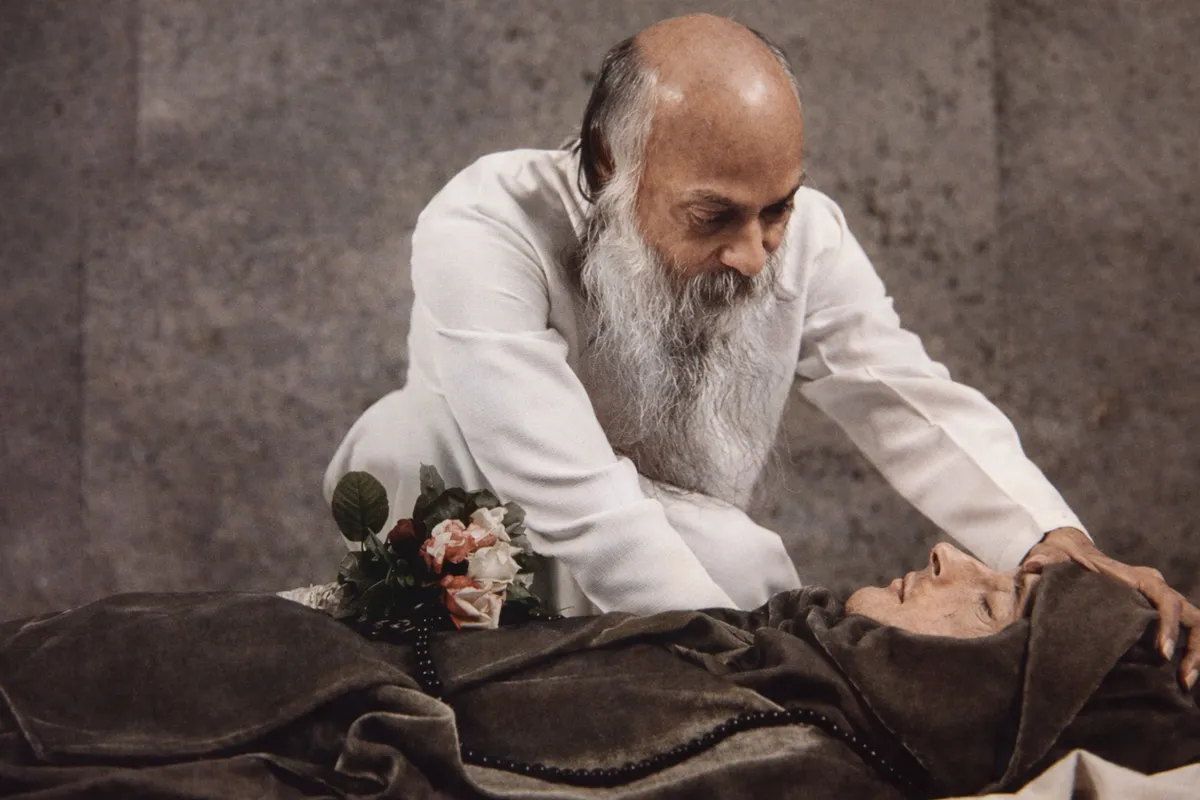
If a devil appears in meditation, it’s your own mind showing you something inside you—notice it, find it in yourself, and let it go.
From the Discourses
Passages where Osho speaks to this question — each links to the complete discourse.
Another friend has asked: Osho, what is the relationship between the method of meditation and jati-smaran (recollection of past lives)?
But the one who becomes skilled in this—who can fully awaken any day’s memory up to the age of five—will find that the memories begin to awaken completely. And you should test it. As today passes, note down some events and lock them up. After two years, try to recall today. Most of it will have been forgotten. Then remember—and after remembering, break the lock and compare whether what you recalled matches what you had written. You will be amazed—astonished—that besides what you wrote, many more details have come back which you did not even note at the time. They will all be there in memory. Buddha called this alaya-vijnana. There is a corner of the human mind he called the storehouse of consciousness. Like a junk room in the house where we keep all the odds and ends, there is a storehouse that collects memories—where everything from birth after…
एक और मित्र ने पूछा है कि ओशो, ध्यान की विधि और जाति-स्मरण में क्या संबंध है?
लेकिन जो व्यक्ति इसमें समर्थ हो जाएगा, पांच वर्ष की उम्र तक की किसी भी दिन की स्मृति को पूरा जगाने लगेगा...और वह पूरी जगने लगती है। और फिर उसको इस तरह जांच कर लेनी चाहिए। जैसे आज का दिन गुजर रहा है, तो आज के दिन की कुछ बातें नोट करके ताले में बंद कर दें। दो साल बाद आज के दिन को याद करें। वह सब खो जाएगा आज का दिन। और तब स्मरण करें, और स्मरण करके फिर ताला तोड़ें, और फिर मेल करें कि वह बात मेल खा गई कि नहीं। और आप हैरान होंगे--आप हैरान होंगे कि जितनी आपने लिखी थीं, उससे बहुत ज्यादा बातें और भी याद आई हैं जो कि आप उस दिन भी नोट नहीं कर पाए थे। वे तो सब बातें याद आ ही जाएंगी। इसको बुद्ध ने नाम दिया है, आलय-विज्ञान। मनुष्य के मन का एक कोना है, जिसको उन्होंने आलय-विज्ञान कहा है। आलय-विज्ञान का मतलब होता है, स्टोर हाउस आफ कांशसनेस। जैसे घर में एक कबाड़खाना होता है, जहां हम सब बेकार हो गई चीजों को डालते चले जाते हैं। …
Osho, I meditated with my mala for thirty minutes. I kept looking at your picture. After a while the eyes in your picture turned toward me and I said: Osho, how can I participate in group meditations when I don’t have any money? To this you replied: Don’t worry, I will provide your money. Then I asked: This isn’t an illusion, is it? And you said: Yes, it is an illusion.
And the proof is that what you spoke came from the right place. Because you asked, “This isn’t an illusion, is it?” and “I” replied: “Yes, it is an illusion.” If I had said, “Yes, it is true, not an illusion,” then there would be the fear that your desire had spoken, your imagination had spoken, that you had made it say exactly what you wanted to hear. That would have been illusion. This may sound very paradoxical. I say, if I had said, “Yes, it is true,” it would have been illusion. And because I said, “Yes, it is an illusion,” therefore it is true. Try to understand. Your dreams too are not sheer illusion. In your dreams it is you who speak; that’s why psychologists probe dreams. They don’t rely on your waking state; they ask, “What do you dream?” Because in waking you have become so dishonest…
तीसरा प्रश्न: ओशो, मैंने अपनी माला पर तीस मिनट ध्यान किया। मैंने आपके चित्र को देखा किया। कुछ देर में आपकी आंखें मेरी ओर उन्मुख हुईं और मैंने कहा: ओशो, समूह साधना मैं कैसे करूं जब कि मेरे पास रुपया ही नहीं है? इस पर आपने उत्तर में कहा: चिंता मत करो, तुम्हारा रुपया मैं दे दूंगा। तब मैंने पूछा: यह भ्रम तो नहीं है? और आपने कहा: हां, भ्रम ही है।
और प्रमाण है कि तुम जो बोले ठीक जगह से बोले हो। क्योंकि तुमने पूछा कि ‘यह भ्रम तो नहीं है? और आपने कहा: हां, भ्रम ही है।’ अगर मैं कह देता कि हां, सच है, भ्रम नहीं, तो डर था कि तुम्हारी चाह बोली; तो डर था कि तुम्हारी कल्पना बोली; तो डर था कि जैसा तुम चाहते थे वैसा तुमने बोल लिया। वह भ्रम होता। यह तुम्हें बड़ा विरोधाभासी लगेगा। मैं कहता हूं, अगर मैंने कहा होता कि हां, यह सच है, तो भ्रम होता। और चूंकि मैंने कहा कि हां, यह भ्रम ही है; इसलिए सच है। समझने की कोशिश करना। तुम्हारे सपने भी एकदम भ्रम नहीं होते हैं। तुम्हारे सपने में भी तुम्हीं बोलते हो। इसलिए तो मनोवैज्ञानिक सपनों की बड़ी छानबीन करता है। वह तुम्हारे जागरण की चिंता नहीं करता; वह तुमसे पूछता है, सपने क्या देख रहे हो तुम? क्योंकि जागरण में तुम इतने बेईमान हो गये हो, तुम्हारे जागरण का कोई भरोसा ही नहीं है। तुम दूसरे को ही धोखा देते हो, ऐसा थोड़े ही है; धोखा वहां थोड़े ही रुक गया है; धोखा तुम अपने को दे रहे हो। …
Another friend has asked: Osho, what is the relationship between the method of meditation and jati-smaran (recollection of past lives)?
But the one who becomes skilled in this—who can fully awaken any day’s memory up to the age of five—will find that the memories begin to awaken completely. And you should test it. As today passes, note down some events and lock them up. After two years, try to recall today. Most of it will have been forgotten. Then remember—and after remembering, break the lock and compare whether what you recalled matches what you had written. You will be amazed—astonished—that besides what you wrote, many more details have come back which you did not even note at the time. They will all be there in memory. Buddha called this alaya-vijnana. There is a corner of the human mind he called the storehouse of consciousness. Like a junk room in the house where we keep all the odds and ends, there is a storehouse that collects memories—where everything from birth after…
एक और मित्र ने पूछा है कि ओशो, ध्यान की विधि और जाति-स्मरण में क्या संबंध है?
लेकिन जो व्यक्ति इसमें समर्थ हो जाएगा, पांच वर्ष की उम्र तक की किसी भी दिन की स्मृति को पूरा जगाने लगेगा...और वह पूरी जगने लगती है। और फिर उसको इस तरह जांच कर लेनी चाहिए। जैसे आज का दिन गुजर रहा है, तो आज के दिन की कुछ बातें नोट करके ताले में बंद कर दें। दो साल बाद आज के दिन को याद करें। वह सब खो जाएगा आज का दिन। और तब स्मरण करें, और स्मरण करके फिर ताला तोड़ें, और फिर मेल करें कि वह बात मेल खा गई कि नहीं। और आप हैरान होंगे--आप हैरान होंगे कि जितनी आपने लिखी थीं, उससे बहुत ज्यादा बातें और भी याद आई हैं जो कि आप उस दिन भी नोट नहीं कर पाए थे। वे तो सब बातें याद आ ही जाएंगी। इसको बुद्ध ने नाम दिया है, आलय-विज्ञान। मनुष्य के मन का एक कोना है, जिसको उन्होंने आलय-विज्ञान कहा है। आलय-विज्ञान का मतलब होता है, स्टोर हाउस आफ कांशसनेस। जैसे घर में एक कबाड़खाना होता है, जहां हम सब बेकार हो गई चीजों को डालते चले जाते हैं। …
By meditating upon the lord parameshwar, consorted by mother uma, the highest lord, the all-powerful, the three-eyed, and the ever-silent, the meditator reaches him who is the source of all manifestation, the witness of all, and who is beyond all ignorance.
There is another school which is known as the gradual enlightenment school. There are many many followers of it, because the moment one says "gradual," we are at ease -- now we can do something. And in steps, gradually, in degrees we can proceed. In a sudden phenomenon there is no time, so you cannot postpone -- you cannot say tomorrow. If the phenomenon can happen suddenly, this very moment, then your mind cannot excuse itself; there is no basis to postpone it. With a gradual school you can say, "Okay, we will try in this life, and if not in this life, then in another life. Gradually we will reach the peak. One step, second step -- by steps we will reach to the ultimate." Then you have to divide. But this UPANISHAD belongs to neither. This is neither sudden nor gradual. This UPANISHAD takes a middle way. It…
Just wait for a hundred years more and the scientist will speak exactly the same language which we find in the Upanishads. They will have to speak the very language that Buddha spoke; they will have to speak the same language that St. Augustine and St. Francis spoke. They will have to speak it, because as the experience of realizing truth becomes deeper, the experience of asserting oneself will become less and less. As the truth becomes manifest the ego dissolves, and some day it appears that whatever was known was because of God's grace. One comes to the understanding that: "It has descended upon me; I as such am not in it. And whatever I did not know, I am responsible because I was so incapable that I could not have known it." So the presence of "I" is necessary only if un-truth is to be realized.