
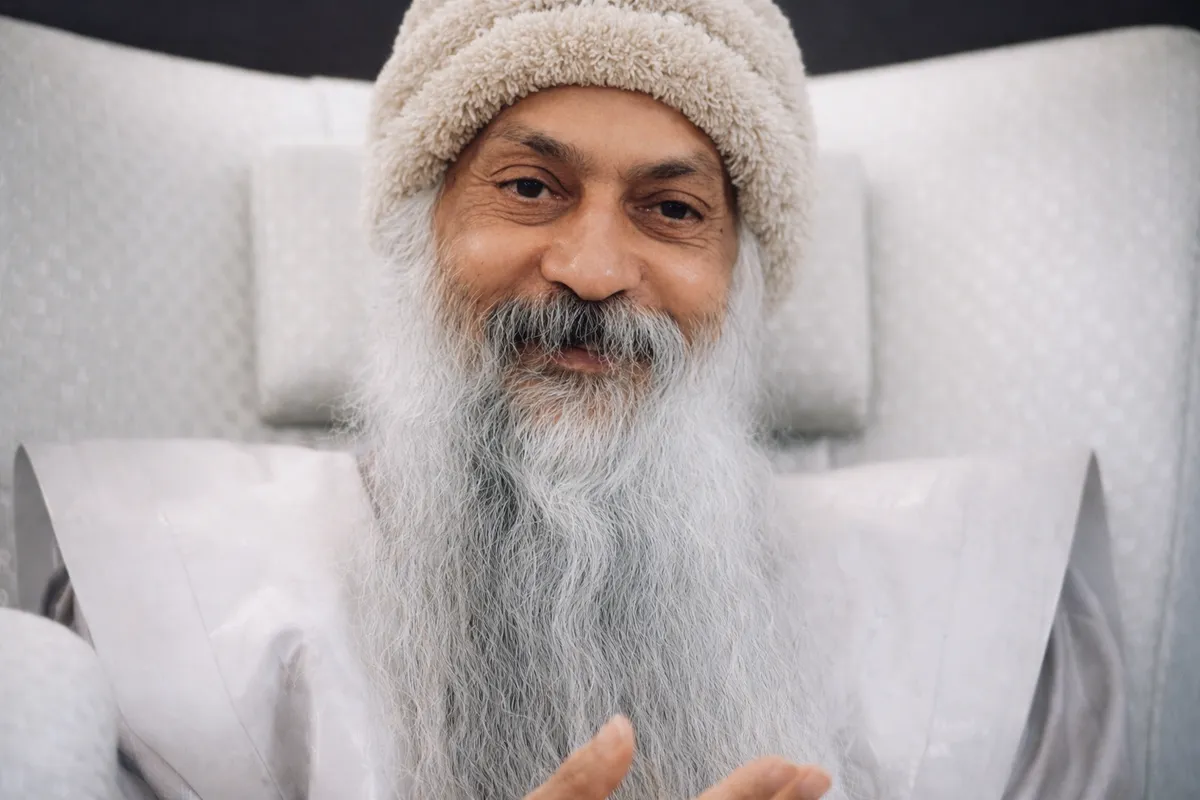
Your body already knows what to eat, when to move, and when to rest—so hush the overthinking and let it lead.
From the Discourses
Passages where Osho speaks to this question — each links to the complete discourse.
What do needs mean for the body?
The body knows what it needs. If moving the hand will help, it moves the hand. It knows where its tensions and complexes are; it does its own work. You don’t know—you’re doing a headstand. A person whose body has no need for a headstand may do one—and it can cause harm. The body has its own wisdom; man has lost the body’s wisdom. Animals haven’t. Leave a buffalo in a field where twenty-five kinds of grasses grow. It will pick what it needs and leave the rest. It isn’t “choosing” the way you think; it doesn’t know botany. It hasn’t read any book about which species to eat and which not. It lives by the body; the body itself knows. It selects what it needs and leaves the rest. A dog—if there’s heaviness in its stomach—will vomit at once. It doesn’t know yogic mudras, it doesn’t take an emetic.…
प्रश्न: शरीर को जरूरत से क्या मतलब है?
शरीर को पता है कि उसके लिए क्या जरूरत है। उसको हाथ हिलाने से फायदा होने वाला है तो वह हाथ हिला रहा है। उसके तनाव के कहां कांपलेक्स हैं? जो वह अपना काम करता है। आपको तो कुछ पता नहीं है, आप शीर्षासन कर रहे हैं। अब एक आदमी ऐसा शीर्षासन कर सकता है जिसके शरीर को शीर्षासन की कोई जरूरत नहीं है। नुकसान पहुंच सकता है। बॉॅडी की अपनी विज़डम है, आदमी ने बॉडी की व़िजडम भी खो दी है। जानवर ने नहीं खोई है। यहां आप एक भैंस को छोड़ दें, यहां पच्चीस तरह का घास लगाया हुआ है। वह अपने घास को चुनकर खा लेगी। बाकी सारा घास छोड़ देगी। चुनाव नहीं कर रही है वह, उसको कुछ पता भी ही नहीं है। उसने कोई घास के संबंध में किताब भी नहीं पढ़ी है कि किस स्पीसी का घास खाना, कि नहीं खाना। बस वह अपने उसी को ही खाती है, वह बॉडी पर ही जीती है, बॉडी उसकी खुद जानती है। …
A collection of sheaths composed of nourishing food, in the form of the physical body is called the annamaya kosh, or the food body. The fourteen kinds of winds, like the vital energy, et cetera, circulating through the food body, are called the pranayama kosh, or the vital body.
This physical layer is the first, is the primary layer -- the outermost. If you can be aware that you are unnecessarily the slave and need not be, then change your body habits consciously. By and by, change. Change the seat of power; be more in control. And give to the body all that is needed by it, but never fulfill any addictions. It will be painful in the beginning, but it is a bliss when you have reached beyond the body and have become the master. And when you are on the throne, it is one of the deepest blisses possible. Matter and energy are not two things. Matter is just energy, energy is just matter -- Two states of one thing. The second body is the vital. The vital body is the energy body, the electricity body, or whatsoever name we like to use for it -- the…
You said that needs are to do with the body and desires are to do with the mind. Which of these two brought us to you?
Before I answer this, one thing more has to be understood; then it will be possible for you to understand the answer to this question. You are not only body and mind: you are something else also -- the soul, the self -- the atman. Body has needs, the atman also has needs; just between the two is the mind which has desires. Body has needs -- hunger to be satisfied, thirst. A shelter is needed, food is needed, water is needed. Body has needs; the mind has desires. Nothing is needed, but mind creates false needs. A desire is a false need. If you don't attend to it, you feel frustrated, a failure. If you attend to it, nothing is attained because in the first place, it was never a need: it never existed as a need. You can fulfill a need; you cannot fulfill a desire. Desire is…
Right now I can say something to you about how to distinguish but that won't be right because whatsoever I say will become an intellectual understanding to you. And there is every danger that your intellectual understanding will make you repressive. The intellect is very repressive, dominating, dictatorial. That's how it has disconnected you from your own body. So first put that intellect aside -- that's what I am trying to say. Just put it aside. If it is saying it is lazy, it is lazy -- okay. But if the body is saying something, you are going to listen to the body and not to the intellect. There is one way to make the distinction -- through the intellect; that will always be repressive. There is another way to make the distinction -- through the body; that will never be repressive. The body is more wise.
You have said that you eat when the body is hungry, and you sleep when the body needs rest, but I have heard that you exactly follow the clock for your bath, food, sleep, etc. Please explain.
This has been a long experimentation. I have eaten almost all sorts of things, and then by and by I eliminated all that was not suiting me. Now whatsoever suits, I eat only that. Vivek is in trouble, because she has to cook almost the same thing every day and she cannot believe how I go on eating and go on enjoying it. Eating is okay -- but enjoying it? If it suits, you can enjoy the same thing again and again. It is not a repetition for you. If it doesn't suit, then there is trouble. It happened: One Thursday night Mulla Nasrudin came home to supper. His wife served him baked beans. He threw his plate of beans against the wall and shouted, 'I hate baked beans!' 'Mulla, I can't figure you out,' his wife said. 'Monday night you liked baked beans, Tuesday night you liked baked beans,…