
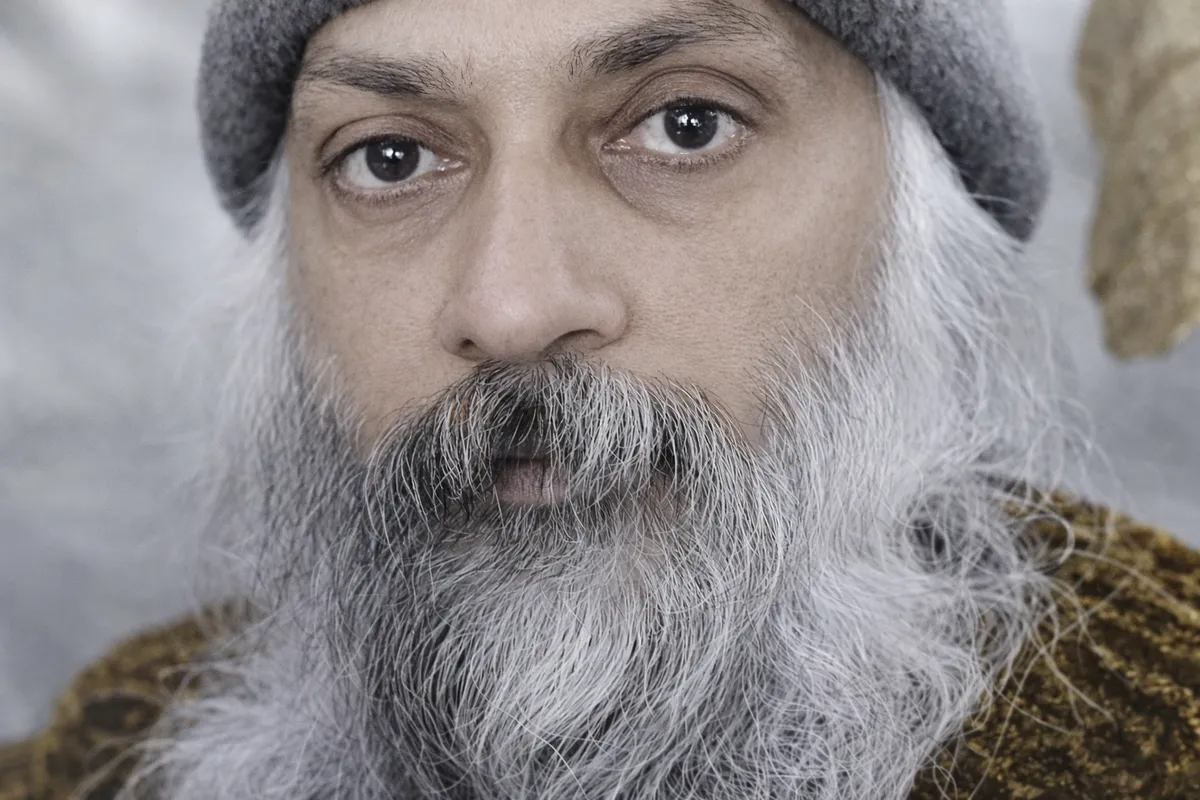
He says he’s so blissfully absorbed that clocks vanish, so he may arrive late—and he jokes he’s just “drunk” on joy.
From the Discourses
Passages where Osho speaks to this question — each links to the complete discourse.
Maneesha has asked: beloved Osho, is it true to say that timing is everything?
No, it is not true to say that timing is everything, because once you start thinking that timing is everything, you will stop seeking, searching. You will simply wait for the spring to come, you will become absolutely unaware of the fact that for enlightenment no season is right or wrong, no climate is right or wrong. Every moment is right, you just have to catch hold of your own being. But it has been said even by Gautam Buddha that timing is needed. I want you to know that Gautam Buddha is simply trying to console those who cannot gather courage in this moment. He does not want to discourage them by saying, "You will never become enlightened." He is saying, "You will become enlightened, just wait for the time, for the ripening, for the cause." But I say unto you, in spite of Gautam Buddha, that no timing…
Please Osho, what is time?
TIME has two meanings. One is chronological time, the clock's time. I cannot say much about it. You have to ask a physicist; only he can say something about it. That is not my dimension of work. If you ask the physicists, Albert Einstein and others, they will say time is the fourth dimension of space. But that does not make much sense, the mystery remains. The mystery remains as mysterious as it was before Albert Einstein. Saint Augustine is reported to have said, "I know what time is if nobody asks me; if somebody asks me then I don't know." Time is a mysterious quality. Everybody lives in it, everybody feels it, everybody knows it, and yet it is inexplicable. The physicist has come to a certain understanding -- that it is the fourth dimension of space -- but that too does not demystify it. In fact it becomes…
Osho, if we remain aware within the present—if we don’t think of the next moment and attend only to this one—could it not happen that, after a moment, the next contact that comes will again pass us by?
But where is it now? It isn’t here yet, is it? The moment this moment passes, that moment will become the present. Then you can make full contact. You can only make contact when it... Whenever it comes, it will come as the present; there is no way for it to sneak past. It has to pass right in front of your house; there is no back alley from which a future moment can slip by. Every future moment has to become the present. And if you are aware in the present, you need not worry. Now no moment of time can pass you by without asking. Yes, the reverse can happen: if you are anxious about the future, the present moment can pass by. You won’t even notice. It will have to come into your hands—and you be aware. Hence someone once asked... There was a Sufi fakir, Bayazid.…
प्रश्न: ओशो, यदि हम इस वर्तमान के अंदर जागरूक रहें...तो अगले क्षण का हमलोग विचार न करें, इसी क्षण का विचार करें...तो ऐसा नहीं हो सकता कि एक क्षण के बाद अगला जो कुछ कांटेक्ट होगा वह फिर आगे निकल जाएगा?
तो अभी है कहां? अभी तो है ही नहीं न। और यह क्षण गुजरा कि वह क्षण वर्तमान बन जाएगा। तब तुम कांटेक्ट कर लेना पूरा। कांटेक्ट तो तभी करोगे न जब वह...। वह तो जब भी आएगा तब वर्तमान होकर आएगा, और तो कोई उपाय नहीं है बच कर निकल जाने का उसके। यानी आपके घर के सामने ही से निकलेगा, और कोई रास्ता ही नहीं है पीछे का जहां से कि भविष्य का क्षण निकल जाए। भविष्य के प्रत्येक क्षण को वर्तमान होना ही पड़ेगा। और आप वर्तमान में जागरूक हो, अब आपको चिंता ही नहीं है। समय का कोई क्षण आपसे बिना पूछे नहीं निकल सकता अब। हां, इससे उलटा हो सकता है कि आप भविष्य के प्रति चिंतित हो तो वर्तमान का क्षण निकल सकता है। आपको पता नहीं चलेगा। आपके हाथ में आना ही पड़ेगा उसे। और आप जागरूक हो। इसलिए किसी ने पूछा एक...
Osho, yesterday a Sardarji came to see the ashram. He said, “Please let us have Osho-ji’s darshan right now.” We replied, “Your darshan will be in the morning discourse.” But he wouldn’t agree. He said, “Give us darshan right now. We’ve come all the way from Amritsar. Our train is about to leave.” He just wouldn’t agree. Then I happened to look at the clock and saw it was twelve. Is there some special mystery about twelve o’clock?
Saint Maharaj! There is indeed a mystery. The saint too is Punjabi. Even if not a complete Sardar, he is ninety-nine percent Sardar. There isn’t much difference between Punjabi and Sardar—about one percent. Just grow the beard and moustache a bit, let the hair grow, the five Ks... Not even any particularly special Ks—comb, hair, bracelet... once those five “K”s are in place, any Punjabi is a Sardar. A Sardar isn’t some new caste or new community—he’s Punjabi, caught up in the five Ks. He has drawn a circle of the five Ks and is standing inside it. And twelve o’clock, Saint Maharaj, does have significance. Twelve o’clock means nonduality—when the two “ones” become one. And where duality has gone, the intellect goes. What need of intellect then! Intellect is needed in this world of twoness. Where there is no duality, what use is intellect? Twelve o’clock is a very…
चौथा प्रश्न: ओशो, कल एक सरदार जी आश्रम देखने आए। उन्होंने कहा: ‘ओशो जी दे दर्शन सानूं अभी करा दो।’ हमने उत्तर दिया कि आपके दर्शन सुबह प्रवचन में ही होंगे। तो वे मानें ही न। वे बोले: ‘दर्शन तो सानूं अभी ही करा दो। असी ऐनी दूर अमृतसर तो आए हां। साडी गड्डी अभी छूटण वाली है।’ वे मानें ही न। फिर मैंने अचानक घड़ी देखी, तो देखा बारह बजे हैं। क्या बारह बजे का कोई विशेष रहस्य है?
संत भी पंजाबी हैं। न हुए पूरे सरदार, तो भी निन्यानबे प्रतिशत तो सरदार हैं ही। पंजाबी और सरदार में कोई ज्यादा फर्क नहीं, एक प्रतिशत का फर्क होता है। बस जरा दाढ़ी-मूंछ बढ़ा ली, बाल बढ़ा लिए, पांच ककार...। कोई खास ककार भी नहीं--कंघा, केश, कड़ा...इस तरह के पांच ‘क’ पूरे हो गए कि कोई भी पंजाबी सरदार है। सरदार कोई नई जाति थोड़े ही है, कोई नई कौम थोड़े ही है। पंजाबी ही हैं, जो पांच ककारों में फंस गए हैं। पांच क का घेरा कर लिया खड़ा। और बारह बजे का तो संत महाराज, महत्व है ही। बारह बजे का मतलब होता है: अद्वैत। जहां दो ‘एक’ हो जाते हैं। और जहां द्वैत गया, वहां बुद्धि गई। फिर कहां बुद्धि की जरूरत! जब द्वैत ही न रहा तो बुद्धि की जरूरत भी न रही। बुद्धि की जरूरत तो यह दुई की दुनिया में है। जहां द्वैत नहीं, वहां बुद्धि का क्या प्रयोजन?
Performing samyama on the present moment, the moment gone, and the moment to come brings knowledge born of the awareness of the ultimate reality. From this comes the ability to distinguish between similar objects which cannot be identified by class, character, or place.
THE HIGHEST KNOWLEDGE BORN OF THE AWARENESS OF REALITY IS TRANSCENDENT, INCLUDES THE COGNITION OF ALL OBJECTS SIMULTANEOUSLY, PERTAINS TO ALL OBJECTS AND PROCESSES WHATSOEVER -- IN THE PAST, THE PRESENT, AND THE FUTURE AND TRANSCENDS THE WORLD PROCESS. ... The chronological time is fixed, it has to be fixed, because it is a social necessity; but the psychological time is fluid, it is not so solid, because each person has his own psychology, his Own mind. Have you watched? When you are happy, time goes fast. Your clock will not go fast; the clock has nothing to do with you. It moves at its own pace -- in sixty seconds it moves one minute, in sixty minutes it moves one hour. It will continue; whether you are happy or unhappy doesn't matter. If you are unhappy your mind will be in a different time; if you are happy your mind