
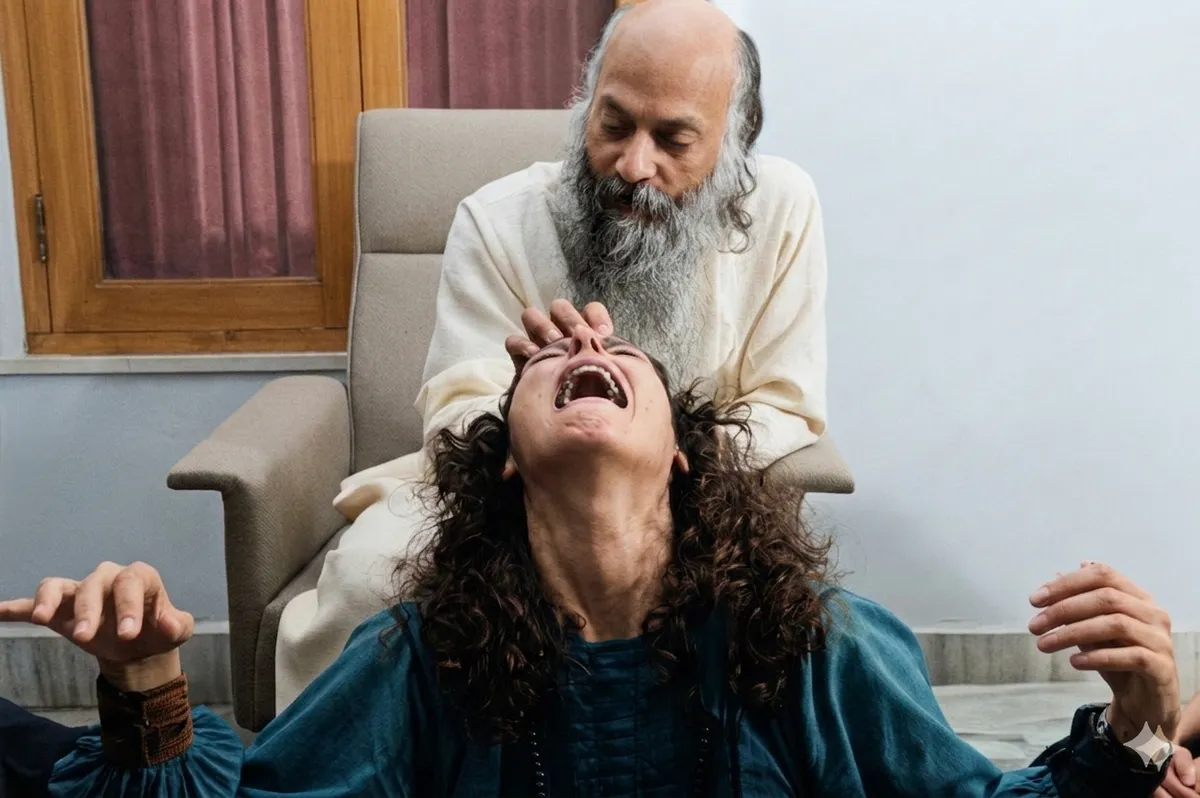
Yes—real spirituality makes you a playful, trusting ‘fool’ who stops overthinking and starts living, which is true wisdom.
From the Discourses
Passages where Osho speaks to this question — each links to the complete discourse.
Osho, is it possible to become a fool by being here for a longer period? I sometimes feel a lack of logic in my mind.
Vidya, it is not only possible, it is certain. You will become a fool. But foolishness has its own wisdom. You will become a fool and wise together. The so-called wise who are never foolish are not really wise. Because wisdom is paradoxical. Wisdom is not only serious, it is playful too. And foolishness is playfulness. Wisdom is not only intellectual knowledge, it is existential celebration. Wisdom is not cerebral -- it is not of the head, it is of the total being. And the total being has emotions, sentiments, feelings. And the total being is far bigger than the poor small intellect. And whatsoever goes beyond intellect, the intellect says is foolishness: Beware -- don't move, don't take another step, otherwise you will become a fool. So people remain confined in the intellect. They remain knowledgeable but they never become wise. A wise man is playful. He can afford…
While practicing zazen, just sitting, I discovered that I had become the greatest fool on earth. But suddenly I remembered one proverb: when ignorance is bliss, it is folly to be wise. Though this stupidity has made me a fool, I have never been so full as I am now. I have now fallen in love with this zazen stupidity. I invoke your blessings so that I remain a fool till eternity.
I have heard about one man who made a will when he died. And in the will he said, 'Write on my tomb: Born such-and-such year, died when thirty, buried when seventy.' Almost always it happens that people die near about thirty, then they are buried at seventy. That's another thing: burial is one thing, dying is another thing. When society comes to know that you are dead that's another thing. I have heard about a priest -- a Catholic priest of course -- who died, and for three days he could not understand what had happened. Then he came to his church and tried to communicate with his successor, and said, 'Be aware. I died, but for three days I did not think that I was dead because I was more dead while I was alive. I was feeling more alive so I did not think that I was…
I am no politician, no diplomat, and I feel like a clown. I want to dance on the desk and sing on the phone "hello-lujah " rather than "hello." may I sign up for the ashram fool?
The question is from Vani. Vani, it is too early. To be really a fool one needs to be very wise. To be a fool one needs to be TRULY wise. That's why all wise people have something of foolishness in them. Jesus was known as a fool, so was Buddha, so was Francis of Assisi. They were known as fools. There is a certain quality of foolishness in a real wise man. Why? Because a real wise man contains the opposite. He is both together. He is more comprehensive. A wise man who has no foolishness in him will be dry, dead. His juice will not be flowing. He will not be green. He will not be able to laugh; he will be serious; he will be a long face. A wise man who is just wise and in whose being the fool has not been integrated will be…
Who can become a better disciple: a learned fool or an unlearned fool? And for the intelligentsia please explain your dictum: blessed are the fools.
So the first type of fool necessarily, out of necessity, has to become the second type of fool. But from the second the third may happen or may not happen, there is no necessity. The third is possible only when the second type of foolishness has become a great burden -- one has carried knowledge too much, to the extreme; one has become lust the head and has lost all sensitivity, all awareness. all living; one has become just theories and scriptures and dogmas and words and words whirling around in the mind. One day, if the person is aware, he has to drop all that. Then he becomes the third type of fool -- the blessed fool. Then he attains to a second childhood; again he is a child. Remember Jesus saying, 'In my kingdom of God only those who are like small children will be welcomed.' But remember,…
There is an old tradition that links wisdom and foolishness. Is a wise man simple-minded? Is the simplification that comes with age wisdom or fatigue? What is the difference between a wise man and a fool?
THE TRADITION IS RIGHT. There is a synthesis which goes beyond foolishness, which goes higher than wisdom itself -- a synthesis in which wisdom and foolishness disappear into one unity. Foolishness and wisdom are dualities, like all other dualities: man and woman, day and night, summer and winter, life and death. All dualities have to be transcended. Unless dualities are transcended you never come to know the one, the real, the universal. In that sense a wise man is also a fool -- because in that transcendence both are included. But he is not a fool in the ordinary sense -- he is not even wise in the ordinary sense. His wisdom is quite a separate reality, so is his foolishness. He is wise because he knows, and he is a fool because he knows that the mystery of life is such that it cannot be known. He is wise…