
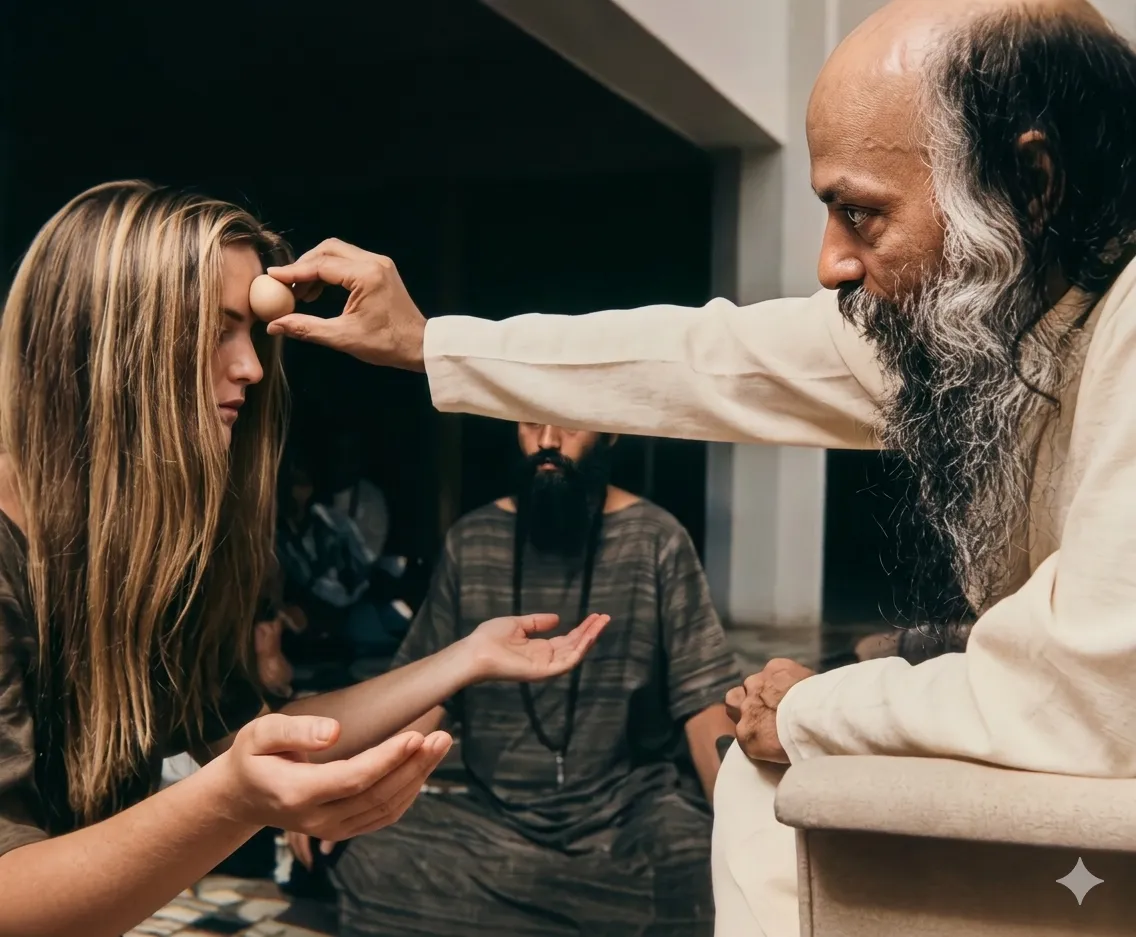
Don’t worry if it’s literally true; using the idea that you’re not the doer helps you relax, stop questioning, and become quiet inside.
From the Discourses
Passages where Osho speaks to this question — each links to the complete discourse.
Osho, you said, “You are free—now, here, in this very moment”; but how do I get free of this “I”?
This is the marvelous principle of destiny, of fate: everything is happening by itself. The wrong people took it in the wrong sense—that was their mistake. Properly understood, fate means only this: if you understand the principle of destiny rightly, you become a witness, and there is nothing to do. But people did not become witnesses through fate; they became inert, indolent. There is a difference between a non-doer (akarta) and an idler (akarmanya). The idler is lazy, sluggish, dead. The non-doer is overflowing with energy—he simply does not say, “I am doing.” The Divine is doing. I am only seeing. This play is happening; I am watching. Man is very dishonest; he uses even the most beautiful truths in ugly ways. Fate is a very beautiful truth. It means only this: everything is happening; nothing is happening by your doing. All is ordained. What has to be, will be.…
तीसरा प्रश्न: ओशो, आपने कहा कि ‘तू अभी, यहीं, इसी क्षण मुक्त है’; लेकिन मैं इस ‘मैं’ से कैसे मुक्त होऊं?
यही नियति का अपूर्व सिद्धांत है, भाग्य का अपूर्व सिद्धांत है कि सब अपने से हो रहा है। गलत लोगों ने उसके गलत अर्थ ले लिये, गलत लोगों की भूल। अन्यथा भाग्य का इतना ही अर्थ है कि भाग्य के सिद्धांत को अगर तुम ठीक से समझ लो, तो तुम साक्षी रह जाओगे, और कुछ करने को नहीं है फिर। लेकिन भाग्य से लोग साक्षी तो न बने, अकर्मण्य बन गये; अकर्ता तो न बने, अकर्मण्य बन गये। अकर्ता और अकर्मण्य में भेद है। अकर्मण्य तो काहिल है, सुस्त है, मुर्दा है। अकर्ता ऊर्जा से भरा है--सिर्फ इतना नहीं कहता कि मैं कर रहा हूं। परमात्मा कर रहा है! मैं तो सिर्फ देख रहा हूं। यह लीला हो रही है, मैं देख रहा हूं। आदमी बहुत बेईमान है; सुंदरतम सत्यों का भी बड़ा कुरूपतम उपयोग करता है। भाग्य बड़ा सुंदर सत्य है। उसका केवल इतना ही अर्थ है कि सब हो रहा है; तुम्हारे किये कुछ नहीं हो रहा है। सब नियत है। जो होना है, होगा। जो होना है, होता है। जो हुआ है, होना था। …
A friend has asked: Osho, it is said that not even a leaf moves without God’s will. If that is true, then our whole life runs according to His will. Then the good and bad thoughts that arise in us, the good and bad actions that happen—are they also according to His will?! Then what is the purpose of sadhana? What meaning is there in changing oneself?
If this point truly lands, then sadhana has no further purpose. Sadhana has begun. If only this much occurs to you—that whatever is being done, God is doing it—then my sense of doership is finished. All of sadhana is only this: that my ego dissolve. Then He is doing the good, He is doing the bad. Then there is no question of good and bad at all. He is doing it—both are His doing. He gives suffering; He gives joy. Birth is His, death is His. Bondage His, liberation His. Then there is no question of me. There is no need for me to come in between. Then there is no need for sadhana—because sadhana has happened; it has begun. This very understanding becomes the supreme sadhana. This very insight cuts the root of life’s disease. For the whole disease is the ego, the notion that “I am doing.” This…
एक मित्र ने पूछा है कि ओशो, ऐसा कहा जाता है कि भगवान की इच्छा के बिना पत्ता भी नहीं हिलता। यदि यह बात सच है, तो हमारा सारा जीवन उनकी इच्छा के अनुसार ही चलता है। तो फिर हमें जो भले-बुरे विचार आते हैं, अच्छे-बुरे काम बनते हैं, वह भी उनकी ही इच्छा के अनुसार होता है! फिर तो साधना का भी क्या प्रयोजन है? फिर तो स्वयं को बदलने का भी क्या अर्थ है?
… अगर इतनी ही बात खयाल में आ जाए कि जो भी कर रहा है, वह भगवान कर रहा है, तो मेरा कर्तापन समाप्त हो गया। सारी साधना इतनी ही है कि मेरा अहंकार समाप्त हो जाए। फिर अच्छा भी वही कर रहा है, बुरा भी वही कर रहा है। फिर अच्छे-बुरे का कोई सवाल ही नहीं रहा। वही कर रहा है, दोनों वही कर रहा है। दुख वही दे रहा है, सुख वही दे रहा है। जन्म उसका, मृत्यु उसकी। बंधन उसका, मुक्ति उसकी। फिर मेरा कोई सवाल न रहा। मुझे बीच में आने की कोई जरूरत न रही। फिर साधना की कोई भी जरूरत नहीं है। क्योंकि साधना हो गई। शुरू हो गई। यह विचार ही परम साधना बन जाएगा। …
The past is no more and the future is never going to be, so this is the moment. You can celebrate it: you can love, you can pray, you can sing, you can dance, you can meditate, you can use it as you want. And the moment is so small that if you are not very alert it will slip out of your hands, it will be gone. So, to be, one has to be very very alert. Doing needs no alertness, it is very mechanical. But don't use the word 'wait' -- because that means the future has entered again from the back door. You follow me? If you think that you should just wait, then again you are waiting for the future. So doing or waiting are not separate things. There is nothing to wait for. The existence is as perfect this moment as it will ever be.
Osho, yesterday you said that jealousy is included in respect. I have immense respect for you, but the jealousy inherent in it keeps poisoning it, and I feel guilt and pain. Does reverence transcend this poison-laced respect?
It needs a little explaining—it's a delicate point. Whenever you respect someone, you do so because you see in that person something you do not have. You respect because you glimpse in the other something you would also like to possess. A beggar respects an emperor because he, too, longs to be an emperor. So on the one hand he respects, and inside he also envies. Because he is not yet an emperor but wants to be. You have attained what he wants to attain. He respects you as skillful, successful: “I stand far back in the line; you have gone ahead to where I should have been.” So you are powerful, clever, intelligent, strong—he respects you. But inside a fire of jealousy also burns—if he gets the chance, he would like to be in your place and push you aside. And if the beggar gets that chance, he will…
तीसरा प्रश्न: ओशो, आपने कल कहा, आदर में ईर्ष्या सम्मिलित है। आपके प्रति मुझमें अपार आदर है, लेकिन उसमें निहित ईर्ष्या उसमें जहर घोलती रहती है और मैं ग्लानि और पीड़ा का अनुभव करता हूं। क्या श्रद्धा इस विष-भरे आदर का अतिक्रमण करती है?
भिखारी सम्राट का आदर करता है, क्योंकि उसकी भी आकांक्षा है कि सम्राट हो। तो एक तरफ आदर भी करता है, भीतर ईर्ष्या भी करता है। क्योंकि सम्राट अभी वह है नहीं, सम्राट होना चाहता है। तुम हो गए हो, तुमने वह पा लिया है जो वह पाना चाहता है। इसलिए तुम्हें आदर भी करता है कि तुम कुशल हो, सफल हो, मैं पंक्ति में बहुत पीछे खड़ा हूं, तुम आगे पहुंच गए हो, तुम उस जगह पहुंच गए हो जहां मुझे होना चाहिए था। इसलिए तुम शक्तिशाली हो, होशियार हो, बुद्धिमान हो, बलशाली हो, तुम्हारा आदर करता हूं। लेकिन एक भीतर ईर्ष्या की आग भी जलती है--अगर मुझे मौका मिले तो उस जगह मैं होना चाहूंगा, तुम्हें हटाना चाहूंगा। और जब मौका मिल जाएगा इस भिखारी को तो यह सम्राट को हटा कर धक्का दे देगा, सिंहासन पर बैठ जाएगा।
Osho, this doing and undoing that you are speaking about, and you in action and inaction, and like the wheel and the axle—in these three, from within and without, it seems that non-doing would mean there is nothing on the outside. But in truth you are saying that outwardly there will be maximum action, and inwardly...
The outer action has nothing to do with it. Nothing to do with it? Yes, nothing to do with it.
ओशो, वह डूइंग और अनडूइंग, यह जो आप बात कर रहे हैं, और क्रिया और अक्रिया में आप, और जैसा व्हील और एक्सेल, इन तीनों में भीतर से और बाहर से ऐसा लगता है कि जो नॉन-डूइंग है, तो बाहर से कुछ नहीं है, लेकिन सचमुच तो आप ऐसा बोल रहे हैं कि बाहर से मैक्सिमम क्रिया होगी और भीतर से.
बाहर की क्रिया का कोई संबंध ही नहीं है। संबंध ही नहीं है? हां, संबंध ही नहीं है।