
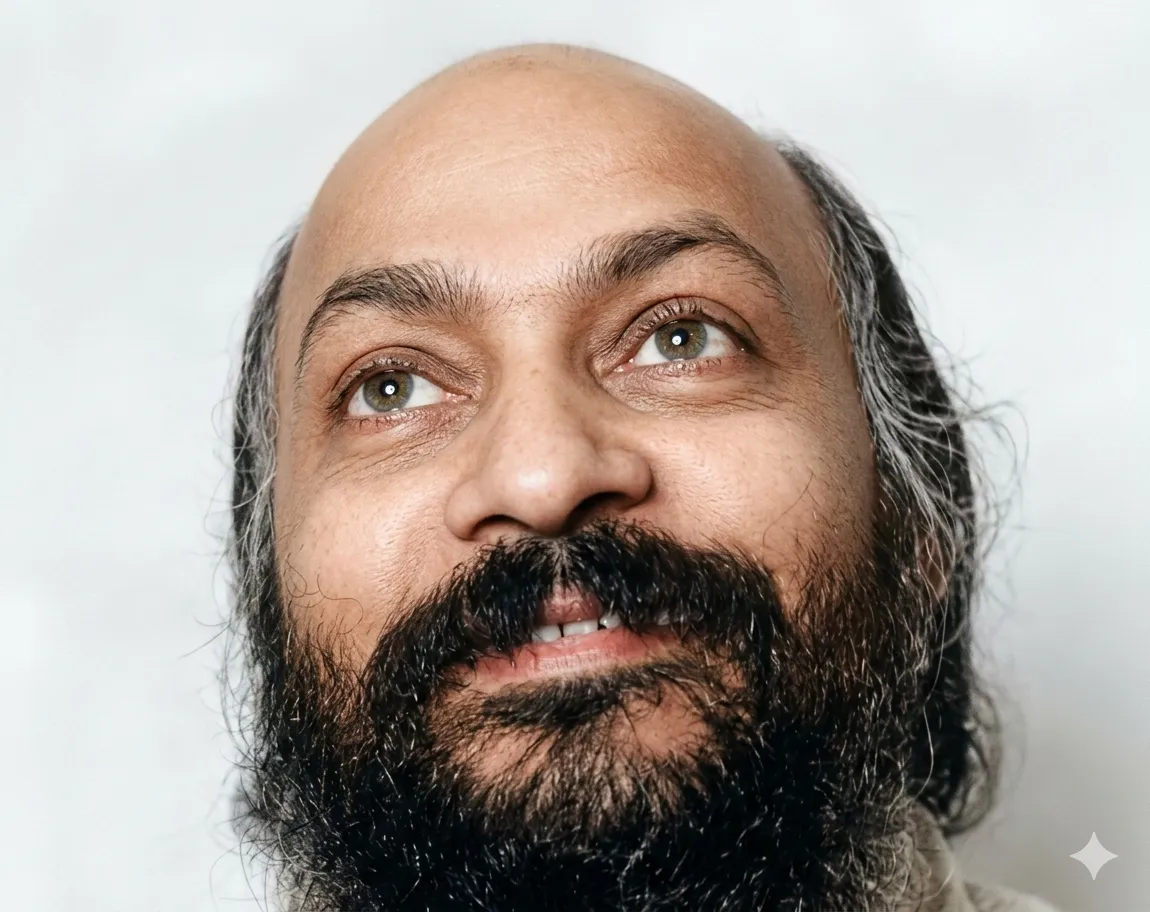
Animals and people have different invisible inner bodies; ours is more complex for self-awareness while animals live more by instinct.
From the Discourses
Passages where Osho speaks to this question — each links to the complete discourse.
I want to ask something: Osho, is an animal’s subtle body the same as a human’s?
By “animal,” you mean? Any animal, like a cow. No, they are not the same; they are different. They are different.Read the full discourse →
Osho, deep down, what is the difference between plant life and animal life?
But not all human beings act. Very few are truly worthy of the name ‘human.’ Most only react. Someone loves you, and you love in return—that is reaction. If someone abuses you and you still love, that is action. When someone loves you and you love back, it is reaction—just like a dog wagging its tail when you throw it bread; there is no fundamental difference. But if someone abuses you and you can love, then it is action. So I am saying: some plants have begun to move; they are entering the direction of the animal. Some animals even act a little—very little; such animals are moving toward the human. Some human beings truly act; they are moving toward higher planes of consciousness. The difference is in freedom. The lower we go, the more dependent it is: stone the most dependent, plant less, animal less than that, the so-called…Read the full discourse →
Osho, is there something like a subtle body within the body, or not?
There is only one way: while you are alive, the body and the body’s consciousness can separate. At the time of death it happens anyway. But then we have no means left to know it. The only means we have is that, while living, a person can experience being outside the body. This experience often happens accidentally—and to many people. It is a fairly common experience; it is not very unusual. Many people have it happen accidentally—during some grave illness, sometimes when a severe injury occurs...Read the full discourse →
Osho, in yesterday’s talk you said that a seeker should first be concerned with becoming a vessel, and should not go about begging from place to place. But the very meaning of a seeker is that he has obstacles in practice. He doesn’t know how to become a vessel, how to prepare. So if he does not go asking, what should he do? How difficult it is to meet the right guide!
But searching and begging are two different things. In fact, the one who does not want to search is the one who begs. Searching and begging are not the same; they are opposites. He who wants to avoid searching begs; a seeker never begs. And the processes of searching and begging are entirely different. In begging you have to keep your attention on the other—the one who will give. In searching you have to keep your attention on yourself—the one who is to receive. It is true that there are obstacles on the path of the seeker. But if we understand rightly, saying there are obstacles on the path of the seeker means the obstacles are within the seeker; the path too is within. And to understand one’s obstacles is not very difficult. So we will have to speak a little more extensively on what the obstacles are and how…Read the full discourse →
Osho, in yesterday’s talk you said that a seeker should first be concerned with becoming a vessel, and should not go about begging from place to place. But the very meaning of a seeker is that he has obstacles in practice. He doesn’t know how to become a vessel, how to prepare. So if he does not go asking, what should he do? How difficult it is to meet the right guide!
But searching and begging are two different things. In fact, the one who does not want to search is the one who begs. Searching and begging are not the same; they are opposites. He who wants to avoid searching begs; a seeker never begs. And the processes of searching and begging are entirely different. In begging you have to keep your attention on the other—the one who will give. In searching you have to keep your attention on yourself—the one who is to receive. It is true that there are obstacles on the path of the seeker. But if we understand rightly, saying there are obstacles on the path of the seeker means the obstacles are within the seeker; the path too is within. And to understand one’s obstacles is not very difficult. So we will have to speak a little more extensively on what the obstacles are and how…Read the full discourse →