
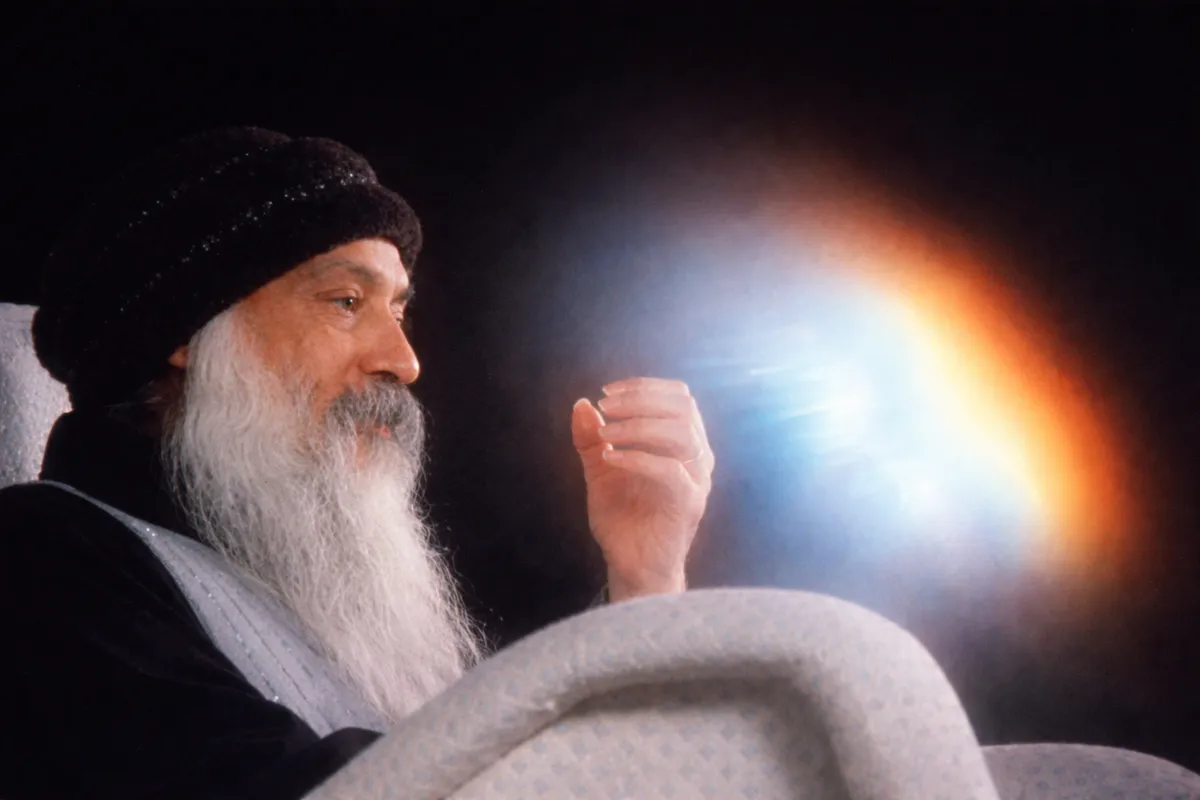
Stop rushing and just be calm now; your mind will clear by itself and you’ll see things as they are.
From the Discourses
Passages where Osho speaks to this question — each links to the complete discourse.
Osho, I have been listening to you for years. I have been with you a long time. From time to time I have heard many different statements from you, even mutually contradictory ones, yet no question has ever arisen in my mind about them. And in spite of them you have always remained one and indivisible in my vision and in my heart. Kindly shed some light on this.
You can be with me in two ways: through thought and intellect, or through the heart and feeling. If you are with me through the intellect and thought, there will be great difficulty. Day after day you will find contradictory statements. Every day you will have to sort them out, and still you will not succeed. The intellect never really resolves anything. Even where things are simple, the intellect tangles them up. And my words are very tangled. Even where everything is clear, the intellect creates problems. And I speak of paths filled with mist. Even if there were only one path, the intellect would find contradictions; here there are countless paths—contradictions upon contradictions. There is hardly a statement I have not refuted a thousand times. So if you are with me through the intellect, only two things are possible: either you will go mad and drop the intellect, or…
पहला प्रश्न: ओशो, मैं आपको वर्षों से सुन रहा हूं। लंबे अर्से से मैं आपके पास हूं। मैंने समय-समय पर आपसे कई भिन्न-भिन्न वक्तव्य और परस्पर विरोधी वक्तव्य सुने, लेकिन उनके संबंध में कहीं कोई प्रश्न मेरे मन में नहीं उठा। और उनके बावजूद आप मेरी दृष्टि में और मेरे हृदय में सदा-सर्वदा एक और अखंड बने रहे। इस पर कुछ प्रकाश डालने की अनुकंपा करें।
मेरे पास दो ढंग से हो सकते हो। एक तो विचार से, बुद्धि से, और एक हृदय से और भाव से। बुद्धि और विचार से अगर मेरे पास हो, तो बड़ी अड़चन होगी। रोज-रोज विरोधी वक्तव्य होंगे। रोज-रोज तुम्हें सुलझाना पड़ेगा, फिर भी तुम सुलझा न पाओगे। बुद्धि कभी कुछ सुलझा ही नहीं पाती। जहां सीधी-सीधी बात हो, वहां भी बुद्धि उलझा लेती है। तो मेरी बातें तो बड़ी उलझी हैं। जहां सब साफ-सुथरा हो, वहां भी बुद्धि समस्याएं खड़ी कर लेती है। तो मैं तो उन रास्तों की बात कर रहा हूं जो बड़े धुंधलके से भरे हैं। एक ही रास्ते की बात हो, तो भी बुद्धि विरोध खोज लेती है। ये तो अनंत रास्तों की बातें हैं। …
Osho, the buddha said, "if you want to see, see at once. Don't let the mind enter into it." can you tell us more about "seeing"?
Anand Deepesh, SEEING IS A STATE OF NO-MIND a state of no-thought, a state of pure awareness, when you simply reflect that which is without any interference, any judgment, any like, any dislike; when you don't say a thing about it, you just function like a mirror. That's why Buddha says, "If you want to see, see at once," because if you start thinking you have already missed. Seeing at once means don't bring the mind in. Mind brings time, mind brings future, mind brings past. Mind starts comparing whether it is right or wrong. It compares with the old prejudices -- with the Gita, with the Koran, with the Bible, with all your conditionings -- or it starts projecting itself into the future, into the world of desires: "If I believe in this what am I going to attain? What will be the achievement?" The moment the mind comes…
Osho, “A sigh needs a lifetime before it takes effect; who lives long enough for the tangles of your tresses to be set right? We agreed you would not feign indifference, but we shall turn to dust before the news even reaches you.”
“A sigh needs a lifetime before it takes effect; who lives until the tangles of your tresses are set right? We agreed you would not feign indifference, but we shall turn to dust before the news reaches you.” Become so! “We will wait for You our whole life long, yet the grief will remain that life is too short.” Do it! Let life prove too short and waiting grow vast. Let many lifetimes be encompassed; let waiting become so dense that birth and life pass like the blink of an eye. Yet let the thread of waiting continue unbroken. Bodies change, lives change, wombs change, forms change, colors change, names change—let everything go on changing—but within, let a single thread of waiting remain strung through all the beads. The happening can occur in this very moment, but the waiting must be endless. And the happening will be much delayed if…
दूसरा प्रश्न: ओशो, आह को चाहिए एक उम्र असर होने तक कौन जीता है तेरे जुल्फ के सर होने तक हमने माना कि तगाफुल न करोगे, लेकिन खाक हो जायेंगे हम तुमको खबर होने तक।
करो! उम्र छोटी पड़ जाये, इंतजार बड़ा हो जाये। अनेक उम्रें समा जायें, इंतजार इतना बड़ा हो जाये। प्रतीक्षा ऐसी घनी हो जाये कि जन्म और जीवन पलक के झपने जैसे बीतने लगें। लेकिन इंतजार का सिलसिला जारी रहे। शरीर बदलें, जीवन बदलें, योनि बदले, रूप बदलें, रंग बदलें, नाम बदलें, सब बदलता जाये--लेकिन भीतर की प्रतीक्षा का एक सूत्र अनस्यूत रहे, एक धागा पिरोया रहे सारे मनकों में।
At times I feel like I can just silently sit and wait for eternity -- and other times like sobbing with the futility of sitting outside a gate I cannot even see -- frozen between action and inaction. Does one miss by demanding? Is impatience a lack of trust?
So waiting has to be with no idea for what. A real waiter cannot answer the question for what he is waiting; he can only shrug his shoulders, he can say 'I don't know.' But one thing is certain: that waiting is infinitely beautiful, waiting is infinitely joyous. When the whole turmoil disappears and it is all silence, it has a beauty of its own. You ask me: DOES ONE MISS BY DEMANDING? Certainly, absolutely. Demand has to be dropped. IS IMPATIENCE A LACK OF TRUST? Yes, certainly, absolutely. Impatience simply means you can't trust existence, you have to do something. You can't just sit there and trust that it will happen when you are ripe; that when spring comes, the grass will grow of its own accord. You cannot trust; you have to pull the grass from the earth. You cannot wait like a farmer who has thrown his…
Osho, this Zen master is echoing the words of Master Jesus. When Jesus spoke, the first thing he would say to his disciples was: “If you have ears, then hear; if you have eyes, then see; if you have understanding, then understand.” Or he would say, “Let those who have eyes, see; and those who have ears, hear.” Everyone who came to listen had ears. Everyone sitting before him had eyes. What could Jesus have meant?
Magidh said, “All that is in the scriptures is no more than the alphabet; everything is contained in it. And when I had recited it fully, I said to God, ‘Now You put it in order. You know my prayer. Here is the alphabet; You arrange it.’ And He arranged it—the prayer was complete.” If the heart is present, the alphabet becomes the Vedas. Without heart, even the Vedas are no more than the alphabet. If the mind is without thought, there is no need of mantras. In a thoughtless mind, even A, B, C becomes mantra. In a mind full of thought, no mantra is of use. Chant Om as much as you like—on the surface you repeat Om, but inside your desires are racing. Your desires warp your Om. Their smoke is so dense that the lamp of Om cannot burn there. This master rightly tells his disciples:…
ओशो, यह झेन सदगुरु जीसस के वचन को दोहरा रहा है। जीसस बोलते थे, तो पहली बात अपने शिष्यों को कहते थे; ‘अगर कान हों तो सुनो; आंखें हों तो देखो; समझ हो तो समझ लो।’ या कभी कहते कि ‘जिनके पास आंखें हों, वे देख लें। और जिनके पास कान हों, वे सुन लें।’ जो भी सुनने वाले थे, सभी के पास कान थे। जो भी सामने बैठे थे, सभी के पास आंखें थीं। जीसस का क्या प्रयोजन होगा?
मगीध ने कहा, ‘सभी शास्त्रों में जो है, वह वर्णमाला से ज्यादा नहीं। वर्णमाला में सभी कुछ आ जाता है, कुछ बचता नहीं। और फिर मैंने जब पूरी वर्णमाला दोहरा दी, तो मैंने परमात्मा से कहा कि अब तू ठीक से जमा ले। प्रार्थना तो मेरी तुझे पता ही है। यह वर्णमाला यह रही, तू जमा ले। और उसने जमा दिया। और प्रार्थना पूरी हो गई।’ अगर भाव हो तो वर्णमाला वेद हो जाती है। अगर भाव न हो तो वेद भी वर्णमाला से ज्यादा नहीं है। अगर निर्विचार चित्त हो तो मंत्रों की जरूरत नहीं। निर्विचार चित्त में अ, ब, स का पाठ भी कर लिया जाए, तो मंत्र हो जाते हैं। और विचार से भरे चित्त में तुम कितने ही मंत्र दोहराओगे, सब व्यर्थ हो जाते हैं। तुम कितना ही ओंकार का पाठ करो, ओम-ओम दोहराओ, यह सब ऊपर-ऊपर है, भीतर तुम्हारी वासनाएं दौड़ रही हैं। …