
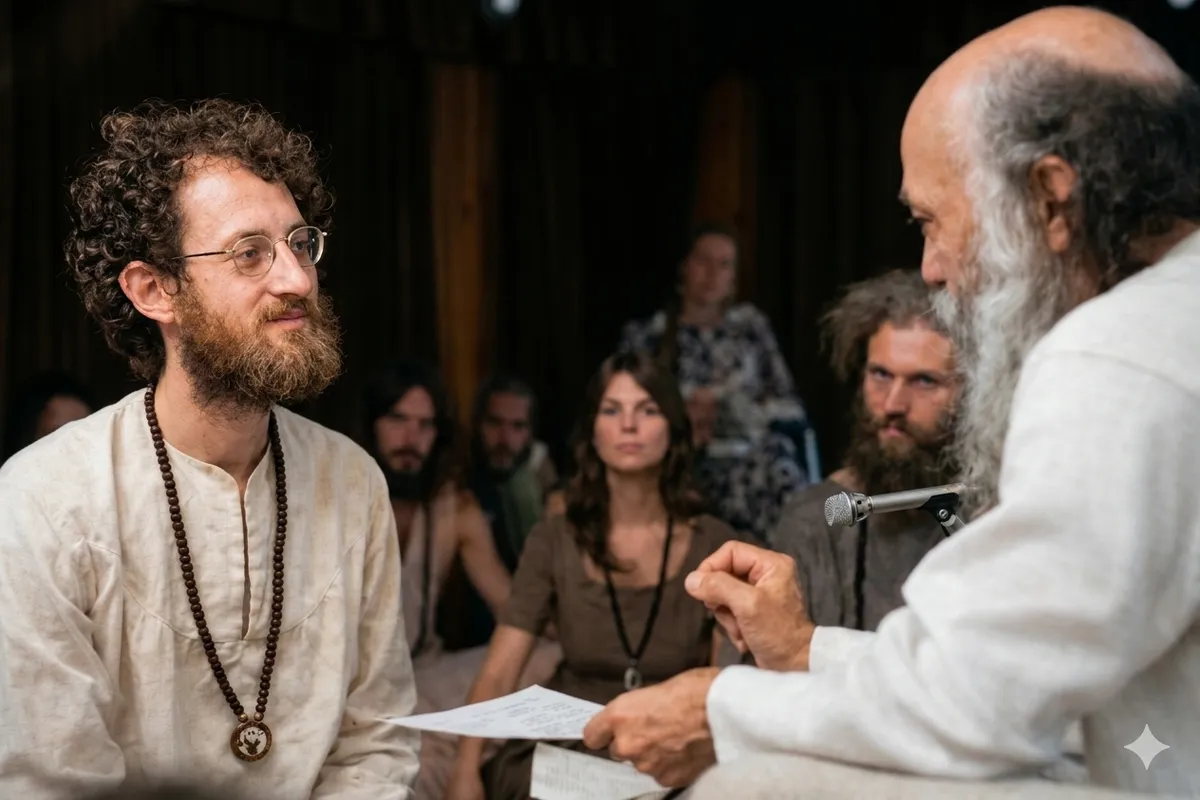
There’s no fixed time; decide together on a fair limit for each speaker.
From the Discourses
Passages where Osho speaks to this question — each links to the complete discourse.
Osho, you have titled this series of talks “Sahaj Yoga.” Do “sahaj” and “yoga” not seem mutually opposed?
Anand Maitreya! They don’t just seem opposed, they are opposed. But no ultimate truth of life can manifest without contradiction. Life is made of opposites—darkness and light, day and night, woman and man, negative electricity and positive electricity, birth and death. The very structure of life is woven of opposites. Hence the opposites are not only opposed; they are complementary to each other. If you have labored hard all day, you will be able to sleep deeply. Labor and rest are opposites, yet only the one who has worked can rest deeply—and the one who has not worked cannot. So the opposites are not only opposed, they complete each other. And only the one who has rested deeply at night can rise in the morning and engage in work again. One who has not rested through the night will not be able to work in the morning. Look closely at…
पहला प्रश्न: ओशो, आपने इस प्रवचनमाला का शीर्षक दिया है--सहज-योग। क्या सहज और योग परस्पर-विरोधी नहीं लगते?
आनंद मैत्रेय! विरोधी लगते ही नहीं, विरोधी हैं। लेकिन जीवन का कोई भी परम सत्य बिना विरोधाभास के प्रगट हो ही नहीं सकता। जीवन बना है विरोधों से--अंधेरा और प्रकाश, दिन और रात, स्त्री और पुरुष, ऋण विद्युत-धन विद्युत, जन्म-मृत्यु। जीवन की संरचना विरोधों से है। इसलिए विरोधी विरोधी ही नहीं हैं, एक-दूसरे के परिपूरक भी हैं। दिन भर श्रम किया खूब तो गहरी नींद सो सकोगे। श्रम और विश्राम विरोधी हैं, पर जिसने श्रम किया है वही गहरा विश्राम कर सकेगा। और जिसने श्रम नहीं किया वह गहरा विश्राम भी न कर सकेगा। तो विरोधी विरोधी ही नहीं हैं, एक-दूसरे के परिपूरक भी हैं। और जिसने रात्रि गहरा विश्राम किया है वही सुबह जागकर फिर श्रम में संलग्न हो सकेगा। जो रात-भर विश्राम नहीं कर सका वह सुबह श्रम में भी न लग सकेगा।
Another friend has asked: Osho, what is the relationship between the method of meditation and jati-smaran (recollection of past lives)?
But the one who becomes skilled in this—who can fully awaken any day’s memory up to the age of five—will find that the memories begin to awaken completely. And you should test it. As today passes, note down some events and lock them up. After two years, try to recall today. Most of it will have been forgotten. Then remember—and after remembering, break the lock and compare whether what you recalled matches what you had written. You will be amazed—astonished—that besides what you wrote, many more details have come back which you did not even note at the time. They will all be there in memory. Buddha called this alaya-vijnana. There is a corner of the human mind he called the storehouse of consciousness. Like a junk room in the house where we keep all the odds and ends, there is a storehouse that collects memories—where everything from birth after…
एक और मित्र ने पूछा है कि ओशो, ध्यान की विधि और जाति-स्मरण में क्या संबंध है?
लेकिन जो व्यक्ति इसमें समर्थ हो जाएगा, पांच वर्ष की उम्र तक की किसी भी दिन की स्मृति को पूरा जगाने लगेगा...और वह पूरी जगने लगती है। और फिर उसको इस तरह जांच कर लेनी चाहिए। जैसे आज का दिन गुजर रहा है, तो आज के दिन की कुछ बातें नोट करके ताले में बंद कर दें। दो साल बाद आज के दिन को याद करें। वह सब खो जाएगा आज का दिन। और तब स्मरण करें, और स्मरण करके फिर ताला तोड़ें, और फिर मेल करें कि वह बात मेल खा गई कि नहीं। और आप हैरान होंगे--आप हैरान होंगे कि जितनी आपने लिखी थीं, उससे बहुत ज्यादा बातें और भी याद आई हैं जो कि आप उस दिन भी नोट नहीं कर पाए थे। वे तो सब बातें याद आ ही जाएंगी। इसको बुद्ध ने नाम दिया है, आलय-विज्ञान। मनुष्य के मन का एक कोना है, जिसको उन्होंने आलय-विज्ञान कहा है। आलय-विज्ञान का मतलब होता है, स्टोर हाउस आफ कांशसनेस। जैसे घर में एक कबाड़खाना होता है, जहां हम सब बेकार हो गई चीजों को डालते चले जाते हैं। …
Beloved Osho, you have said many times that a dialogue is not possible through debate. But shankara announced his universal victory and defeated innumerable intellectuals in a debate on the meaning of the scriptures. After the defeat they had to become shankara's disciples. Please explain what kind of debate on the scriptures this was.
Shankara agreed to debate with Bharati. But he found he could not reply to the questions asked by her, because she did not ask any question regarding Brahma or knowledge of Brahma. As he had already defeated Mandan on that topic. She had understood from the debate with Mandan that it was useless to talk to this young man about Brahma. She thought "This young-looking person is actually a very ancient being." And Mandan certainly knew more than Bharati. That is why Bharati had fallen in love with him, married him, and was looking after him. She had seen him defeated by Shankara on the subject of Brahma, so she asked Shankara questions regarding sex. Shankara was young. He was thirty years old and was unmarried. He found himself in a difficult situation. He said, "I want six months' time to reply to these questions because I am unmarried and…
Osho, you have been speaking continuously for twenty years. How is it possible to keep speaking like this? What is the secret of this art?
Rajendra! There is no secret at all. A small story will make it clear to you. A certain leader was contesting an election. As far as elections were concerned, he was rather new to the game. He didn’t really know how to give speeches. During the campaign a friend said to him, “Brother, why be so shy? You’re a leader and you’re feeling shy!” He replied, “Brother, I’m new to this field, and I don’t know the art of public speaking—how one should speak.” His friend laughed and said, “Arrey, is speaking even an art? Just keep drawing one thing out of another—that’s the secret of a speech.” After that, the speech the leader gave on stage went like this: “Brothers and sisters, I am neither a speaker nor a loudspeaker! The speaker used to be Kallan Miya from our neighborhood, and these days he is in his grave. Two…
ओशो, आप बीस वर्षों से सतत बोल रहे हैं। इस तरह बोलना कैसे संभव हो पाता है? इस कला का राज क्या है?
एक नेताजी चुनाव लड़ रहे थे। चुनावों के मामले में वे जरा नये-नये ही थे। भाषण-वगैरह देना उन्हें ढंग से आता नहीं था। चुनावी दौरे के समय उनके मित्र ने उनसे कहा कि भाई, ऐसे भी क्या शर्माते हो! अरे नेता होकर शर्म करते हो! वे बोले कि भाई, मैं जरा इस क्षेत्र में नया-नया हूं और भाषण देने की कला मुझे आती भी नहीं कि कैसे भाषण देना चाहिए। मित्र महोदय हंसे और बोले: अरे, भाषण देना भी कोई कला है। बस बात में से बात निकालते जाओ, यही तो भाषण का राज है। इसके बाद नेताजी ने मंच पर जो भाषण दिया, वह इस प्रकार था: भाइयो और बहनो, न तो मैं स्पीकर हूं, न ही लाउडस्पीकर! स्पीकर हमारे मोहल्ले के कल्लन मियां हुआ करते थे, जो कि आजकल कब्र में हैं। उनकी कब्र पर दो तरह के फूल चढ़ाए गए--गुलाब के और गेंदे के। और आप जानते ही होंगे कि गुलाब से ही गुलकंद बनता है। और गुलकंद ही सारी बीमारियों की जड़ है। और जड़ों में सबसे लंबी जड़ खरबूजे की होती है। और आपको पता ही होगा कि एक खरबूजे को देख कर दूसरा खरबूजा रंग बदलता है। …
Osho, just one small thing: what’s the significance of the forty-eight minutes in this?
It doesn’t mean anything. It doesn’t mean anything. Here it’s not a matter of minutes at all; just pausing for a while is enough.
प्रश्न: ओशो, एक बात जरा सी, वह अड़तालीस मिनट का इसमें क्या हिसाब है?
कुछ मतलब नहीं है। कुछ मतलब नहीं है। यहां मिनट-विनट का सवाल ही नहीं है, एक समय भर ठहर जाना काफी है।