
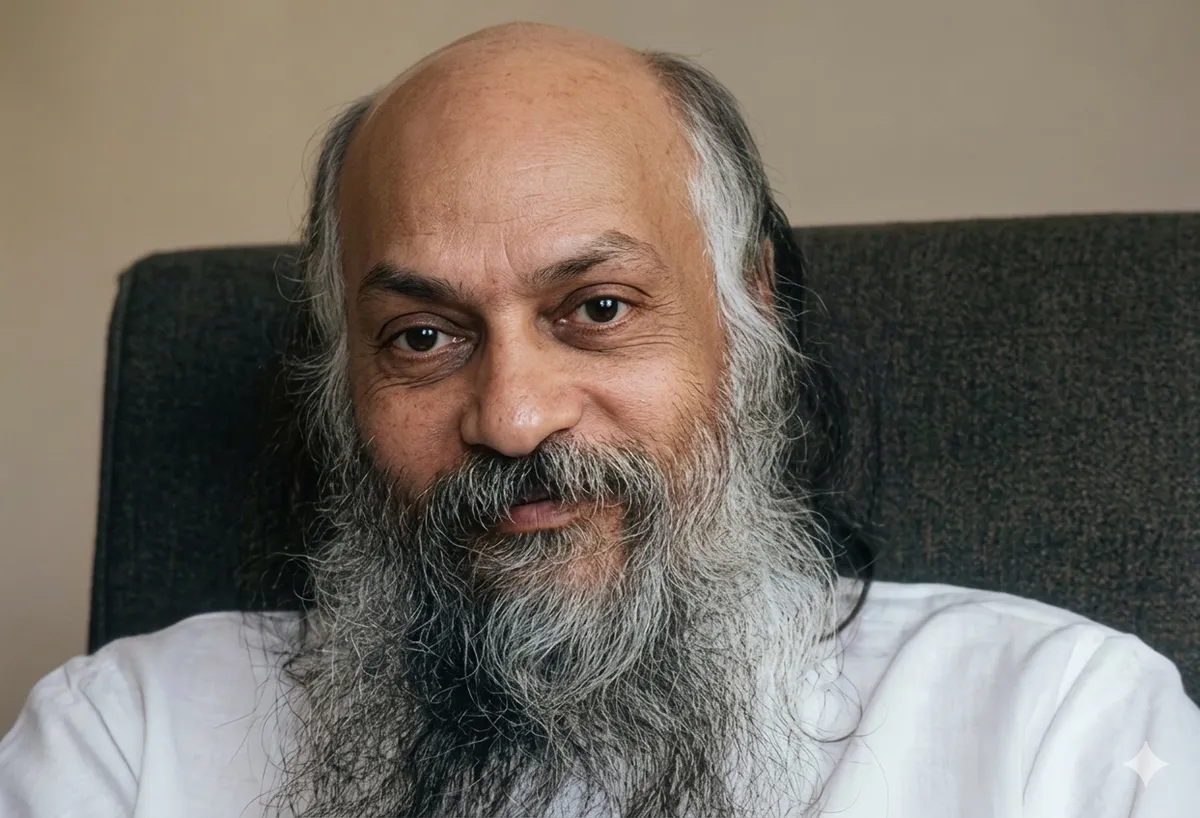
Even if people tell you to look out only for yourself, you can’t live or grow without others—like flowers need sun and soil—so helping and being helped are part of the same life.
From the Discourses
Passages where Osho speaks to this question — each links to the complete discourse.
Interdependence is a nice concept, but how is that possible when you urge an of us to be totally selfish?
First, interdependence is not 'nice', and it is not a concept. It is not nice at all. Independence feels nice; dependence feels very, very bitter; interdependence is neither nice nor bitter. It is a very balancing thing: neither this way nor that. It leans to no side; it is a tranquility. And it is not a concept, it is a reality. It is how it is. Just watch life and you will never find anything which is not interdependent. Everything that exists, exists in the ocean of interdependence. It is not a concept, it is not a theory. You just drop all theories, all prejudices, and look at life. Look at a small tree, a rose bush, and you will see the whole existence converges on it. From the earth it is connected. Without the earth, it would not be there. It goes on breathing the air. It is connected…
Osho, does living moment-to-moment begin the awareness of interdependence?
You have heard of Baital Pachisi (the Vetala tales). You would never suppose it could be a teaching for the wise—yet this land has made unique experiments. It has produced books that can be read on many levels, with layer upon layer of meaning—two, three, four, five meanings running parallel like five roads side by side. Thus whoever you are, there is a way. A small child enjoys it; the supreme knower enjoys it. The seeker finds the path; the arrived recognizes the destination. For one who is neither, it is a diversion—that too is something, a little entertainment. The first story goes like this. Emperor Vikramaditya was in court when a fakir arrived. As custom had it, people came in the morning to offer gifts. The fakir offered a wild-looking fruit. The emperor smiled—why come so far to offer a jungle fruit? But a fakir has nothing else, so…
पहला प्रश्न: ओशो, क्या क्षण-क्षण जीने से परस्पर-तंत्रता का बोध शुरू होता है?
तुमने बैताल पचीसी का नाम सुना होगा। तुम कभी सोच भी नहीं सकते कि वह भी कोई ज्ञानियों की बात हो सकती है, बैताल पचीसी। पर इस देश ने बड़े अनूठे प्रयोग किए हैं। इस देश ने ऐसी किताबें लिखी हैं, जिनको बहुत तलों पर पढ़ा जा सकता है, जिनमें पर्त दर पर्त अलग-अलग अर्थ हैं। जिनमें एक साथ दो, तीन, चार और पांच अर्थ दौड़ते रहते हैं। जैसे एक साथ पांच रास्ते चल रहे हों, पैरेलल, समानांतर। तो जिसकी जो सुविधा हो। एक छोटा बच्चा भी बैताल पचीसी पढ़कर प्रसन्न होगा और परम ज्ञानी भी पढ़कर प्रसन्न होगा। खोजी को मार्ग मिल जाएगा, पहुंचे हुए को मंजिल की प्रत्यभिज्ञा होगी। जो नहीं खोजी है, नहीं पहुंचा हुआ है, उसके लिए सिर्फ चित्त का मनोरंजन होगा। वह भी क्या कम है! थोड़ी देर को मन बहलाव हो जाएगा। बैताल पचीसी की पहली कथा है.। पच्चीसों ही कथाएं बड़ी अदभुत हैं, लेकिन पहली तुम से कहता हूं। पहली कथा है कि सम्राट विक्रमादित्य के दरबार में एक फकीर आया। सुबह का वक्त था। रिवाज के अनुसार लोग सम्राट को भेंट चढ़ाने सुबह-सुबह आते थे। …
One of the essential laws of nature seems to be relationship, interdependence. I have watched two birds fly, intimate with each other and with the wind, so easy and without strife, in perfect harmony. What is the secret of this that seems so hard for human beings? Please Osho, say something about relationship.
Vasumati, the most fundamental thing to be remembered is that life is dialectical. It exists through duality, it is a rhythm between opposites. You cannot be happy forever, otherwise happiness will lose all meaning. You cannot be in harmony forever, otherwise you will become unaware of the harmony. Harmony has to be followed by discord again and again, and happiness has to be followed by unhappiness. Every pleasure has its own pain, and every pain has its own pleasure. Unless one understands this duality of existence, one remains in unnecessary misery. Accept the total, with all its agonies and all its ecstasies. Don't hanker for the impossible; don't desire that there should be only ecstasy and no agony. Ecstasy cannot exist alone, it needs a contrast. Agony becomes the blackboard, then ecstasy becomes very clear and loud, just as in the darkness of night the stars are so bright. The…
Beloved Osho, in your vision of a model society, would there be one large commune, or a series of communes? If there is more than one, what would be their relationship to one another? Do you envisage people of different communes being able to be interdependent, sharing ideas and skills, and without any of the attitudes that grow out of possessiveness, like nationalism and fanaticism?
A small group of people can enjoy life more easily, because to have so many friends, so many acquaintances, is a joy unto itself. Today in the big cities, you live in the same house and you don't know your neighbor. In one house one hundred thousand people may be living. A one hundred story building can contain that many people -- almost a whole city. And they are absolute strangers to each other, living in a crowd, and yet being alone. My idea of a commune is, living in small groups, which gives you enough space, and yet living in a close, loving, relationship. Your children are taken care of by the commune, your needs are taken care of by the commune, your medical care is taken care of by the commune. The commune becomes an authentic family without any diseases that families have created in the past. It…
Question: BELOVED OSHO, SHOULD WE BE SELFISH? There is no other way. Nobody can be unselfish -- except hypocrites. The word `selfish' has taken a very condemnatory association, because all the religions have condemned it. They want you to be unselfish. But why? To help others.... I am reminded: a small child was talking to his mother, and the mother said, "Remember always to help others." And the child asked, "Then what will the others do?" Naturally the mother said, "They will help others." The child said, "This seems to be a strange scheme. Why not help yourself, rather than shifting it and making things unnecessarily complex?" Selfishness is natural. Yes, there comes a moment when you are sharing by being selfish. When you are in a state of overflowing joy, then you can share.