
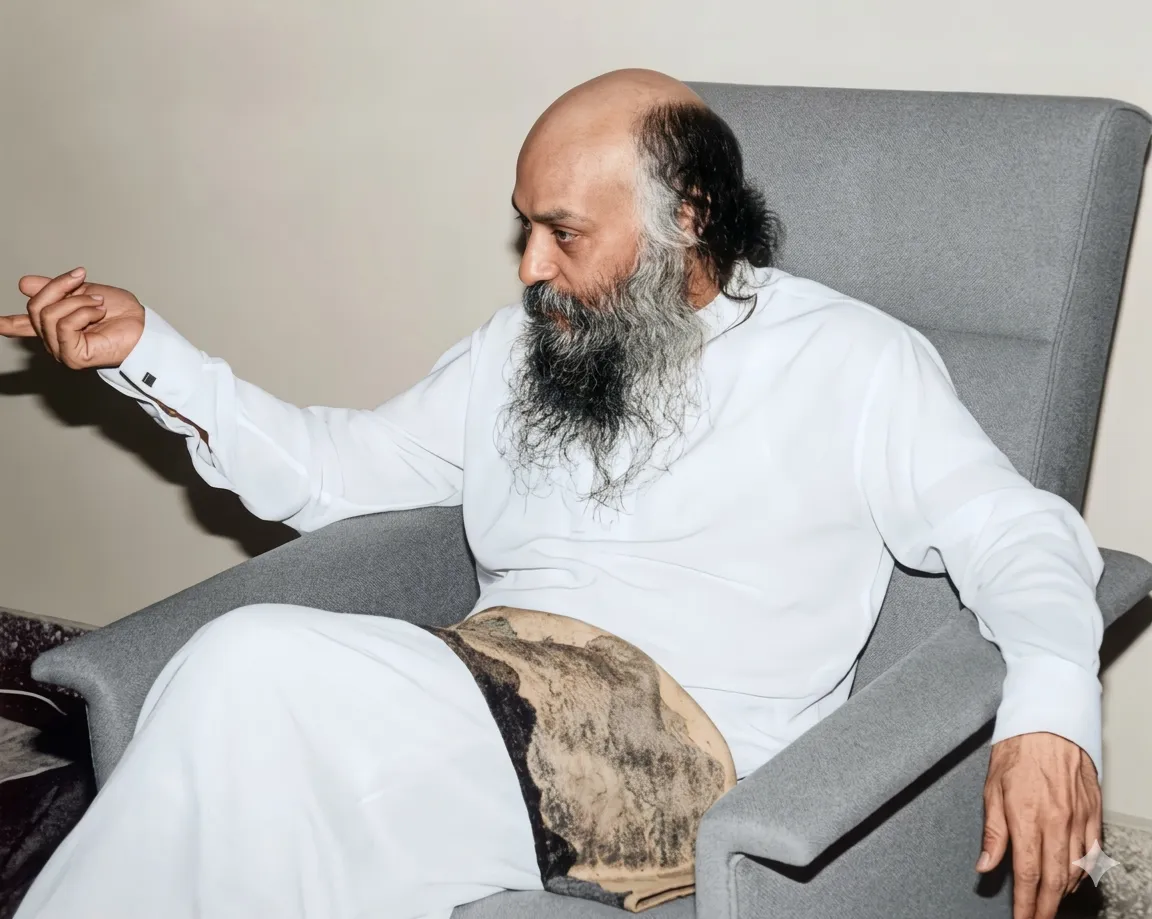
People change you only if you open up to them; if you stay closed or hide behind masks, nothing sticks.
From the Discourses
Passages where Osho speaks to this question — each links to the complete discourse.
Osho, does the color of company inevitably rub off, or is it only a matter of chance? Please explain!
It so happened: in the French Revolution the Bastille was broken open. There were imprisoned there France’s most heinous offenders. Only those who were sentenced to life imprisonment were confined in that fortress. There were some five thousand prisoners there—some had been inside thirty years, some forty, some even fifty. The chains and fetters put on those prisoners had no locks, because there was no need for locks; there was no key either, because there was no question of opening them—when they died, then their hands and feet were broken to remove the chains. For until death they were to remain in prison. The revolutionaries broke the Bastille and tried to free the prisoners by force, to drag them out of their dark cells. Many flatly refused, absolutely refused; they fought and quarreled—“We don’t want to go!” I understand them. Do not laugh; you too should understand. A man who…
दूसरा प्रश्न: ओशो, संग का रंग लगता ही है या कि यह केवल संयोग मात्र है? कृपा कर समझावें!
ऐसा हुआ, फ्रांस की क्रांति में बैस्तले का किला तोड़ा गया। उसमें फ्रांस के सब से जघन्य अपराधी बंद थे। जिनको आजीवन कैद होती थी, वे ही केवल उस किले में बंद किए जाते थे। उसमें कोई पांच हजार कैदी थे। कोई तीस साल से बंद था, कोई चालीस साल से, कुछ तो ऐसे थे जो पचास साल से बंद थे। उन कैदियों को जो जंजीरें और बेड़ियां पहनाई जाती थीं उनमें ताले नहीं होते थे। क्योंकि ताले की कोई जरूरत नहीं थी। चाबी भी नहीं होती थी। क्योंकि खुलने का तो सवाल ही नहीं था; जब वे मर जाएंगे तब उनके हाथ-पैर तोड़ कर जंजीरें निकाल ली जाती थीं। क्योंकि मरने तक तो उनको अब कारागृह में ही रहना है। …
About George Gurdjieff, an opponent spread in France: Avoid Gurdjieff as one avoids plague. There is truth in it — the plague’s victim may survive; Gurdjieff’s victim will not. The one who is struck in satsang is struck forever — he cannot return as he was. Hence people avoid. Or if they come, they go deaf and stone-like; or, if they join, they join half — never whole. And until you are one hundred percent, you are not joined — for less than a hundred, no union happens. Have you seen? Water becomes steam at a hundred degrees. Do not think that at ninety-eight some steam should appear — not even one percent. Even at ninety-nine it does not. Let there be the slightest lack — water will not turn to vapor. At exactly a hundred it does. So it is with His color.
Osho, you have dyed thousands in your color; what is the magic behind it?
The magic belongs to God; there is nothing of mine in it. As long as there is “mine and yours,” magic never comes. Where mine-and-yours vanish, from there the magic begins. That is the one who colors; the color is his. Understand it like this: you take up a brush and paint a picture. The brush does not paint; it is in someone’s hand. I am in his hand. If there is victory, it is his; if there is defeat, it is his. I am utterly carefree. I have no stake in it. I am not making any effort to color people. You see, I don’t even step out of my room—but people keep coming! I don’t know who summons them! I had set out alone toward the destination, but— I had set out alone toward the destination, but— People kept joining along the way, and a caravan formed. I…
आखिरी प्रश्न: ओशो, आपने हजारों को अपने रंग में रंग दिया है, इसके पीछे जादू क्या है?
जादू परमात्मा का है, मेरा उसमें कुछ भी नहीं है। जहां तक मेरा-तेरा है, वहां तक जादू आता ही नहीं। जहां मेरा-तेरा गया, वहीं से जादू की शुरुआत है। वही रंग रहा है। रंग उसका है। ऐसे ही समझो, जैसे तुम तूलिका को लेकर और चित्र बनाते हो। तूलिका थोड़े ही चित्र बनाती है। तूलिका तो किसी के हाथ में होती है। मैं उसके हाथ में हूं। जीते तो वह, हारे तो वह। मैं बिलकुल निश्चिंत हूं। अपना कुछ लेना-देना नहीं। कोई चेष्टा थोड़े ही कर रहा हूं लोगों को रंगने की। देखते हो, अपने कमरे से बाहर भी नहीं जाता। लेकिन लोग आए चले जाते हैं! …
Low-born, vile, slow of wit. And yet where have you seated me! Now I understand: I am as much yours as are Ram, Krishna, Buddha, Mahavira. Your compassion makes no distinctions. Your grace showers alike. Whoever opens his vessel is filled. I too, a carder, am filled. In the sky’s great dome the carder sits—my Satguru taught me the art. What art? The art of disappearing. The heart must be pierced by love’s spear. Only one thing must happen at the feet of a true Master; then know you have been with him. Being with a Satguru is not physical proximity. It means: be near by being nothing; be near by disappearing. Wipe yourself out. Do not protect yourself. Lay your whole being at the feet. The leaves of sin and the burrs of bad intelligence fall off—effortlessly, effortlessly. Then miracles upon miracles—I have seen them, says Dariya.
सदगुरु के पास एक ही घटना घटनी चाहिए, तो ही समझना कि तुम सदगुरु के पास गए। सदगुरु के पास होना कोई भौतिक बात नहीं है, कि शरीर से पास रहे। सदगुरु के पास होने का अर्थ है कि मिट कर पास रहे; न होकर पास रहे। अपने को पोंछ ही दिया। अपने को बचाया ही नहीं। अपने को पूरा-पूरा चरणों में चढ़ा दिया।
Osho, I find your words very full of rasa, very delightful. But as a stage actor I want to go deep into the art of acting. So I am not yet ready for sannyas. Nor do I want to be limited to a single ochre color. I am interested in colorful clothes, because life too is colorful, rainbow-like. Can I come from time to time for your darshan without becoming your sannyasin?
But I had to choose some symbol. And I chose saffron deliberately. Deliberately—because for some five thousand years saffron has been in the wrong hands. It must be taken back from them. This lovely color has become a symbol of the denial of life. Yet it is the color of life, of spring. Hence its other name: basanti—the color of spring, when all flowers bloom. I don’t know how this spring-color fell into the hands of the wrong people—enemies of flowers, lovers of thorns—people who lay thorn-beds and sleep upon them, who long for thorns, who torment themselves in every way, who are filled with violence. Since there is risk in doing violence to others—for others will answer back—they do violence to themselves. No one can answer that, no one can defend against it. It became the symbol of the self-violent. It became the symbol of hypocrites—those who say one…
दूसरा प्रश्न: ओशो, मुझे आपकी बातें बहुत रसपूर्ण लगती हैं। लेकिन मैं रंग-मंच का अभिनेता होने के नाते अभिनय कला की गहराई में जाना चाहता हूं। इसलिए संन्यास के लिए मेरी अभी तैयारी नहीं है। और न ही मैं केवल एक गैरिक रंग में सीमित होना चाहता हूं। मैं रंग-बिरंगे वस्त्रों में रुचि रखता हूं, क्योंकि जीवन भी तो रंग-बिरंगा है, इंद्रधनुषी है। क्या मैं बिना आपका संन्यासी हुए समय-समय पर आपके दर्शन को आ सकता हूं?
लेकिन मुझे कोई न कोई प्रतीक तो चुनना था। और गैरिक मैंने जान कर चुना है। जान कर चुना है इसलिए कि गैरिक वस्त्र गलत आदमियों के हाथ में कोई पांच हजार साल से रहा है। उसको उनके हाथ से छुड़ाना है। यह प्यारा रंग जीवन के निषेध का प्रतीक बन गया। और यह जीवन का रंग है, यह वसंत का रंग है। इसलिए इसका दूसरा नाम बासंती रंग है। वसंत, जब सारे फूल खिल जाते हैं। यह वसंत का रंग न मालूम कैसे गलत लोगों के हाथ में पड़ गया, जो फूलों के दुश्मन हैं, जो कांटों को प्यार करते हैं, जो कांटों की शय्या बिछा कर उस पर सोते हैं, जो कांटों के लिए लालायित हैं, जो अपने को सताते हैं हर तरह से, जो अपने को परेशान करते हैं हर तरह से, जो हिंसा से भरे हैं। हालांकि दूसरे की हिंसा करने में खतरा है। क्योंकि दूसरा भी जवाब देगा। वे अपनी ही हिंसा करते हैं। उसमें कोई जवाब भी नहीं कर सकता, उसमें कोई रक्षा भी नहीं कर सकता। यह आत्महिंसक लोगों का प्रतीक हो गया। यह पाखंडियों का प्रतीक हो गया। जो कहते कुछ हैं, करते कुछ हैं। …