
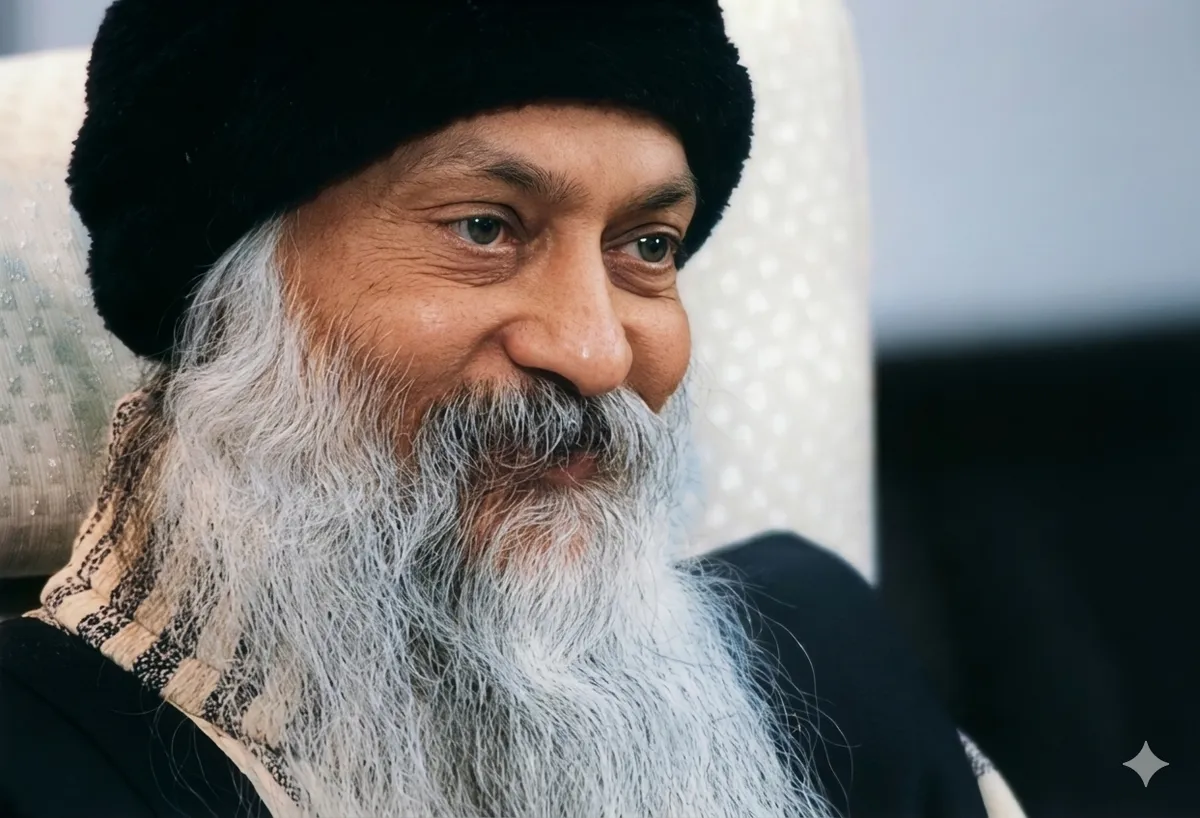
Yes, special powers can happen because the mind is very powerful, but they’re just mind stuff, not the main goal.
From the Discourses
Passages where Osho speaks to this question — each links to the complete discourse.
Question: OSHO, DO MIRACLES REALLY NOT EXIST? ... Devadatta brought a mad elephant who was known to have killed many people and so was kept always in chains. He brought him and left him without chains close to where Buddha was sitting. And the elephant came rushing, because after many days he had got the chance to kill somebody. He was murderous. But just coming close to Buddha, a sudden break: no, this is not the man to kill. He lowered himself, went on his knees and touched Buddha's feet. Now if elephants, mad elephants, rocks and trees are so careful about Buddha -- and I would like them to be so careful, there is no harm in it. I would like them to be so careful about everybody, why only about Buddha? But when he eats the poisonous food his own body does not bother; the poison takes no care.
Osho, different religions have discovered different great mantras—like Om Namah Shivaya, Namo Arihantanam, Allahu Akbar, Om Mani Padme Hum. In what state did such great mantras descend, and how are they related to the inner centers? And how should a seeker choose the mantra suitable for himself?
It happened that when Vivekananda came to Ramakrishna, his household was in dire straits. His father had died—and, being a worldly, whimsical man, had left many debts. There was not even food enough. If somehow there was food, it was not enough for both mother and son. Vivekananda would tell his mother, “A friend has invited me today,” so that she would eat; otherwise she would feed him and remain hungry. Saying so, he would wander the lanes, then return home cheerful, belching, as if well-fed—no friend had invited him—but to make his mother feel at peace that he had eaten well so she could eat without worry. Ramakrishna came to know and said, “You are a great fool. You come daily to Mother Kali’s court—why don’t you ask? Such a small matter—why suffer needlessly?” At Ramakrishna’s insistence, Vivekananda said, “If you say so, I will ask.” Ramakrishna sat outside…
प्रश्न: ओशो, अलग-अलग धर्मों ने अलग-अलग महामंत्र पाए हैं, जैसे ॐ नमो शिवाय, नमो अरिहंताणं, अल्लाहो अकबर, ॐ मणि पद्मे हुम्। तो ऐसे महामंत्र कौन सी अवस्था में उतरे हैं और इनका भीतर के कौन-कौन से केंद्रों से कैसा संबंध है? और साधक इनमें से अपने लिए योग्य महामंत्र कैसे चुने?
… पिता चल बसे थे। और पिता संसारी मनमौजी आदमी थे, तो बड़ा कर्ज छोड़ गए थे। घर में रोटी का भी इंतजाम न था। किसी तरह रोटी जुटती थी, तो मां और बेटे दोनों के लिए काफी नहीं होती थी। तो विवेकानंद मां को कहते कि मुझे किसी मित्र ने निमंत्रण दिया है आज, ताकि मां रोटी खा ले, अन्यथा विवेकानंद को खिला देती और खुद भूखी रह जाती। तो ऐसा कहकर आस-पास की गलियों में चक्कर लगाकर वहां से बड़े प्रसन्न और डकार लेते लौटते थे। न किसी मित्र ने निमंत्रण दिया है, लेकिन मां को दिखाने को कि भोजन कर आया हूं, बड़ा प्रसन्न हूं, बड़ा अच्छा भोजन था, ताकि मां भी निश्चिंतता से भोजन कर ले। रामकृष्ण को पता लगा तो रामकृष्ण ने कहा, तू भी बड़ा मूर्ख है। यहां रोज काली के दरबार में उपस्थित होता है तो मांग क्यों नहीं लेता? …
Osho, I understand you said the other day in the lecture that jesus did not walk on water and there are no miracles as such. But by practicing the samyama on patanjali's udana sutra, is not man able to do this? Please comment.
He says those who get lost in miracles are lost in a jungle. Certainly there are powers within you, hidden powers within you, which you are not aware of. And when you start going deeper into meditation those hidden powers start manifesting themselves, and there is every possibility you will be tempted by those powers. There is nothing miraculous about them; they are as natural as any other law. We just don't understand the law underlying them, hence we call them miracles. For example, if you meditate, soon you will realize the fact that you can read other people's thoughts. Now it will look like a miracle: before the person has asked the question you can answer him. And he will be surprised, and you will be worshipped as a great saint. But you are being very stupid, because somehow you have got rid of your own ideas, now you…
Siddhi means: to attain divinity; to become God. Siddhi means: from where no desire remains; from where there is no going beyond; the final point of life. This is what we are seeking. But the place where we are seeking it is perhaps not the place where it can be found. We seek this—in wealth, in position, in prestige, in scriptures. But it cannot be found there; it must be sought within. Wherever we are seeking, we are seeking wrongly. And therefore, when we do not find it, we do not consider that our seeking was wrong—we think our fate was wrong; that some obstacle came. We seek happiness in one person, do not find it—then we think this person is wrong, so happiness is not found; let us seek in someone else. We seek in wealth, do not find—then in position; in position, do not find—then in scripture.
इसी की हम तलाश भी कर रहे हैं। लेकिन जहां हम तलाश कर रहे हैं, शायद वह जगह नहीं है जहां इसे पाया जा सके। हम इसी को खोज भी रहे हैं--कोई धन में, कोई पद में, कोई प्रतिष्ठा में, कोई शास्त्र में। लेकिन वह खोज वहां हो नहीं सकती, उसे खोजना होगा भीतर। जहां भी हम खोज रहे हैं हम गलत खोज रहे हैं। और इसलिए जब हमें नहीं मिल पाता, तो हम इस बात का खयाल नहीं लेते कि हमारी खोज गलत थी। हम सोचते हैं, हमारा भाग्य गलत था। हम सोचते हैं, कोई चीज बाधा बन गई। जब हम एक व्यक्ति में सुख खोजते हैं; नहीं पाते हैं, तो हम सोचते हैं, यह व्यक्ति ही गड़बड़ है, इसीलिए सुख नहीं मिल पा रहा है, किसी और में खोजें। धन में खोजते हैं, नहीं मिलता, तो सोचते हैं, पद में खोजें; पद में खोजते हैं, नहीं मिलता है, तो सोचते हैं, शास्त्र में खोजें।