
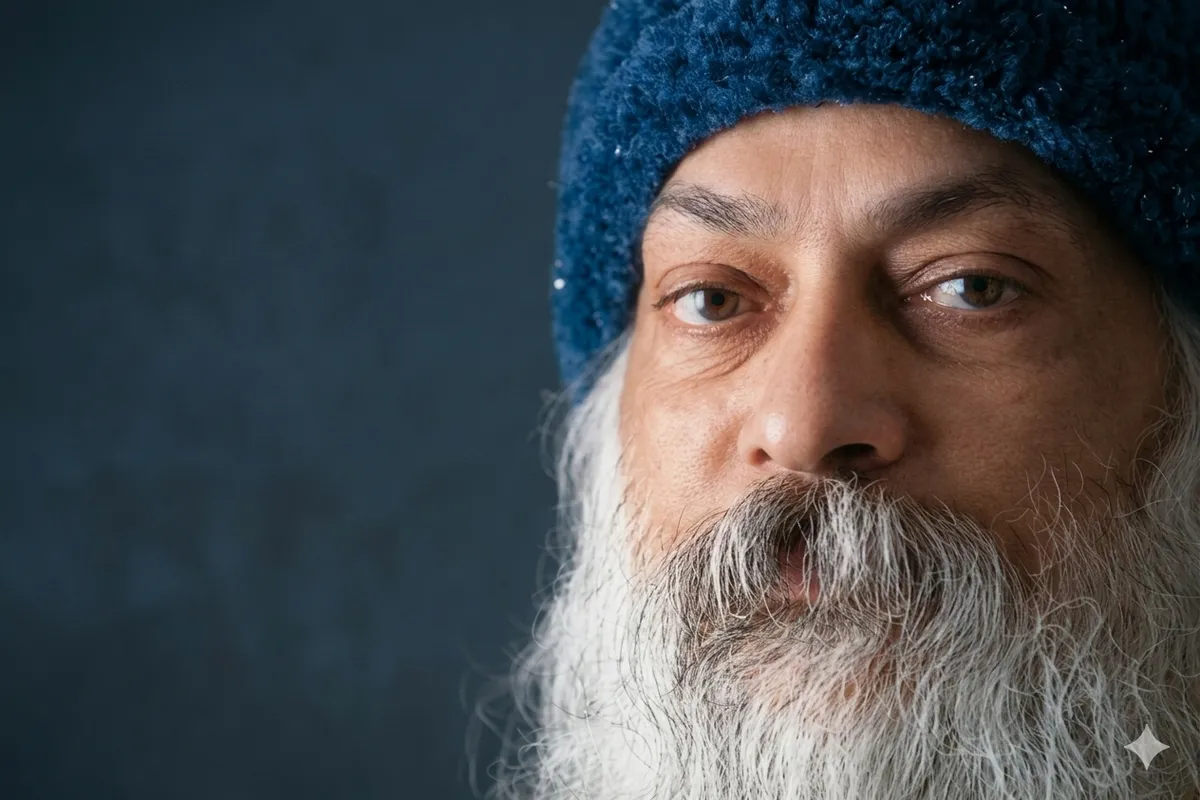
Masters do yawn, but unlike us they let it happen completely, with their whole being, without holding back or trying to control it.
From the Discourses
Passages where Osho speaks to this question — each links to the complete discourse.
Do masters ever yawn?
Yes, they yawn, but they yawn totally. And that is the difference between an enlightened person and an unenlightened person. The difference is only of totality. You do whatsoever you do partially. You love -- only part of you loves; you sleep -- only part of you sleeps; you eat -- only part of you eats; you yawn -- only part of you yawns, another part against it, controlling it. A Master lives totally, whatsoever. If he is eating, he is totally eating; there is nobody else than eating. He walks... he walks; the walker is not there. The walker doesn't exist because where the walker will exist? -- the walking is so total. When you yawn, you are there. When a Master yawns only the yawn is there. And if you are not convinced, you can ask Vivek; that will be the proof. You can ask a witness.
Osho, you spoke of two kinds of sleep. One is the ordinary sleep from which we wake in the morning when it is complete. The other is what we call spiritual sleep, in which we are all asleep—even during the day. To wake from that sleep too, is it necessary that it also be allowed to complete itself?
When Buddha was born, astrologers said that when he grew up he would either become a renunciate or a great emperor. His father grew very anxious. To become a great emperor—this a father can desire—but if he becomes a renunciate, that would be a painful event. It is easy to touch the feet of a renunciate, but if your own son wants to renounce, it hurts deeply. If someone else’s son renounces, you even go and touch his feet. The father was troubled. He asked the astrologers, “Then what can be done so that he does not become a renunciate?” They said, “Only one thing: see that his sleep is never disturbed at all. Because sometimes, through a disturbance, a man wakes.” It is not necessary that only an alarm awakens you—the alarm is merely a disturbance. Clouds may thunder in the sky and your sleep may break. Some circumstance…
ओशो, आपने दो तरह की नींद की चर्चा की। एक तो साधारण नींद है, जिससे हम सुबह जागते हैं जब वह नींद पूरी हो जाती है। दूसरी नींद, जिसे हम आध्यात्मिक नींद कहते हैं; जिसमें हम सब सोये हैं, दिन में भी सोये हैं, उससे जागने के लिए भी क्या जरूरी है, कि वह नींद पूरी हो जाये?
बुद्ध का जन्म हुआ, ज्योतिषियों ने कहा कि यह युवक होकर या तो संन्यासी हो जायेगा, और या महाप्रतापी सम्राट होगा। पिता बहुत चिंतित हुए। महाप्रतापी सम्राट हो यह तो पिता चाहे, लेकिन पिता...यह तो दुखद घटना बने अगर यह संन्यासी हो जाये। संन्यासी के चरण छूना आसान है, लेकिन तुम्हारा बेटा संन्यासी होना चाहे तो बड़ी पीड़ा होती है। दूसरे का बेटा संन्यासी हो तो तुम पैर भी छू आते हो। पिता बहुत परेशान हुए। ज्योतिषियों से कहा कि फिर क्या उपाय है कि यह संन्यासी न हो? उन्होंने कहा एक ही उपाय है, कि इसकी नींद में जरा भी दखल न पड़े। क्योंकि कभी-कभी दखल पड़ने से आदमी जग जाता है।
Being beyond the limits of time he is the master of masters. He is known as aum.
REPEAT AND MEDITATE ON AUM. REPEATING AND MEDITATING ON AUM BRINGS ABOUT THE DISAPPEARANCE OF ALL OBSTACLES AND AN AWAKENING OF A NEW CONSCIOUSNESS. ... Remember this -- desire and need -- these two words. Desire is of the mind; need is of the body. Desire and need, then you are a clock with hands. Only need, no desire, then you are a clock without hands, and when need also drops, you have gone beyond time. This is eternity; beyond time is eternity. For example: if I don't look at the watch -- and I have to look continuously the whole day -- if I don't look at the watch, I don't know what is the time. Even if I have seen it five minutes before, again I have to look because I don't know exactly, because now -- no time inside -- only the body is ticking. Consciousness has no
Hakuju served as a distinguished lecturer at the tendai-sect college. As he was lecturing with his customary zeal on the chinese classics one hot summer's afternoon, he noticed that a few of the students were dozing off. He stopped his lecturing in midsentence and said, "it is a hot afternoon, isn't it? Can't blame you for going to sleep. Mind if I join you?" with this, hakuju shut his textbook, and leaning well back in his chair, fell asleep. The class was dumbfounded, and those who had been dozing were awakened by his snores. All sat up in their seats and waited for the master to awaken.
Remember, I am not saying "perfect". His each moment is TOTAL. What is the difference? A perfect man, maybe, will never be angry. That is the idea of a perfect man: he will never be angry. But a total man can be angry. You can only be promised one thing, that he will be totally angry. It cannot be said he will not be angry. Only one thing can be said, that he will be totally angry; if ever he is angry he will be totally angry. It happened a scholar came to Raman Maharshi, and he was arguing and arguing and arguing; and nobody had seen Raman Maharshi ever being angry. Raman was saying again and again, "I am not a philosopher, and I don't believe in proofs and arguments, and I don't know any logic. I say'God is' because I have experienced it so." But the scholar wouldn't…
Osho, Zen Master Hogen of Seiryo Monastery was just about to give his discourse before the evening meal when he noticed that the bamboo screen hung for meditation had not yet been put away. He pointed to it, and immediately two monks rose from the assembly and began to put it away. Observing that very moment, the Master said: “The first monk’s state is good, but the second’s is not.” Osho, please explain the purport of this Zen enlightenment story.
A Marwari, dying, told his lawyer: “To every servant who has served me for five years, I bequeath fifty thousand rupees.” The lawyer couldn’t believe it—he knew the man; he never gave five paise. Fifty thousand to each—and there were many servants. He asked, “Are you in your senses?” The Marwari said, “More than you. There is no servant in my house I let stay for five years! I’ll give nothing—but the news of my charity will spread.” Even at death, the relish is in reputation. The mask doesn’t drop, not even in the last moment. What people say after you die is important; what you are is not. You have no taste for being—only for others’ opinions. That is the mark of the householder. The sannyasin’s mark is: what I am is my relish. What people say—what is the use? That is their business. What I am—that is mine,…
ओशो, सीरो विहार के सदगुरु होगेन, रात्रि-भोजन के पूर्व प्रवचन करने ही वाले थे कि उन्होंने देखा कि जो बांस की जाली ध्यान के लिए लटकायी गयी थी, वह अभी तक समेटी नहीं गयी है। उन्होंने उसकी ओर इशारा किया और तुरंत दो साधु सभा से उठकर उसे समेटने लगे। उस प्रकृत क्षण का निरीक्षण करते हुए सदगुरु ने कहा: ‘पहले साधु की दशा तो अच्छी है, पर दूसरे की नहीं।’ ओशो, इस झेन बोध-कथा का अभिप्राय बताने की कृपा करें।
एक मारवाड़ी मरा, तो उसने अपने वकील को कहा कि जो-जो नौकर मेरे घर पांच साल से नौकरी कर रहे हैं, सबको पचास-पचास हजार रुपया मैं दान कर देता हूं। वकील को भी भरोसा नहीं हुआ। क्योंकि वह जिंदगी से इसको जानता था। इसने पांच पैसे कभी किसी को नहीं दिया। यह पचास हजार रुपये एक-एक नौकर को? और नौकर उसके काफी थे, बड़ा कारबार था। वकील ने कहा कि ‘मैं समझा नहीं, आप होश में तो हैं?’ उस मारवाड़ी ने कहा, ‘मैं और बेहोश? तुम्हारी समझ में नहीं आ रहा है। मेरे घर ऐसा कोई नौकर है ही नहीं जिसे पांच साल तक मैं टिकाऊं। इसलिए देना तो एक को भी न पड़ेंगे, लेकिन पचास हजार एक-एक को दिये, दान की चर्चा हो जायेगी।’ मरते वक्त भी दान की चर्चा में रस है। मुखौटा छूटता नहीं है आखिरी दम तक। मरने के बाद भी लोग मेरे संबंध में क्या कहेंगे, यही महत्वपूर्ण है। मैं क्या हूं, यह महत्वपूर्ण नहीं है। तुम्हें अपने होने में तो कोई रस ही नहीं है, लोग क्या कहते हैं तुम्हारे संबंध में बस, इसी में रस है। यह गृहस्थ का लक्षण है। …