
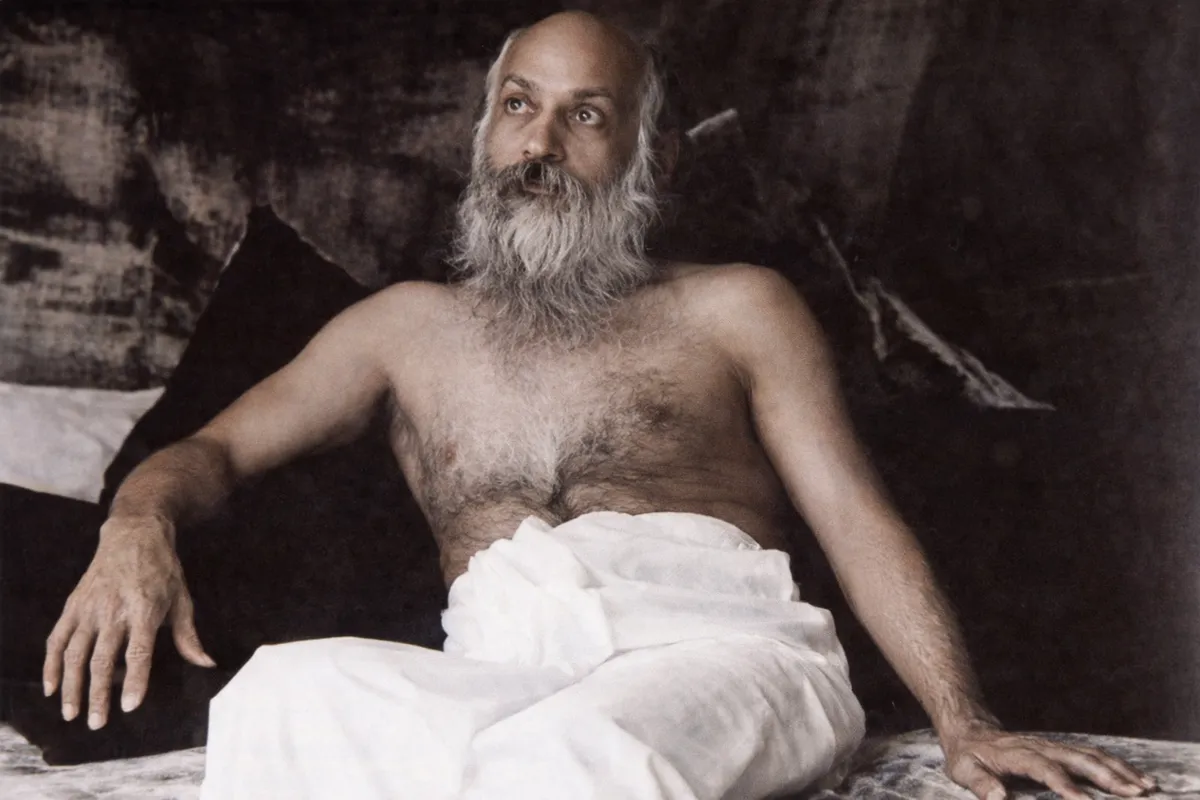
A teacher can show you the path, but you must do the walking—don’t cling to the teacher and stop.
From the Discourses
Passages where Osho speaks to this question — each links to the complete discourse.
Osho, Mahavira preached asharan—seek no refuge—and yet he also made disciples. Are these two not mutually contradictory?
They look contradictory; they are not. And whoever has been a truly awakened being in this world will always appear paradoxical. Life is paradoxical, so whoever mirrors life in its suchness will also appear paradoxical. Only the pundit is not paradoxical. The knower will always be paradoxical, because the knower does not prune life, he does not force a framework onto it. For him, life as it is, is accepted. He simply reflects life, and whatever is in life gets reflected in him. He functions as a mirror. Now Mahavira says, asharan—seek no refuge. Do not go into anyone’s shelter. Yet disciples come to Mahavira and say, “Siddhe sharanam pavajjhami.” O perfected one! We come to your refuge. “Arihante sharanam pavajjhami.” O victorious, realized one! We come to your refuge. Mahavira accepts them too. Then it seems all upside down: Mahavira says, “No refuge,” and yet those who seek refuge…
दूसरा प्रश्न: ओशो, महावीर अशरण का उपदेश देते थे और शिष्य भी बनाते थे। क्या ये दोनों बातें परस्पर-विरोधी नहीं हैं?
… तो जो भी इस जीवन को झलकाएगा इसकी सचाई में, वह भी विरोधाभासी होगा। सिर्फ पंडित विरोधाभासी नहीं होते। ज्ञानी सदा विरोधाभासी होंगे। क्योंकि ज्ञानी छांटता नहीं। वह जिंदगी पर कोई ढांचा नहीं रोकता। उसके लिए जिंदगी जैसी है, स्वीकार है। वह सिर्फ जिंदगी को झलका देता है। फिर जो भी जिंदगी में है, वह सब उसमें झलक जाता है। वह दर्पण का काम करता है। अब यह बात महावीर कहते हैं, अशरण। किसी की शरण मत जाओ। लेकिन महावीर के पास शिष्य आते हैं। शिष्य कहते हैं, ‘सिद्धे शरणं पवज्झामि।’ हे सिद्ध पुरुष! हम तुम्हारी शरण आते हैं। ‘अरिहंते शरणं पवज्झामि।’ हे पहुंचे हुए पुरुष! …
Osho, why could Mahavira not find any master or sect at whose feet he could surrender? What was Mahavira seeking?
And remember: one who bows to someone is always stiff before someone else. One who touches somebody’s feet is eager to have others touch his feet. I once went to the ashram of a great sannyasin. On a big platform the head sannyasin was seated; below him, on a smaller seat, sat another sannyasin; below that, others were sitting on the floor. The head sannyasin said to me, “Do you see who is sitting beside me?” I said, “I don’t need to know; someone is sitting, that’s enough.” He insisted, “Perhaps you don’t know—he is the Chief Justice of the High Court. Not an ordinary man! But very humble—he never sits on the platform with me, always on the smaller seat below.” I said, “That I can see. But below even that small seat some others are sitting—he is not humble towards them; he sits above them. And they are…
प्रश्न: ओशो, महावीर को ऐसा कोई गुरु अथवा पंथ क्यों नहीं मिल सका, जिनके चरणों में महावीर अपना आत्मसमर्पण कर सकें? महावीर ऐसा क्या चाहते थे?
और ध्यान रहे, जो व्यक्ति किसी के प्रति झुकता है, वह किसी के प्रति सदा अकड़ा रहता है। और जो व्यक्ति किसी के चरण छूता है, वह किसी से चरण छुआने की आतुरता में रहता है। मैं एक बड़े संन्यासी के आश्रम में गया था। एक बड़े मंच पर संन्यासी बैठे हुए हैं, उनके मंच के नीचे ही एक छोटा तख्त है, उस पर एक दूसरे संन्यासी बैठे हैं, उस तख्त के नीचे और संन्यासी बैठे हुए हैं। उन बड़े संन्यासी ने मुझसे कहा कि आप देखते हैं मेरे बगल में कौन बैठा हुआ है? मैंने कहा, मुझे जरूरत नहीं है; कोई बैठा है जरूर, कोई जरूरत नहीं है। नहीं, उन्होंने कहा, आपको शायद पता नहीं, वे हाईकोर्ट के चीफ जस्टिस थे। साधारण आदमी नहीं हैं! लेकिन बड़े विनम्र हैं, कभी मेरे साथ तख्त पर नहीं बैठते, हमेशा छोटे तख्त पर नीचे बैठते हैं।
Osho, Mahavira refused to take anyone’s support—that is right. But along with that, a question arises: just as it is important not to take support, it should be equally important not to give support. Yet his way of expressing himself, and then the whole structure of shravaks and shramans and all that—this amounts to giving support to others. So why was this aspect not considered: if I do not take support, who am I to give support to another?
They would say… Sicily is a small island to the south. The Sophists offered an example: a man came from Sicily and, on arriving in Athens, said, “In Sicily, everyone is a liar.” Someone stood up and asked him, “Where are you from?” He said, “I am from Sicily.” The man said, “Now we are in trouble! You say everyone in Sicily is a liar, and you are from Sicily; so you are a liar—what shall we do with your statement? And if we accept that everyone in Sicily is a liar, then at least one person in Sicily must be telling the truth, and your statement becomes false. If we do not accept that everyone in Sicily is a liar—if we take you to be lying—again we land in a difficulty.” Someone stood up and said, “What shall we do?” Perhaps the man himself had no idea what to…
प्रश्न: ओशो, महावीर ने किसी दूसरे का सहारा लेने से इनकार कर दिया, सही बात है। लेकिन साथ ही साथ प्रश्न यह उठता है कि जितना महत्वपूर्ण सहारा न लेना है, उतना ही महत्वपूर्ण सहारा न देना भी होना चाहिए। लेकिन उनकी अभिव्यक्ति और उसके बाद फिर श्रावक और श्रमण और यह सारी चीज है--यह दूसरे को सहारा देने वाली बात हुई। तो इस पहलू पर क्यों नहीं विचार किया गया कि मैं जब सहारा नहीं लेता हूं तो मैं सहारा दूसरे को देने वाला भी कौन हूं?
तो वे कहते थे...सिसली नीचे एक छोटा द्वीप है। और सोफिस्ट एक उदाहरण लेते थे कि सिसली से एक आदमी आया और उसने एथेंस में आकर कहा कि सिसली में सब लोग झूठ बोलने वाले हैं! तो एक आदमी ने खड़े होकर उससे पूछा कि तुम कहां के रहने वाले हो? …
Osho, yesterday you said that when anger is watched consciously, it dissolves. But why is it that when sexual desire arises, even in awareness its intensity persists? Why is it so?
There is no entanglement in the breath. If you try to practice on anger… Anger is not happening every moment; it happens sometimes. And when it happens, it happens with such intensity that you are already going deep into it; so much is at stake in those moments that you may think, “We will look into awareness later; first let’s settle this now.” Lust is very deep, because existence has made it so deep; life depends on it. If lust were so easy that you decided and were freed, perhaps you would not even have been born—because many before you would have become free, and the possibility of your being would have been almost nil. But your parents, and their parents, did not become free; therefore you are. You too will not get free so easily, because your children are also to be—they are waiting: “Do not run away midway.”…
दूसरा प्रश्न: ओशो, आपने कल कहा कि क्रोध को होशपूर्वक देखने पर क्रोध विलीन हो जाता है। लेकिन क्या कारण है कि कामवासना के उठने पर होश में भी उसकी प्रगाढ़ता बनी रहती है। ऐसा क्यों है?
श्वास में कुछ झंझट नहीं है। अब तुम या तो क्रोध पर साधोगे...। क्रोध रोज तो होता नहीं, प्रतिपल होता नहीं, कभी-कभी होता है; जब होता है तब इतनी प्रगाढ़ता से होता है कि तुम गहरे में उतर रहे हो; जब होता है तब इतनी बातें दांव पर लग जाती हैं कि शायद तुम सोचोगे, ‘फिर देख लेंगे होश इत्यादि! यह अभी, अभी तो निपट लें।’ कामवासना तो बहुत गहरी है, क्योंकि प्रकृति ने उसे बहुत गहरा बनाया है, क्योंकि जीवन उस पर निर्भर है। अगर कामवासना इतनी आसान हो कि तुमने चाहा और छूट गए, तो तुम शायद पैदा ही न होते, क्योंकि तुमसे पहले बहुत लोग छूट चुके होते; तुम्हारे होने की संभावना न के बराबर होती। मगर वह तो तुम्हारे माता-पिता उनके माता-पिता नहीं छूट सके, इसलिए तुम हो। तुम भी इतनी आसानी से न छूट जाओगे, क्योंकि तुम्हारे बच्चों को भी होना है; वे भी प्रतीक्षा कर रहे हैं कि ऐसे भाग मत जाना बीच से। जीवन बहुत कुछ टिका है कामवासना पर। इसलिए उसका छूटना इतना आसान नहीं है। असंभव नहीं है, आसान भी नहीं है। …
Osho, immediately after his enlightenment Buddha said: Having known by myself, whom shall I call a master and whom shall I teach, whom shall I make a disciple? And yet for forty years he initiated and taught millions. But before the Mahaparinirvana, his final instruction was: Atma Deepo Bhava! Bhagwan, please shed some light on this.
You know how to play the veena. Your fingers are skillful. The veena is there. Yet music is not arising. You are not placing your fingers on the strings. You are not pouring your skill onto the veena. Pour your skill onto the veena; the veena will shower music on you. Everything is present. You know how to cook. There is flour, salt, ghee, lentils, water, the fire is lit—and you sit hungry! And you also know how to cook! Nothing is lacking. Everything is there. Only a little coordination is needed. A little arrangement is needed. There will be no need to remain hungry. Therefore Buddha says: Whom shall I teach? What shall I teach? Truth cannot be taught at all. Whatever is taught will not be truth. Even to say “taught” is too much; truth cannot even be said. Whatever is taught is not your nature. All teaching…