
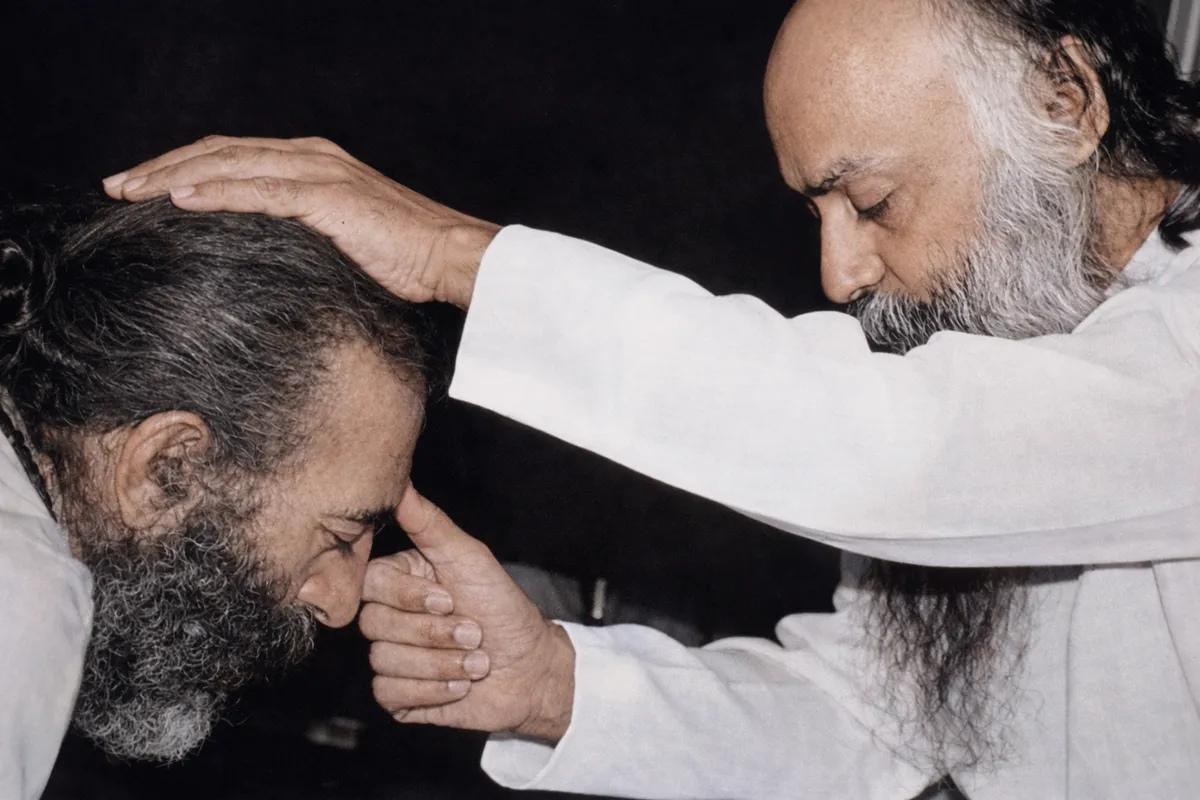
Osho's original Hindi beside Osho Live's English translation, matched passage by passage.
मनुष्य दो भांति से विकसित होता है। एक तो उसके पास साधन, सुविधाएं, संपत्ति, परिग्रह बढ़ता चला जाए, लेकिन आत्मा न बढ़े। और दूसरा, उसकी अंतस-चेतना बढ़े। संसार में जो भी हम पा सकते हैं, उससे हम विकसित नहीं होते। हमारी शक्ति भला विकसित होती हो; हमारे महल बड़े हो जाते हों, हमारी धन की राशि बड़ी हो जाती हो, हमारा ज्ञान बड़ा संग्रह बन जाता हो, स्मृति भरपूर हो जाती हो; उपाधियां, सम्मान, सत्कार मिल जाते हों, लेकिन भीतर की चेतना, भीतर की आत्मा, बीइंग, वैसा ही अविकसित रह जाता है जैसा जन्म के साथ था।
Man evolves in two ways. One: his means, his conveniences, his property, his possessions go on increasing, but the soul does not grow. And the other: his inner consciousness expands. Whatever we can get in the world does not truly develop us. Our power may grow; our palaces may become larger; our wealth may swell; our knowledge may become a vast hoard, memory may be brimming; degrees, honors, welcomes may come our way — yet the inner consciousness, the inner soul, the Being, remains as undeveloped as it was at birth.
बाहर की यह दौड़ सभी को पकड़ लेती है। भीतर की दौड़ बड़ी मुश्किल से कभी किसी को पकड़ती है। उसके भी कारण हैं।
This outer race seizes everyone. The inner race, only with great difficulty, ever seizes anyone. There are reasons for this.
बाहर की दौड़ इसलिए आसानी से पकड़ लेती है कि बाहर का हमें इंद्रियों के द्वारा अनुभव होता है। आंखों से दिखाई पड़ती हैं वस्तुएं, कानों से ध्वनियां सुनाई पड़ती हैं, नाक गंध की खबर देती है, स्वाद मिलता है। शरीर के सारे उपकरण बाहर की खबर देते हैं, भीतर की कोई खबर नहीं देते। शरीर विकसित ही इसलिए हुआ है कि उससे बाहर की खबर मिल सके। शरीर आत्मा और बाहर के बीच सेतु है, इसलिए शरीर बाहर की खबर देता है। इस खबर के मिलते ही चेतना बाहर की तरफ दौड़नी शुरू हो जाती है।
The outer race catches us easily because the outer is experienced through the senses. Things are seen by the eyes, sounds are heard by the ears, the nose reports fragrances, taste is savored. All the instruments of the body bring news of the outside, none bring news of the within. The body has evolved precisely to bring reports of the outside. The body is a bridge between the soul and the outer, therefore the body reports the outer. As soon as this news is received, consciousness starts running toward the outside.
आंखें बाहर देखती हैं, भीतर तो देखती नहीं। और जहां हमें दिखाई पड़ता है, वहीं मार्ग भी मालूम होता है। समस्त इंद्रियां बहिर्गामी हैं। होंगी ही। क्योंकि अंतर्गामी इंद्रियों की कोई जरूरत नहीं है। जो भीतर है मेरे, उसे तो मैं बिना इंद्रियों के भी जान ले सकता हूं। जो बाहर है, उसे बिना इंद्रियों के जानने का कोई उपाय नहीं है।
The eyes see outward; they do not see within. And wherever we can see, there the path also appears to be known. All the senses are extrovert. They must be. For there is no need of introvert senses. What is within me I can know even without the senses. What is outside, there is no way to know without the senses.
मनुष्य की सारी इंद्रियों का विकास बाहर के जगत को जानने की आकांक्षा से हुआ है। मेरे हाथ आपको छू सकते हैं। मेरे हाथ से मैं सब कुछ पकड़ सकता हूं, सिर्फ अपने हाथ को छोड़कर। मेरी आंखें सब कुछ देख सकती हैं, सिर्फ मेरी आंखें खुद को नहीं देख सकतीं। आंख आंख को ही नहीं देख सकती।
All the senses of man have evolved out of the urge to know the outer world. My hands can touch you. With my hands I can grasp everything — everything except my own hand. My eyes can see all, except my own eyes. The eye cannot see the eye.
स्वभावतः इस कारण चेतना बाहर की तरफ बहती है। और हम बाहर के संग्रह में, बाहर के संसार में, बाहर की वस्तुओं में, उनके बढ़ाने में, उनके विकास में संलग्न हो जाते हैं। ऐसे एक आदमी संपत्तिशाली हो जाता है और भीतर दरिद्र रह जाता है। ऐसे एक आदमी महाशक्तिशाली हो जाता है--बाहर की दुनिया में, लेकिन भीतर दीन रह जाता है। और जब तक भीतर दीनता है, तब तक बाहर की कोई शक्ति और सामर्थ्य किसी काम में आने वाली नहीं।
Naturally thus, consciousness flows outward. And we become engaged in outer accumulation, in the world outside, in things outside — in increasing them, in developing them. Thus one man becomes wealthy and remains inwardly poor. Thus one man becomes mighty — in the outer world — but remains inwardly mean. And so long as there is inner poverty, no outer power or might will be of any use.
दूसरी बात, हमारे चारों तरफ बाहर दौड़ते हुए लोग हैं, और आदमी का मन बड़ा नकलची है। हम सीखते ही सारी बातें नकल से हैं। भाषा घर में जो बोली जाती है, बच्चा सीख लेगा। स्वभावतः और किसी भाषा को सीखने का उपाय भी नहीं है। घर के मां-बाप जिस धर्म को मानते हैं, बच्चा भी मानने लगेगा। जिस मंदिर में प्रार्थना-पूजा करते हैं, वह भी वहां जाने लगेगा। घर, परिवार, गांव, समाज, देश के लोग जिस तरफ दौड़ रहे हैं, बच्चा भी उसी दौड़ में सम्मिलित हो जाएगा।
Secondly, all around us people are running outward — and the mind of man is great at imitation. Everything we learn, we learn by imitation. The language spoken at home the child will learn. Naturally, there is no other way to learn any language. The religion the parents hold, the child too will begin to hold. The temple where they pray and worship, he too will begin to go. The direction in which the people of the home, the family, the village, the society, the nation are running — the child will join that very race.
हम भीड़ के साथ बहते हैं। सभी लोग बाहर की तरफ दौड़ रहे हैं। उन सबके साथ हम भी दौड़ते चले जाते हैं। सारा शिक्षण बाहर की यात्रा का है, अंतर-यात्रा का कोई शिक्षण नहीं है।
We flow with the crowd. Since all are running outward, we run along with them. The whole education is about the outer journey; there is no education for the inner journey.
इस देश ने कुछ कोशिश की थी। जब ये उपनिषद रचे गए, तब वह कोशिश अपनी चरम अवस्था में थी। इसके पहले की कोई बच्चा बाहर के संसार से जुड़े, हम उसे भेज देते थे गुरुकुल, उन लोगों के पास जो भीतर की तरफ दौड़ रहे हैं। इसके पहले कि कोई बाहर की तरफ जाए, हम उसे भीतर का स्वाद दे देना चाहते थे।
This land once made an attempt. When the Upanishads were composed, that attempt had reached its peak. Before any child could be tied to the world outside, we used to send him to the gurukul — to those who were running toward the within. Before he went toward the outside, we wanted to give him a taste of the inner.
एक बार भी वह स्वाद आ जाए, तो फिर बाहर का कोई भी स्वाद उससे कीमती कभी भी नहीं हो पाता। और एक बार इस बात का रस आ जाए कि भीतर भी एक जगत है, तो बाहर की सब दौड़ फीकी और उदास मालूम होने लगती है। फिर कोई बाहर चले भी तो भी कर्तव्यवश चलता है, वासनावश नहीं। फिर कोई बाहर के जीवन में संलग्न भी रहे, तो साक्षी की तरह संलग्न होता है, भोक्ता की तरह नहीं।
If even once that taste comes, then no outer taste can ever be more precious than it. And once the relish of this is known — that there too is an inner world — then all the outer rush begins to look pale and dull. Then even if one goes outward, he goes out of duty, not out of craving. Then even if one remains engaged in outer life, he is engaged as a witness, not as a consumer.
सिर्फ भारत ने एक अनूठा प्रयोग किया था कि इसके पहले कि भीड़ पकड़ ले और आदमी बाहर की तरफ बहने लगे, हम उसे गुरुकुल भेज देते थे, ताकि वह उन लोगों के सान्निध्य में बैठ जाए जो भीतर की तरफ बह रहे हैं। उस हवा में वह भी भीतर की तरफ बह पाए। और थोड़ा-सा उसे बोध हो जाए, थोड़ा संगीत सुनाई पड़ने लगे, थोड़ी भीतर की वीणा बज उठे, फिर हम उसे संसार में भेज देते थे, निर्भीक।
Only India made a unique experiment: before the crowd could seize a man and he begin to be carried outward, we sent him to the gurukul so that he would sit in the presence of those who are flowing inward. In that breeze he too might flow within. If a little awakening happened, if a little music began to be heard, if the inner veena sounded a little, then we would send him into the world — unafraid.
हमने इस देश में जीवन के चार चरण किए थे। पहले चरण को हमने ब्रह्मचर्य कहा था। यह शब्द बड़ा अनूठा है। इस शब्द का अर्थ है--ईश्वर जैसी चर्या। ब्रह्म जैसी चर्या। ब्रह्म जैसा आचरण। यह शब्द उतना छोटा नहीं है जैसा कि लोगों ने इसे मान रखा है। लोग तो समझते हैं कि शायद वीर्य का निरोध ब्रह्मचर्य है। यह बड़ी क्षुद्र व्याख्या है। वीर्य का निरोध तो सहज हो जाता है। लेकिन ईश्वर जैसी चर्या अगर हो, तो वीर्य का निरोध तो छाया की भांति पीछे चला आता है। वह कोई मौलिक, वह कोई आधारभूत बात नहीं है। वह तो जो बाहर की तरफ दौड़ रहा है, उसका ही वीर्य भी बाहर की तरफ दौड़ता है। जो भीतर की तरफ चलने लगा, उसके वीर्य की गति भी अंतर्मुखी हो जाती है।
In this land we made four stages of life. We called the first stage brahmacharya. This is a very unique word. It means: conduct like Brahman; God-like movement; Brahman-like behavior. The word is not as small as people take it to be. People think perhaps brahmacharya is semen-retention. This is a very paltry interpretation. Retention happens naturally. But if there is God-like conduct, then retention follows like a shadow. It is neither a fundamental, nor a foundational matter. The one who is running outward — even his semen runs outward. The one who has begun to move inward — the current of his semen also becomes inward.
ईश्वर जैसी चर्या का अर्थ है--जिसकी जीवन-चेतना भीतर, और भीतर, और भीतर की तरफ जा रही है। केंद्र की तरफ जाती हुई चेतना का नाम ब्रह्मचर्य है। अपने से बाहर जाती चेतना का नाम अब्रह्मचर्य है। दूसरे की तरफ जाती हुई चेतना का नाम कामवासना है। अपनी तरफ जाती हुई चेतना का नाम ब्रह्मचर्य है।
God-like conduct means: whose life-consciousness is going within — and within — and yet more within. Consciousness moving toward the center is brahmacharya. Consciousness moving outside oneself is abrahmacharya. Consciousness going toward the other is lust. Consciousness returning toward oneself is brahmacharya.
पच्चीस वर्ष के लिए हम युवकों को भेज देते थे गुरुकुल में, ताकि वे भीतर की तरफ बहना सीखें। इसके पहले कि संसार का स्वाद उन्हें आए वे परमात्मा का थोड़ा-सा स्वाद ले लें। फिर कोई डर नहीं है। फिर संसार उन्हें कभी भी भुला न सकेगा। फिर वह याद बनी ही रहेगी। फिर वह भीतर की पुकार जारी ही रहेगी। फिर भीतर कोई धुन बजती ही रहेगी। और धन फिर कितनी ही आवाज करे, उस भीतर की आवाज को दबाना मुश्किल होगा।
For twenty-five years we used to send youths to the gurukul so that they might learn to flow inward. Before the taste of the world could arise, let them have a little taste of the Supreme. Then there is no fear. The world can never make them forget. That remembrance abides. The inner call goes on. Some melody keeps sounding within. And then however loudly wealth may call, it will be hard to drown that inner voice.
स्त्रियां पुरुषों को कितना ही आकर्षित करें, या पुरुष स्त्रियों को कितना ही आकर्षित करें, वह आकर्षण फीका ही रहेगा। जिसने एक बार भी भीतर के पुरुष या भीतर की स्त्री का दर्शन कर लिया, उसके लिए बाहर फिर छायाएं हैं, फिर बाहर तस्वीरें हैं, फिर बाहर कुछ भी वास्तविक नहीं है। फिर कोई आकर्षण बाहर नहीं है। फिर कोई खींच नहीं सकता। तब हम मानते थे व्यक्ति को इस योग्य कि वह अब संसार में जाए।
However much women may attract men, or men attract women, that attraction remains pale. One who has once seen the inner man or the inner woman — for him the outer is shadow, mere picture; outside nothing is anymore real. No attraction remains. None can pull him. Then we considered him fit to go into the world.
बड़ी अजीब बात है। संसार के बाहर का अनुभव ले ले, फिर संसार में जाए। प्रयोजन कीमती था। फिर कोई संसार में जाता था तो भी संसार उसके भीतर नहीं पहुंच पाता था। जिसने भीतर की थोड़ी-सी भी समझ पैदा कर ली, वह संसार से फिर अछूता निकल जाता था। वह चलता था इस नदी में, लेकिन उसके पैरों में पानी नहीं छूता था। फिर वह गुजरता था इन्हीं सब जगहों से, जहां से आप गुजरते हैं, लेकिन वह गुजर जाता था एक मेहमान की तरह। यह घर उसके लिए धर्मशाला ही होता था। यह परिवार उसके लिए एक नाटक से ज्यादा मूल्य नहीं रखता था। जो भी जरूरी था, वह करता था। लेकिन कोई भी ऐसी वासना नहीं थी जो विक्षिप्तता बन जाए।
It is a strange thing: let him taste the beyond-world, then send him into the world. The purpose was precious. Then even if he went into the world, the world could not reach within him. One who had created even a small understanding of the inner would pass through the world untouched. He would walk through the river, yet water would not touch his feet. He would pass through all the same places you pass, yet he would pass like a guest. This house would be only a dharmashala, a wayside inn. This family would hold no more value than a play. Whatever was necessary he would do — but there would be no craving that becomes derangement.
तो हम दूसरे चरण में उसे गृहस्थ बनाते थे। ऐसा अनूठा प्रयोग पृथ्वी पर फिर कभी दुबारा नहीं हुआ। और जब तक यह प्रयोग दुबारा नहीं होता, पृथ्वी अत्यंत दुख और पीड़ा से भरी रहेगी।
Thus we made him a householder in the second stage. Such a unique experiment was never repeated on earth. And until it is repeated, the earth will remain filled with great sorrow and pain.
बाहर जाने के पहले भीतर पैर मजबूती से जम जाने चाहिए। धन पर हाथ पड़े इसके पहले स्वयं की संपदा का अनुभव हो जाना चाहिए। फिर धन साधन होगा। फिर हम उसका उपयोग कर लेंगे, लेकिन धन फिर हमारा मालिक न हो पाएगा।
Before going outside, the feet within must be firmly planted. Before the hand touches money, the experience of one’s own wealth must dawn. Then money will be a means. We will use it — but money will no longer be our master.
तो ब्रह्मचर्य के बाद हम भेजते थे उसे गृहस्थ में, कि जाए घर में, विवाह करे, संतति हो उसकी। संसार को देखे, संसार को जीए। लेकिन यह व्यक्ति और ढंग से जीता था। इसके जीने का गुण ही अलग था। क्योंकि यह व्यक्ति साक्षी हो पाता था। हम साक्षी नहीं हो पाते, हम भोक्ता हो जाते हैं।
So after brahmacharya, we would send him into the life of a householder — go, marry, have children. See the world, live the world. But this person lived in another way. The quality of his living was different. For he could be a witness. We cannot be witnesses; we become enjoyers.
भोक्ता होना पीड़ा है। साक्षी होना परम आनंद है। और साक्षी को अगर हम नर्क में भी डाल दें, तो भी दुख में नहीं डाल सकते। और भोक्ता को हम स्वर्ग में भी रख दें, तो भी हम दुख के बाहर नहीं ले जा सकते।
To be an enjoyer is misery. To be a witness is supreme bliss. And even if you throw a witness into hell, you cannot put him into sorrow. And even if you place an enjoyer in heaven, you cannot take him out of misery.
भोगी मन दुखी होगा ही। क्योंकि भोगी मन के लक्षण हैं कुछ। भोगी मन का पहला लक्षण तो यह है कि जो भी मिल जाए वह कम मालूम होता है। भोगी मन का दूसरा लक्षण यह है कि उसे जो भी मिल जाए वह व्यर्थ मालूम होता है; जो नहीं मिलता वही सार्थक मालूम होता है। भोगी मन का तीसरा लक्षण यह है कि उसकी वासना अनंत होती है और वासना की पूर्ति के साधन सदा सीमित हैं।
The enjoyer-mind will be miserable. For the enjoyer-mind has certain marks. First: whatever he gets seems less. Second: whatever he gets seems useless; only what he does not get seems meaningful. Third: his desires are infinite, and the means to fulfill them are always finite.
इसलिए भोगी मन को कभी भी किसी तरह के सुख में प्रविष्ट कराना असंभव है। वह हर जगह दुखी होगा। दुख उसके भीतर पैदा होता है। हर चीज उसके दुख में रंग जाती है।
Therefore it is impossible ever to bring the enjoyer-mind into any kind of happiness. He will be miserable everywhere. His sorrow arises within. Everything is colored by his sorrow.
साक्षी को दुखी करना असंभव है। क्योंकि साक्षी के भी वैसे ही लक्षण हैं। साक्षी का पहला लक्षण तो यह है कि जो भी घटना घटती हो, वह उससे अपने को पृथक मानता है। जो भी घट रहा हो, वह उससे अपने को फासले पर देखता है। वह जानता है कि मैं सिर्फ देखने वाला हूं। तो अगर दुख घट रहा है तो वह दुख का भी देखने वाला है। वह दुख के साथ एक नहीं हो पाता। और जब तक आप दुख के साथ एक न हों, तब तक दुखी नहीं हो सकते।
To make a witness miserable is impossible. The witness too has marks. First: whatever event happens, he regards himself as separate from it. Whatever is happening, he sees himself at a distance. He knows, I am only the seer. So if sorrow is happening, he is the seer of sorrow. He cannot become one with sorrow. And until you become one with sorrow, you cannot be sorrowful.
साक्षी मन का दूसरा लक्षण है कि जो भी मिल जाए, वह उसके लिए अनुगृहीत होता है। जो भी मिल जाए, वह उसे परमात्मा की अनुकंपा मानता है। जो भी मिल जाए, वह उसे अपने कर्तृत्व का फल नहीं मानता, उसकी अनुकंपा मानता है। क्योंकि साक्षी कर्ता तो बनता ही नहीं, इसलिए वह यह तो कह ही नहीं सकता कि मैंने किया इसलिए मुझे मिला! वह सदा यही कहता है कि मैंने तो कुछ भी नहीं किया और यह सब मुझे मिला, इसलिए मैं अनुगृहीत हूं। उसके अनुग्रह की कोई सीमा नहीं है। उसके धन्यवाद का, आभार का अहोभाव अनंत है।
Second: whatever comes, he is grateful. Whatever comes, he takes as grace of the Divine. Whatever comes, he does not regard it as the fruit of his doing but as His compassion. For the witness never becomes a doer, therefore he cannot say, I did, therefore I received. He always says, I did nothing, and all this has been given — therefore I am obliged. His sense of grace has no limit. His thankfulness, his wonder of gratitude, is infinite.
इसे समझ लें।
Understand this well.
साक्षी का मतलब ही यह है कि वह जानता है, मैंने कभी कुछ नहीं किया। मैं सिर्फ देखने वाला हूं। तो जो कुछ भी हुआ है, वह मेरे द्वारा नहीं हुआ है, उसमें मैं कर्ता नहीं हूं। इसलिए जो भी हो जाए, वह प्रभु की अनुकंपा है।
Witnessing means: he knows, I have never done anything. I am only the seer. So whatever has happened has not happened by me; I am not the doer in it. Therefore whatever happens is the Lord’s compassion.
साक्षी से सुख को छीनना असंभव है। साक्षी उस कला को जानता है, जिससे उसके चारों तरफ सुख फैलता है। जैसे मकड़ी अपने भीतर से जाले को निकालकर निर्मित करती है, वैसा ही भोक्ता अपने चारों तरफ दुख का जाल निर्मित करता है और साक्षी अपने चारों तरफ सुख का जाल निर्मित करता है।
You cannot snatch away happiness from a witness. He knows the art by which happiness spreads around him. As the spider draws out from within and spins its web, so the enjoyer spins a web of sorrow around himself, and the witness spins a web of bliss around himself.
फिर साक्षी की कोई वासना नहीं है। क्योंकि जब मैं कर्ता हो ही नहीं सकता, तो करने की कोई कामना व्यर्थ है। और जिसकी कोई वासना नहीं है, जिसकी कोई अपेक्षा नहीं है, उसे आप कभी भी दुखी नहीं कर सकते। दुख आता है अपेक्षा के टूटने से।
Then the witness has no craving. For when I cannot be the doer, then all desire to do is futile. And one who has no craving, no expectation — you can never make him miserable. Sorrow comes from the breaking of expectation.
मैंने सुना है कि एक आदमी बहुत उदास और दुखी बैठा है। उसकी एक बड़ी होटल है। बहुत चलती हुई होटल है। और एक मित्र उससे पूछता है कि तुम इतने दुखी और उदास क्यों दिखाई पड़ते हो कुछ दिनों से? कुछ धंधे में कठिनाई, अ़ड़चन है? उसने कहा, बहुत अड़चन है। बहुत घाटे में धंधा चल रहा है। मित्र ने कहा, समझ में नहीं आता, क्योंकि इतने मेहमान आते-जाते दिखाई पड़ते हैं! और रोज शाम को जब मैं निकलता हूं तो तुम्हारे दरवाजे पर होटल के तख्ती लगी रहती है नो वेकेंसी की, कि अब और जगह नहीं है, तो धंधा तो बहुत जोर से चल रहा है! उस आदमी ने कहा, तुम्हें कुछ पता नहीं। आज से पंद्रह दिन पहले जब सांझ को हम नो वेकेंसी की तख्ती लटकाते थे, तो उसके बाद कम से कम पचास आदमी और द्वार खटखटाते थे। अब सिर्फ दस-पंद्रह ही आते हैं। पचास आदमी लौटते थे पंद्रह दिन पहले; जगह नहीं मिलती थी। अब सिर्फ दस-पंद्रह ही लौटते हैं। धंधा बड़ा घाटे में चल रहा है।
I have heard: a man sat very sad and miserable. He owned a big hotel — a very busy hotel. A friend asked, Why do you look so sad these days? Some difficulty in business? He said, Great difficulty. Business is running at a big loss. The friend said, I don’t see how — so many guests coming and going! And every evening when I pass by, your door carries the sign 'No Vacancy', that there is no room — business must be brisk! The man said, You know nothing. Fifteen days ago when we hung 'No Vacancy' in the evening, at least fifty people still knocked. Now only ten or fifteen come. Fifteen days ago fifty went away for want of rooms; now only ten or fifteen go away. Business is running at a great loss.
अपेक्षा से भरा हुआ चित्त निश्चित ही दुखी होगा।
A mind full of expectations is bound to be miserable.
मैं एक घर में मेहमान था। गृहिणी ने मुझे कहा कि आप मेरे पति को समझाइए कि इनको हो क्या गया है। बस, निरंतर एक ही चिंता में लगे रहते हैं कि पांच लाख का नुकसान हो गया। पत्नी ने मुझे कहा कि मेरी समझ में नहीं आता कि नुकसान हुआ कैसे! नुकसान नहीं हुआ है। मैंने पति को पूछा। उन्होंने कहा, हुआ है नुकसान, दस लाख का लाभ होने की आशा थी, पांच का ही लाभ हुआ है। नुकसान निश्चित हुआ है। पांच लाख बिलकुल हाथ से गए।
I was a guest in a home. The hostess said, Please explain to my husband what has come over him — he is continuously worried: a loss of five lakhs! It is not clear to me how a loss occurred; there has been no loss. I asked the husband. He said, There has been a loss — we hoped for a profit of ten lakhs, only five came. Certainly a loss: five lakhs gone out of hand.
अपेक्षा से भरा हुआ चित्त, लाभ हो तो भी हानि अनुभव करता है। साक्षीभाव से भरा हुआ चित्त, हानि हो तो भी लाभ अनुभव करता है। क्योंकि मैंने कुछ भी नहीं किया, और जितना भी मिल गया, वह भी परमकृपा है; वह भी अस्तित्व का अनुदान है।
A mind full of expectation experiences loss even when there is profit. A mind full of witnessing experiences profit even in loss — for I did nothing, and whatever came is also supreme grace; it is also a gift of existence.
तो गृहस्थ हम बनाते थे व्यक्ति को, जब वह भीतर के साक्षी की थोड़ी-सी झलक पा लेता था। फिर पत्नी होती थी, लेकिन वह कभी पति नहीं हो पाता था। फिर बच्चे होते थे, वह उनका पालन करता था, लेकिन कभी पिता नहीं हो पाता था। मकान बनाता था, दुकान चलाता था, लेकिन सब ऐसे जैसे किसी नाटक के मंच पर अभिनय कर रहा हो। और प्रतीक्षा करता था उस दिन की, कि वह जो भीतर की यात्रा पच्चीस वर्ष की उम्र में अधूरी छूट गई थी, जल्दी से उसे पूरा करने का कब अवसर मिले। तो पचास वर्ष की उम्र में वह वानप्रस्थ हो जाता था।
Thus we made a man a householder when he had caught a little glimpse of the inner witness. Then there was a wife, but he could never become a husband. Then there were children; he cared for them, but he could never become a father. He built a house, ran a shop — but all as if acting upon a stage. And he waited for the day when that inner journey, left incomplete at twenty-five, could be completed. At fifty he entered vanaprastha.
वानप्रस्थ का अर्थ था कि अब उसकी नजर फिर जंगल की तरफ। जंगल से ही शुरू हुई थी उसकी यात्रा, अब वह फिर जंगल की तरफ देखने लगा। लेकिन अभी जंगल चला नहीं जाता था, क्योंकि उसके बच्चे पच्चीस वर्ष के होकर गुरुकुल से वापस लौट रहे होंगे। और अभी बाप एकदम छोड़कर चला जाए, तो बच्चे बिलकुल मुश्किल में पड़ जाएंगे। उन्हें भीतर का तो थोड़ा-सा अनुभव हुआ है, लेकिन बाहर के उपद्रव के जाल की शिक्षा भी चाहिए।
Vanaprastha meant that his gaze turned again toward the forest. From the forest his journey had begun; again he looked toward the forest. But he did not leave yet, because his children would be returning from the gurukul at twenty-five. If the father left suddenly, the children would be in difficulty. They had some experience of the inner, but needed education in the snares of the outer world.
तो बाप घर रुकता था, पच्चीस वर्ष। पचहत्तर वर्ष की उम्र तक वह घर रुकता। उसका मुख जंगल की तरफ होता; वह घर से अपना डेरा उखाड़ने लगता। लेकिन बच्चे लौटते हैं आश्रम से, उनको इस संसार की जो व्यवस्था है, इसका जो उसका अपना अनुभव है, वह उसे दे देना है। और जब वह पचहत्तर साल का होता, तो वह संन्यस्त हो जाता। वह वापस जंगल में लौट जाता। क्योंकि जब वह पचहत्तर साल का होता, तब उसके बच्चे पचास साल के करीब पहुंचने लगते। उनके वानप्रस्थ होने का वक्त आ जाता।
So the father stayed at home for twenty-five more years. Until seventy-five he stayed. His face toward the forest; he began uprooting his camp from the home. But the children returning from the ashram — he had to pass on to them his experience of the world’s arrangements. And when he reached seventy-five, he took sannyas. He returned to the forest. For by then his children were nearing fifty; their time for vanaprastha had arrived.
यह जो पचहत्तर साल की अवस्था में संन्यस्त होकर चले जाते लोग, ये गुरु हो जाते। छोटे बच्चे इनके पास पहुंचते। ऐसा हमारा वर्तुल था। जो सारे जीवन की सब अवस्थाओं को देखकर लौट आया है जंगल में, उसके पास हम अपने छोटे बच्चों को भेज देते थे कि उससे वे जीवन का सार और जीवन की कुंजी लेकर आ जाएं।
Those who took sannyas at seventy-five became gurus. Little children reached them. Such was our circle. One who had seen all the stages of life and returned to the forest — to him we sent our little ones, that they might bring back from him the essence and key to life.
शिक्षक और विद्यार्थी के बीच इतना फासला तो होना ही चाहिए। आज जगत में बड़ी असुविधा है, क्योंकि शिक्षक और विद्यार्थी के बीच कोई सम्मान का भाव नहीं है। हो भी नहीं सकता, क्योंकि फासला बिलकुल नहीं है। कई बार तो ऐसा है कि हो सकता है विद्यार्थी ज्यादा अनुभवी हो शिक्षक से। और अगर थोड़ा बहुत फासला भी है तो वह इतना इंच दो इंच का है कि उसमें कोई आदरभाव पैदा नहीं होता।
There must be this much distance between teacher and student. Today the world is inconvenienced: there is no feeling of respect between teacher and student. Nor can there be — because there is no distance. Sometimes it even happens that the student may be more experienced than the teacher. And if there is any distance, it is so small — an inch or two — that no reverence can arise in it.
लेकिन एक पचहत्तर साल का बूढ़ा, जिसने जीवन के ब्रह्मचर्य का, गार्हस्थ का, वानप्रस्थ होने का और संन्यस्त होने का सारा अनुभव संजो लिया है, जब छोटे बच्चे उसके पास जाते तो उन्हें लगता कि वे किसी हिमाच्छादित शिखर के पास आ गए हैं। उसकी चोटी बड़ी ऊंची होती, आकाश छूती! वहां सम्मान सहज होता।
But a seventy-five-year-old elder, who has gathered the whole experience of brahmacharya, householder, vanaprastha, and sannyas — when little children came to him, they felt they had come near a snow-clad peak. Its summit so high, touching the sky! There reverence was spontaneous.
लोग कहते हैं, गुरु का आदर करना चाहिए। और मैं कहता हूं, जिसका आदर करना ही पड़े, वही गुरु है। करना चाहिए का कोई सवाल नहीं उठता। और जहां करना चाहिए का सवाल उठता है, वहां कोई आदर हो नहीं सकता। आदर कोई थोपा नहीं जा सकता, उसकी कोई मांग नहीं हो सकती।
People say, One should respect the guru. I say, He whose respect happens of itself — he alone is guru. There is no question of should. Wherever should arises, reverence cannot happen. Reverence cannot be imposed; it cannot be demanded.
जीवन में दो यात्राएं हैं--एक भीतर की तरफ, एक बाहर की तरफ।
There are two journeys in life — one toward the within, one toward the without.
इस सूत्र में अब हम प्रवेश करें।
Now let us enter this sutra.
इस प्रकार परीक्षा करके जब यम ने समझ लिया कि नचिकेता दृढ़निश्चयी, परम वैराग्यवान एवं निर्भीक है, अतः ब्रह्मविद्या का उत्तम अधिकारी है, तब ब्रह्मविद्या का उपदेश आरंभ करने के पहले, उसका महत्व प्रकट करते हुए यम ने कहा...।
Having thus tested him, when Yama understood that Nachiketa is resolute, supremely dispassionate and fearless, and thus the most worthy recipient of Brahmavidya, then — before beginning to impart Brahmavidya — he proclaimed its significance...
उसने कई बातें जांच लीं। उसने एक तो समझ लिया कि यह नचिकेता वैराग्य-भाव से भरा है। जो वैराग्य-भाव से भरा है, वही भीतर जा सकता है। जो राग-भाव से भरा है, वह बाहर जाएगा। क्योंकि हम वहीं जाते हैं, जहां हमारी तृप्ति हो। राग की तृप्ति है बाहर, वासना की तृप्ति है बाहर, काम की तृप्ति है बाहर; इच्छाएं तो पूरी होंगी बाहर, तृष्णाएं तो पूरी होंगी बाहर। होंगी या नहीं होंगी, लेकिन आभास, पूरे होने का, बाहर है।
He examined many things. First he understood that this Nachiketa is filled with the mood of dispassion. Only one filled with dispassion can go within. One filled with attachment will go outward. For we go where we expect gratification. The gratification of attachment is outside, the gratification of desire is outside, the gratification of lust is outside. Wishes — whether fulfilled or not — have their mirage of fulfillment outside.
यम को जब पक्का हो गया कि नचिकेता वैराग्य को उपलब्ध हो गया है, तब उसे लगा कि अब ब्रह्मविद्या की बात कही जा सकती है। क्योंकि ब्रह्मविद्या का अर्थ है--आत्यंतिक रूप से भीतर जाना; उस बिंदु पर पहुंच जाना, जहां सिर्फ भीतर का ही अस्तित्व रह जाता है, और बाहर खो जाता है। बाहर होता ही नहीं। बाहर जैसी कोई घटना ही नहीं बचती। सब कुछ भीतर ही हो जाता है। सारा अस्तित्व भीतर समा जाता है, समाविष्ट हो जाता है। केंद्र पर ही प्राणों की सारी धारा आ जाती है। लेकिन यह तो तभी होगा, जब प्राण बंट-बंटकर वासनाओं में बाहर न जा रहे हों।
When Yama became certain that Nachiketa had attained dispassion, then he felt Brahmavidya could be spoken. For Brahmavidya means: to go utterly within; to reach that point where only the within remains, and the without disappears. The outside simply ceases to be. No such event as the outer remains. Everything happens within. The whole existence gets absorbed within. The entire current of life returns to the center. But this will happen only when life-energies are not being dissipated outward in desires.
वैराग्य का अर्थ है--बाहर जाने की वृत्ति खो गई हो। और तभी कोई ब्रह्मविद्या में प्रवेश पा सकता है।
Dispassion means: the tendency to go outward has vanished. Only then can one enter Brahmavidya.
यम ने देखा कि नचिकेता वैराग्यवान है, दृढ़-निश्चयी है। इसे हिलाया-डुलाया नहीं जा सकता। ब्रह्मविद्या के खोजी को निश्चय, डिसीसिवनेस तो होनी ही चाहिए।
Yama saw that Nachiketa is dispassionate, resolute. He cannot be shaken. A seeker of Brahmavidya must have decisiveness.
लेकिन हमारा मन तो बड़ा कंपता हुआ है। जरा-सी बात कोई कह दे, हमारे सब निश्चय खो जाते हैं। जरा-सा कोई संदेह पैदा करना चाहे, तत्काल हममें संदेह पैदा हो जाते हैं। लोग डरते हैं; आस्तिक डरते हैं, नास्तिक की बात सुनने से! बड़े कमजोर आस्तिक हैं! डर किस बात का है? कहीं नास्तिकता की बात आस्तिकता को हिला न दे।
But our mind trembles. Someone says a small thing, all our resolves evaporate. Someone sows a small doubt, immediately doubts arise in us. People are afraid; the theist is afraid of listening to the atheist! Such weak theists! What is there to fear? Perhaps atheism may shake theism.
और जो आस्तिकता नास्तिकता की बात से हिल जाती हो, वह दो कौड़ी की है। उसका क्या मूल्य है? वह नास्तिकता से भी गई-बीती है। कम से कम नास्तिक आस्तिकों से डरते तो नहीं! मैंने ऐसा कभी नहीं देखा कि नास्तिक आस्तिक से डरता हो कि यह हमको डिगा देगा। एक नास्तिक नहीं डरता। नास्तिक तलाश करता है कि आस्तिक कहां है कि उसको डिगाएं। यह बड़ी हैरानी की बात है।
And the theism that is shaken by a word of atheism is worth two pennies. What is its value? It is worse than atheism. At least atheists are not afraid of theists! I have never seen an atheist afraid that a theist may unseat him. An atheist does not fear. He looks for the theist so that he can unseat him. Strange indeed.
नास्तिकों ने अपने किसी भी शास्त्र में नहीं लिखा है कि आस्तिकों की बातें मत सुनना, क्योंकि उससे मन में शंका पैदा होगी। आस्तिकों ने लिखा है: नास्तिकों की बातें मत सुनना, उनके शास्त्र मत पढ़ना, क्योंकि उससे मन डिगता है।
In none of their scriptures have the atheists written: Do not listen to theists, for doubt will arise. The theists have written: Do not listen to the atheists, do not read their scriptures, for the mind will be unsettled.
लेकिन ध्यान रहे, मन डिगता तभी है जब मन डिगने की हालत में होता है। जब आप हिलना चाहते हैं तभी कोई हिला सकता है।
But remember, the mind shakes only when it is in a condition to shake. Only when you want to be moved can anyone move you.
तो मैं तो कहता हूं कि अगर आप आस्तिक हैं तो नास्तिकों को अपने आसपास बसा लेना। वे आपको हिला-हिलाकर मौका देते रहेंगे कि आप हिल सकते हैं कि नहीं हिल सकते। और अगर नास्तिक हिला देता हो तो समझना कि अभी आस्तिकता पैदा नहीं हुई। तो झूठी आस्तिकता अपने ऊपर थोपे मत रहना।
So I say: if you are a theist, settle atheists around you. They will keep shaking you to see whether you shake or not. And if an atheist can shake you, understand that theism has not yet arisen. Do not impose false theism upon yourself.
लेकिन मुझे ऐसा लगता है...इसीलिए दुनिया में इतने आस्तिक मालूम होते हैं, झूठे ही होंगे, नहीं तो जमीन बदल जाए। जमीन पर कितने आदमी आस्तिक हैं! सौ में कभी एकाध नास्तिक होता है। निन्यानबे तो आस्तिक ही होते हैं। ये निन्यानबे आस्तिक इस जमीन को धार्मिक नहीं बना पाते और एक नास्तिक इस जमीन को अधार्मिक बनाए हुए है। आश्चर्य है! ये निन्यानबे आस्तिक झूठे हैं। इनके भीतर कोई आस्था नहीं है। ऊपर-ऊपर से थोपकर इन्होंने अपने को सम्हाल रखा है। और ये भयभीत हैं।
भय तभी होता है जब स्वयं के भीतर संदेह हो। कोई आपको संदिग्ध नहीं कर सकता। लेकिन आप संदिग्ध हैं ही। सिर्फ ऊपर से आपने एक आवरण बना लिया है दृढ़ निश्चय का। इसलिए जब भी कोई संदेह की बात करता है, तो आपके भीतर के संदेह तरंगें लेने लगते हैं। वे भीतर छिपे हैं।
It seems to me this is why there appear to be so many theists in the world — they must be false, otherwise the very ground would have changed. How many on earth are theists? In a hundred, perhaps one or two atheists. Ninety-nine are theists. These ninety-nine do not make this earth religious — and one atheist keeps it irreligious. A wonder! These ninety-nine theists are false. There is no faith within them. They have covered themselves outwardly with a veneer of resolve. Therefore whenever anyone speaks of doubt, the hidden doubts begin to ripple within. They lie concealed inside.
जो भीतर छिपा है, वही आपमें पैदा किया जा सकता है। इसे आप एक परम सिद्धांत समझ लें। जो आपके भीतर नहीं है, उसे कोई भी पैदा नहीं कर सकता। अगर आपके भीतर संदेह है, तो कोई भी संदेह पैदा कर सकता है। अगर आपके भीतर श्रद्धा है, तो ही कोई आपके भीतर श्रद्धा पैदा कर सकता है। जो आपके भीतर नहीं है, उसे भीतर जन्माने का कोई उपाय नहीं है।
Only what is hidden within can be aroused in you. Understand this as a supreme principle. What is not within you cannot be created by anyone. If doubt is within, anyone can create doubt. If faith is within, only then can anyone create faith within. What is not within you has no way to be born within.
यम ने बड़ी कोशिश की हिलाने की। इस छोटे-से बच्चे के साथ यम थोड़ा ज्यादती करता हुआ मालूम पड़ता है। यह निर्दोष बच्चे को वह प्रलोभन दे रहा है! अगर सोचें तो थोड़ा हमें लगेगा कि यम थोड़ी ज्यादती कर रहा है। इस निर्दोष बच्चे की जिसकी उम्र पांच साल, सात साल, इतनी कुछ रही होगी, उससे यह कहना कि तुझे हम स्वर्ग की अप्सराएं देते हैं! थोड़ा ज्यादा मालूम पड़ता है। इस भोले बच्चे को विकृत करने की पूरी कोशिश कर रहा है यम। इस छोटे-से बच्चे को कहना कि तुझे हम सम्राट बना देते हैं सारे संसार का, कि तुझे जो चाहिए ले। तू जो मांगे, हम देते हैं। छोटे बच्चे तो खिलौनों के प्रलोभन में आ जाते हैं। सारे संसार का साम्राज्य देने का जहां प्रलोभन दिया जा रहा हो, वहां कहना चाहिए कि यम थोड़ा कठोर परीक्षा ले रहा है। बूढ़े-बूढ़े भी खिलौनों में उलझ जाते हैं।
Yama made a big effort to shake him. With this small child, Yama seems to be a little unjust. He tempts an innocent child! If you think about it, it seems Yama is a bit excessive — telling this innocent boy of perhaps five or seven years: I will give you the apsaras of heaven! It seems too much. He is trying to pervert this innocent child! Telling this small boy: I will make you emperor of the whole world; ask for whatever you want, I will give. Small children are tempted by toys — here the temptation is for the empire of the whole world! We must say Yama is putting him to a hard test. Even old people get entangled in toys.
एक युवक मेरे पास आया। ऐसे ही मैंने उससे पूछा कि तुम्हारे पिता भी कभी यहां आते हैं? उसने कहा कि नहीं, मेरे पिता को फुर्सत ही नहीं है। वे अपनी कार ही साफ करते रहते हैं! चलाते भी नहीं, कि खराब न हो जाए! सुधार करवाते रहते हैं। कभी यह बदलेंगे, कभी वह बदलेंगे! कभी नया कुछ साज-सामान डालेंगे; सजाएंगे। और दिनभर वे कार में ही लगे हुए हैं। उनको फुर्सत नहीं। मेरी मां आना चाहती है, उस युवक ने कहा, लेकिन पिताजी घर में रहते हैं चौबीस घंटे तो वह भी नहीं आ सकती।
A young man came to me. I asked, Do your father and mother ever come here? He said, No, my father has no time — he keeps cleaning his car! He does not even drive it, lest it get spoiled! Always tinkering. Sometimes he changes this, sometimes that. Sometimes adds new gadgets; decorates. All day he is absorbed in the car. No time. My mother wants to come, he said, but since father is at home twenty-four hours, she too cannot.
कार खिलौना हो गई। साधन न रही, कि उससे कहीं पहुंचना है। पहुंचने का तो कोई सवाल ही नहीं है। निकालते तो हैं नहीं, कि खराब न हो जाए। लेकिन रखे-रखे भी चीजें खराब तो होती ही हैं, तो फिर उसको लीपापोती करके ठीक करते रहते हैं।
The car has become a toy. No longer a vehicle to take one somewhere. There is no question of going anywhere. He does not take it out lest it be spoiled. But things decay even when they are not used, so he keeps patching it.
छोटे बच्चे अपने खिलौनों से खेल रहे हों, यह समझ में आता है। लेकिन बड़े बच्चे भी खिलौनों से ही खेलते रहते हैं। आप भी सोचें कि आप अपनी चीजों की कितनी चिंता करते हैं? सारा जीवन चीजों की चिंता में व्यतीत हो जाता है।
It is understandable when small children play with toys. But big children too go on playing with toys. You too consider how much you worry about your things. The whole life is consumed in anxiety over things.
इस छोटे-से बच्चे को यह कहना कि तुझे सारे संसार का साम्राज्य दिए देता हूं। इस छोटे-से बच्चे को यह कहना कि तुझे जितना जीना हो तू जी! जितनी लंबी उम्र चाहिए! तेरे बेटे हजारों वर्ष के हों, तेरे पोते हजारों वर्ष के हों, ऐसी लंबी तेरी जीवन-यात्रा हो!
To tell this little boy: I will give you the empire of the whole world. To tell him: live as long as you wish; however long a life you want! Let your sons be thousands of years old, your grandsons thousand-year-olds — let your life-journey be so long!
ध्यान रहे, बच्चे को मृत्यु का कोई बोध नहीं होता। मृत्यु का बोध तो बूढ़ों तक को मुश्किल से हो पाता है। क्योंकि जिसको मृत्यु का बोध हो जाए, वह संन्यस्त हो जाएगा। मृत्यु संन्यास लाती है, वैराग्य लाती है। मरते दम तक आदमी जीना चाहता है। अगर मरती हुई आखिरी श्वास टूट रही हो, तब भी आप किसी को कह दें कि अब बस तुम मरने वाले हो, तो वह आपको दुश्मन की तरह देखता है।
Remember, a child has no sense of death. Even old people struggle to gain a sense of death. One who truly senses death will take sannyas. Death brings sannyas, brings dispassion. Till the last breath, man wants to go on living. Even if the last breath is breaking, tell someone, Now you are dying — he will look at you like an enemy.
मैंने सुना है, एक युवक ज्योतिष का अध्ययन करके लौटा। उसका पिता पुराना अनुभवी ज्योतिषी था। उसने अपने बेटे से कहा कि जल्दी मत करना। क्योंकि यह ज्योतिष बड़ी गहरी कला है। इसमें सत्य कहना आवश्यक नहीं है। इसमें सत्य कहने से बचना पड़ता है। और इसमें सत्य भी कहना हो तो ऐसे ढंग से कहना होता है कि उसका पता न चल पाए। इसमें असत्य भी बोलने पड़ते हैं। यह बड़ी मीठी कला है। इसमें सिर्फ शास्त्र के ज्ञान से कुछ न होगा। तू ठहर। हर किसी को ज्योतिष का ज्ञान मत दिखाने लगना।
I have heard: a youth returned after studying astrology. His father was an old, seasoned astrologer. He said to his son, Do not rush. Astrology is a deep art. It is not necessary to speak truth in it. Often one must avoid truth. And even when truth must be spoken, it has to be said in such a way that its impact is hidden. One must also speak untruth. It is a very sweet art. Scripture-knowledge alone will not do. Wait. Do not begin showing astrology to everyone.
लेकिन उस युवक ने कहा, कि मैं काशी से लौटा हूं, और सब ज्ञान पूरा पा लिया हूं, और अब रुकना मुझसे नहीं हो सकता। मैं जाता हूं सम्राट के पास। और जितना मैं जानता हूं उससे मैं घोषणा कर सकता हूं कि क्या होने वाला है। उसने कहा, तेरी मर्जी। मैं भी पीछे आता हूं।
But the youth said, I have returned from Kashi, I have completed all knowledge, I cannot wait. I will go to the emperor. With what I know I can proclaim what is to happen. The father said, As you wish. I too will come behind.
बाप ने कहा कि पहले मैं सम्राट को कुछ कहूं, उसका हाथ देखूं, फिर तू देखना। बाप ने हाथ देखा, और उसने कहा कि साम्राज्य और बढ़ेगा; तेरे जीवन में सूर्योदय होने के करीब है। युवक थोड़ा हैरान हुआ, क्योंकि रेखाएं कुछ और कहती हैं, यह आदमी मरने के करीब है।
The father said, First let me say something to the emperor, let me see his hand; then you see. The father looked and said, The empire will increase; in your life, sunrise is near. The youth was surprised, for the lines said something else — the man was close to death.
बाप को सम्राट ने सम्मानित किया, धन दिया, कीमती वस्तुएं भेंट कीं। बेटे ने हाथ देखकर कहा कि एक बात भर निश्चित है कि तुम सात दिन से ज्यादा नहीं जीओगे। सम्राट ने उसे पकड़वाकर कोड़े लगवाए। बाप खड़ा देखता हंसता रहा। पिटे हुए लड़के को लेकर घर लौटा। उससे कहा कि देख, शास्त्र में जो लिखा है वह समझदारों के लिए है। समझदार कहां हैं लेकिन! वह मुझे भी दिख रहा था कि सात दिन में मरेगा, लेकिन उसके पहले अपने को मरना हो तो इसकी घोषणा करनी है। सत्य कहना काफी नहीं है। वह क्या चाहता है? उसकी वासना क्या है? उसकी हाथ की रेखा से ज्यादा उसकी इच्छाओं की रेखाओं को पहचानना जरूरी है।
The emperor honored the father, gave money and precious gifts. The son looked at the hand and said, One thing is certain — you will not live beyond seven days. The emperor had him flogged. The father stood watching, laughing. He brought the beaten boy home and said, See, what is written in the scripture is for the wise. Where are the wise! It was apparent to me too that he would die in seven days — but one must announce what is to happen only if one must himself die before him. Saying truth is not enough; what does he want, what is his desire — more than the lines of his hand, it is necessary to read the lines of his wishes.
इसलिए जब आप ज्योतिषी के पास जाते हैं, तो वह आपकी इच्छाओं की रेखाएं पहचानता है। वह कोशिश करता है, वासनाएं कहां दौड़ रही हैं, उनमें जितनी दूर तक सहयोग दे सके, देता है।
Thus when you go to an astrologer, he reads the lines of your desires. He tries to see where your cravings run, and assists them as far as he can.
मरते दम तक भी आदमी यह सुनना नहीं चाहता है कि वह मर रहा है, या मरने वाला है।
Even at the last breath man does not want to hear that he is dying.
यह छोटा-सा बच्चा जो अभी जीवन को जाना भी नहीं, इसे लंबे जीवन का प्रलोभन देना, थोड़ा ज्यादा है! लेकिन यम ने अतिशयोक्ति की है, ताकि अगर यह बच्चा हिल सकता हो तो हिल ही जाए। और ध्यान रहे, मृत्यु के सामने हम सब छोटे बच्चे ही हैं। और जीवन के अंत तक प्रलोभन हमें हिलाता है। संशय हमें डांवाडोल करते हैं। कोई भी हमें दिक्कत में डाल सकता है। कोई भी! कोई मृत्यु जैसे सबल महात्मा का होना जरूरी नहीं है; कोई भी!
To tempt this small child who has not yet known life with a long life — a bit too much! But Yama exaggerated — so that if the child could be shaken, he would be shaken. And remember, before death we are all small children. Till the end of life, temptations shake us. Doubts wobble us. Anyone can put us in difficulty — anyone! There is no need of a mighty one like Death; anyone can.
मेरे पास लोग आते हैं, वे कहते हैं कि हम ध्यान करते हैं, और बड़ा आनंद आना शुरू हुआ था कि एक आदमी ने कहा कि यह तुम क्या कर रहे हो? यह कोई ध्यान है! बस संशय पैदा हो गया। तुम्हें आनंद आ रहा था, इतनी जल्दी संशय कैसे पैदा हो गया! कम से कम इतना तो देखो कि इस संशय से कुछ आनंद आ रहा है? तो जिससे आनंद आ रहा था, उस दिशा में चलो। क्योंकि अंततः अगर कोई व्यक्ति आनंद को ही खोजता चला जाए तो परमात्मा तक पहुंच जाता है।
People come to me and say, We meditate, great joy had begun to arise — then someone said, What are you doing? Is this any meditation? A doubt arose. If joy was coming, how so quickly did doubt arise? At least see whether this doubt brings any joy! Go in the direction from which joy is coming. For ultimately, if one keeps seeking joy alone, he will reach the Divine.
इसलिए हमने परमात्मा की व्याख्या में सच्चिदानंद, उसे आनंद की आखिरी अवस्था कहा है। अगर कोई इतनी ही जांच-परख करता रहे अपने यंत्र की कि जहां मुझे आनंद आ रहा है वहीं मैं चलता चला जाऊं, तो भी आदमी कितना ही भटके, सदा के लिए भटका हुआ नहीं रहेगा।
Therefore, in defining the Divine we have said Satchidananda — the final state of bliss. If one simply keeps testing one’s instrument — wherever joy comes, I go — then however much one may wander, he will not be lost forever.
लेकिन आनंद आ रहा हो, तो भी कोई भी आपको डांवाडोल कर सकता है। भीतर संदेह बैठा ही हुआ है, बाहर के लोग सिर्फ उसे इशारा करके निकाल देते हैं, प्रगट कर देते हैं। आप खुद ही डरे हुए हैं, कि पता नहीं मैं क्या कर रहा हूं! पता नहीं यह पागलपन तो नहीं है! आपका भय ही आपका संदेह बन जाता है; दूसरे तो केवल निमित्त हैं।
But even when joy comes, anyone can wobble you. Doubt sits inside; people outside only point to it and bring it up. You are already afraid — Who knows what I am doing? Perhaps this is madness? Your fear becomes your doubt; others are only occasions.
यम ने पूरी कोशिश की, लेकिन पाया कि इस नचिकेता को हिलाने-डुलाने का कोई भी उपाय नहीं है। दृढ़निश्चयी है। परम वैराग्यवान है। निर्भीक है। अतः ब्रह्मविद्या का उत्तम अधिकारी है।
Yama tried his best, but found that there is no way to shake Nachiketa. Resolute. Supremely dispassionate. Fearless. Therefore the most worthy receptacle of Brahmavidya.
तो ये तीन बातें अधिकारी बनाती हैं--कि वैराग्य हो, कि चेतना भीतर की तरफ चलने को राजी हो; कि निश्चय हो, कि जो हम करना चाहें उसे पूरे प्राणों से कर सकें; कि अभय हो, कि भय हमें डांवाडोल न करे।
These three things make one worthy: dispassion — that consciousness is willing to move inward; decisiveness — that what we choose to do we can do with our whole being; fearlessness — that fear does not unsteady us.
ध्यान रहे, जब तक भय होता है, तब तक प्रलोभन भी होता है। भय और लोभ एक ही सिक्के के दो पहलू हैं। जो आदमी भयभीत है, उसे फौरन लोभ में डाला जा सकता है। जो आदमी लोभी है, उसे भयभीत किया जा सकता है। ध्यान रहे, दोनों साथ जुड़े हैं। अक्सर लोग कोशिश करते हैं निर्भय होने की, लेकिन उन्हें पता नहीं, जब तक लोभ है, तब तक वे निर्भय नहीं हो सकते। क्योंकि लोभ भय का मूल है। जब तक आप कुछ मांगते हैं, तब तक आप डरेंगे।
Remember, as long as there is fear, there is greed. Fear and greed are two sides of one coin. One who is fearful can be dropped into greed at once. One who is greedy can be frightened. Remember, they are joined together. Often people try to become fearless, but they do not know — till greed remains they cannot be fearless. Greed is the root of fear. So long as you ask for something, you will be afraid.
मैंने सुना है कि च्वांग्त्से, चीन का एक बहुत रहस्यवादी संत, एक सम्राट का वजीर था। फिर उसने वजीर के पद को छोड़ दिया और संन्यस्त हो गया। फिर वह जंगल में एक वृक्ष के नीचे निवास करने लगा। सम्राट शिकार को आया था, तो उसके मित्रों ने कहा कि आपका पुराना वजीर च्वांग्त्से यहां पास में ही एक वृक्ष के नीचे रहता है। अगर आपकी जिज्ञासा हो तो हम देखते चलें। सम्राट ने कहा, जरूर! देखने जैसा होगा। क्या हुआ च्वांग्त्से का? संन्यस्त होकर वह कैसा हो गया है? वजीर था सम्राट का पुराना। सम्राट परिचित भी था भलीभांति। और वजीर बड़ा सुसंस्कृत था।
I have heard: Chuang Tzu, a great Chinese mystic, was a minister to an emperor. Then he left the post, took sannyas, and lived under a tree in the forest. The emperor came hunting. His friends said, Your old minister Chuang Tzu lives nearby under a tree. If you are curious, let us see him. The emperor said, Certainly — worth seeing. What happened to Chuang Tzu? He knew the minister well — very cultured.
सम्राट आया, उतरकर खड़ा हुआ। च्वांग्त्से पैर फैलाए बैठा था, अपनी खंजड़ी बजा रहा था। पैर फैलाए ही रहा। यह बड़ी अशोभन बात थी। सम्राट सामने खड़ा हो और आप पैर फैलाए बैठे हों! तो सम्राट ने कहा कि च्वांग्त्से, संन्यास ठीक है, लेकिन संस्कार तो मत छोड़ो। ये पैर क्यों फैले हुए हैं?
The emperor came and stood. Chuang Tzu sat with legs outstretched, playing his little tambourine. He kept his legs outstretched. This was most improper. The emperor stands before you and you sit with legs out! The emperor said, Chuang Tzu, sannyas is alright — but do not abandon culture. Why are your legs stretched?
तो च्वांग्त्से ने कहा, जिस दिन लोभ छूट गया, उस दिन भय भी छूट गया। न तुमसे कुछ चाहना है, न तुमसे कुछ डर है। संस्कार के कारण पैर नहीं मुड़ते थे, लोभ के कारण मुड़ते थे। डरता था। तुम कुछ छीन सकते थे। तुम जो छीन सकते थे, मैं खुद ही छोड़ आया। अब तुम्हारा कोई भय नहीं। अब तुम समझ रहे हो कि तुम सम्राट हो, मेरे लिए जैसे और लोग इस राह से गुजरते हैं, वैसे ही तुम हो। तुम सम्राट थे कभी; वह मेरे लोभ के कारण थे। क्योंकि तुमसे कुछ ज्यादा मिल सकता था, जो किसी और से नहीं मिल सकता था। अब? अब तुम वैसे ही राह से गुजरने वाले एक राहगीर हो, जैसे और हैं। और पैर अब क्या मोड़ें, अब कोई भय न रहा।
Chuang Tzu said, The day greed dropped, that day fear also dropped. I want nothing from you; I fear nothing from you. My legs were not folded due to culture; they folded because of greed. I used to be afraid. You could snatch something. What you could snatch, I have already dropped. Now there is no fear of you. You think you are an emperor — for me you are as any other passerby on the road. You were an emperor once — that was because of my greed. I could get from you what I could not get from another. Now? Now you are like any passerby. Why should I fold my legs — there is no fear now.
जैसे ही लोभ जाता है, वैसे ही भय चला जाता है।
As soon as greed goes, fear also goes.
तो जब यम ने देखा कि इतने लोभ भी इस नचिकेता को प्रलोभित नहीं करते, स्वभावतः यह निर्भीक है। इसके पास कोई भय नहीं है। यह अभय को उपलब्ध हुआ है। यह ब्रह्मविद्या का अधिकारी है।
When Yama saw that such great temptations do not tempt Nachiketa, naturally he is fearless. He has no fear. He has attained abhay. He is worthy of Brahmavidya.
तो यम ने कहा--श्रेय अर्थात कल्याण का साधन अलग है और प्रेय अर्थात प्रिय लगने वाले भोगों का साधन अलग है। वे भिन्न-भिन्न फल देने वाले दोनों साधन मनुष्य को बांधते हैं, अपनी-अपनी ओर आकर्षित करते हैं। उन दोनों में से श्रेय अर्थात कल्याण के साधन को ग्रहण करने वाले का कल्याण होता है। परंतु जो प्रेय अर्थात सांसारिक भोगों के साधन को स्वीकार करता है, वह यथार्थ लाभ से वंचित रह जाता है।
So Yama said: Shreya — the means of blessedness — is one thing; Preya — the means of the pleasant — is another. Both, giving different fruits, bind man and pull him toward themselves. Of the two, one who chooses Shreya, the means of blessedness, attains well-being. But he who accepts Preya, the means of worldly pleasures, is deprived of real benefit.
श्रेय और प्रेय दोनों ही मनुष्य के सामने आते हैं। बुद्धिमान मनुष्य उन दोनों के स्वरूप पर भलीभांति विचार करके उनको पृथक-पृथक करके समझ लेता है। और वह श्रेष्ठबुद्धि मनुष्य परम कल्याण के साधन को ही भोग-साधन की अपेक्षा श्रेष्ठ समझकर ग्रहण करता है। परंतु मंदबुद्धि वाला लौकिक योगक्षेम की इच्छा से भोगों के साधनरूप प्रेय को अपनाता है।
Shreya and Preya both come before man. The wise, having considered well the nature of both, separate and understand them. And the supremely intelligent chooses only the means of ultimate blessedness, deeming it superior to the means of pleasure. But the dull-witted, desiring worldly security and gain, adopts Preya — the means of indulgence.
ये दो शब्द बड़े कीमती हैं--श्रेय और प्रेय। श्रेय से अर्थ है--वह जो श्रेष्ठ है, वह जो सत्य है, वह जो परम आत्यंतिक है, शुभ है, शिव है। और प्रेय से अर्थ है--वह जो प्यारा है, प्रिय है; चित्त को प्रसन्न करता है, चित्त को रंजित करता है; जो किसी काम को किसी वासना को तृप्त करने का आश्वासन देता है।
These two words are very precious — Shreya and Preya. Shreya means: that which is superior, that which is true, that which is ultimate — auspicious, Shiva. Preya means: that which is dear, pleasant; which delights and colors the mind; which promises to gratify some desire.
प्रेय का अर्थ है--वासना जिससे प्रफुल्लित होती है। और श्रेय का अर्थ है--आत्मा जिससे प्रफुल्लित होती है। प्रेय का अर्थ है, मन को लगता है कि इससे आनंद आएगा। लेकिन आता कभी भी नहीं। क्योंकि लगने से कुछ संबंध नहीं है।
Preya means: that by which desire is exhilarated. Shreya means: that by which the Atman is exhilarated. Preya means: the mind feels that this will bring joy — but it never does. For feeling has no necessary connection with reality.
आपको भला लगता हो कि रेत से तेल निकल आएगा, लेकिन लगने से कुछ अर्थ नहीं है। रेगिस्तान में आपको भला लगता हो कि वह दूर जो दिखाई पड़ता है मरूद्यान वह वास्तविक है, लेकिन आपके दिखाई पड़ने से कुछ वास्तविकता का संबंध नहीं है। आप जब पास जाते हैं तो पाते हैं: सब किरणों का खेल था। वहां कोई मरूद्यान नहीं है। वह केवल मृग-मरीचिका थी। जो आपको दिखाई पड़ता है, वह जरूरी रूप से हो, ऐसा नहीं है।
You may feel that oil could be squeezed from sand — but feeling means nothing. In the desert you may feel that the distant oasis is real — but your seeing does not make it real. When you come near you find — it was all a play of rays. There is no oasis; only mirage. What appears to you is not necessarily true.
प्रेय से अर्थ है--जो आपको दिखाई पड़ता है कि तृप्ति देगा, लेकिन जब आप पाते हैं तो तृप्ति देता नहीं। एक आदमी सोचता है कि यह स्त्री मिल जाए; या यह पुरुष मिल जाए। जब तक नहीं मिलता, तब तक लगता है कि सारे स्वप्न उसी के इर्द-गिर्द घूमते हैं। लेकिन मिल जाने पर मृग-मरीचिका हाथ लगती है। कोई भी प्रेम सफल नहीं होता। और अगर प्रेमी रहना हो, सदा प्रेमी बने रहना हो, तो प्रेयसी की निकटता न मिले यह जरूरी है।
Preya means: that which appears as though it will gratify — but on attaining, it does not. A man thinks: if only this woman were mine; or this man. As long as it is not attained, all dreams circle around it. But when it is attained, a mirage falls into the hand. No love is ever fulfilled. And if one wants to remain a lover, to remain always in love, then it is necessary that closeness to the beloved never happen.
रवींद्रनाथ ने एक उपन्यास लिखा--और रवींद्रनाथ ने बड़े अनुभव से यह बात कही है--उस उपन्यास में जो पात्र है, वह एक युवती के प्रेम में है। और वह युवती से कहता है कि विवाह हम न करें। क्योंकि विवाह सदा ही प्रेम को तोड़ देता है। युवती की समझ में बात नहीं आती। आ भी नहीं सकती। क्योंकि प्रेम है, इसलिए विवाह करें--यह समझ में आता है। वह युवक कहता है, विवाह भी हम कर लें, तो तू झील के उस पार रहना और मैं इस पार। कभी-कभी हम मिल लिया करेंगे--आकस्मिक, अनायास। या कभी निमंत्रण देकर मैं तेरे घर आऊंगा, या तू मेरे घर आ जाना। लेकिन हम साथ-साथ न रहें। वह युवती कहती है, तुम पागल हो! विवाह हम करते ही इसलिए हैं कि साथ-साथ रहें। चौबीस घंटे साथ रहें। वह युवक कहता है, तो प्रेम मर जाएगा।
Rabindranath wrote a novel — and he spoke from deep experience. The protagonist loves a young woman, and says to her, Let us not marry, for marriage always breaks love. The girl cannot understand. It is natural to think, because we love, let us marry. The youth says, Even if we marry, you live on that shore of the lake, I on this side. We will meet sometimes — suddenly, casually. Or sometimes I will invite you, or you invite me — but let us not live together. The girl says, You are mad! We marry precisely to live together — twenty-four hours together. The youth says, Then love will die.
रवींद्रनाथ ने बड़े अनुभव से यह कथा लिखी है। हजारों-हजारों प्रेम की कथा यही है। मजनूं अब भी लैला को प्रेम करता होगा, कहीं भी हो, क्योंकि लैला उसको मिली नहीं। मिल जाती तो उसका सदा के लिए छुटकारा हो जाता।
From deep experience Rabindranath wrote this. The story of thousands of loves is the same. Majnu still perhaps loves Laila, wherever he is, because Laila never became his. Had he attained her, he would have been freed forever.
एक मृग-मरीचिका है। प्रेय से अर्थ है--वे वस्तुएं, वे व्यक्ति, वे संबंध, दूर से पता चलता है कि बड़ा आनंद होगा, जैसे-जैसे पास आते हैं, आनंद खो जाता है और दुख घना हो जाता है।
It is a mirage. Preya means: those objects, those persons, those relationships which, from a distance, seem to bring great joy — but as you come near, joy disappears and sorrow thickens.
ठीक इससे उलटी स्थिति श्रेय की है। प्रेय में प्रारंभ में तो लगता है सुख और पीछे आता है दुख। श्रेय में पहले तो लगता है दुख और पीछे आता है सुख। इसलिए श्रेय शुरू में तपश्चर्या है। वह कष्ट का अपने हाथ से, स्वेच्छा से वरण है। इसलिए श्रेय का साधक तपश्चर्या में लगेगा ही।
Exactly the reverse is Shreya. In Preya, at first there seems to be happiness and behind it comes sorrow. In Shreya, at first there seems sorrow and behind it comes happiness. Therefore Shreya is, in the beginning, tapas — self-chosen hardship. A willing acceptance of pain. Thus the seeker of Shreya will engage in tapas.
यह बड़े मजे की बात है कि जहां पहले सुख दिखाई पड़ता है, वहां पीछे दुख हाथ आता है। यह हम सबका अनुभव है। हम सबको थोड़े-बहुत अनुभव हैं कि जहां-जहां सुख दिखाई पड़ा, वहां-वहां दुख पाया। लेकिन उससे हमने कुछ सीखा नहीं। उससे हमने यह जीवन का नियम न सीखा कि सुख का पहले दिखाई पड़ना खतरनाक है। वह असल में प्रलोभन है।
It is a great wonder: where happiness appears first, there sorrow comes later. We all have some experience — wherever happiness seemed to be, there we found sorrow. But we learned nothing. We did not learn the rule of life: that happiness appearing first is dangerous. It is in fact a temptation.
वह सुख का पहले दिखाई पड़ना वैसे ही है जैसे हम कड़वी दवा पिलानी हो किसी को तो ऊपर से शक्कर चढ़ा देते हैं। हर कड़वी गोली के ऊपर शक्कर चढ़ी होती है। मछली को पकड़ना हो तो कांटे में आटा लगा देते हैं। कौन आटा डालकर बैठता है नदी के किनारे मछलियों को खिलाने! कांटा डालकर बैठते हैं लोग। लेकिन मछली कांटे को पकड़ेगी नहीं। मछली आटे को पकड़ना चाहती है। तो सीधी बात है, सीधा गणित है, कि आंटे को ऊपर और कांटे को भीतर कर लो।
That happiness appearing first is like coating sugar over a bitter pill to make it swallowable. On every bitter tablet there is sugar. If you want to catch a fish you bait the hook with dough. Who sits on the riverbank to feed fish with dough! People sit with hooks. But the fish will not bite the hook; the fish wants the dough. So it is simple arithmetic: put dough on top, the hook within.
हम सब पूरे जीवन यही कर रहे हैं। इसे थोड़ा समझें। क्योंकि जीवन के गहरे मनस-शास्त्र से संबंधित यह बात है। अभी पश्चिम में बहुत खोजबीन चलती है, क्योंकि पश्चिम ने एक बड़ी भूल कर ली। वह भूल यह कर ली कि उसने प्रेम के ऊपर विवाह को आधारित कर लिया। इसके पहले विवाह आयोजित होते थे, अरेंज्ड होते थे। लड़के और लड़की का कोई संबंध ही नहीं था, जैसे उनका विवाह ही नहीं हो रहा है। यह मां-बाप का मामला था। पंडित-पुरोहित कुंडली मिलाते, हिसाब बिठाते। माता-पिता कुल की जांच-पड़ताल करते और विवाह करते। लड़के और लड़की का कोई लेना-देना नहीं था। विवाह दो परिवार करते थे। प्रेम का कोई सवाल नहीं था।
All our lives we do just this. Understand it — it concerns the deep psychology of life. In the West there is much inquiry, for the West made a big mistake: it based marriage upon love. Earlier marriages were arranged. The boy and girl had no relation — as if they were not even getting married. It was the affair of the parents. The priest matched horoscopes. The parents examined families and made the marriage. The boy and girl had nothing to do; marriage was between two families. Love had no place.
पश्चिम ने एक नया प्रयोग करने की कोशिश की पिछले दो-तीन सौ सालों में। और उसने कहा कि आयोजित विवाह भी कोई विवाह है! प्रेम से विवाह होना चाहिए। बात बड़ी कीमती थी। लेकिन प्रेम का विवाह टूट रहा है। तलाक रोज बढ़ते चले जाते हैं। अमरीका में सौ विवाह में से पचास के तलाक हो जाते हैं। और जो पचास के नहीं होते, वह आप यह मत समझना कि वे बड़े सुख में रह रहे हैं। वे सिर्फ तलाक की हिम्मत नहीं जुटा पाते। कुछ अड़चनें हैं।
The West attempted a new experiment in the past two or three centuries, saying: arranged marriage — what kind of marriage is that! Marriage should arise from love. The statement is precious. But love-marriage is breaking. Divorces increase every day. In America, of a hundred marriages, fifty end in divorce. And those fifty which do not — do not think they live in great joy. They merely fail to gather the courage for divorce; there are obstacles.
सिर्फ कहानियों में या फिल्मों में, खासकर भारतीय फिल्मों में, विवाह पर सब खत्म हो जाता है, उसके बाद दोनों सुख से रहने लगे! कोई कभी नहीं रहता। कि राजा-रानी का विवाह हो गया और उसके बाद वे दोनों सुख से रहने लगे, इस पर कहानी खत्म हो जाती है। असल में कहानी यहीं से शुरू होती है। सारा उपद्रव यहां से शुरू होता है। इसके पहले तो प्राथमिक भूमिका थी, आटा था। कांटा तो यहां से शुरू होता है, जहां से दो व्यक्ति साथ होते हैं।
Only in stories, or films — especially Indian films — everything ends at marriage: then they lived happily ever after! No one ever lives so. The king and queen were married and then lived happily ever after — the story ends there. In fact the story begins there. All the trouble begins there. Before that it was only the prologue — the dough. The hook begins where two persons are together.
पश्चिम में विवाह टूट रहा है। क्योंकि विवाह को प्रेम के आधार पर खड़ा किया जा रहा है। प्रेम के आधार पर विवाह खड़ा होगा, तो टूटेगा। कारण हैं उसके। क्योंकि जब भी दो व्यक्ति एक-दूसरे के प्रेम में पड़ते हैं, तो दोनों ही अपने भीतर जो श्रेष्ठ है वह दिखलाते हैं और जो निकृष्ट है उसको छिपाते हैं।
In the West marriages are breaking because marriage is being built on love. Why would it break? There are reasons. Whenever two people fall in love, both show what is best in them, and hide what is worst.
अगर आप किसी के प्रेम में पड़ जाएं--आप पुरुष हैं या स्त्री हैं--तो जिससे आप प्रेम में पड़ जाते हैं, उसको आप अपना सुंदरतम चेहरा दिखलाते हैं। वह आपकी वास्तविकता नहीं है। वह आपका पूरा होना नहीं है, एक पहलू हो सकता है। और यह भी हो सकता है कि पहलू भी न हो, वह सिर्फ दिखावा हो। लेकिन कभी-कभी बीच पर मिले, कभी बगीचे में मिले, कभी चांद-तारों के नीचे मिले, तो यह चेहरा दिखाया जा सकता है। लेकिन जब चौबीस घंटे साथ रहेंगे, तो वह जो असली आदमी है, वह प्रगट होना शुरू होगा। वह असली आदमी नरक है। तो वे जो बातें चांद-तारों के नीचे हुई थीं, वे सब टूट जाती हैं।
If you fall in love — man or woman — you show to the beloved your most beautiful face. That is not your reality. It is not your wholeness — at most a facet. And it may be not even a facet — only a show. But when you meet in the marketplace, or in the garden, or under the moon and stars — this face can be shown. But when you live together twenty-four hours, the real person begins to appear. That real person is hell. Then the talk that happened under the moon and stars falls apart.
जब दो व्यक्ति करीब आते हैं, उनकी असलियत जाहिर होती है। दोनों के नरक प्रगट हो जाते हैं। और दोनों ने जो चेहरे दिखाए थे वे हट जाते हैं, क्योंकि उनको चौबीस घंटे ओढ़े रहना आसान नहीं है।
When two persons come close, their reality is revealed. Both hells appear. The faces they had shown are discarded, because you cannot wear them day and night.
मैं यह कह रहा हूं कि दो प्रेमी भी आटा दिखलाते हैं और कांटे को छिपा लेते हैं। इसलिए सब विवाह जो प्रेम पर खड़े होते हैं, टूट जाते हैं। तब तक प्रेम पर विवाह खड़े नहीं हो सकते, जब तक हम कांटे को दिखलाने की हिम्मत न जुटाएं। दो प्रेमियों को चाहिए कि विवाह के पहले अपने नरक को पूरा प्र्रगट कर दें। अगर दोनों एक-दूसरे के नरक से राजी हों, तो विवाह होना चाहिए। फिर तलाक नहीं होगा। क्योंकि तलाक का सारा कारण पहले ही समाप्त हो गया।
I am saying that even two lovers show the dough and hide the hook. Therefore all marriages built on love break. Marriages cannot stand on love until lovers gather the courage to show their hooks. Two lovers should, before marriage, reveal their hells completely. If each consents to the other’s hell, then marriage should be. There will be no divorce. The cause of divorce will already have ended.
लेकिन दोनों अपना स्वर्ग दिखलाते हैं। दोनों दिखलाते हैं अपने स्वप्नों का जाल। जितने-जितने करीब आते हैं, स्वप्न खो जाते हैं। जैसे इंद्रधनुष के पास जाएंगे, इंद्रधनुष खो जाएगा। वह सिर्फ दूर से ही दिखाई पड़ता है; पास जाने की भूल मत करना।
But both display their heaven. Both display the web of their dreams. The closer they come, dreams vanish — as the rainbow vanishes when you approach. It appears only from afar; do not make the mistake of going near.
जीवन में सब तरफ ऐसा है। न केवल ऐसा पति-पत्नी के बीच है, मित्रों के बीच, गुरु-शिष्यों के बीच, नेताओं-अनुयायिओं के बीच, सब तरफ जहां भी संबंध हैं, वहां आटा है। थोड़ी ही देर में आटे की पर्त को तोड़कर कांटा निकल आता है, क्योंकि कांटा वास्तविक है और आटा ऊपर-ऊपर है, वह केवल पर्त है।
This is so everywhere in life. Not only between husband and wife — between friends, between guru and disciple, between leader and follower — wherever there is relationship, there is dough. In a little while the sugar crust breaks and the hook comes out — for the hook is real and the coating is only a surface.
पे्रय हम उसे कहते रहे हैं, जिसमें पहले तो झलक मिले कि सुख मिलेगा और पीछे दुख मिले। पे्रय का हमें अनुभव है। श्रेय ठीक इससे उलटा है। और अगर यह हो सकता है कि पहले सुख की झलक और पीछे दुख हाथ आता हो, तो इससे उलटा भी हो सकता है कि पहले दुख और पीछे सुख हाथ आता हो।
We have called Preya that in which first there is a glimpse of pleasure and later comes pain. We have experience of Preya. Shreya is the exact reverse. If it can happen that first pleasure shows and later pain comes, then the reverse can also happen: first pain, later joy.
हमने इस आधार पर एक अलग जीवन निर्मित करने की कोशिश की थी। इस देश में हम बच्चों के जीवन का प्रारंभ अत्यंत कठोर दुख और तप से शुरू करवाते थे। जंगल में भेज देना गुरुकुल में बच्चों को, कष्टपूर्ण था। न वहां सुविधाएं थीं सभ्यता की, न साधन थे। वहां ठीक जंगल में सारी कठिनाइयों और कठोरताओं के बीच बच्चे को बड़ा होना पड़ता था। कठोर गुरु वहां थे। श्रम भी करना होता, लकड़ी काटनी होती, गाएं चरानी होतीं, घास काटना पड़ता। छोटे बच्चे सारी मेहनत करते, तब कहीं छोटी-मोटी शिक्षा उन्हें मिलती। पच्चीस साल इस तपश्चर्या के बाद जब वे जीवन में आते, तो अगर उन्हें रूखी रोटी भी मिल जाती तो सुखद मालूम होती थी।
Upon this basis we tried to create a different life. In this land we began the child’s life with severe hardship and tapas. To send children to the gurukul in the forest was difficult. There were no civilized conveniences. In the forest, amidst all difficulties and rigors, the child had to grow. The masters were stern. He had to labor — cut wood, herd cows, cut grass. Little children toiled, and then they received a little education. After twenty-five years of such tapas, when they came into life, even dry bread seemed delicious.
भारत सुखी था बहुत दिनों तक, उसका कारण यह नहीं था कि भारत के पास सब कुछ था। उसका कारण था कि भारत की शिक्षा दुख से शुरू होती थी। आज शिक्षा सुख से शुरू होती है; पूरा मुल्क दुखी है, पूरी जमीन दुखी है। विद्यार्थी को जो सुविधा यूनिवर्सिटी में और हास्टल में मिलती है, वह उसका बाप घर पर नहीं दे सकता। और जब यूनिवर्सिटी की सारी सुख-सुविधाओं को लेकर बच्चा वापस लौटेगा, विवाह करेगा, और एक सौ रुपये की नौकरी पर लगेगा, और सारे तरह के कष्ट आने शुरू होंगे, जीवन एक महादुख हो जाएगा।
India was happy for long — not because India possessed everything, but because India’s education began with hardship. Today education begins with comfort; the whole earth is miserable. The facilities a student gets in the university and hostel his father cannot provide. And when, loaded with all these comforts, he returns home, marries, takes a job of a hundred rupees, and all sorts of hardships begin — life becomes a great misery.
असल में जो चीजें भी सुख से शुरू होती हैं, वे दुख पर समाप्त होती हैं। और जो चीजें भी दुख से शुरू होती हैं, वे सुख पर समाप्त हो सकती हैं। दुख की शिक्षा प्राथमिक चरण होना चाहिए, तो जीवन के अंत में संतोष संभव है। लेकिन सभी मां-बाप सोचते हैं कि बच्चों को सुख दो। बेचारे बच्चे! इन्हें तो कम से कम सुख दो। वे इनके जीवनभर के दुख का आयोजन कर रहे हैं।
Indeed, whatever begins with happiness ends in sorrow. And what begins with sorrow can end in happiness. Education in sorrow should be the primary stage; then contentment at the end of life becomes possible. But all parents think: give the children comfort. Poor children! At least give them comfort. They are organizing a lifetime of misery for them.
तपश्चर्या का अर्थ है--दुख को स्वेच्छा से वरण करना। श्रेय का प्रयोजन है प्रेय से उलटा: दुख को पहले वरण लो। दुख से भागो मत, छिपाओ मत। दुख से डरो मत, बल्कि दुख को जीओ। ताकि दुख का दंश निकल जाए। और तुम इतने अभ्यस्त हो जाओ दुख के कि दुख तुम्हें दुख न दे सके। उसके बाद जीवन में महासुख का अवतरण है।
Tapas means: to accept suffering voluntarily. The aim of Shreya is the reverse of Preya — choose suffering first. Do not run from suffering; do not hide it. Do not fear suffering — rather, live it. So that the sting of suffering is drawn. And you become so acquainted with suffering that it cannot hurt you. After that, the great descent of joy happens in life.
इसलिए कर्तव्य दुख देता है, नैतिकता दुख देती है। शुभ करने में दुख होता है, अशुभ करने में बड़ा प्रलोभन मिलता है। अगर लाख रुपये पड़े हैं, तो सामने दोनों सवाल उठ जाते हैं। एक मन कहता है, उठा लो। क्योंकि लाख के पीछे बड़े सुख की संभावना है। बहुत महल खड़े होने का उपाय है। और एक मन कहता है, छोड़ दो। लेकिन छोड़ने में दुख है। अगर आप उठा लेते हैं और चोरी को चुन लेते हैं, तो आपने प्रेय को तो चुन लिया, लेकिन साथ ही आपका पूरा जीवन दुख से भर जाएगा।
Thus duty seems painful; morality seems painful. To do the auspicious is painful; the inauspicious carries great temptation. If a lakh rupees lies before you, two voices arise. One mind says, Take it — for behind the lakh is the possibility of great pleasures, the means of building palaces. Another mind says, Leave it. But leaving is painful. If you take it and choose theft, you have chosen Preya — and along with it, your life will be filled with sorrow.
लेकिन अगर आप छोड़ देते हैं, हिम्मत से, साहस से हट जाते हैं उन लाख रुपयों पर लात मारकर, तो आपने दुख को चुना। क्योंकि लाख के सुख की जो आशा थी, वह समाप्त हो गई। लेकिन इस दुख के चुनाव में आप श्रेय को चुन रहे हैं, अचौर्य को चुन रहे हैं। और यह अचौर्य आपको महासुख की तरफ ले जाएगा।
But if you leave it — with courage — if you step back and kick away that lakh, you have chosen suffering. For the hope of the pleasures of the lakh ended. But in choosing this suffering, you are choosing Shreya — you are choosing non-stealing. And this non-stealing will lead you toward great bliss.
चोरी ने कभी किसी को सुखी नहीं बनाया है। चोर कितना ही इकट्ठा कर ले, चोर ही होगा, दुखी ही होगा। उसकी आत्मा दबी ही होगी। उसकी आत्मा का फूल खिल नहीं सकता है।
Theft has never made anyone happy. However much the thief may accumulate, he remains a thief — miserable. His soul remains suppressed. The flower of his being cannot bloom.
श्रेय का अर्थ है, दुख को चुनना, शुभ के लिए। चाहे स्पष्ट रूप से पीड़ा में गुजरना पड़े, संताप भोगना पड़े, असुविधा झेलनी पड़े, कष्ट भाग्य बन जाए, लेकिन श्रेय के लिए, शुभ के लिए, शिव के लिए उस कष्ट को जो स्वीकार कर लेता है, उसकी आत्मा विकसित होती है। उसकी आत्मा इंटीग्रेटेड, अखंड हो जाती है। उसकी आत्मा एक हो जाती है। यह कष्टों का स्वेच्छा से वरण अग्नि बन जाता है। और उसकी आत्मा इस अग्नि में निखरकर शुद्ध हो जाती है।
Shreya means: to choose suffering for the sake of the auspicious. Even if one must clearly pass through pain, endure torment, bear inconvenience, let hardship become fate — but for Shreya, for the good, for Shiva, one who accepts that hardship — his soul develops. His being becomes integrated, indivisible. He becomes one. This voluntary acceptance of hardship becomes fire — and in that fire his soul is purified.
लेकिन जो छोटे-छोटे क्षुद्र सुखों को चुन लेता है, धीरे-धीरे पाता है कि सारी आत्मा खंडित हो गई। वासनाएं, उनकी दौड़, उनकी साधन-सामग्री इकट्ठी होती चली जाती है, भीतर का आदमी खोता चला जाता है।
But one who chooses petty pleasures — little by little he finds his soul fragmented. Desires — their race — their paraphernalia accumulate; the inner man is lost.
नचिकेता के सामने दोनों ही सवाल हैं। यम ने उसे कहा कि श्रेय और प्रेय दो मार्ग हैं।
Nachiketa stands before both alternatives. Yama said: Shreya and Preya are two paths.
हे नचिकेता! तुम ऐसे निस्पृह हो कि प्रिय लगने वाले और अत्यंत सुंदर रूप वाले इस लोक और परलोक के समस्त भोगों को भलीभांति सोच-समझकर तुमने छोड़ दिया। इस संपत्तिरूप श्रृंखला को, बेड़ियों को तुम नहीं प्राप्त हुए। इसके बंधन में तुम नहीं फंसे, जिसमें बहुत से मनुष्य फंस जाते हैं।
O Nachiketa, you are so desireless that, having deliberated well, you have renounced all the pleasant and supremely beautiful enjoyments of this world and the other. You did not accept this chain of property — these fetters. You did not fall into those bonds in which multitudes get entangled.
जो कि अविद्या और विद्या के नाम से विख्यात हैं...।
These are known by the names Avidya and Vidya...
ये दो शब्द और भी समझने जैसे हैं।
Two more words to understand.
अविद्या का अर्थ अज्ञान नहीं होता, जैसा कि शब्दकोशों में लिखा है। विद्या का अर्थ भी सिर्फ ज्ञान नहीं होता, जैसा कि शब्दकोशों में अंकित है। अविद्या का अर्थ होता है, ऐसा ज्ञान जिससे प्रेय मिले। और विद्या का अर्थ होता है, ऐसा ज्ञान जिससे श्रेय मिले। अविद्या भी ज्ञान है, विद्या भी ज्ञान है। अविद्या उस ज्ञान का नाम है जिससे प्रेय मिलता है।
Avidya does not mean ignorance, as in the dictionaries. Vidya does not merely mean knowledge, as in those entries. Avidya means: that kind of knowledge by which Preya is attained. Vidya means: that knowledge by which Shreya is attained. Avidya is also knowledge, Vidya is also knowledge. Avidya is the name of that knowledge which yields Preya.
चोर का भी कुछ ज्ञान है। कोई योगी का ही ज्ञान है ऐसा नहीं है, भोगी का भी कुछ ज्ञान है। बुरे आदमी की भी कुछ व्यवस्था है, कुशलता है, कारीगरी है। बुरे आदमी की भी कला है।
The thief too has some knowledge. It is not only the yogi who has knowledge — the enjoyer too has knowledge. The bad man too has skill, craft, artistry.
जिससे प्रेय मिलता है, उस ज्ञान का नाम अविद्या है। इसे अगर समझें तो बड़ी मुश्किल होगी। इसका मतलब होगा कि सारा विज्ञान अविद्या है--पूरी साइंटिफिक नॉलेज। क्योंकि उससे प्रेय मिलता है, श्रेय नहीं मिलता। ज्यादा से ज्यादा प्रिय वस्तुएं मिलती हैं, लेकिन आत्मा तो नहीं मिलती।
Knowledge by which Preya is gained is Avidya. If you understand this, it will be difficult — it means that all science is Avidya, all scientific knowledge. For by it the pleasant is obtained — not the blessed. At most, dear objects are obtained, but not the soul.
विज्ञान अविद्या का हिस्सा है। विद्या हम उसे कहते हैं जिससे आत्मा मिलती है। विद्या हम उसे कहते हैं जिससे व्यक्ति प्रिय का मोह छोड़ देता है; शुभ की खोज करता है, सत्य की खोज करता है। वह जो प्रिय की मिठास है, उसका त्याग करता है, और चाहे कड़वा जहर ही क्यों न हो सत्य, उसको पीने की तैयारी करता है। उस तैयारी से ही नवजीवन उपलब्ध होता है।
Science belongs to the realm of Avidya. We call that Vidya by which the Self is known. We call that Vidya by which one drops the attachment to the pleasant; seeks the auspicious, seeks truth. He who renounces the sweetness of the pleasant and is ready to drink truth — even if it is bitter poison. From that readiness new life becomes available.
यम ने कहा कि ये दो हैं। और नचिकेता! तूने बड़ी हिम्मत की। तू बड़ा वैराग्यवान साबित हुआ। तू इस श्रृंखला में न फंसा, इस बेड़ी में न उलझा, जो कि अधिक लोगों को बांध लेती है--प्रिय की, प्रेय की।
Yama said: These two exist. And Nachiketa, you showed great courage. You proved greatly dispassionate. You were not entangled in this chain — this shackle — which binds most: of the dear, of Preya.
अविद्या और विद्या दोनों परस्पर अत्यंत विपरीत और भिन्न-भिन्न फल देने वाली हैं। तुम नचिकेता को मैं विद्या का अभिलाषी मानता हूं। क्योंकि तुमको बहुत से भोग किसी प्रकार भी लुभा न सके।
Avidya and Vidya are mutually opposite and give different fruits. I regard you, Nachiketa, as a lover of Vidya. For no enjoyments could lure you in any way.
तुम उस तत्व की खोज में हो, उस ज्ञान की, उस बोध की, उस ध्यान की, उस योग की, उस कीमिया की खोज में हो, जिससे व्यक्ति परम श्रेय को, परम परमात्मा को उपलब्ध हो जाता है। तुम प्रिय की तलाश नहीं कर रहे। क्योंकि मैंने तुम्हें सब प्रलोभन दिए, तुम उनसे अछूते बाहर आ गए, अस्पर्शित। कोई भी तुम्हारे मन को डांवाडोल न कर पाया।
You are in search of that element — that knowing, that awakening, that meditation, that yoga, that alchemy — by which one attains the supreme Shreya, the Supreme Paramatman. You are not seeking the pleasant. For I gave you all temptations — and you came out untouched, unsmudged. No one could wobble your mind.
अविद्या के भीतर रहते हुए भी अपने आपको बुद्धिमान और विद्वान मानने वाले मूढ़ लोग नाना योनियों में चारों ओर भटकते हुए ठीक वैसे ही ठोकरें खाते रहते हैं, जैसे अंधे मनुष्य के द्वारा चलाए जाने वाले अंधे अपने लक्ष्य तक न पहुंचकर, इधर-उधर भटकते और कष्ट भोगते हैं।
Those dull ones who, abiding in Avidya, regard themselves as intelligent and wise — they wander in many wombs, stumbling all around, just like the blind led by the blind who, not reaching the goal, roam here and there and suffer.
बड़ी अदभुत बात यम ने कही। यम ने कहा कि बहुत हैं जो बुद्धिमान हैं, पंडित हैं, जो अपने को ज्ञानी मानते हैं, लेकिन उनका सारा ज्ञान अविद्या का है।
Yama said an astonishing thing: Many are so-called wise, learned, who regard themselves as knowers — but all their knowledge is Avidya.
हमारे विद्यालय, विश्वविद्यालय अभी तक भी विद्यालय नहीं हैं इस अर्थों में, अविद्यालय हैं। क्योंकि वहां जो भी सिखाया जा रहा है, उससे प्रेय की उपलब्धि होती है--वह भी नहीं हो पा रही है! उसका भी सिर्फ आश्वासन मिलता है। वे आश्वासन भी पूरे नहीं हो पाते। अगर हम उपनिषद के ऋषियों से पूछें, तो हमारे विद्यालय को वे कहेंगे कि गलत नाम दिया तुमने, अविद्यालय कहो। विद्यालय तो वह है जहां व्यक्ति को स्वयं को पाने की, सत्य को पाने की--आजीविका पाने की नहीं, जीवन को पाने की कला सिखाई जाती है।
Our schools and universities, even now, are not vidyalayas in this sense — they are avidyalayas. For whatever is taught there leads to Preya — and even that is hardly obtained; merely the promise of it. Even those promises are not fulfilled. If we ask the rishis of the Upanishads, they would say: you have given the wrong name — call them avidyalayas. A vidyalaya is where one learns the art of gaining oneself, of knowing truth — not the art of earning a livelihood, but of gaining life.
कहता है यम, तुम अभिलाषी हो विद्या के। क्योंकि तुम वैराग्यवान, दृढ़निश्चयी, निर्भीक; तुम डांवाडोल नहीं होते; वासना के झोंके, आंधियां तुम्हारे चित्त की लौ को कंपा नहीं पातीं। तुम तैयार हो, तुम पात्र हो, मैं तुमसे विद्या कहूंगा।
Says Yama: you are a lover of Vidya. For you are dispassionate, decisive, fearless; you are not wobbled; the gusts of desire, the gales, cannot flicker the flame of your consciousness. You are ready, you are a vessel; I will speak Vidya to you.
आप भी जानते हैं बहुत कुछ। वह विद्या नहीं है। एक इंजीनियर है, एक डॉक्टर है, एक प्रोफेसर है, एक दुकानदार है, एक बढ़ई है, एक कारीगर है; एक कलाकार है, चित्रकार है, मूर्तिकार है; वे जो भी जानते हैं, विद्या नहीं है। वे जो भी जानते हैं, उससे प्रेय को पाया जा सकता है, उससे श्रेय को पाने का कोई उपाय नहीं है।
You too know many things. That is not Vidya. An engineer, a doctor, a professor, a shopkeeper, a carpenter, a craftsman; an artist, a painter, a sculptor — what they know is not Vidya. From what they know, Preya can be obtained; there is no way to obtain Shreya from it.
तो जब तक कोई व्यक्ति श्रेय को पाने की कला न जान ले, तब तक विद्यावान नहीं है। और श्रेय की कला को बिना जाने जो अपने को बुद्धिमान मानता हो, यम कह रहा है नचिकेता से कि वे बुद्धिमान मूढ़ हैं। और वे बुद्धिमान अपने को ही नहीं भटकाते, वे बहुतों को अपने साथ भटकाते हैं। जैसे अंधा दूसरे अंधों को ले चले और कहे कि मैं तुम्हें रास्ता दिखाऊंगा। वह खुद भी भटकेगा अनंत जन्मों तक, और बहुतों को भटकाएगा भी।
लेकिन यह मजे की बात है, और थोड़ी समझ लेने जैसी है। अंधे का भी मन दूसरों को मार्ग दिखाने का तो होता है। क्योंकि मार्ग दिखाने में अहंकार की बड़ी तृप्ति है। मार्ग पता न भी हो, तो भी।
Until one knows the art of attaining Shreya, he is not learned. And one who, without knowing this art, regards himself as wise — Yama says to Nachiketa — such wise men are fools. And they not only wander themselves — they lead many astray with them. As a blind man leads other blind men and says: I will show you the way. He himself will wander through countless births, and he will mislead many.
जिब्रान ने एक छोटी-सी कहानी लिखी है। लिखा है कि एक गुरु था और वह गांव-गांव जाता और लोगों से कहता कि मुझे परमात्मा के घर का पता है। जिन्हें भी पहुंचना हो उस परम स्थान तक, आएं मेरे पीछे। लेकिन ध्यान रहे, फिर मेरे पीछे ही चलना होगा संकल्पपूर्वक। फिर बीच से लौटना मत, डांवाडोल मत होना। रास्ता कठिन है, यात्रा लंबी है। प्रलोभन भी देता और फिर काफी भय भी बता देता कि दुर्गम मार्ग है। और जाना बहुत मुश्किल है। कभी लाखों में कोई एक पहुंच पाता है। लेकिन अगर कोई हो सच्चा पहुंचने वाला, आ जाए मेरे पीछे, मैं उसे ले चलूंगा।
लोग कहते कि अभी तो सुविधा नहीं है, लेकिन आकांक्षा है। कभी जब समय होगा, सुविधा होगी, संसार की उलझन से जरा छूटेंगे, तो आपके चरणों में आएंगे। उसकी हिम्मत बढ़ती चली गई, क्योंकि कोई कभी पीछे चलने को राजी न होता था। तो वह और दावे करने लगा कि अभी पहुंचा सकता हूं, कोई चलने भर को राजी हो; लेकिन मार्ग बहुत दुर्गम है।
लेकिन एक गांव में एक पागल आदमी मिल गया। उसने कहा, अब देर नहीं करनी है। मैं तैयार हूं। गुरु थोड़ा डरा। उसे पहली दफे खयाल आया कि कहां ले जाऊंगा! यह तो भूल ही गया था वह। क्योंकि कहीं ले जाने का कभी कोई सवाल न उठा था। फिर भी उसने सोचा--उसने डरवाने की कोशिश की कि मार्ग बहुत दुर्गम है। यात्रा लंबी है। उस आदमी ने कहा, बातचीत बंद, समय खोना व्यर्थ है, हम चलें। इतना समय क्यों गंवाएं? जब चलना ही है तो चलना ही है। गुरु ने कहा, बीच से छोड़कर मत जाना। उस खोजी ने कहा, मैं नहीं जाने वाला। आप भर बीच में मत छोड़ देना। मैं अब जाने ही वाला नहीं हूं कहीं। जहां आप होंगे, मैं आपकी छाया हूं। गुरु बहुत घबड़ाया। लेकिन सोचा कि इतनी हिम्मत कितने दिन तक!
एक वर्ष बीता, वह आदमी उसके पीछे ही लगा रहा। गुरु की हालत खराब होने लगी! वह अब दूसरे गांव में भी जाता तो इतनी हिम्मत से न कह पाता, क्योंकि वह आदमी पीछे खड़ा है! वह कहता, एक साल से तो मैं पीछे चल रहा हूं। अभी कहीं पहुंचे नहीं। यहीं गांव-गांव घूमते हैं! तो उसकी हिम्मत टूटने लगी। उसने बड़ी कोशिश की कि किसी तरह से इस आदमी को भगा दे, हटा दे, इससे छूट जाए। मगर वह बड़ा पक्का खोजी था। वह नचिकेता जैसा रहा होगा। वह बिलकुल पीछे ही लग गया। छः साल बीत गए। उस आदमी ने यह भी नहीं पूछा कि अभी तक नहीं पहुंचे! उसने कहा, मार्ग दुर्गम है, कभी तो पहुंचेंगे; लेकिन मैं पीछे रहूंगा।
एक दिन गुरु ने उसके हाथ जोड़े और कहा कि देख, तेरे कारण मैं भी मार्ग भूल गया! मुझे पता था। तू कृपा कर, और मुझे छोड़।
अंधों को भी मार्गदर्शन करने का खयाल तो आता है। और उसके कारण हैं। अंधा अगर दो आदमी पा जाए--अंधे ही सही--जो उसके पीछे चलते हों, तो अंधे को लगने लगता है कि मेरे पास आंखें हैं। दो आदमी मेरे पीछे चलते हैं, तो अंधे तो नहीं हो सकते! तो जितनी भीड़ बढ़ती जाती है गुरुओं के पीछे, उतना गुरु को पक्का भरोसा होने लगता है कि जरूर मैं कहीं जा रहा हूं।
But this is a curious thing, worth understanding. Even the blind wish to guide others. There is a reason. If a blind man finds two people — blind is fine — who walk behind him, then he begins to feel he has eyes. Two walk behind me — they cannot be blind! Thus the larger the crowd behind a guru, the more certain the guru becomes that surely he is going somewhere.
अनुयायी की बड़ी जरूरत है गुरु को। उसकी वजह से ही उसे पक्का भरोसा होता है कि मैं भी हूं। और मेरे पास आंखें हैं।
The follower is greatly needed by the guru; only because of him does he gain certainty that he is.
सौ में निन्यानबे गुरु इस भांति...खुद अंधे अंधों को लिए चलते हैं। लेकिन बड़ी कठिनाई है। अंधे आदमी की बड़ी मुसीबत है। वह तौले भी तो कैसे तौले कि जो मुझे ले जा रहा है, वह अंधा है या नहीं? अंधा आदमी कैसे पता लगाए कि जो मुझे ले जा रहा है, वह अंधा है या नहीं? अगर खुद आंखें होतीं, तो देख लेता। आंखें तो नहीं हैं।
Ninety-nine in a hundred gurus are like this — blind, leading the blind. But there is a great difficulty: how will a blind man weigh whether the one leading him is blind or not? If he had eyes himself, he would see. But he has no eyes.
इसलिए शिष्य की बड़ी मजबूरी है। वह टटोलता फिरता है--एक गुरु से दूसरे गुरु, तीसरे गुरु के पास। कैसे वह पक्का पता लगाए?
Hence the disciple’s great compulsion. He gropes from one guru to another. How to find certainty?
लेकिन मैं आपसे कहता हूं कि जिस आदमी की मैंने यह कहानी कही, अगर गुरु को आप इतने जोर से पकड़ लें, तो अगर वह अंधा है तो खुद ही हाथ जोड़कर कहेगा कि मेरे पास आंखें नहीं हैं, अब आप कहीं और जाएं।
I say to you: as in the story I told — if you catch hold of a guru that firmly, then if he is blind, he himself will fold hands and say, I have no eyes — now please go elsewhere.
और एक बात ध्यान रहे कि भटकना तो पड़ेगा। सीधा-सीधा आपको गुरु मिल जाए, यह असंभव है। करीब-करीब असंभव है। भटकना पड़ेगा। लेकिन अगर आप साहस से, निर्भीकता से, और आखिरी शब्द खयाल रखें--वैराग्य के भाव से चलते रहें, तो अंधा गुरु आपको ज्यादा देर तक धोखा नहीं दे पाएगा। क्योंकि अंधा गुरु आपको लुभा पाता है, क्योंकि आपके भीतर वासना है, वैराग्य नहीं है।
And remember one more thing: you will have to wander. To find the right guru straightaway is nearly impossible. You will have to wander. But if you walk with courage, fearlessness — and remember the final word: with dispassion — then a blind guru cannot deceive you for long. A blind guru lures you because there is desire in you, not dispassion.
तो कोई ताबीज देता है, कोई राख गिराता है, कोई चमत्कार दिखाता है, उससे आप प्रभावित होते हैं। आपकी वासना, आपका लोभ--आपको लगता है कि जिस आदमी के हाथ में आकाश से ताबीज आ जाता है, तो यह क्या नहीं कर सकता। तो मेरी इच्छाएं भी पूरी करवा सकता है। जो चमत्कारी है उससे मेरी बीमारी दूर होगी, बेटा पैदा हो जाएगा, कि धन मिलेगा, कि अदालत में मुकदमा जीत जाऊंगा। वासनाओं को प्रलोभन मिलता है।
One gives talismans, one sprinkles ash, one shows miracles — and you are impressed. Your desires, your greed — you feel that the man in whose hand a talisman falls from the sky, what can he not do! He can fulfill my desires too. The miracle-worker will heal my disease; produce a son; give money; win my case in court. Desires are tempted.
जो गुरु भी आपकी वासनाओं को किसी तरह तृप्त कर रहा है, जान लेना कि वह अंधा है, और अंधों को प्रलोभित करने की कला उसे पता है। जो गुरु आपकी वासनाओं को प्रलोभित नहीं कर रहा है, बल्कि आपको उस तरफ ले जा रहा है जहां परम वैराग्य है, जहां परम मृत्यु है; जहां जीवन का सारा उपद्रव छूट जाता है, बाहर की दौड़ खो जाती है, और भीतर का शून्य प्रगट होता है; अगर कोई गुरु आपको शून्यता की तरफ ले जा रहा है, जहां आपको कोई दूसरा आश्वासन नहीं है कि आपको धन मिलेगा, पद मिलेगा, प्रतिष्ठा मिलेगी, यश मिलेगा, कि आप चुनाव जीत जाओगे...।
Any guru who in any way gratifies your desires — know that he is blind, and he knows the art of tempting the blind. The guru who does not seduce your desires, rather leads you where supreme dispassion is — where there is supreme death; where all the outer bustle drops, the outer run is lost, and the inner void appears — if some guru leads you toward emptiness, where there is no promise that you will get money, position, prestige, fame, win an election...
दिल्ली में एक ऐसा नेता नहीं है जिसका कोई गुरु न हो। क्योंकि वे गुरु चुनाव ही जितवाते हैं! और जैसे ही कोई नेता हारता है चुनाव में, अगर इसके पहले गुरुओं के पास न गया हो, तो फौरन पहुंच जाता है। जो लोग दिल्ली में पदों से हटते हैं, तो तत्क्षण आप उनको कहीं न कहीं ऋषियों के आश्रम में पाएंगे। बैठे हैं सत्संग में! पर वे सत्संग में तभी तक रहते हैं, जब तक चुनाव फिर नहीं जीत जाते।
In Delhi there is not a single leader without a guru — for gurus win elections! And as soon as a leader loses an election, if he had not gone to gurus before, he immediately goes. Those who are removed from posts in Delhi — at once you will find them in some sage’s ashram, sitting in satsang! And they remain in satsang only until they win the next election.
गुरु-कृपा की तलाश चल रही है! और प्रलोभन देने वाले लोग हैं, जो कह रहे हैं, सब कुछ हो जाएगा; सब कुछ मिलेगा, बस तुम समर्पण करो। गुरु-चरणों में आ जाओ, सब मिलेगा।
The hunt for guru’s grace goes on! And there are tempters who say, Everything will be done, everything will be given — only surrender at the guru’s feet.
वासना से भरे हुए लोग अंधों के द्वारा आकर्षित कर लिए जाते हैं। फिर जैसा यम कहता है--अंधों के पीछे चलते हुए लोग! जैसे नेता खुद गड्ढे में गिरता है और बाकी अंधे भी गड्ढे में गिरते हैं। नानक ने कहा है--अंधा अंधा ठेलिया। वे अंधे अंधों को लिए जा रहे हैं।
Those filled with desire are attracted by the blind. And then, as Yama says — the blind leading the blind — the leader falls into a pit and the rest fall with him. Nanak said: blind pushing the blind.
लेकिन यम ने कहा, नचिकेता! तुझे कोई अंधा नहीं ले जा सकता। तेरा गुरु होने के लिए, गुरु ही कोई हो, तो ही उपाय है। क्योंकि तुझे प्रलोभित नहीं किया जा सकता। जहां लोभ मर गया, वहां आपको कोई भी भटका नहीं सकता। सिर्फ लोभ भटकाता है। इसलिए आप गुरु की तलाश उतनी न करें, जितना लोभ को छोड़ने की तलाश करें। जिस दिन लोभ नहीं होगा, उस दिन गुरु से मिलन हो जाएगा। जिस दिन आपके भीतर लोभ न होगा, उस दिन कोई भी गलत आदमी आपको मार्ग-दिशा नहीं दे सकता। तब जो ठीक है, उससे सत्संग हो जाता है।
But Yama said: Nachiketa, no blind one can lead you. To be your guru, one must be a guru. For you cannot be tempted. Where greed has died, no one can mislead you. Only greed misleads. Therefore seek not so much for a guru as for the dropping of greed. The day greed is gone, that day you will meet the guru. The day there is no greed within you, from that day no wrong person can direct you. Then satsang with the true happens by itself.
रात्रि के ध्यान के संबंध में दो बातें समझ लें।
Now understand two things about the night’s meditation.
रात्रि का ध्यान त्राटक का प्रयोग है। लेकिन बहुत अनूठा और बहुत शक्तिशाली। पहले चरण में पंद्रह मिनट तक आप एकटक मेरी ओर देखेंगे। (... बैठे रहें, पहले समझ लें।...) एकटक मेरी ओर देखेंगे। आंख झपकनी नहीं है। पलक गिरने नहीं देना है, चाहे आंसू बहने लगें। पूरी तरह आंख मेरी तरफ लगाए रखें। दोनों हाथ ध्यान करते वक्त ऊंचे उठा लेने हैं और खड़े होकर ध्यान करना है। मैं अपने हाथ से आपको इशारा करूंगा। जब मैं हाथ से आपको इशारा करूं तो आपको अपनी पूरी शक्ति से कूदना है, ताकि आपके भीतर जो छिपी हुई ऊर्जा है, वह सक्रिय हो जाए। आंख मेरी तरफ लगाए रखनी है, ताकि मुझसे जोड़ बन जाए, ताकि मुझसे संबंध और सेतु निर्मित हो जाए। और उछलते रहना है, और दोनों हाथ आकाश की तरफ ऊपर उठाए रखने हैं। और हू, हू, हू, का महामंत्र बोलना है।
The night meditation is a practice of tratak — but very unique and very powerful. In the first stage, for fifteen minutes you will gaze at me without blinking. (Sit first — understand first...) Gaze at me fixedly. Do not blink. Do not let the lids fall, even if tears begin to flow. Keep the eyes wholly on me. Both hands are to be raised high during meditation, and you will stand to meditate. I will signal you with my hand. When I signal, you must jump with your total energy — so that the hidden energy within you becomes active. Keep your eyes affixed to me so a link is made with me, so a relationship, a bridge, is created. Keep jumping, keep both hands lifted upward toward the sky, and sound the great mantra Hoo, Hoo, Hoo.
यह हू का महामंत्र आपके भीतर चोट करेगा। मेरा हाथ का इशारा आपको गति देगा। और मेरी तरफ आपकी आंख का जुड़ा होना एक गहन संबंध निर्मित करेगा। अगर यह प्रयोग ठीक से किया, तो पंद्रह मिनट में आप किसी और लोक में छलांग लगा रहे होंगे। पंद्रह मिनट के बाद मैं रुक जाने को कहूंगा। जो जैसा हो, उसे वहीं आंख बंद करके रुक जाना है, मुर्दे की भांति। पंद्रह मिनट इस मौन, शून्य, शांति में खड़े रहना, या गिर गए हों तो गिरे रहना।
This great mantra Hoo will strike within you. My hand’s signal will give you momentum. And your eyes’ connectedness with me will create a deep communion. If this experiment is done rightly, within fifteen minutes you will be leaping into another realm. After fifteen minutes I will say, Stop. However you are, at once stop there with eyes closed — like a corpse. For fifteen minutes stand in this silence, void, peace — or if you have fallen, remain fallen.
बाद में अभिव्यक्ति का पंद्रह मिनट का समय होगा। तब पूरे दिनभर के आनंद को, प्रभु के प्रति अनुकंपा को, अनुग्रह को नाचकर, गाकर प्रगट कर देना है। और ध्यान रहे, आनंद को जितना प्रगट किया जाए, उतना ही बढ़ता चला जाता है। तो कंजूसी न करें। और डरें न कि कोई क्या कहेगा! छोटे बच्चों की तरह आनंद को प्रगट करें।
Afterwards there will be fifteen minutes for expression. Then dance and sing out the day’s joy — your gratitude, your thankfulness to the Divine. And remember: the more joy is expressed, the more it grows. So do not be miserly. Do not fear what anyone will say. Like small children, express your joy.