
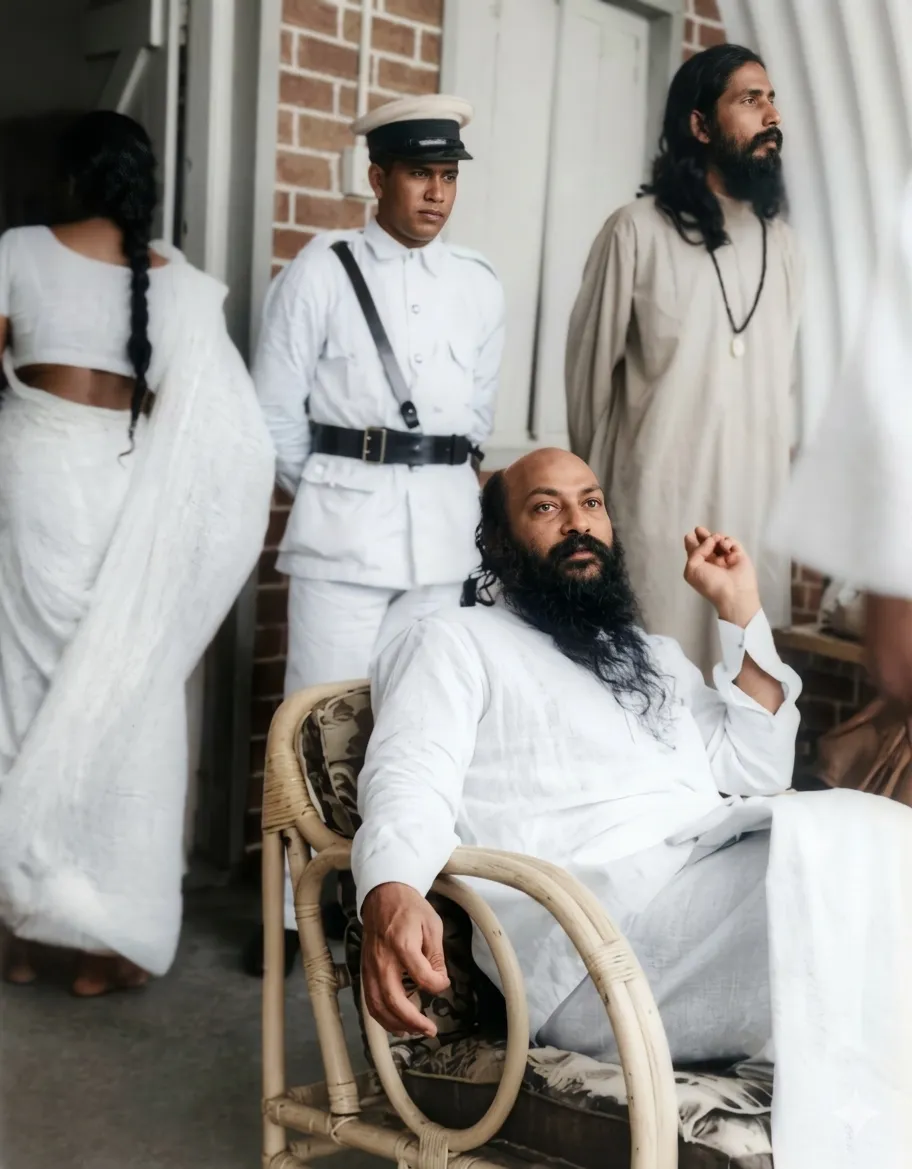
In the discourse series "Kathopanishad," Osho delves into the profound intricacies of human existence and consciousness, exploring the multidimensional layers within the human personality that cause inner conflict and unrest. Central to his interpretation is the understanding that man is not a singular entity but a composite of layered dimensions—body, mind, and Buddhi (intelligence or discernment)—each with distinct urges and desires. Osho posits that this internal divergence leads to restlessness, as the body, mind, and discernment often pull in conflicting directions. He offers insights into why more developed, intellectually driven societies face increased tension and anxiety, attributing it to the sharper discernment and heightened consciousness that come with education and prosperity. Animals, in their simplicity, lack such discord due to their singular alignment with the physical realm. Through an exploration of these themes, Osho invites individuals to transcend these layers by cultivating awareness and understanding, guiding them towards inner peace and harmony. His unique perspective sheds light on the path to unity within, suggesting that liberation from internal chaos is achievable through self-awareness and spiritual awakening.
-
Chapter 1
Knowing life requires learning to die: through conscious dying the body falls away and the immortal self is revealed, as Nachiketa's questioning shows
-
Chapter 2
Nachiketa's childlike urgency exposes the soul's timeless age: true inquiry is whether Atman survives death, tested by Yama's temptations before self‑knowledge.
-
Chapter 3
Human growth is inner or outer: choose Shreya (auspicious hardship) over Preya (pleasant mirage); cultivate witness consciousness, dispassion, decisiveness.
-
Chapter 4
Dying to the small self, living as the soul: realization comes when mind falls silent; the central question is what happens after death and who am I
-
Chapter 5
Om is the primordial unstruck sound within; enter it through quiet attention, desirelessness and disciplined practice—effort readies you for grace.
-
Chapter 6
Parameshwar is totality that harmonizes opposites; God is known not by intellect or discourse but by dying to ego, transforming conduct, and being accepted.
-
Chapter 7
Human restlessness stems from inner layers; transcendence comes not by fighting lower planes but by awakening higher Vivek—awareness leads to true mastery.
-
Chapter 8
Surface forms are transient; discover the hidden center through silence, subtle intelligence and a living guide to know Brahman beyond Maya intently.
-
Chapter 9
The senses look outward; Self-vision arises when their outward flow is stopped and consciousness turns inward—exhaust the senses, discover the ever-present seer.
-
Chapter 10
Pure mind is thoughtless void beyond good and bad; only a unified, wave-less mind reveals the One Paramatma—how can the fragmented mind become whole?
-
Chapter 11
The body is a sacred temple housing Paramatma; use breath, prana-apana and awareness to transform desire into liberation, becoming free while alive.
-
Chapter 12
Three great paths - One Brahman, many Atmans, and Shunya - are pointers to the same nameless truth: awaken the witnessing Self and realize silence.
-
Chapter 13
Appearances are inverted: the world's roots are above, branches below; reverse instincts and seek Paramatma—fulfillment dawns when desire and striving end
-
Chapter 14
Fear and love are projections of our readiness to disappear; the Divine is neutral. Purify the inner mirror (antahkaran) to see Brahman—will you dare the leap?
-
Chapter 15
God is interior subjective energy, not a person or pilgrimage; through fearless contemplation, surati and non‑doing one stops the mind and finds Him.
-
Chapter 16
Paramatma cannot be proved by words, mind or senses; only a heart-felt He is, nurtured into faith, dissolves desires and opens the heart to living immortality.
-
Chapter 17
Raise sex-energy into Sushumna to end rebirth; the subtle electric body (Kirlian) and practices, Hoo, headstand and silence transmute lust into immortality.