
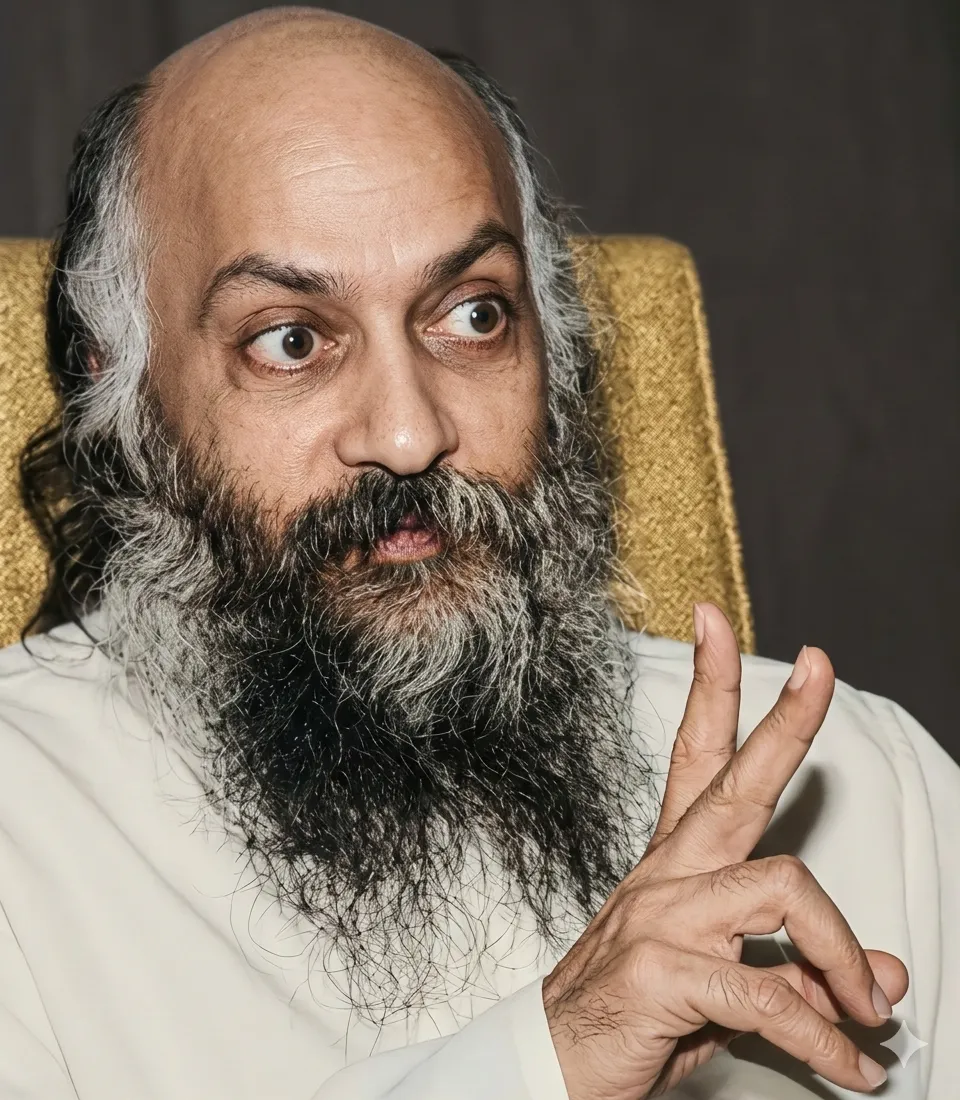
Osho's original Hindi beside Osho Live's English translation, matched passage by passage.
जैसे किसी सरोवर के किनारे कोई वृक्ष खड़ा हो तो सरोवर में जो प्रतिबिंब बनता है, वह उलटा होगा। तट पर खड़े हुए वृक्ष की शाखाएं आकाश में ऊपर की ओर फैली होंगी, तट पर खड़े वृक्ष की मूल, जड़ें नीचे जमीन में फैली होंगी। लेकिन प्रतिबिंब उलटा होगा। उसमें जड़ें ऊपर होंगी, शाखाएं नीचे होंगी। सभी प्रतिबिंब उलटे होते हैं। प्रतिबिंब कभी भी सीधा नहीं हो सकता। इस वैज्ञानिक सत्य को ध्यान में रखकर इस सूत्र को समझना बहुत आसान होगा।
Just as a tree stands on the bank of a lake and its reflection in the water appears inverted—on the shore its branches spread upward into the sky and its roots extend downward into the earth, but in the reflection the roots seem above and the branches below—so it is. All reflections are inverted; a reflection can never be upright. Keeping this scientific truth in mind, understanding this sutra becomes very easy.
चीजें जैसी हैं, ठीक उससे उलटी दिखाई पड़ती हैं, क्योंकि देखना भी एक तरह का प्रतिबिंब है। आंख भी एक दर्पण है। आंख पर भी प्रतिबिंब बनते हैं। प्रतिबिंब सभी उलटे हो जाते हैं। तो इस जगत को जैसा हम देख रहे हैं, यह जगत इससे ठीक उलटा है। जगत का जो नियम हमें मालूम होता है, वास्तविक नियम उससे ठीक उलटा होगा।
Things appear exactly the opposite of what they are—because seeing itself is a kind of reflection. The eye is also a mirror; images form upon it; images invert. Therefore, the world as we are seeing it is precisely the reverse of the world as it is. The law of the real will be the reverse of the law we think we know.
आभास सत्य से विपरीत होते हैं, इस मौलिक विचार के आधार पर भारत के मनीषियों ने एक बहुत पुराना प्रतीक उपयोग किया है। वह प्रतीक--
On the basis of this fundamental insight—that appearances are contrary to truth—India’s seers have used a very ancient symbol. The symbol is this:
ऊपर की ओर मूल वाला और नीचे की ओर शाखा वाला यह प्रत्यक्ष जगत सनातन पीपल का वृक्ष है। इसका मूलभूत तत्व वह परमेश्वर ही है। वही ब्रह्म है और वही अमृत कहलाता है।
This manifest world is the eternal peepal tree whose roots are above and whose branches are below. Its fundamental principle is that very God. That is Brahman, and that alone is called the Immortal.
This manifest world is the eternal peepal tree with roots above and branches below.
ऊपर की ओर मूल वाला और नीचे की ओर शाखा वाला यह प्रत्यक्ष जगत सनातन पीपल का वृक्ष है।
हम तो जो भी देखते हैं, उसमें जड़ें नीचे की तरफ हैं, शाखाएं ऊपर की तरफ हैं। लेकिन यह यम का सूत्र नचिकेता को कहा गया है, इसमें यम कह रहा है कि ऊपर की ओर मूल, नीचे की ओर शाखाएं हैं। जैसा भी हमारा जानना है, जीवन का सत्य उससे ठीक विपरीत है। इसे हम कुछ जीवन के अलग-अलग पहलुओं से समझने की कोशिश करें।
What we see has roots below and branches above. But in this sutra given by Yama to Nachiketa, Yama says: the roots are above, the branches below. Whatever we think we know—life’s truth is precisely the reverse of it. Let us try to understand this through different facets of life.
हम सोचते हैं कि मृत्यु जीवन की दुश्मन है, लेकिन सत्य बिलकुल विपरीत है। मृत्यु के बिना जीवन हो ही नहीं सकता। तो मृत्यु जीवन की शत्रु तो जरा भी नहीं, मित्र है। मृत्यु के बिना जीवन के होने की कोई संभावना नहीं है। जिस दिन मृत्यु मिट जाएगी, उसी दिन जीवन भी मिट जाएगा। लेकिन हमारे देखने में सब चीजें उलटी हो जाती हैं। हमें लगता है कि जीवन और मृत्यु में विरोध है, जब कि वस्तुतः मृत्यु ही जीवन का आधार है। और मृत्यु के बिना जीवन हो नहीं सकता।
We think death is the enemy of life—but the truth is utterly the opposite. Without death there can be no life at all. So death is not life’s enemy in the least—it is its friend. Life has no possibility of being without death. The day death disappears, life disappears with it. But in our seeing, everything turns upside down. We feel life and death are in opposition, whereas in fact death is the very foundation of life. Without death, life cannot be.
हमें अनुभव में आता है कि प्रेम और घृणा विपरीत हैं, जब कि सचाई बिलकुल उलटी है। मनसविद कहते हैं कि प्रेम और घृणा एक ही ऊर्जा के दो पहलू हैं, वे साथ-साथ हैं। फ्रायड ने जो महानतम खोजें इस सदी में की हैं, उसमें एक खोज यह भी थी कि आदमी जिसको प्रेम करता है, उसी को घृणा भी करता है। हम भी अगर थोड़ा सोचें, तो खयाल में बात आ सकती है। आप किसी भी व्यक्ति को सीधा शत्रु नहीं बना सकते। शत्रु बनाने के पहले मित्र बनाना जरूरी होगा। सीधी शत्रुता पैदा ही नहीं हो सकती; शत्रुता के लिए पहले मित्रता चाहिए। तो मित्रता शत्रुता का पहला कदम है, अनिवार्य कदम है, उसके बाद ही शत्रुता हो सकती है।
In experience it appears that love and hate are opposites—while in truth it is exactly the reverse. The psychologists say love and hate are two aspects of the same energy; they come together. Among the greatest discoveries of this century by Freud is also this: the person one loves, one also hates. If we think about it a little, the point becomes clear. You cannot make anyone your enemy straightaway. Before enmity, friendship is essential. Enmity cannot arise by itself; for enmity, friendship is needed first. So friendship is the first step—an inevitable step—towards enmity; only thereafter can enmity be.
तो शत्रुता और मित्रता विपरीत नहीं हैं, बल्कि एक ही सिक्के के दो पहलू हैं। जिस-जिसको हम प्रेम करते हैं, उस-उसको घृणा भी करते हैं; और जिस-जिसको हम घृणा करते हैं, उस-उसको हम प्रेम भी करते हैं। शत्रुओं से हमारा बड़ा लगाव होता है, उनकी याद आती है। उनके बिना हम अधूरे हो जाएंगे; उनके बिना हमारे जीवन में कुछ खाली हो जाएगा। उसी तरह, जैसे मित्र के मिट जाने पर कुछ खाली हो जाएगा। मित्र भी हमें भरते हैं, शत्रु भी हमें भरते हैं।
Hence, enmity and friendship are not opposites; they are two faces of the same coin. Whomever we love, we also hate; whomever we hate, we also love. We are strongly attached to our enemies; we remember them. Without them we would become incomplete; something would be missing in our life without them—just as something is missing when a friend disappears. Friends fill us, enemies also fill us.
बुद्ध ने कहा है कि मैं कोई मित्र नहीं बनाता, क्योंकि मैं कोई शत्रु नहीं बनाना चाहता हूं। पर हम तो सोचते हैं: शत्रु और मित्र विपरीत हैं। जीवन में ऐसी बात नहीं है। हम तो सोचते हैं: रात और दिन विपरीत हैं, अंधेरा और प्रकाश विपरीत हैं। सचाई यह नहीं है। अंधेरा प्रकाश का ही एक रूप है। प्रकाश अंधेरे का ही एक ढंग है। वे दोनों एक ही ऊर्जा के अलग-अलग क्रम हैं।
Buddha has said: I do not make any friend, because I do not want to make any enemy. But we think friend and enemy are opposites. Life is not like that. We think night and day are opposites, darkness and light are opposites. The truth is otherwise. Darkness is only a form of light; light is only a mode of darkness. They are different orders of the same energy.
अगर जगत से अंधकार पूरी तरह मिट जाए तो हमारी साधारण बुद्धि कहेगी कि सब तरफ प्रकाश ही प्रकाश रह जाएगा। विज्ञान इससे राजी नहीं होगा। विज्ञान कहेगा, अंधकार अगर बिलकुल मिट जाए तो प्रकाश बिलकुल मिट जाएगा, या प्रकाश बिलकुल मिट जाए तो अंधकार बिलकुल मिट जाएगा।
If darkness were completely eliminated from the world, our ordinary mind would say there would be light everywhere. Science will not agree. Science says: if darkness disappears entirely, light will also disappear; if light disappears entirely, darkness will also disappear.
अगर जगत से घृणा बिलकुल मिटानी हो तो प्रेम को बिलकुल मिटाना पड़ेगा। जब तक प्रेम है, घृणा जारी रहेगी। जब तक मित्र हैं, तब तक शत्रु पैदा होते रहेंगे। और अगर मृत्यु को बिलकुल पोंछ देना हो, तो जन्म को बिलकुल पोंछ देना होगा। जब तक जन्म है, मृत्यु होती रहेगी।
If hatred is to be completely removed from the world, love will have to be removed completely. As long as love is, hate will continue. As long as there are friends, enemies will keep arising. And if death is to be erased altogether, then birth must be erased altogether. As long as birth is, death will be.
अगर दुनिया से युद्ध मिटाने हों, तो हम सोचते हैं कि जब युद्ध मिट जाएंगे तो दुनिया में परम शांति होगी। लेकिन युद्ध अगर बिलकुल मिट जाएं तो शांति भी मिट जाएगी। यह जरा कठिन मालूम पड़ता है। यही हमारे आभास और सत्य की विपरीतता है। दुनिया में तभी तक शांति रह सकती है, जब तक युद्ध जारी रहेंगे। शांति और युद्ध एक ही सिक्के के दो पहलू हैं। उनमें से एक भी खो जाए तो दूसरा भी खो जाएगा।
If wars are to be removed from the world, we think that when wars end there will be supreme peace. But if war disappears entirely, peace too will disappear. This seems difficult to accept. This is exactly the contrariness of appearance and truth. Peace can remain in the world only so long as wars continue. Peace and war are two faces of the same coin. If one is lost, the other is lost too.
हम सोचते हैं कि बीमारी है, स्वास्थ्य है--विपरीत हैं। और हमारी चेष्टा होती है कि ऐसा वक्त आ जाए कि आदमी के जीवन में कोई बीमारी न रहे। जिस दिन ऐसा होगा, उसी दिन कोई स्वास्थ्य भी न रह जाएगा।
We think there is illness and health—opposites. And we strive for a time when no illness remains in human life. The day that happens, that very day no health will remain either.
इस बात की संभावना है कि वैज्ञानिक धीरे-धीरे ऐसी व्यवस्था निकाल लें कि बीमारी न रह जाए। वह व्यवस्था एक ही हो सकती है कि धीरे-धीरे वे मनुष्य के सारे अंगों को बदल डालें। उनकी जगह प्लास्टिक और स्टेनलेस स्टील और कृत्रिम अंगों को डाल दें। बीमारी मिट जाएगी, लेकिन स्वास्थ्य भी मिट जाएगा। स्वास्थ्य का जो अनुभव है, जो वेल बीइंग है, वह स्टेनलेस स्टील और प्लास्टिक के अंगों से नहीं हो सकती। बीमारी के साथ ही जुड़ा है स्वास्थ्य।
अब इस बात के उपाय हैं। अब हृदय बदला जा सकता है, मस्तिष्क के हिस्से भी बदले जा सकते हैं। आज नहीं कल, सारे के सारे मनुष्य के शरीर में जो भी खराब होने वाले, जिनकी संभावना रुग्ण होने की है, ऐसे जो भी अंग हैं, वे सब अलग कर दिए जा सकते हैं। प्लास्टिक बीमार नहीं पड़ेगा। स्टेनलेस स्टील बड़ी लंबी उम्र की होगी। आपके हाथ में हड्डियों की जगह स्टेनलेस स्टील हो सकती है। नसों की जगह प्लास्टिक की नसें होंगी। और आज नहीं कल, हम खून से भी बेहतर रासायनिक-द्रव्य खोज सकते हैं। शरीर को पूरा का पूरा यंत्रवत बनाया जा सकता है। फिर शरीर बीमार नहीं पड़ेगा। लेकिन भीतर जो आत्मा छिपी है, उसको स्वास्थ्य का भी कोई अनुभव नहीं होगा।
असल में स्वास्थ्य बीमारियों के बीच एक संतुलन है। और बीमारियां स्वास्थ्य का डगमगा जाना है। दोनों साथ हैं। एक को हटा दें, दूसरा विनष्ट हो जाता है। लेकिन हमें ऐसा दिखाई नहीं पड़ता। हमें तो दिखाई पड़ता है कि एक को मिटा दें, तो दूसरा बचेगा। यही हमारे आभास की विपरीतता है।
It is possible scientists may gradually devise such an arrangement that illness disappears. That arrangement can be only this: slowly they will replace all human organs—put in plastic, stainless steel, artificial organs. Illness will vanish—but health will vanish too. The experience of wellbeing cannot be with organs of plastic and steel. Health is tied to disease. With disease removed, health is destroyed. Yet this is not how it appears to us. We feel: remove one, the other will remain. That is the contrariness of our appearance.
तो जहां-जहां हमें जैसा-जैसा दिखाई पड़ता है, बहुत गौर से उससे उलटा करके सोचना, उलटे के सत्य होने की संभावना ज्यादा है।
So wherever things appear a certain way to us, it is worth reversing them carefully—there is greater likelihood the reverse is true.
ऐसा देखें, जहां-जहां मनुष्य को सुख दिखाई पड़ता है, वहां-वहां अंत में दुख हाथ लगता है। लेकिन मन कहता है कि जहां सुख दिखाई पड़ता है, वहां सुख होगा। खोजने पर दुख हाथ लगता है। और जीवन में अनेक बार हम प्रयोग कर चुके हैं। जहां सुख दिखाई पड़ा, वहीं दौड़े, और पाया कि दुख हाथ लगा।
See it thus: wherever happiness appears, in the end suffering is found. But the mind says: where happiness appears, there must be happiness. On searching, suffering is found. And in life we have experimented countless times—wherever happiness seemed to be, we rushed there, and found sorrow in our hands.
ऋषियों ने इस सूत्र को उलट लिया। उन्होंने कहा, जहां-जहां दुख दिखाई पड़े, वहां-वहां प्रवेश करने की कोशिश करना। जब सुख दिखाई पड़ने पर दुख मिलता है, तो जहां दुख दिखाई पड़ता है, उसमें खोजने से सुख मिलेगा। इस वैज्ञानिक खोज का नाम ही तप है। तप का मतलब है: दुख में खोजना सुख को। क्योंकि सुख में खोजने वाले दुख पा रहे हैं। सूत्र उलटा लिया। एक यात्रा भ्रांति में ले जाती थी, तो हमने दिशा बदल ली।
The seers reversed the formula. They said: wherever suffering appears, try to enter there. When searching in happiness yields sorrow, then searching where sorrow appears will reveal happiness. The name of this scientific exploration is tapas. Tapas means: seeking happiness within suffering—because those who seek in happiness are finding only suffering. The formula was reversed. The journey that was leading into illusion, we changed direction.
भोगी हम उसे कहते हैं, जो सुख के आभास में सोचता है कि खोजने से सुख मिलेगा। योगी हम उसे कहते हैं, जिसकी यह भ्रांति टूट गई और जिसने सूत्र को उलटा कर लिया, और अब जो दुख में कोशिश करता है खोजने की। और जो व्यक्ति दुख में खोजता है, वह निश्चित ही सुख पाता है। क्योंकि सुख में खोजने वालों ने सिवाय दुख के और कुछ भी नहीं पाया है।
We call him a bhogi, a sensualist, who believes happiness will be found by chasing its appearance. We call him a yogi whose delusion has broken, who has reversed the formula, and who now makes the effort to seek within suffering. And the one who seeks within suffering surely finds joy—because those who seek within joy have found nothing but sorrow.
इस बात को कि जीवन के सत्य हमें उलटे दिखाई पड़ते हैं, क्योंकि हमारा चित्त उनके प्रतिबिंब बनाता है; झील की भांति वृक्ष उलटा हो जाता है--तो इसके पहले की आप अपने जीवन का दर्शन निर्मित करें, जीवन का पथ चुनें और जीवन का गंतव्य चुनें--इस महत्वपूर्ण बात को स्मरण रखना।
Remember this: life’s truths appear inverted because our mind makes reflections of them; like a lake, the tree turns upside down. Therefore, before you craft a philosophy of life, choose a path, and choose a destination—remember this essential point.
इसलिए ऋषियों ने कहा है कि जो वृक्ष तुम्हें दिखाई पड़ता है कि जड़ें नीचे हैं और शाखाएं ऊपर हैं, वस्तुतः इससे उलटा होगा। जीवन के वृक्ष की शाखाएं ऊपर नहीं नीचे, और मूल नीचे नहीं ऊपर है। इसे शाश्वत, सनातन पीपल का वृक्ष ऋषियों ने कहा है।
Thus the seers said: the tree that appears to you with roots below and branches above—in reality, it will be the reverse. Life’s tree has its branches below, not above; its root is above, not below. The seers called this the eternal, everlasting peepal tree.
यह तो सिर्फ काव्य-प्रतीक है। और इस काव्य-प्रतीक को जीवन में उपयोग किए बिना, और जीवन में जगह-जगह नियोजित किए बिना इसका अर्थ साफ नहीं होता है।
This is only a poetic symbol. Without applying this poetic symbol in life, without placing it at many points in life, its meaning does not become clear.
ऊपर की ओर मूल वाला और नीचे की ओर शाखा वाला यह प्रत्यक्ष जगत सनातन पीपल का वृक्ष है। इसका मूलभूत तत्व परमेश्वर ही है।
This manifest world, with roots above and branches below, is the eternal peepal tree. Its fundamental element is God alone.
लेकिन वह दिखाई नहीं पड़ता। दिखाई हमें पदार्थ पड़ता है। दिखाई हमें पड़ता है पदार्थ और वस्तुतः है परमेश्वर।
But He does not appear. What appears to us is matter. What appears to us is matter, while in reality it is God.
परमेश्वर हमें अदृश्य है, पदार्थ हमें दृश्य है। जब कोई व्यक्ति जीवन की इस प्रक्रिया को उलटा करता है, तो पदार्थ अदृश्य होने लगता है और परमात्मा दृश्य होने लगता है। और जिस दिन पदार्थ पूरी तरह अदृश्य हो जाता है, सिर्फ परमात्मा दृश्य रह जाता है, उस दिन जानना कि सत्य की अनुभूति हुई।
God is invisible to us; matter is visible. When a person reverses this life-process, matter starts becoming invisible and Paramatma becomes visible. And the day matter disappears completely, and only Paramatma remains visible—know that that day the truth has been realized.
इसलिए उस परम अवस्था में ज्ञानियों ने जगत को माया कह दिया। कह दिया इसलिए कि वह दिखाई नहीं पड़ती थी, खो गई। जैसा कि अज्ञानी ईश्वर को असत्य कहते हैं। कहेंगे ही। जो नहीं दिखाई पड़ता, वह नहीं है। अज्ञानी कहता है, कहां है ईश्वर? उसे दिखाने का कोई उपाय भी नहीं है। क्योंकि सवाल ईश्वर के होने का नहीं है, सवाल अज्ञानी के देखने के ढंग का है। उसके देखने का ढंग ऐसा है कि पदार्थ पकड़ में आता है और ईश्वर छूट-छूट जाता है।
Therefore, in that supreme state the wise have called the world maya—not because it does not exist, but because it no longer appears; it is lost to sight. Just as the ignorant call God unreal. They must—what is not seen, is not. The ignorant say, “Where is God?” There is no way to show Him—for the question is not of God’s being, the question is of the ignorant person’s way of seeing. His seeing is such that matter comes into his grasp and God slips away.
ज्ञानी को पदार्थ पकड़ में नहीं आता, छूट-छूट जाता है; सिर्फ परमेश्वर ही पकड़ में आता है। इसलिए अज्ञानी कहता है--जगत सत्य, ब्रह्म मिथ्या। ज्ञानी कहता है--ब्रह्म सत्य, जगत मिथ्या। उलटा हो जाता है। इस गणित को अगर आप खयाल रख लें और जीवन में थोड़ा-सा इसका उपयोग करने लगें, तो आप पाएंगे, आप बदलने लगे, आप नए होने लगे।
The wise cannot grasp matter—matter slips; only God is grasped. Hence the ignorant say—“the world is true, Brahman is false.” The wise say—“Brahman is true, the world is false.” It turns upside down. If you keep this arithmetic in mind and begin to apply it a little in life, you will find—you are changing, you are becoming new.
इसका कैसे उपयोग करें? यह तो मैंने आपको तात्विक उदाहरण दिए। आचरण में इसका उपयोग हो सकता है। यह सूत्र बड़ा कीमती है। जब कोई गाली दे, तो आपको क्रोध पैदा होता है--यह सहज, प्राकृतिक, अज्ञानी मनुष्य की स्थिति है। ज्ञानी कहते हैं: जब कोई क्रोध करे, तो क्षमा पैदा हो। उलटा कर लेना है। जब कोई क्रोध करे, तो क्षमा करना; क्षमा के भाव को जन्माना। तुम्हारा जीवन नया हो जाएगा। जब कोई गाली दे और क्रोध तुम करो, तो तुम्हारा जीवन जैसा था, वैसा ही रहेगा। उसमें कोई रूपांतरण संभव नहीं है। क्योंकि तुम कोई बुनियाद बदल नहीं रहे हो।
How to apply it? I have given you metaphysical examples; it can be used in conduct. This sutra is very precious. When someone abuses you and anger arises—this is the natural, unawakened state. The wise say: when someone is angry, let forgiveness arise. Reverse it. When someone is angry, forgive—bring forth the feeling of forgiveness; your life will be new. If someone abuses you and you become angry, your life will remain as it was; no transformation is possible—because no foundation is being changed.
जब कोई तुम्हारा आदर करे तो हम प्रफुल्लित होते हैं, प्रसन्न होते हैं। ज्ञानी ने कहा है, जब तुम्हारा कोई आदर करे, तब तुम उदास हो जाना, उपेक्षा से भर जाना। क्यों जब कोई आदर करता है, सम्मान करता है तो हम प्रसन्न होते हैं? क्योंकि अहंकार तृप्त होता है। और अहंकार रोग है। इसलिए आपके दुश्मन आपको उतना नुकसान नहीं पहुंचा सकते, जितने आपके खुशामदी आपको नुकसान पहुंचा सकते हैं। क्योंकि वे आपके अहंकार को भर रहे हैं।
When someone honors you, we become elated, pleased. The wise have said: when someone honors you, become indifferent, grow a certain aloofness. Why are we pleased when someone respects us? Because the ego is gratified—and ego is disease. Your enemies cannot harm you as much as your flatterers—because they feed your ego.
कबीर ने तो कहा है कि आंगन कुटी छवाकर, जो तुम्हारी निंदा करते हैं, उनको अपने घर के पास ही बसा लेना। यह उलटा है। जो तुम्हें गाली देते हैं, उनको तुम मकान के बगल में ही बसा लेना, ताकि सुबह-शाम वे तुम्हें गाली देते रहें। क्योंकि जो तुम्हें गाली देता है, वह तुम्हारे अहंकार को तोड़ता है। और जो तुम्हारी प्रशंसा करता है, स्तुति करता है, वह तुम्हारे अहंकार को बढ़ाता है। और अहंकार ही महारोग है, वही दुख का आधार है, स्रोत है।
Kabir has said: build a hut in your courtyard for those who slander you—house them close by. This is the reversal: those who abuse you, settle them next door so morning and evening they keep abusing you—for the one who abuses breaks your ego, and the one who praises inflates it. And ego is the great disease, the very base and source of suffering.
आचरण में इस सूत्र का अर्थ होगा कि जो सहज, प्राकृतिक प्रतिक्रिया मालूम होती है, वह मत करना, उससे उलटा करना। तुम्हारा जीवन धार्मिक होता चला जाएगा।
In conduct this sutra means: do not enact the reaction that seems natural and spontaneous; do its opposite. Your life will become religious.
जीसस को सूली दी गई और अंतिम समय कहा गया कि तुम्हें कुछ कहना तो नहीं है? तो जीसस ने परमात्मा की तरफ हाथ उठाकर कहा कि इन सबको क्षमा कर देना, क्योंकि ये नहीं जानते कि क्या कर रहे हैं।
Jesus was crucified, and at the final moment he was asked, “Have you anything to say?” Jesus raised his hands toward God and said, “Forgive them, for they know not what they do.”
जब तुम्हें कोई सूली दे रहा हो, तो तुम्हारे मन से अभिशाप निकल सकते हैं। वरदान के निकलने का कोई उपाय नहीं है। अभिशाप बिलकुल प्राकृतिक प्रक्रिया है। वह तो पशुओं से भी वही निकलेगा, पत्थर से भी वही निकलेगा। उसके लिए मनुष्य होने की कोई जरूरत नहीं है। वह तो जीवन का जड़ नियम है। जैसे पानी नीचे की तरफ बहता है और आग जलाती है, ऐसे ही पशुता क्रोध के उत्तर में दुगुना क्रोध पैदा करती है। वह पशुता का सहज नियम है। लेकिन पशु का अर्थ है: जो थिर है औैर जो गतिमान नहीं है। पशु का अर्थ है: जो जड़ है, रुका है और जिसके जीवन में कोई ऊर्ध्वगमन नहीं है।
When someone is crucifying you, curses can flow from your mind—blessings cannot. Cursing is the natural process—it will arise even from animals, even from stones; one need not be human for that. It is the inert law of life—like water flowing downward and fire burning. Animality responds to anger with doubled anger—that is the simple rule. But animal means: that which is fixed, unmoving—bound, with no upward growth in life.
संस्कृत का यह शब्द पशु बड़ा अदभुत है। संस्कृत के सभी शब्द अदभुत हैं। कोई भाषा इस अर्थ में वैज्ञानिक नहीं है जैसी संस्कृत है। एक-एक शब्द के पीछे पूरा तत्व-दर्शन है। और एक-एक शब्द को ऐसे ही कामचलाऊ ढंग से नहीं बना लिया गया है, बड़े विचार और बड़ी चिंतना से निखारा गया है।
The Sanskrit word pashu is wondrous. Sanskrit’s words are wondrous. No language is as scientific in this sense as Sanskrit. Behind each word there is an entire metaphysics; words were not coined casually, they were refined by deep thought and contemplation.
पशु शब्द बनता है पाश से। पाश का अर्थ होता है: जो बांध ले, बंधन। पशु का अर्थ है: जो बंधा हुआ है। पशु का अर्थ जानवर नहीं है; जो बंधा हुआ है, जो जकड़ा हुआ है, जो प्रकृति के अंधे नियमों का गुलाम है, जो स्वतंत्र नहीं है।
Pashu comes from pash—bond, fetter. Pashu means: one who is bound—not “animal” as species, but one who is tied up, shackled, a slave to nature’s blind laws, unfree.
पशुता से ऊपर उठना हो तो प्रकृति जो सहज रूप से करने को कहे, उससे विपरीत को तुम अपनी साधना समझना। जब तुम्हारी कोई प्रशंसा करे तो तुम रोना, और जब तुम्हें कोई गाली दे तो तुम हंसना। अगर जीवन इस एक छोटे-से सूत्र को मानकर चल पड़े, तो मोक्ष ज्यादा दूर नहीं है। और तुम्हें परमात्मा को खोजने नहीं जाना पड़ेगा, परमात्मा तुम्हें खोजता हुआ आ जाएगा। फिर उसकी तलाश की कोई जरूरत नहीं है।
To rise above animality, let your practice be to do the opposite of what nature prompts you to do. When someone praises you, weep; when someone abuses you, laugh. If life begins to move by this simple sutra, moksha is not far. And you will not have to go seeking God—God will come seeking you. No need for your search then.
एक बार तुमने जीवन की साधारण प्रक्रिया को बदलकर विपरीत किया कि तुम सत्य के जगत में प्रवेश कर गए, कि तुम उस पथ पर आ गए जहां से सत्य तुम्हें खींच लेगा।
Once you change the ordinary process of life and reverse it, you enter the realm of truth; you step upon the path from which truth itself will draw you on.
अभी हम उलटे खड़े हैं। जिसे हम सीधा होना समझ रहे हैं, वह शीर्षासन है। हमें सब उलटा दिखाई पड़ रहा है। हमें पैर के बल खड़ा होना होगा। जैसे हम हैं, उससे उलटा हो जाना पड़ेगा।
Right now we are standing upside down. What we call standing upright is a headstand. Everything appears inverted to us. We will have to stand on our feet—become the reverse of what we are.
सारे संतों का बस एक ही प्रयास है कि तुम्हारे जीवन की जो अंधी प्रक्रियाएं हैं, वे होशपूर्ण हो जाएं। तुम जहां जड़ की तरह व्यवहार करते हो, यंत्र की तरह व्यवहार करते हो, वहां तुम सचेतन हो जाओ। और सचेतन कोई तभी होता है, जब प्रकृति का अतिक्रमण करता है। कोई गाली दे, तो क्रोध करने के लिए सचेतन होने की कोई भी जरूरत नहीं है।
All the effort of the saints is only this: that your blind processes become conscious. Wherever you behave like an inert mechanism, become aware. And one becomes aware only when one transgresses nature. No awareness is needed to become angry when abused.
क्रोध मूर्च्छा है। उसके लिए होश की कोई भी जरूरत नहीं है। लेकिन कोई गाली दे और क्षमा करना है, तो बहुत सावधान होना पड़ेगा; बहुत जागरूक होना पड़ेगा; बहुत चित्त को ऊंचाई पर उठाना पड़ेगा; भीतर की ज्योति को खूब जगमगाना पड़ेगा। तब भी डर है कि क्रोध की पुरानी आदत पकड़ ले और नीचे खींच ले। लेकिन बड़े मजे की प्रक्रिया है। अगर कोई व्यक्ति जीवन की सामान्य प्रक्रियाओं को उलटा करने लगे, तो बड़ा रस उपलब्ध होगा। तब पूरा जीवन एक प्रयोगशाला हो जाता है।
Anger is a stupor; it needs no awareness. But if, when abused, you are to forgive, you will have to be very alert; very aware; raise the mind to a great height; make the inner lamp blaze bright. And even then the old habit of anger may seize you and drag you down. Yet it is a delightful process. If a person begins to reverse life’s normal processes, great flavor becomes available; the whole of life becomes a laboratory.
तब दूसरे भी बहुत चकित होंगे, क्योंकि दूसरे भी तभी चकित होते हैं जब वे पाते हैं कि तुम अंधे नहीं हो। दूसरे भी तभी चकित होते हैं और मुसीबत में पड़ते हैं, जब तुम उनके सहज अनुमान के अनुसार नहीं चलते हो।
Others will be amazed—people are amazed only when they see you are not blind; when you do not behave according to their easy expectations, they are puzzled and troubled.
बुद्ध को कोई गाली देता है तो बुद्ध चुपचाप सुन लेते हैं। बुद्ध के ऊपर कोई थूक जाता है तो बुद्ध चुपचाप अपनी चादर से पोंछ लेते हैं। और जिसने थूका है, उस आदमी से कहते हैं, तुम्हें कुछ और भी कहना है? आनंद क्रोध से भर जाता है--उनका शिष्य--और वह कहता है, आप क्या पूछ रहे हैं इस आदमी से? यह पागल है और इसने आपके ऊपर थूका! मुझे आज्ञा दें तो मैं इसे ठीक करूं।
Someone abuses Buddha—Buddha listens silently. Someone spits upon Buddha—Buddha quietly wipes it off with his shawl and says to the man, “Have you something more to say?” Ananda, his disciple, fills with anger: “What are you asking this man? He is mad! He spat on you! Give me permission and I will set him right.”
बुद्ध कहते हैं, उसे मैं क्षमा कर दूं, क्योंकि वह नासमझ है; लेकिन तू इतने दिन से मेरे पास है और तू बिलकुल ही मूर्च्छित व्यवहार कर रहा है! यह आदमी कुछ कहना चाहता है, जो शब्दों में नहीं कहा जा सकता, इसलिए थूककर प्रगट कर रहा है।
Buddha says, “I can forgive him, for he is ignorant—but you have been with me so long and are behaving utterly unconsciously! This man wants to say something he cannot put into words—so he expresses it by spitting.”
थूकना एक भाषा है। बहुत बार भाव गहरा होता है, आप प्रगट नहीं कर पाते, किसी को गले लगा लेते हैं, वह एक भाषा है। कुछ इतना गहरा था हृदय में, जिसे शब्द नहीं कह पाते, तो आप छाती से लगा लेते हैं।
Spitting is a language. Often a feeling is so deep you cannot express it: you embrace someone—that is a language. Something so deep is in the heart that words cannot say it, so you press him to your chest.
तो बुद्ध कहते हैं, कुछ भाव है इसके मन में बहुत गहरा, जिसको यह शब्द से नहीं कह पाता, थूककर जाहिर कर रहा है। बड़े गहरे क्रोध से भरा है, वह क्रोध शब्द से पूरा नहीं होगा। इसलिए मैं इससे पूछता हूं कि और भी कुछ कहना है? इतना कहा, यह समझा; कुछ और भी कहना है? कुछ इसकी व्याख्या भी करनी है?
Buddha says, “There is a very deep feeling in him he cannot express in words—so he has expressed it by spitting. He is filled with great rage, which words cannot exhaust. That is why I ask him: is there anything more to say? Is there any further commentary to add?”
वह आदमी तो बड़ा बेचैन हो गया। क्योंकि जब कोई आपके ऊपर थूके तो अपेक्षा करता है कि अब कुछ उपद्रव होगा। लेकिन यहां एक तात्विक चर्चा छिड़ जाए कि थूकना भी एक भाषा है और इस आदमी ने कुछ कहा है! तो वह आदमी थोड़ा बेचैन हुआ, उसे थोड़ा अपराध-भाव लगा होगा कि मैंने गलत आदमी पर थूक दिया। वह चला गया।
The man became restless—because when you spit on someone you expect some uproar. But here a metaphysical discussion begins—that spitting too is a language, and that this man has said something! He felt guilty—“I have spat on the wrong man”—and went away.
वह दूसरे दिन सुबह आया, बुद्ध के चरणों में सिर रखकर रोने लगा। उसकी आंख से आंसू बहने लगे। उसने कहा कि मुझे क्षमा कर दें। मैं कल आपके ऊपर थूक गया था। मुझसे बड़ी भूल हो गई। मैं पीछे पछताया। मैं रातभर सो नहीं सका। बुद्ध ने कहा, तू बिलकुल नासमझ है। उस बात को बीते कितना समय हो गया! तब से गंगा का कितना पानी बह गया! अब उसको तू याद क्यों रखे है? और तूने थूका था, हमने उसे लिया नहीं था, इसलिए व्यर्थ पश्चात्ताप मत कर। तूने थूका होगा, लेकिन हमें कोई चोट नहीं पहुंची, इसलिए तू व्यर्थ पश्चात्ताप मत कर।
The next morning he came, placed his head at Buddha’s feet, and began to weep. Tears flowed from his eyes. He said, “Forgive me. Yesterday I spat upon you; I did very wrong. I repented afterward. I could not sleep at night.” Buddha said, “You are utterly unknowing. How much time has passed since then! How much water has flowed in the Ganges since! Why are you carrying it now? And though you spat, I did not take it—so do not repent needlessly. You may have spat, but I was not hurt—so do not waste your remorse.”
और बुद्ध ने आनंद से कहा, आनंद! देख, यह आदमी फिर कुछ कहना चाहता है। लेकिन बात इतनी गहन है कि नहीं कह पाता, तो इसने आंसुओं से पैर धो डाले।
Buddha then said to Ananda, “Look, this man wants to say something again. But the thing is so deep he cannot speak it—so his tears have washed my feet.”
व्यक्ति जैसे ही जीवन की सामान्य धारा के ऊपर अपने को उठाना शुरू करता है, एक बड़ी रसपूर्ण प्रक्रिया शुरू होती है। और एक बहुत मधुर और एक बहुत मीठी यात्रा का प्रारंभ होता है, जो रोज-रोज मधुर होती जाती, रोज-रोज मीठी होती जाती है, रोज-रोज सुगंधित होती जाती है, और भीतर एक रस झरने लगता है। इस यात्रा के अंत में ही अमृत की वर्षा है।
As soon as a person begins to rise above the ordinary stream of life, a process full of great flavor begins. A very sweet and gentle journey begins—each day sweeter, each day more fragrant, and within, a nectar begins to flow. At the journey’s end is the showering of amrit.
लेकिन जैसे हम हैं, जहां हम हैं, हम बिलकुल उलटे हैं। हम वही कर रहे हैं, जो नहीं करना चाहिए। हम वैसे ही जी रहे हैं, जैसा नहीं जीना चाहिए। हम अपने ही हाथ से कांटे बो रहे हैं और अपने ही हाथ से मार्ग पर पत्थर रख रहे हैं, जिनकी वजह से यात्रा असंभव हो जाएगी। हम अपने ही दुश्मन हैं।
But as we are—where we are—we are utterly inverted. We are doing what should not be done; living as we should not live. With our own hands we sow thorns, and place stones upon our own path, so the journey becomes impossible. We are our own enemies.
तत्व और आचरण दोनों में यह सूत्र खयाल में आ जाए कि हमारी बुद्धि विपरीत देख रही है, तो जीवन के रूपांतरण की कुंजी आपके हाथ में उपलब्ध हो जाती है।
In both principle and conduct, if this sutra is remembered—that our intellect sees inversely—the key to life’s transformation comes into your hands.
इसका मूलभूत तत्व वह परमेश्वर है, वही ब्रह्म है और वही अमृत है। सब लोक उसी के आश्रित हैं। कोई भी उसको लांघ नहीं सकता। यही है वह परमात्मा, जिसके विषय में तुमने पूछा था।
Its fundamental element is that very God—He is Brahman and He is amrit. All worlds depend upon Him. No one can transcend Him. This is that Paramatma about whom you asked.
उसको कोई लांघ नहीं सकता। उसके पार जाने का कोई उपाय नहीं है। उसको ट्रांसेंड नहीं किया जा सकता। परमात्मा का अर्थ ही यही है कि जो अंत है, कि जो आखिरी है--सीमांत--जिसके पार कुछ शेष नहीं रह जाता। अगर उसके पार कुछ शेष रह जाता है, तो वह परमात्मा नहीं है।
No one can transcend Him. There is no way beyond Him. Paramatma means exactly this: the end—the ultimate—the boundary beyond which nothing remains. If something remains beyond, it is not Paramatma.
इसे ऐसा समझें कि जब तक आपके मन में पाने की कोई कामना है, तब तक आप परमात्मा नहीं हैं। जिस दिन आपके मन में पाने की कोई कामना न रही, उसका अर्थ हुआ कि अब आगे जाने को कुछ भी न बचा, उस दिन आप परमात्मा हो गए।
Understand it this way: as long as there is any desire to get, you are not Paramatma. The day there remains in you no desire to get anything further, it means there is nowhere further to go; that day you have become Paramatma.
इसलिए ज्ञानियों ने परमात्मा की परिभाषा की है--निर्वासना से भरी हुई चेतना। क्योंकि वासना अतिक्रमण करना चाहती है--और आगे, और आगे। और वासना अनेक रूप लेती है, वह कहीं भी तृप्त नहीं होती। अगर आप इसी क्षण, जैसे हैं वहीं तृप्त हो जाएं और कह दें कि बस आगे और कुछ भी मांग नहीं है--कहने से नहीं होगा, यह भीतर भाव प्रविष्ट हो जाए--तो इसी क्षण आपका सब अंधकार गिर जाए और आप परमात्मा हो जाएं।
Therefore the wise have defined Paramatma as consciousness filled with nirvasana—desirelessness. For desire wants to overstep—further, yet further; it takes many forms and is never content. If you could be fulfilled in this very instant, as you are, and say: enough, nothing more—saying will not do; the feeling must pervade within—then in this very instant all darkness would fall away and you would be Paramatma.
परमात्मा का अर्थ है: इसी क्षण में पूर्ण तृप्ति, जिसके पार कुछ भी नहीं बचता।
Paramatma means: utter fulfillment in this moment—beyond which nothing remains.
लेकिन आदमी बहुत उपद्रवी है। अगर वह एक तरफ से अपने उपद्रव को छोड़ता है, तो तभी छोड़ता है जब दूसरी तरफ अपने उपद्रव को तैयार कर लेता है।
But man is very troublesome. He drops one mischief only after preparing another.
एक मित्र मेरे पास आए। वृद्ध हैं। रो रहे थे। बड़े भाव से भरे थे। रोकर कह रहे थे कि मेरी कुंडलिनी अभी तक जगी नहीं। बीस वर्ष से भटक रहा हूं। न-मालूम कितने आश्रम, कितने गुरु, कितनी साधनाएं कर चुका हूं, लेकिन कुंडलिनी नहीं जगी।
A friend came to me—elderly, weeping, full of emotion: “My kundalini has still not awakened. For twenty years I have wandered; who knows how many ashrams, how many gurus, how many practices—but kundalini does not awaken.”
उनके भाव में कमी नहीं है, उनकी खोज में कमी नहीं है, लेकिन उनकी मौलिक दृष्टि भ्रांत है। वे कुंडलिनी को ऐसे ही खोज रहे हैं, जैसे कोई धन को खोजता हो। और न मिले तो रोता हो। न मिले तो परेशान हो, पीड़ित हो, संतप्त हो। कुंडलिनी उनका लोभ बन गई है।
There is no lack of feeling in him, no lack of search, but his fundamental outlook is mistaken. He is seeking kundalini as one seeks wealth—and if it is not found, he weeps, grows anxious, tormented. Kundalini has become his greed.
और ध्यान रहे, इस आंतरिक यात्रा की यही सबसे बड़ी कठिनाई है कि वहां लोभ के द्वारा कोई भी प्रवेश नहीं हो सकता। वहां तृप्ति के द्वारा प्रवेश है।
Remember, this is the greatest difficulty of the inner journey: no entry is possible there through greed. Entry is through fulfillment.
जो नहीं मिला है, उसकी फिक्र छोड़ें; जो मिला है, उसका अनुग्रह मानें और प्रवेश बढ़ता जाएगा। लेकिन वे परेशान हैं। इस परेशानी से कुंडलिनी जाग्रत होने वाली नहीं है। उस परेशानी से ही रुकी है। बीस साल की खोज के कारण नहीं मिली, ऐसा नहीं है। बीस साल की खोज के कारण ही रुकी है। वह जो अति तनाव है पाने का, उसी से भीतर सब सिकुड़ गया है।
Leave worry for what has not been attained; be grateful for what has, and the entry will deepen. But he is anxious. Kundalini will not awaken through anxiety; it has been held back by that very anxiety. Not that it has not come because he searched for twenty years, but because he searched for twenty years—it is delayed. That intense tension to get has shriveled everything within.
जहां पाने का तनाव रहेगा, वहां हम संसार में हैं। यह पाने की दौड़ संसार है। और न पाने के लिए राजी हो जाना, संसार से बाहर हटने लगना है।
Wherever there is tension to get, there you are in the world. This race to get is the world. To be willing not to get is to begin to step out of the world.
एक आदमी धन के लिए दौड़ रहा है। एक आदमी पद के लिए दौड़ रहा है। एक आदमी यश के लिए दौड़ रहा है। और एक आदमी मोक्ष के लिए दौड़ रहा है। फर्क क्या है? कोई भी फर्क नहीं है। मोक्ष के लिए दौड़ा ही नहीं जा सकता। मोक्ष तो खड़े होने वाले को मिलता है।
One man runs after wealth, another after position, another after fame—and one after moksha. What is the difference? None. You cannot run after moksha. Moksha is for the one who stops.
धन के लिए दौड़ा जा सकता है, क्योंकि धन खड़े होने वाले को नहीं मिलता। दौड़ने वाले को भी नहीं मिल पाता है, तो खड़े होने वाले को तो मिलने का कोई उपाय नहीं है। धन, पद, यश, सब दौड़ें हैं। मोक्ष दौड़ नहीं है। मोक्ष ठहर जाना है, रुक जाना है।
You can run after wealth—for wealth does not come to the one who stands still; it often fails even the runner, so how would it come to the one who stands? Wealth, status, fame are all races. Moksha is not a race; moksha is halting, stopping.
एक साधिका ने आज ही मुझे आकर कहा कि अभी तक कोई अनुभव नहीं हो रहा है! अनुभव करना क्या है? प्रकाश दिखाई पड़ने लगे तो कुछ हो जाएगा? कि भीतर रंग दिखाई पड़ने लगें तो कुछ हो जाएगा? कि भीतर कोई सुगंध आने लगे तो कुछ हो जाएगा? या आपके हाथ से राख झड़ने लगे तो कुछ हो जाएगा? कि ताबीज निकलने लगे तो कुछ हो जाएगा? कि आप बीमारों को छू दें और वे ठीक हो जाएं तो कुछ हो जाएगा? वह सब खेल संसार का है और मन का है।
A woman seeker told me today, “Still no experience is happening!” What is it to “experience”? If light appears within, will something happen? If colors begin to appear within, will something happen? If fragrance arises within, will something happen? If ash begins to fall from your hands, will something happen? If talismans manifest, will something happen? If you touch the sick and they are healed, will something happen? All that is the play of the world and of the mind.
अनुभव की तलाश लोभ है। उस तलाश को गिर जाने दें। अनुभव को नहीं चाहिए; अनुभोक्ता को। वह जो अनुभव करने वाला है, उसकी पहचान। अनुभव तो फिर भी पराए हैं, बाहर हैं। अध्यात्म अनुभव नहीं है। अध्यात्म, अनुभव जिसको होते हैं, उसके साथ एक हो जाना है। जिसके सामने प्रकाश आते हैं, और जिसके सामने सुगंधें तैरती हैं, और जिसके सामने रंगों की बहार आ जाती है और इंद्रधनुष फैल जाते हैं, और जिसके भीतर संगीत बजने लगता है...। लेकिन ये सब बाहर ही हैं। चाहे आंख बंद करके ये घटनाएं घट रही हों, तो भी बाहर हैं। इनको जानने वाला तो और भीतर है। जानने वाला हमेशा, जिसे भी जानता है, उससे भीतर है, पीछे है, पार है। और जब तक आप जानने वाले में न ठहर जाएं, तब तक अध्यात्म का कोई स्वाद आपको नहीं मिल सकता।
The search for experience is greed. Let that search drop. Not experience is needed—but the experiencer. Recognition of the one to whom experience happens. Experiences are still objects—outer. Spirituality is not experience; spirituality is becoming one with the one to whom experiences occur. Before whom lights appear, in whose presence fragrances float, in whose vicinity rainbows spread, within whom music begins to play... Yet all these are still outside; even if these events occur with closed eyes, they are outside. The knower of them is further within. The knower is always—whenever he knows anything—more inward, behind, beyond. Until you rest in the knower, you will taste nothing of spirituality.
तो कोई बाहर का सेंसेशन खोज रहा है कि चलो फिल्म देखें, रेडियो सुनें; कोई नायिका आई, कोई नर्तकी आई--उसको देखें। कोई बाहर का रूप-रंग खोज रहा है; कुछ भीतर के रूप-रंग खोज रहे हैं, कि चलो कुंडलिनी जगाएं, भीतर का प्रकाश देखें, कि भीतर का आनंद लें, लेकिन खोज वही है कि कुछ सेंसेशन, कोई उत्तेजना। दोनों ही अध्यात्म नहीं हैं।
Some seek outer sensation—film, radio; some heroine has come, some dancer—let us see. Some seek inner sensations—let us awaken kundalini, let us see inner light, let us enjoy inner bliss. But the search is the same—some sensation, some excitation. Neither is spirituality.
अध्यात्म तो उसकी तलाश है, उस चैतन्य की, उस साक्षी-भाव की, जहां सब अनुभव समाप्त हो जाते हैं और केवल अनुभोक्ता रह जाता है। जहां सब दृश्य खो जाते हैं और केवल द्रष्टामात्र रह जाता है। जहां सब ज्ञेय समाप्त हो जाते हैं और मात्र ज्ञाता शेष रह जाता है। उस केवल-ज्ञान की, उस कैवल्य की खोज अध्यात्म है।
Spirituality is the search for that consciousness, that witnessing, where all experiences end and only the experiencer remains; where all scenes are lost and only the Seer remains; where all knowables cease and only the Knower remains. The search for that keval-gyan, that Kaivalya—that is spirituality.
सब लोक उसी के आश्रित हैं। कोई भी उसको लांघ नहीं सकता। यही है वह परमात्मा, जिसके विषय में तुमने पूछा था।
All worlds depend upon That; no one can overstep It. This is that Paramatma about whom you asked.
तो जिस दिन आप उस घड़ी में पहुंच जाएं जहां लांघने को कुछ न बचे, समझना कि आ गया घर। समझना कि आ गया वह मंदिर, जिसकी तलाश थी। यह इसी क्षण भी हो सकता है। क्योंकि परमात्मा का समय से कोई संबंध नहीं है कि साल लगेगी कि दो साल लगेगी, कि दो जन्म लगेंगे कि पचास जन्म लगेंगे। आप के ऊपर निर्भर है। अनंत जन्म लग सकते हैं। और एक क्षण भी काफी है।
The day you reach that moment where nothing remains to overstep—know that home has been reached. Know that the temple sought has been found. This can happen in this very instant—for Paramatma has no relation to time: whether it takes a year, two years, two births, or fifty births, depends on you. It can take infinite births—or one moment is enough.
यह बोध साफ हो जाए कि नहीं कुछ लांघना है, नहीं कहीं जाना है, नहीं कुछ पाना है। जो भी मैं हूं, वहीं परम तृप्ति का भाव सजग हो जाए, तृप्ति का दीया जल जाए--इसी क्षण आप उसमें प्रवेश कर गए, जिसको लांघने का कोई उपाय नहीं। जो लांघने की कोशिश कर रहा है, वह संसार में भटकता रहेगा।
Let this understanding dawn clearly: there is nothing to overstep, nowhere to go, nothing to get. Let a conscious feeling of utter fulfillment arise with what I am—let the lamp of contentment be lit—and in this very instant you enter that which cannot be crossed. The one who strives to cross will keep wandering in the world.
हम सब लांघने की कोशिश कर रहे हैं--और! और! कुछ भी हो। चाहे कुंडलिनी हो और चाहे धन हो--और! और चाहिए! कुछ भी हमें मिल जाए, और की दौड़-धूप नहीं मिटती। वह और की आपाधापी भीतर जारी रहती है--और! और! यह और ही संसार है।
We are all trying to cross—more! more! whatever it is—whether kundalini or wealth—more! more is needed! Whatever we get, the scramble for “more” never ends; the inner bustle goes on—more! more! This “more” is the world.
जो है, उससे राजीपन। जितना है, उससे स्वीकार। जो है, उससे एक तथाता का भाव। एक परम अहोभाव, उसको लांघने की कोई वृत्ति नहीं।
Being content with what is; acceptance of what is; tathata with what is—a supreme “ah, so!”—with no urge to overstep it.
लांघने की वृत्ति का नाम महत्वाकांक्षा है, एंबीशन है। दस रुपये पास हों, तो लांघने की वृत्ति कहती है कि सौ के बिना कैसे चलेगा? सौ पास हों, तो लांघने की वृत्ति कहती है: हजार के बिना कैसे चलेगा? और यह वृत्ति कभी समाप्त नहीं होती।
The urge to overstep is ambition. If you have ten rupees, ambition says: how will it do without a hundred? If you have a hundred, ambition says: how without a thousand? And this urge never ends.
एंड्रू कारनेगी मरा तब उसके पास दस अरब रुपये थे। मरने के दो दिन पहले उसने कहा कि मैं अतृप्त मर रहा हूं, क्योंकि मेरे इरादे सौ अरब रुपये इकट्ठे करने के थे।
Andrew Carnegie died with a billion dollars; two days before dying he said, “I die unfulfilled—my intention was to gather ten billion.”
दस अरब केवल! जैसे कोई भिखमंगा कहे, दस पैसे केवल! दस नए पैसे! दस अरब केवल! सौ अरब की योजना थी। और यह मत सोचिए कि सौ अरब से कोई फर्क पड़ जाता। दस अरब से जब कोई फर्क नहीं पड़ा, सौ अरब से क्या फर्क पड़ने वाला था? जब तक आप सौ अरब पर पहुंचते हैं, तब तक आपकी महत्वाकांक्षा हजार अरब पर पहुंच चुकी होगी। वह सदा आपके आगे है। जैसे छाया पीछे चलती है, वैसे महत्वाकांक्षा आगे चलती है। जहां आप पहुंच जाते हैं, वह सदा उसके आगे होती है।
A mere one billion! As if a beggar says, “Only ten coins! Ten new coins!” One billion only! The plan was ten billion. Do not think ten billion would have made any difference. If one billion made no difference, what difference would ten make? By the time you reach ten, your ambition will have reached a hundred. It is always ahead of you. As your shadow follows you from behind, ambition runs ahead. Wherever you arrive, it is further ahead.
बायजीद सूफी फकीर ने कहा है कि महत्वाकांक्षा आकाश के क्षितिज की भांति है। आपके और क्षितिज के बीच फासला हमेशा वही रहता है, चाहे आप कितनी ही यात्रा करें। क्योंकि क्षितिज कहीं है नहीं; सिर्फ भासता है। दूर लगता है कि आकाश जमीन को छू रहा है। आकाश जमीन को कहीं भी नहीं छूता। बढ़ें तो ऐसा लगता है, जैसे अभी कुछ ही समय में पहुंच जाएंगे उस जगह जहां आकाश जमीन को छू रहा है। जितना आप बढ़ते जाते हैं, उतना ही क्षितिज आगे बढ़ता जाता है। वह और आगे छूता है, फिर और आगे छूता है। आप पूरी पृथ्वी का चक्कर लगाकर अपनी जगह पर वापस लौट आएं, तब भी वह उतना ही आगे छूता रहता है। वह छूता नहीं, सिर्फ छूता हुआ मालूम पड़ता है।
Bayazid, the Sufi fakir, has said: ambition is like the horizon of the sky—the distance between you and the horizon remains the same no matter how far you travel. Because the horizon is nowhere; it only appears. It seems that sky touches earth far away, but sky touches earth nowhere. You move and it seems you will soon arrive at the place where sky meets earth; the more you proceed, the more the horizon recedes. You can circle the entire earth and return to your spot—still it seems just as far. It never touches; it only seems to do so.
आपके और क्षितिज के बीच के फासले को कम करने का कोई भी उपाय नहीं है। आप सोचते हों कि पैदल चलने से पूरा नहीं होता, तो शायद कार में चलने से पूरा होगा, या हवाई जहाज में उड़ने से पूरा होगा। नहीं, कोई उपाय ही नहीं है, क्योंकि क्षितिज की कोई रेखा वस्तुतः नहीं है। नहीं तो उपाय हो सकता था। वहां सिर्फ रेखा भासती है। वहां है नहीं; प्रतीत होती है।
There is no way to reduce the distance between you and the horizon. You may think: perhaps walking will not do—maybe in a car, or flying—no, there is no way, because there is no actual line of horizon; otherwise there could be a way. There is only the appearance of a line; it only seems.
महत्वाकांक्षा की रेखा क्षितिज की भांति है। बस लगता है कि दस अरब पर रेखा है, जब तक आप दस अरब की रेखा पर पहुंचते हैं, पाते हैं कि रेखा आगे हट गई, फासला उतना का उतना है। यह बड़े मजे की बात है। इस लिहाज से देखने पर एक बड़ी गहरी आर्थिक प्रक्रिया समझ में आ जाती है। दुनिया में गरीब और अमीर के बीच धन का कितना ही फर्क हो, गरीबी का फर्क नहीं होता।
Ambition’s line is like the horizon. It seems that the line is at one billion; by the time you reach one billion the line has moved forward. This gives a deep economic insight too: between rich and poor, however great the difference in wealth, there is no difference in poverty.
एक आदमी के पास दस पैसे हैं, उसको सौ पैसे की चाह है। वह नब्बे पैसे से गरीब है। एक आदमी के पास दस रुपये हैं, उसे सौ रुपये की चाह है, वह नब्बे रुपये से गरीब है। वह नब्बे का आंकड़ा बराबर चलेगा। दस अरब हों, तो सौ अरब की चाह है। वह नब्बे का आंकड़ा बराबर कायम रहता है। वह क्षितिज और आदमी के बीच की दूरी है--वह नब्बे। आपके पास कितना है, क्या है, इससे कोई सवाल नहीं, लेकिन आप नब्बे गुना गरीब, नब्बे के फासले से गरीब बने रहेंगे।
One man has ten coins; he wants a hundred—he is short by ninety. One has ten rupees; wants a hundred—short by ninety rupees. The figure of ninety remains constant. Ten billion, and the wish is for a hundred—again the ninety remains. That is the distance between the horizon and man—ninety. What you have is irrelevant—but you will remain poor by the measure of ninety.
भिखमंगा और सम्राट दोनों बराबर गरीब होते हैं। उनके खाते-बही में आंकड़े अलग-अलग होते हैं, लेकिन दोनों की आकांक्षा मानवीय आकांक्षा है। जितना होता है, उससे एक खास फासले पर आकांक्षा होती है। कि आप सोचते हैं कि एक भिखमंगा खड़ा हो और एक सम्राट खड़ा हो, तो क्षितिज की रेखा दोनों के लिए अलग-अलग होगी? क्षितिज की रेखा दोनों के लिए बराबर होती है। और दोनों ही यात्रा करें, सम्राट अपनी पूरी संपत्ति के साथ, और गरीब अपनी पूरी दीनता के साथ, जहां भी वे खड़े होंगे, वहां से फासला उतना ही होगा जितना पहले था। और दोनों के फासले में कभी कमी-ज्यादा नहीं आएगी।
The beggar and the emperor are equally poor. Their ledger numbers differ, but their longing is human longing. No matter what one has, there is a fixed distance to desire. Do you think the horizon appears different to a beggar and to an emperor? The horizon is the same. Both may travel—an emperor with all his wealth and a poor man with all his poverty—the distance remains as it was. It never diminishes or increases.
दुनिया में दो तरह के गरीब हैं। एक, जिनके पास धन है; और एक, जिनके पास धन नहीं है। बाकी गरीबी में कोई भेद नहीं है।
There are two kinds of poor in the world: those who have wealth and those who do not. In poverty there is no other distinction.
तो फिर अमीर कौन हो सकता है? अमीर वही हो सकता है जिसकी क्षितिज-रेखा आगे नहीं, पैर के नीचे है। इसका ही अर्थ है तृप्ति--जिसकी क्षितिज-रेखा पैर के नीचे है; जो क्षितिज को वहां देखता है जहां उसका पैर है; जो कहता है, जहां मेरा पैर पड़े वहीं आकाश जमीन को छूता है, और कहीं भी नहीं। जिस दिन कोई व्यक्ति इस भाव से भर जाता है, उस भाव का नाम संन्यास है, वीतरागता है, तृप्ति है। या हम जो भी नाम देना चाहें। वह व्यक्ति दौड़ से मुक्त हो गया।
Then who can be rich? He alone whose horizon lies not ahead but under his feet. That is the meaning of contentment—whose horizon is where his foot is; who sees the sky meet the earth wherever his foot falls, and nowhere else. The day such a feeling fills someone, that feeling is called sannyas, dispassion, contentment—whatever name you give. That person is freed from the race.
जो दौड़ से मुक्त है, वह लांघने के पागलपन से मुक्त है। जो लांघने के पागलपन से मुक्त है, वह उस परमात्मा में प्रवेश कर जाता है जिसे लांघने का कोई भी उपाय नहीं।
The one free of the race is free of the madness to overstep. The one free of that madness enters that Paramatma which cannot be overstepped by any means.
परब्रह्म परमेश्वर से निकला हुआ यह जो कुछ भी संपूर्ण जगत है, उस प्राणस्वरूप परमेश्वर में ही चेष्टा करता है। इस उठे हुए वज्र के समान महान भयस्वरूप सर्वशक्तिमान परमेश्वर को जो जानते हैं, वे अमर हो जाते हैं, अर्थात जन्म-मरण से छूट जाते हैं।
From Parabrahman, Parameshwar, this entire universe has emerged; it moves in that life-form God alone. Those who know that Almighty—fearsome like an upraised thunderbolt—become immortal, free of birth and death.
यहां एक बहुत महत्वपूर्ण शब्द का प्रयोग है। सोचने जैसा है। क्योंकि जगत में परमात्मा की तरफ यात्रा करने वालों की दो श्रृंखलाएं हैं, दो धाराएं हैं। एक कहती है कि परमात्मा प्रेमस्वरूप है और एक कहती है कि परमात्मा भयस्वरूप है। दोनों बड़ी विपरीत हैं।
Here a very important word is used—worth pondering. There are two streams of seekers toward God in the world. One says God is of the nature of love; the other says God is of the nature of fear. They are quite opposite.
तुलसीदास ने कहा है, भय बिन होइ न प्रीति। परमात्मा का अगर भय न हो, तो प्रेम न होगा। लेकिन वह जो प्रेमस्वरूप मानती है--जैसे जीसस ने कहा है: गॉड इज लव, परमात्मा प्रेम है--वह दूसरी धारा कहेगी कि जहां भय हो, वहां प्रेम तो हो ही नहीं सकता। आप जिससे भयभीत हैं, उससे घृणा कर सकते हैं, प्रेम कैसे? जहां भय पैदा हो जाएगा, वहां आप डर के कारण झुक सकते हैं, लेकिन आदर नहीं हो सकता। भय के कारण आप पैरों पर सिर रख सकते हैं, लेकिन समर्पण नहीं हो सकता। प्रेम का तो कोई उपाय नहीं है, जहां भय है।
Tulsidas has said: without fear there is no love. If there is no fear of God, there will be no love. But the other stream—which believes God is love, as Jesus said “God is love”—will say: where fear is, love cannot be. One you fear—you can hate, but how love? Out of fear you may bow, but there will be no reverence. From fear you may place your head at the feet, but there can be no surrender. Where there is fear, love has no way.
लेकिन जो कहते हैं कि परमात्मा भयस्वरूप है और उसके भय से ही चांद-तारे चल रहे हैं, उसके भय से ही प्रकृति अपनी लीक पर कायम है, उसके भय के कारण ही सब व्यवस्था है। उसका भय टूट जाए तो सारी व्यवस्था टूट जाए। उसके भय के कारण अनुशासन है। उनके कहने की भी बात समझने जैसी है। दोनों धाराएं समझने जैसी हैं। और दोनों धाराएं उस तक ले जाती हैं।
Yet those who say that God is fear-form—that the moon and stars move by His fear, that nature holds to its track by His fear, that order exists by His fear, and if His fear breaks, the whole order breaks; that discipline comes by fear—their point too is worth understanding. Both streams are worth understanding—and both lead to Him.
प्रेम की बात समझनी बहुत आसान है कि परमात्मा प्रेमस्वरूप है। होना ही चाहिए। परम प्रेम, परम प्रेम का धाम, और उससे प्रेम की धाराएं हमारी तरफ बह रही हैं। यह बात बहुत कठिन नहीं है, क्योंकि हमारी धारणा परमात्मा के प्रति वही होती है, जो हमारी धारणा पिता और मां के प्रति होती है। इसलिए हमने अकारण ही परमात्मा को पिता, महापिता, या मां या माता नहीं कहा है। कारण से कहा है।
That God is love—this is easy to understand. He must be—supreme love, the abode of love, and streams of love flowing toward us. This is not difficult, because our notion of God is the projection of our notion of father and mother. Hence we have not called God father or mother without reason—but with cause.
फ्रायड जैसे मनोवैज्ञानिक तो कहते हैं कि परमेश्वर की धारणा पिता की धारणा का ही विस्तार है, उसका ही प्रक्षेप है। जो बच्चे पिता के पास बड़े होते हैं, और जो पिता के प्रेम से भर जाते हैं, और पिता के प्रति आदर से भर जाते हैं, वे बच्चे बाद में धार्मिक हो जाएंगे। और जो बच्चे पिता के प्रति अवज्ञा से भर जाते हैं, विरोध-विद्रोह से भर जाते हैं, वे बच्चे बाद में नास्तिक हो जाते हैं। पिता और बेटे के बीच कैसा संबंध है, इस पर निर्भर करेगा कि व्यक्ति और परमात्मा के बीच कैसा संबंध होगा। फ्रायड की इस बात में अर्थ है।
Psychologists like Freud say: the notion of God is an extension, a projection, of the notion of father. Children who grow near their father, who are filled with the father’s love and respect, will later become religious; those filled with disobedience, opposition, rebellion toward the father, will become atheists. The relationship between father and son will determine the relationship between the person and God. There is meaning in Freud’s point.
लेकिन पिता की तरफ भी अगर हम ध्यान दें, तो वहां भी दो धाराएं मौजूद हो जाती हैं। पिता प्रेम भी करता है, लेकिन पिता से बच्चा भयभीत भी होता है। अकेला प्रेम ही नहीं है पिता, साथ में भय भी है। और बड़ा भय तो यही है कि वह चाहे तो अपने प्रेम को देने से रोक सकता है।
But even in the father there are two streams—he loves, and the child also fears him; along with love, fear. The great fear is this: that he can withhold his love if he so wishes.
बड़ा भय क्या है बच्चे के सामने? मां या पिता चाहें, तो प्रेम देने से वे वंचित कर सकते हैं। वह भय भी है। वे प्रेम भी दे सकते हैं, वे प्रेम देने से रोक भी सकते हैं। और बच्चे के लिए इससे बड़ी भय की कोई बात नहीं होती। क्योंकि असहाय है बच्चा और पिता और मां का प्रेम उसे न मिल सके, तो वह खत्म हो जाएगा। तो मृत्यु का भय मालूम होता है। अगर मां इतना ही मुंह फेर ले, कह दे कि नहीं, मुझे तुझसे कुछ भी लेना-देना नहीं, तो बच्चे की पीड़ा हम नहीं समझ सकते हैं कि कितनी भयंकर हो जाती है।
What is the child’s greatest fear? If mother or father wishes, they can deprive him of love. That is fear. They can give love—and they can stop giving love. For the child there is no greater fear—for he is helpless; if the love of father and mother is not received, he is finished. Then death is felt. If the mother simply turns her face and says, “No, I have nothing to do with you,” the child’s agony is beyond our grasp.
जिससे हम प्रेम करते हैं, उसके साथ-साथ छाया में छिपा हुआ भय भी है। और वह भय इस बात का है कि प्रेम नष्ट हो सकता है, प्रेम टूट सकता है; प्रेम न दिया जाए, यह हो सकता है। प्रेम के और हमारे बीच में अवरोध आ सकते हैं।
With the one we love, there is always a shadow—fear: love can be destroyed, broken; love may not be given. Obstacles may arise between us and love.
इसलिए बाप से बेटा सिर्फ प्रेम ही नहीं करता, भयभीत भी होता है। ये दोनों ही भाव साथ जुड़े रहते हैं। और बड़ी कला यही है, इन दोनों के बीच संतुलन पिता स्थापित कर ले। नहीं तो हर हालत में अयोग्य पिता सिद्ध होता है। और योग्य पिता होना बड़ा कठिन है। बच्चे पैदा करना बिलकुल आसान बात है। उससे आसान और क्या होगा! लेकिन पिता होना बड़ा कठिन है। मां होना बड़ा कठिन है; जन्म देना बिलकुल आसान है।
Therefore the son does not only love the father—he also fears him. Both feelings persist together. The great art is for the father to establish a balance between these two. Otherwise he proves an unfit father. To be a fit father is very difficult. Bearing children is the easiest thing; what could be easier? But being a father is difficult; being a mother is difficult—giving birth is easy.
कठिनाई यही है कि भय और प्रेम के बीच संतुलन स्थापित करना है। अगर बाप इतना ज्यादा भयभीत कर दे बेटे को कि बेटे की आस्था ही प्रेम से उठ जाए, तो भी बेटा नष्ट हो जाएगा। क्योंकि जिंदगीभर अब वह किसी को प्रेम न कर सकेगा।
The difficulty is to balance fear and love. If the father frightens the son so much that faith in love itself fades, the son is ruined—for all his life he will not be able to love anyone.
जिस बच्चे को प्रेम नहीं मिला हो बचपन में, वह बिना प्रेम के ही जीएगा। वह बातें कितनी ही प्रेम की करे, कविताएं लिखे, शास्त्र रच डाले, लेकिन प्रेम उसके जीवन में नहीं होगा। वह प्रेम का पहला जो संस्पर्श था, जिससे प्रेम का बीज जमता, वह नहीं जम पाया। अगर मां और बाप बेटे को प्रेम न कर सकें, तो बेटा फिर किसी को प्रेम नहीं कर पाएगा। और वह जो क्रुद्ध बेटा है, वह सब तरफ से विनाश का कारण हो जाएगा।
A child who has not received love will live without love. He may talk incessantly of love, write poems, compose scriptures—but love will not be in his life. The first touch through which the seed of love sprouts—if that does not sprout through the parents, he will not be able to love anyone again. That enraged son will become a cause of destruction everywhere.
आज सारी दुनिया में विद्यालय, विश्वविद्यालय बड़े उत्पात के कारण बने हैं। विशेषकर पश्चिम के मुल्कों में बहुत भयंकर आग है। पूरब के मुल्कों में भी फैल रही है। क्योंकि पूरब के शिक्षालय भी पूरब के नहीं हैं, वे भी पश्चिम की अनुकृतियां हैं, नकल हैं। तो वहां जो बीमारी पैदा होती है, वह कोई तीन-चार साल में पूरब में आ जाती है। उसमें भी हम पीछे हैं। वहां दवा कोई नई होती है, उसको भी तीन साल लग जाते हैं, हमारे मुल्क के अस्पताल में उपयोग में आए तब तक। वहां कोई बीमारी भी पैदा होती है, उसको भी आने में वक्त लग जाता है। हम हर हालत में पीछे हैं।
Today, schools and universities have become sources of turmoil worldwide—especially in the West where there is fierce fire; it is spreading east too, because our Eastern schools are not Eastern, they are imitations of the West. So diseases born there arrive here in two or three years. We are behind in everything—new medicine reaches our hospitals after years; diseases also take time to arrive. We lag in every way.
वहां युवकों का एक भारी विद्रोह चल रहा है पुरानी पीढ़ी के खिलाफ, शिक्षा के खिलाफ, संस्कृति के खिलाफ, समाज के खिलाफ। अब मनोवैज्ञानिक कहते हैं कि उसका मूल कारण यही है कि इन बच्चों को इनके मां-बाप से प्रेम नहीं मिला; यह पीढ़ी बिना प्रेम के बड़ी हुई है। और पश्चिम में प्रेम का उपाय कम हो गया है। क्योंकि करीब-करीब बच्चे इसके पहले कि बड़े हों, तलाक हो जाते हैं। सौ विवाह में पचास तलाक हो रहे हैं। तो पचास परिवार विच्छिन्न हो रहे हैं। बाप बदल जाते हैं, मां बदल जाती है। सौतेली मां के पास बड़ा होना पड़ता है, या सौतेले बाप के पास बड़ा होना पड़ता है। जिंदगी की जो प्रेम की धारा है, वह सब जगह से टूट जाती है।
There is a great rebellion of youth there—against the old generation, education, culture, society. Psychologists now say the root cause is that these children did not receive love from their parents; this generation grew up without love. And love has diminished in the West—because before children grow up, divorces happen. Fifty out of a hundred marriages end in divorce—fifty families break apart. Fathers change, mothers change. One must grow up with a step-mother or a step-father. The stream of love in life is broken everywhere.
ये पिछले तीस वर्षों में पश्चिम में तलाक के बढ़ने के साथ जो बच्चे पैदा हुए हैं, इनको प्रेम नहीं मिला। ये उसका बदला ले रहे हैं। ये प्रेम नहीं कर सकते। ये विध्वंस से भर गए हैं। प्रेम सृजनात्मक है। और जब प्रेम न मिले तो आदमी तोड़ने लगता है, नष्ट करने लगता है।
The children born in the last thirty years amid rising divorce did not receive love—they are taking revenge. They cannot love; they are filled with destruction. Love is creative; when love is absent, one starts breaking, destroying.
हिटलर के ऊपर जिन लोगों ने अध्ययन किया है, वे कहते हैं, हिटलर को उसकी मां का और पिता का प्रेम नहीं मिला। उस न मिलने के कारण, इतना भयंकर युद्ध हुआ। हिटलर तोड़ना चाहता था, सब तरह से नष्ट करना चाहता था। बनाने में उसका कोई रस नहीं था, क्योंकि प्रेम न हो तो बनाने में रस होता ही नहीं।
Those who have studied Hitler say he did not receive the love of his mother and father. That deprivation became the cause of such a terrible war—Hitler wanted to break, to destroy in every way. He had no taste for building—for without love, building has no taste.
जिस दिन आपके जीवन में प्रेम आता है, उसी दिन सृजन आता है। एक युवक एक युवती के प्रेम में पड़ता है, तत्क्षण घर बसाने की सोचने लगता है। तत्क्षण घर को कैसे सजाना, कैसे कमाना, एक सृजनात्मक प्रक्रिया शुरू हो जाती है। जहां प्रेम न हो, वहां विध्वंस की धारा पकड़ जाती है।
The day love enters your life, creativity arrives with it. A young man falls in love with a young woman—immediately he begins to think of making a home; how to arrange the house, how to earn… a creative process begins. Where there is no love, the stream of destruction is chosen.
सारी दुनिया में चल रहे युवकों के विद्रोह प्रेम की कमी के कारण हैं। और सारी दुनिया में युवक नास्तिक होते जा रहे हैं। होंगे ही। क्योंकि जिनको पिता का और मां का प्रेम न मिला हो, वे कल्पना भी नहीं कर सकते कि इस जगत का कोई पिता और मां है। और अगर हो भी, तो वह गोली मार देने योग्य है। उसकी पूजा करने का कोई सवाल नहीं है।
The rebellions of youth worldwide arise from lack of love. Youth everywhere is becoming atheistic—they will. For those who did not receive a father’s or mother’s love cannot even imagine that the world has a Father or a Mother; and if there is one, he deserves to be shot, not worshiped.
मां या पिता के होने की कला यह है कि अकेला भय अगर हो...। जो कि बहुत जो अनुशासन को थोपने वाले बाप होते हैं, या मां होती हैं, वे अपने सब तरह के प्रेम को रोक लेते हैं, कि कहीं बेटा प्रेम के कारण बिगड़ न जाए! वे उसे भयभीत करते हैं, डंडे के बल पर उसको सुधारने की कोशिश में लगे रहते हैं। वह सुधार अंततः विकृति सिद्ध होता है।
The art of being father or mother is this: where fear alone is… those fathers or mothers who impose discipline suppress all their love, fearing the child may be spoiled by love; they frighten him, attempt to reform him by the stick. That reform finally becomes a perversion.
लेकिन दूसरी तरफ भी खाई है। कुछ मां-बाप इस डर से--और पश्चिम के मनोवैज्ञानिकों ने बहुत डरा दिया है कि बच्चे को जरा भी भयभीत मत करना, उसे जरा भी डराना मत, उस पर जरा भी कुछ थोपना मत, अनुशासन मत लादना, नहीं तो वह विद्रोही हो जाएगा--तो मां-बाप डर गए हैं। सिर्फ प्रेम करना, अकेला प्रेम भी जहरीला हो जाता है। क्योंकि अकेले प्रेम का मतलब स्वच्छंदता हो जाता है। और तब बेटों को लगता है कि प्रेम उनका अधिकार है। तुम्हें प्रेम देना ही पड़ेगा। प्रेम को अर्जित करने का कोई सवाल नहीं है कि बेटा कुछ करे और प्रेम अर्जित करे। नहीं, बेटे का हक है। कर्तव्य कुछ भी नहीं है।
But on the other side too there is a precipice: some parents, frightened by Western psychologists—“do not frighten the child even a little, do not scare, do not impose, do not load discipline, otherwise he will become rebellious”—have themselves become afraid; only love, only love… but love alone becomes poisonous. For love alone means licentiousness. Then the child feels that love is his right—you must give love; there is no question of earning love by doing something. No—he has a right, and no duty.
और अगर मां-बाप सिर्फ प्रेम दें और भय की कोई भी उपस्थिति न हो, तो भी बेटा बिगड़ जाता है। तब वह सारी दुनिया से प्रेम मांगता है। दुनिया आपकी मां-बाप नहीं है। दुनिया कोई आपको प्रेम देने के लिए नहीं बैठी है। दुनिया में जब आप जाएंगे, तो वहां संघर्ष है, प्रतियोगिता है, युद्ध है। वहां कोई आपके लिए प्रेम देने नहीं बैठा है।
If parents give only love and no presence of fear, the child is spoiled. He will demand love from the whole world—but the world is not your parents; the world is not sitting to give you love. In the world there is struggle, competition, war. No one is waiting to pour love upon you.
और जिसके मां-बाप ने सिर्फ प्रेम दिया है, वह कोमल हो जाता है। वह इतना कोमल हो जाता है कि संघर्ष में वह टिक नहीं पाता, वह टूट जाता है। वह सब से प्रेम की आशा करता है। वह सब तरफ हाथ फैलाए रहता है कि मुझे प्रेम करो। और उसे एक बात भूल ही गई है कि संसार प्रेम देगा, लेकिन तुम्हें उसका प्रेम अर्जित करना पड़ेगा। तुम्हें कुछ करना पड़ेगा अपने जीवन में। तुम्हें कमाना पड़ेगा प्रेम। मुफ्त नहीं मिलेगा।
And the child whose parents gave only love becomes soft—so soft he cannot stand in struggle; he breaks. He expects love from all. He stretches hands everywhere—“Love me.” He forgets that the world may give love—but you must earn it. You must do something in your life. You must deserve love—it is not free.
मां-बाप का प्रेम मुफ्त मिल सकता है। इस जगत में फिर प्रेम मुफ्त नहीं मिलेगा। पत्नी का प्रेम भी मुफ्त नहीं मिलेगा, उसको भी अर्जित करना होगा। तो फिर बच्चा मां-बाप की तलाश कर रहा है। तो वह हो सकता है ईश्वरवादी हो जाए। और बैठा मंदिर में हाथ जोड़े ऊपर आकाश में कहे कि हे पिता! हे परम पिता!! मगर जीवन उसका बांझ होगा। क्योंकि जीवन में संघर्ष से जो प्रौढ़ता आती है, जो शक्ति आती है, वह उसके पास नहीं होगी।
Parents’ love may be free—in the world, love will not be free. A wife’s love is not free either; it too must be earned. Then the child searches for parents—he may become theist and sit in the temple with folded hands, “O Father! O Supreme Father!”—but his life will be barren; the maturity and strength born of struggle will be absent.
इसलिए अब मनोवैज्ञानिक कहते हैं कि मां और बाप के होने की कला यह है कि भय और प्रेम के बीच एक संतुलन हो। इतना भय कि बच्चा बगावती न हो जाए और इतना प्रेम की बच्चा मुफ्त प्रेम को मांगने का आदी न हो जाए। यह बड़ी जटिल है बात। यह ऐसा ही है जैसे कि कोई रस्सी पर--दो पहाड़ों के बीच बंधी हुई रस्सी पर--कोई नट चलता हो, तो उसे पूरे वक्त बैलेंस, संतुलन सम्हालना पड़ता है। जरा ही बाएं झुकता है, तो दाएं झुक जाता है, ताकि बाएं न गिर जाए। और जैसे ही दाएं झुकता है कि दाएं गिरने की हालत आ जाती है, तो बाएं झुक जाता है। दाएं गिरने का डर पैदा होता है, तो बाएं झुकता है।
जरा ही भय से डर पैदा होता है तो प्रेम, जरा ही प्रेम से भय पैदा होता है तो डर। दोनों के बीच जो रस्सी की तरह, रस्सी पर चलने वाले नट की तरह अपने को सम्हाल ले, वही कुशल पिता और कुशल मां हो सकते हैं।
Hence psychologists now say: the art of being parent is to maintain a balance between fear and love—enough fear that the child does not turn rebellious; enough love that he does not become habituated to free love. It is subtle—like a rope stretched between two peaks on which a performer walks, maintaining balance at every step. If he tilts a bit to the left, he leans to the right so as not to fall left; as soon as he leans right to the point of falling, he leans left again. When fear creates dread, bring in love; when love creates laxity, bring in fear. The one who holds himself like the tightrope walker between these two can be a skillful father, a skillful mother.
परमात्मा के संबंध में भी दो ही दृष्टियां हैं।
There are two views regarding God as well.
ईसाइयत मानती है कि परमात्मा प्रेम है। और जीसस और यहूदी-धर्म का विरोध यही था, क्योंकि यहूदी-धर्म मानता है--परमात्मा भयावह है। यहूदी शास्त्र यम के इस वचन से राजी हो जाएंगे कि वह उठे हुए वज्र की भांति भयस्वरूप है। वह पूरे समय अपने हाथ में शस्त्र लिए हुए है। जरा-सी बात, और वह नष्ट कर देगा। जरा-सी नाराजगी, और आग बरसा देगा। जरा-सा क्रोध, और प्रलय हो जाएगा। यहूदी-धर्म भय के ऊपर आधारित है। वह कहता है, परमात्मा जो है वह भयंकर है। विराट ऊर्जा है वहां। और वह विराट ऊर्जा प्रेमपूर्ण नहीं है।
Christianity holds that God is love. The conflict between Jesus and Judaism was precisely this, for Judaism holds: God is fearsome. The Jewish scripture would agree with Yama’s statement that He is fear-form like a raised thunderbolt—always with a weapon in hand: a small thing, and He will destroy; a small displeasure, and He will rain fire; a small anger, and there will be deluge. Judaism is based on fear—God is terrible, an immense energy not necessarily filled with love.
इसे थोड़ा हम समझें। वह विराट ऊर्जा प्रेमपूर्ण नहीं है, वह विराट ऊर्जा तो जो उसके अनुकूल चलता है, बस उसी के लिए कृपापूर्ण है। जो उसके विपरीत चलता है, उसे नष्ट कर देती है।
Understand this: that immense energy is not loving—it is gracious only to those who move in accord with it; those who go against it, it crushes.
यह बात कविता में बहुत अच्छी नहीं मालूम पड़ती, लेकिन विज्ञान इससे राजी है कि जगत का कोई भी नियम प्रेमपूर्ण नहीं है। लेकिन इसका मतलब यह नहीं है कि आपका दुश्मन है।
In poetry this may not sound pleasant, but science agrees: none of the world’s laws are loving. That does not mean they are your enemy.
जमीन में कशिश है, ग्रेविटेशन है। अगर आप जरा ही इरछे-तिरछे चले, तो गिरेंगे। हाथ-पैर की हड्डी टूट जाएगी। जमीन की कशिश आपको माफ नहीं करेगी, कि तुम कहते थे, हे पृथ्वी माता! कि तुमने कई दफा सिर झुकाकर पृथ्वी के चरण छुए थे! अगर आप तिरछे चले, तो हड्डी टूटेगी। उस वक्त पृथ्वी माता कुछ भी दया नहीं करेगी। नियम के विपरीत आप गए कि आप नुकसान उठाएंगे। लेकिन आप सम्हलकर चलते रहें, तो पृथ्वी आपकी हड्डी तोड़ने को जरा भी उत्सुक नहीं है।
The earth has gravitation. If you walk askew, you will fall; your bones will break. The earth’s pull will not forgive you because you used to say, “Mother Earth!” or bowed to her feet many times. If you walk crookedly, a bone will break; Mother Earth will show no pity. If you go against the law, you will suffer. But if you walk carefully, the earth is not at all eager to break your bones.
विज्ञान भी कहता है कि जगत के नियम प्रेमपूर्ण नहीं हैं। इसका मतलब यह नहीं है कि वे आपके दुश्मन हैं। इसका कुल इतना मतलब है कि वे तटस्थ हैं। और आप अगर अनुकूल चलते हैं, तो आप सुख को उपलब्ध होंगे। अगर प्रतिकूल चलते हैं, तो दुख को उपलब्ध होंगे।
Science too says: the laws of the world are not loving. That does not mean they are your foes; it means they are neutral. If you move in accord with them, you attain joy; if against them, you attain sorrow.
पुराने धर्मों की भाषा में, यहूदी और उस तरह के, जिन्होंने भयस्वरूप माना है परमेश्वर को, उनका भी कहना यही है कि वह आपका दुश्मन नहीं है। लेकिन वह शाश्वत नियम है। अगर आप उसके अनुकूल चलते हैं, तो परम मोक्ष तक पहुंच जाएंगे। और अगर प्रतिकूल चलते हैं, तो महानर्क में पड़ जाएंगे।
In the language of old religions like Judaism that consider God fear-form, the meaning is the same: He is not your enemy, but He is the eternal law. If you move in accord with Him, you can reach supreme moksha; if you move against Him, you will fall into great hell.
यम भी नचिकेता को उसके भयस्वरूप का वर्णन कर रहा है। कारण भी है कि यम भयस्वरूप का वर्णन करे। क्योंकि यम स्वयं भय की ही प्रक्रिया है। यम का अर्थ है, मौत का देवता। मौत का देवता प्रेम की बात भी कैसे करे? मौत का देवता भय की ही बात करेगा।
Yama is describing His fear-form to Nachiketa—and rightly so, for Yama is himself the process of fear; Yama means god of death. How would the god of death speak of love? He will speak of fear.
और यम की यह बात आधी सच है कि परमात्मा से सिर्फ जो प्रेम की ही आशा रखेंगे, वे नष्ट हो जाएंगे। क्योंकि वे अपने को बदलने की कोई भी कोशिश न करेंगे। जो परमात्मा से भयभीत भी होंगे और जो समझेंगे कि अगर मैं अनुकूल नहीं हूं तो मेरी स्तुतियां काम आने वाली नहीं हैं, मेरी खुशामद से परमात्मा नहीं बदला जा सकता, केवल मेरे आचरण से...। वह भी मैं परमात्मा को नहीं बदलता हूं, अपने को बदलता हूं--जब मेरा आचरण ठीक होता है और मैं परमात्मा की धारा में बहता हूं।
And Yama’s statement is half-true: those who expect only love from God will be destroyed—because they will make no effort to transform themselves. Those who are also in awe of God, who understand: if I am out of tune, my praises will not avail—God cannot be swayed by flattery; only by my conduct… and even then I do not change God, I change myself—when my conduct is right, I flow in God’s current.
जब कोई आदमी नदी की धारा में बहता है तो नदी उसे ले चलती है सागर की तरफ। और जब कोई आदमी नदी के विपरीत लड़ता है तो नदी भयावह हो जाती है। परमात्मा भयावह है, अगर हम विपरीत हैं। परमात्मा प्रेमपूर्ण है, अगर हम अनुकूल हैं। अगर हम नदी की धारा में बह रहे हैं, तो परमात्मा हमें ले चलेगा। फिर हमें तैरने की भी जरूरत नहीं है, हमें हाथ भी हिलाने की जरूरत नहीं है, नदी खुद ले चलेगी।
When one flows with the river, the river carries him to the ocean; fight against the river and it becomes fearsome. God is fearsome if we oppose Him; God is loving if we are in accord. If we float with the river’s current, God will carry us; then we need not even swim—no need to stir an arm; the river itself will carry us.
रामकृष्ण कहते थे, तुम सिर्फ उसकी हवा का रुख पहचान लो, फिर तुम अपनी नाव का पाल खोल दो। फिर तुम्हें पतवार भी न चलानी पड़ेगी, फिर नाव, उसकी हवाएं ले चलेंगी गंतव्य की ओर। लेकिन तुम उसकी हवा का रुख पहचान लो। और अगर तुम हवा के विपरीत चले, तो तुम्हें बड़ी मेहनत करनी पड़ेगी, और मेहनत करके भी तुम सफल न हो पाओगे, सिर्फ टूटोगे। क्योंकि विराट से लड़कर कोई भी सफल नहीं हो सकता।
Ramakrishna used to say: just recognize the direction of His winds, then unfurl your sail. Then you will not need to row; His winds will carry your boat to the goal. But recognize the wind’s direction; if you go against it, you will have to labor hard—and even with labor you will not succeed; you will only break—because no one succeeds fighting the Vast.
भयावह का अर्थ इतना ही है कि विराट से तुम लड़ना मत, विराट के प्रति समर्पित हो जाना।
Fearsome means only this: do not fight the Vast; surrender to it.
इस उठे हुए वज्र के समान महान भयस्वरूप सर्वशक्तिमान परमेश्वर को जो जानते हैं, वे अमर हो जाते हैं। जन्म-मरण से छूट जाते हैं।
Those who know that Almighty—fearsome like a raised thunderbolt—become immortal, freed from birth and death.
क्योंकि वस्तुतः अगर हम ठीक से समझें, तो मृत्यु भी हमारे गलत चलने का परिणाम है। हम अपने को शरीर से बांधते हैं, इसलिए मृत्यु घटित होती है। अगर हम शरीर से अपने को न बांधें, मृत्यु घटित न होगी।
For in truth, if we rightly understand, death itself is the outcome of our wrong movement. We bind ourselves to the body; thus death happens. If we do not bind to the body, death does not happen.
शरीर की ही मृत्यु होती है, हमारी तो मृत्यु नहीं होती, लेकिन हम शरीर से बांध लेते हैं। जैसे कोई कागज की नाव पर सवार हो जाए, फिर नाव डूब जाए, तो गलती नाव की नहीं है, गलती सागर की भी नहीं है। आप कागज की नाव पर सवार थे, डूबना तो निश्चित ही था। जितनी देर चल गई, वही काफी है। वह भी चमत्कार है!
Only the body dies—we do not; but we tie ourselves to the body. It is as if one rides a paper boat—then the boat sinks; the fault is not in the boat or the ocean—you chose a paper boat; sinking was certain. That it went as far as it did was miracle enough.
शरीर के साथ जिसने अपने को बांधा है, उसने मरने की तो तैयारी कर ही ली, क्योंकि शरीर मरणधर्मा है। जो व्यक्ति भी मरणधर्मा के साथ चलेगा, वह अमृत के विपरीत चल रहा है। वह मरेगा, बार-बार मरेगा। जो व्यक्ति अमृत के अनुकूल चलेगा, मरणधर्मा से नहीं बांधेगा अपने को, यम कह रहा है, वह समस्त भयों से मुक्त हो जाता है, वह मृत्यु से मुक्त हो जाता है, जन्म-मरण से छूट जाता है।
He who binds himself to the body has prepared for dying—for the body is of death. Whoever moves with what is mortal moves against the Immortal; he will die again and again. Whoever moves in tune with the Immortal, does not bind to the mortal—says Yama—becomes free of all fear, free of death, released from birth and death.
वे अमर हो जाते हैं, जो परमात्मा के भयस्वरूप को स्मरण करते हैं और उसके अनुकूल अपने जीवन को अनुशासन से भर लेते हैं।
Those become immortal who remember the fear-form of God and fill their lives with discipline in accord with Him.
इसी के भय से अग्नि तपती है, इसी के भय से सूर्य तपता है, इसी के भय से इंद्र, वायु और पांचवें मृत्यु देवता अपने-अपने काम में प्रवृत्त हो रहे हैं।
It is from fear of Him that fire burns; from fear of Him that the sun blazes; from fear of Him that Indra, wind, and the fifth—Death—remain engaged in their works.
यदि शरीर का पतन होने से पहले इस मनुष्य शरीर में ही साधक परमात्मा को साक्षात कर सका, तब तो ठीक है, नहीं तो फिर अनेक कल्पों तक नाना लोक और योनियों में शरीर धारण करने को विवश होता है।
If before the body falls, in this human body the seeker can behold Paramatma directly—then good; otherwise he is compelled for countless aeons to assume bodies in many worlds and wombs.
मनुष्य की अवस्था में, मनुष्य की योनि में, एक विशेषता है। मनुष्य से नीचे भी योनियां हैं। पशु हैं, पक्षी हैं, वृक्ष हैं, पदार्थों का फैलाव है। मनुष्य से ऊपर की भी योनियां हैं--देवता हैं, स्वर्गों के निवासी हैं। मनुष्य से पीछे और मनुष्य से आगे, दोनों तरफ योनियां हैं। मनुष्य ठीक मध्य की योनि है। लेकिन मध्य की योनि होने के कारण एक विशेषता है, और वह यह कि मनुष्य एक चौराहा है। वहां से नीचे की तरफ भी रास्ता जाता है, वहां से ऊपर की तरफ भी रास्ता जाता है। और वहां से ऊपर-नीचे, दोनों से मुक्त होने की तरफ भी रास्ता जाता है। इसे हम थोड़ा समझें।
In the human state, in the human womb, there is a special feature. Below man there are wombs—animals, birds, trees, the spread of matter. Above man there are wombs—devas, residents of heavens. Behind man and ahead of man, on both sides, there are wombs. Man is the middle womb. Being the middle there is a special feature—man is a crossroads. From here roads lead downward, and upward; and from here too a road leads to freedom from both above and below. Let us understand.
नीचे की योनियां बिलकुल ही दुख में डूबी हैं। नर्क है समझें कि मनुष्य के नीचे का जगत। वहां दुख ही दुख है। वहां दुख इतना ज्यादा है कि दुख से मुक्त होने की आशा भी नहीं बंधती। दुख से मुक्त होने की आशा तभी बंधती है, जब थोड़ी-बहुत सुख की रेखा हो।
The lower wombs are drenched entirely in suffering—hell, in effect. There is only suffering; so much suffering that even the hope of freedom from it does not arise. Hope arises only when there is some trace of joy.
मनोवैज्ञानिक, जो क्रांतियों का गहन अध्ययन करते हैं, उनका कहना है कि क्रांति तब तक नहीं होती जब तक दुख बहुत ज्यादा हो। यह बड़ी उलटी बात लगेगी। राजनीति के विद्यार्थी समझते हैं कि जब दुख बहुत ज्यादा होता है समाज में, तो क्रांति हो जाती है। यह बात गलत है। दुख बहुत ज्यादा होता है तो क्रांति होती नहीं, क्योंकि दुख के लोग इतने आदी हो जाते हैं। सुख की कोई आशा ही न हो, तो क्रांति किसलिए करनी?
Psychologists who study revolutions say: revolution does not happen when suffering is greatest. This seems contrary. Students of politics think revolution arises when there is great suffering. This is wrong. When suffering is extreme, there is no revolution—people become habituated; without hope of joy, why revolt?
राजनीतिक विचारक कहते हैं कि गरीब क्रांति करता है, जो कि गलत है। गरीब क्रांति नहीं कर सकता। क्रांतिकारी सभी मध्यवित्तीय घरों में पैदा होते हैं। चाहे लेनिन, चाहे मार्क्स, सब मध्यवर्गीय परिवारों में पैदा होते हैं।
Political thinkers say the poor make revolution, which is false. The poor cannot. Revolutionaries are born in the middle class. Whether Lenin or Marx—all are born in middle-class families.
न तो अमीर घर में पैदा होते हैं क्रांतिकारी, और न गरीब घर में पैदा होते हैं। मध्यवर्गीय, बीच में, जिनको दुख का भी अनुभव है और जिन्हें सुख की भी आशा है। जो महल में भी नहीं पहुंच गए हैं और झोपड़े में भी नहीं हैं, जो बीच के मकान में हैं। कोशिश की जाए, तो वह महल बन सकता है। और अगर कोशिश न की जाए, तो जल्दी ही झोपड़ा हो जाएगा। जो बीच में अटके हैं, जिनको दुख की भी प्रतीति है और सुख का स्वप्न भी जिनके साथ है, वे लोग क्रांति पैदा करते हैं।
Neither in the wealthy nor in the very poor are revolutionaries born. The middle—the ones who know sorrow and yet hope for joy; who are neither in palaces nor huts but in between—if they try, they may reach the palace; if they do not, they may soon fall into a hut. Those stuck in between, with a sense of sorrow and a dream of happiness—these create revolution.
मनुष्य के पीछे दुख का जगत है। इसलिए कोई पशु मोक्ष पाने की कोशिश नहीं करता। दुख, मूर्च्छा इतनी सघन है कि कोई आशा भी नहीं है। आशा न हो तो आप कोशिश भी नहीं करते।
Behind man is the world of suffering; hence no animal seeks moksha—torpor and pain are so dense that even hope is absent; without hope, no effort is made.
हिंदुस्तान में पांच हजार साल का इतिहास है, शूद्रों ने कोई बगावत नहीं की। कोई आशा ही नहीं थी, बगावत का कोई कारण नहीं था। अंग्रेजों ने आशा बंधाई। अंग्रेजों के आने के बाद शूद्रों को आशा बंधनी शुरू हुई। राज्य हिंदुओं का नहीं है, बगावत हो सकती है। आशा बंधनी शुरू हुई, शूद्र भी शिक्षित हो सकता है--हिंदुओं की व्यवस्था होती तो शूद्र शिक्षित ही नहीं हो सकता था--शूद्र भी शिक्षित होकर नौकरी कर सकता है। वे मध्यवर्गीय होने लगे, कुछ लोग शूद्रों में मध्यवर्गीय होने लगे। उन मध्यवर्गीय शूद्रों के मन में स्वभावतः क्रांति उठनी शुरू हो गई।
In India, in five thousand years of history, the shudras never rebelled—there was no hope; no reason to rebel. The British gave hope. After their coming, hope began for the shudras: the state is not Hindu—they can rebel. Hope of education—under a Hindu system they could never be educated. Educated, they could find jobs. They began to become middle-class—the moment some shudras entered the middle class, revolution naturally arose in their minds.
हिंदुस्तान में, आप जानकर हैरान होंगे कि जिन्होंने आजादी की लड़ाई लड़ी, वे सब वे ही लोग थे जो पश्चिम से शिक्षा लेकर लौटे। यह बड़े मजे की बात है कि पश्चिम से शिक्षा लेकर लौटे हुए लोगों ने आजादी की लड़ाई लड़ी--चाहे वे गांधी हों, चाहे नेहरू, चाहे अरविंद। पश्चिम ने गुलामी दी थी, पश्चिम ने ही आजादी भी दी। क्या कारण होगा? जो भारत में ही रह रहा था, उसको कोई आशा नहीं थी।
You will be surprised: those who fought India’s freedom were all those who returned educated from the West—whether Gandhi, Nehru, or Aurobindo. The West gave slavery and also freedom. Why? Those who remained entirely in India had no hope.
सुभाष ने अपने संस्मरणों में कहीं कहा है, कि यूरोप जब मैं शिक्षित होने गया, पढ़ने गया, और जब मैंने देखा कि अंग्रेज मेरे जूते पर पालिश करता है, तब मुझे लगा कि गुलाम होना अनिवार्य नहीं है। अंग्रेज भी जूते पर पालिश कर सकता है। तो अंग्रेजों की मालकियत कोई अनिवार्य तत्व नहीं है।
Subhas has written in his memoirs: when I went to Europe for education, and I saw an Englishman polish my shoes, I realized slavery is not inevitable—an Englishman can polish shoes too; so their lordship is no inherent truth.
जो बच्चे हिंदुस्तान से बाहर पढ़ने गए, उनको आशा बंधी। उस आशा का परिणाम था कि भारत आजादी की लड़ाई में लग गया। जो बच्चे भारत में ही पढ़ रहे थे, उनको आशा भी नहीं बंध सकती थी।
Those who studied abroad felt hope—and the result was India entered the freedom struggle. Those educated only in India could not develop that hope.
मनुष्य के पीछे जो योनियां हैं, वे अत्यंत दुख की हैं; दारुण दुख की हैं। वहां कोई आशा नहीं बंधती। वहां कोई क्रांति नहीं हो सकती। मनुष्य के ऊपर की जो योनियां हैं, बड़े सुख की हैं, महासुख की हैं। सुख से कोई क्रांति कभी नहीं करता। क्योंकि जो सुख में है, वह क्रांति कैसे करेगा? जिसके पास कुछ भी है खोने को, वह बदलाहट नहीं करना चाहता।
Beyond man are wombs of great joy—heavens. From joy, no one makes revolution—he who is content will not change; one who has something to lose fears change.
इसलिए क्रांतिकारी को मारना हो, तो उसको कुछ दे दो, कोई पद दे दो। कितना ही कम्यूनिस्ट क्रांतिकारी हो, उसको मिनिस्ट्री दे दो, क्रांति समाप्त हो गई। एक फियेट कार भी क्रांति को नष्ट कर सकती है। कुछ खोने को भर पास हो जाए, तो क्रांति से खुद ही भय पैदा हो जाता है। जिसके पास सुख है, वह बदलाहट नहीं चाहता। सुख हमेशा स्टेटस को चाहता है--स्थिति वैसी ही बनी रहे। सुखी व्यक्ति कोई रूपांतरण नहीं चाहता।
So to neutralize a revolutionary, give him something—offer a post. However communist he may be, give him a ministry, and revolution is over. A Fiat car can destroy revolution. Once he has something to lose, fear of change arises. The contented do not want transformation; joy always wants status quo.
इसलिए स्वर्ग में कोई क्रांति नहीं होती। स्वर्ग में अब तक कोई एक बुद्ध पैदा नहीं हुआ, न कोई एक महावीर, न कोई एक कृष्ण। स्वर्ग में लंपट देवता हैं। इंद्र हैं, जिनकी विवेक की दृष्टि से कोई कीमत नहीं है, और धंधा अप्सराओं को नचाने के सिवाय और कुछ भी नहीं है। खुद तो किसी साधना में, स्वर्ग के देवताओं की कोई कथा नहीं है, बल्कि अगर कोई और साधना कर रहा हो तो उसको हिलाने-डुलाने में उनका बड़ा रस है। तो कोई ऋषि-मुनि, कोई बेचारा अपने झोपड़े में, अपने पहाड़ पर, अपने वृक्ष के नीचे, बैठकर कुछ साध रहा हो, तो जरूर इन देवताओं को उसको सताने में रस आता है कि भेज दो उर्वशी को कि ऋषि-मुनि को परेशान करे।
Therefore, in heaven there is no revolution. No Buddha has arisen there, no Mahavira, no Krishna. Heaven has wanton gods—Indra, who has no value in the eyes of wisdom, whose business is to dance apsaras. They have no stories of their own austerity; rather, if someone else practices, they take delight in disturbing him. If some rishi is sitting under a tree, they enjoy sending Urvashi to distract him.
स्वर्ग से कभी कोई मुक्त नहीं हुआ है। हो नहीं सकता। सुख से कोई मुक्त होना ही क्यों चाहेगा? इसलिए सुख की अतिशयता भी अभिशाप है। दुख की अतिशयता तो अभिशाप है ही, सुख का अतिशय होना भी अभिशाप है।
No one has ever been liberated from heaven; why would one wish freedom from joy? Therefore excess of joy is a curse—just as excess of suffering is a curse.
मनुष्य मध्यवर्गीय योनि है। न तो वह नर्क में है, और न स्वर्ग में। वह त्रिशंकु की तरह; वह बीच में है। वह जरा ही भूल-चूक करे तो नर्क में गिर सकता है, और जरा ही होशियारी करे तो स्वर्ग में प्रवेश कर सकता है। वह दोनों के मध्य में है।
Man is the middle-class womb—neither in hell nor in heaven—like Trishanku, in between. A slight error and he falls to hell; a little awareness and he enters heaven. He is in the middle.
मनुष्य योनि रूपांतरण की, ट्रांसफार्मेशन की अवस्था है। और अगर समझ जाए ठीक से, तो न नर्क में जाना चाहेगा और न स्वर्ग में। क्योंकि सुख भी बार-बार भोगने पर बासे हो जाते हैं, और दुख जैसे हो जाते हैं। अगर आप स्वर्ग में जाएं तो वहां आप हर देवता को जम्हाई लेते हुए पाएंगे। ऊब गया होगा। सुंदर-सुंदर स्त्रियां चौबीस घंटे आपके पास मौजूद रहें, आप उनसे भी भागना चाहेंगे कि थोड़ी देर मुझे अकेला रहने दो।
The human womb is the state of transformation—and if he understands rightly, he will desire neither hell nor heaven; because joy, enjoyed again and again, becomes stale, becomes suffering. If you go to heaven, you will find every god yawning—bored. Beautiful women present twenty-four hours a day—you will long to run away: “Let me be alone for a while.”
सौंदर्य भी कुरूपता हो जाती है। मिष्ठान्न खाते-खाते जीभ तरसने लगती है, विपरीत के लिए। सुविधा में बैठे-बैठे मन असुविधा में जाने की आकांक्षा करने लगता है। स्वर्ग में जो बैठे हैं, वे बुरी तरह ऊबे हुए हैं। बोरडम स्वर्ग का लक्षण है। वहां हर आदमी ऊबा हुआ है। ऊबा हुआ है, इसीलिए तो इतना मनोरंजन का उपाय कर रहा है। नाच, गाना, शराब--वह चल रहा है।
मुसलमानों के स्वर्ग में शराब के चश्मे बह रहे हैं। बोतलों से काम वहां नहीं चल सकता। झरने! कि आप पीएं ही मत, डूबें, तैरें, नहाएं! स्वर्ग में सिर्फ मनोरंजन के साधन हैं।
आप थोड़ा समझें। जमीन पर भी आज अमेरिका स्वर्ग होने के करीब पहुंच गया है। बड़ी ऊब है। सब सुलभ है और कोई रस नहीं है। मनोरंजन ही मनोरंजन चारों तरफ इकट्ठा हो गया है। सुबह से रात तक आप मनोरंजन करते रहें। लेकिन रस बिलकुल नहीं है। और कितनी ही बड़ी बात घट जाए, मिनटों में रस खत्म हो जाता है। चांद पर पहुंचने की कितनी पुरानी आकांक्षा है आदमी की! जब से आदमी जमीन पर है, तब से चांद का सपना है। छोटे बच्चे पैदा होते ही से हाथ बढ़ाने लगते हैं चांद पकड़ने के लिए। आदमी हजारों-हजारों वर्ष से चांद पर पहुंचने की आकांक्षा रखे है।
फिर पहला आदमी एक दिन चांद पर उतर भी गया और अमेरिका में पंद्रह मिनट में रस चला गया। पंद्रह मिनट, दस मिनट तक लोगों ने टेलीविजन पर देखा, फिर उन्होंने टेलीविजन अलग--बंद--दूसरा प्रोग्राम शुरू। मनोवैज्ञानिक कहते हैं कि पंद्रह मिनट के बाद किसी का रस नहीं था कि चांद पर आदमी पहुंच गया। पंद्रह मिनट में इतनी बड़ी घटना व्यर्थ हो गई। बस हो गई बात, खत्म हो गई। देख लिया कि आदमी चांद पर उतर गया, अब और क्या है! अब कुछ और। भयंकर ऊब है।
स्वर्ग में भी मनोरंजन के इतने साधन हैं, भयंकर ऊब होगी। ऊब जहां होती है, वहां मनोरंजन के साधन जुटाने पड़ते हैं। जहां मनोरंजन के साधन जुटते जाते हैं, वहां ऊब बढ़ती चली जाती है। बहुत कथाएं हैं स्वर्ग के देवताओं की कि वे तरसते हैं जमीन पर आकर किसी युवती को प्रेम करने को, कि वहां की उर्वशी तड़पती है कि पृथ्वी के किसी पुरुरवा को प्रेम करे। यहां थोड़ा रस है, क्योंकि यहां जीवन एकदम सुखद नहीं है। यहां जीवन संघर्ष है। यहां कठिनाई भी है, असुविधा भी है।
Beauty too becomes ugliness; sweets, eaten continuously, make the tongue crave the opposite; immersed in comfort, the mind longs for inconvenience. Those in heaven are terribly bored. Where there is boredom, entertainment must be arranged. Where entertainment multiplies, boredom increases. There are many stories: gods of heaven long to come to earth to love some maiden; Urvashi longs to love a Pururava of earth. Here there is some flavor, because life is not wholly pleasant—there is struggle, hardship, inconvenience.
जो मनुष्य इस बात को समझ लेता है कि दुख तो दुख है ही, सुख भी अंततः दुख हो जाता है, और दुख से तो छुटकारा चाहिए ही, अंततः सुख से भी आदमी छूटना चाहता है। जो इस सत्य को समझ लेता है, वह न तो स्वर्ग को चाहता है न नर्क को, वह मुक्त होना चाहता है। वह समस्त वासनाओं के पार जाना चाहता है।
He who understands that suffering is suffering, and joy too becomes suffering in the end; that one seeks freedom—not heaven, not hell. He wants to go beyond all desires.
तो मनुष्य के अस्तित्व से तीन मार्ग निकलते हैं। एक दुख का, एक सुख का और एक मोक्ष का, मुक्ति का। मुक्ति न तो सुख है न दुख। मुक्ति दोनों के पार है।
From the human state three paths open—one of suffering, one of joy, and one of moksha, of liberation. Liberation is neither joy nor suffering—liberation is beyond both.
यदि शरीर का पतन होने के पहले इस मनुष्य शरीर में ही साधक परमात्मा को साक्षात न कर सका -- कर सका तो ठीक, न कर सका--तो फिर, अनेक कल्पों तक नाना लोक और योनियों में शरीर धारण करने को विवश हो जाता है।
If, before the fall of the body, in this human body the seeker cannot behold Paramatma—if he can, well and good; if not—then for countless aeons he is compelled to assume bodies in many worlds and wombs.
बहुत लंबी यात्रा के बाद कभी-कभी चेतना मनुष्य की स्थिति में खड़ी होती है। फिर लंबी यात्रा का चक्र शुरू हो जाता है।
After a very long journey, consciousness sometimes arrives at the human state—then the cycle of long journey begins again.
जो व्यक्ति मनुष्य होने की अवस्था में मोक्ष की प्यास से नहीं भरते, उनका भविष्य अंधकारमय है। कुछ भी नहीं कहा जा सकता कि कितनी उनकी लंबी यात्रा होगी। फिर दुबारा चौराहे तक पहुंचने में कितना समय लगेगा, कहना कठिन है। चौराहे से चूक जाना बहुत आसान है। क्योंकि कोई लंबा समय नहीं है। चौराहे को फिर से पाना बड़ा कठिन हो सकता है।
Those who, being human, are not filled with the thirst for moksha—their future is dark. It is impossible to say how long their journey will be; when they will again arrive at the crossroads—who knows? Missing the crossroads is easy; time is short. To find the crossroads again may be very difficult.
करीब-करीब ऐसी हालत है कि मैंने सुना है, एक आदमी अपनी कार को भगाए जा रहा है। वह रोककर एक वृक्ष के नीचे बैठे आदमी से पूछता है कि दिल्ली कितनी दूर है? वह आदमी कहता है, इट डिपेंड्स--यह निर्भर करता है--कि दिल्ली कितनी दूर है? जिस तरफ तुम जा रहे हो, दिल्ली बहुत दूर है। क्योंकि दिल्ली पीछे छूट गई। अगर तुम लौटने को राजी हो जाओ, तो दिल्ली बहुत पास है। लेकिन तुम्हें दिशा बदलनी पड़ेगी।
It is like this: a man is driving his car fast. He stops and asks a man resting under a tree, “How far is Delhi?” The man replies, “It depends. In the direction you are going, Delhi is very far—because it has been left behind. If you are willing to turn around, Delhi is very near—but you will have to change direction.”
आदमी तेजी से भागा जा रहा है मौत की तरफ। और जिस जगह से वह मुक्त हो सकता है, वह पीछे छूटी जा रही है, प्रतिपल। फिर दुबारा कब इस संयोग को उपलब्ध होगा, कहने का कोई उपाय नहीं है।
Man is rushing toward death; the place of freedom lies behind, slipping away every moment. When you will again find this conjunction—who can say?
अगर रुक जाए, ठहर जाए और आगे की तरफ दौड़ने की फिक्र छोड़ दे और भीतर की तरफ चलना शुरू हो जाए, दिशा मोड़ ले बाहर की तरफ से भीतर की तरफ, पदार्थ की तरफ से परमात्मा की तरफ, तो योनियों में भटकाव बंद हो जाता है। और मनुष्य अयोनि हो जाता है, मनुष्य मुक्त हो जाता है। फिर किसी और शरीर में उसका प्रवेश नहीं है।
If you stop, become still—leave the worry of moving forward and begin to move within; change direction from outer to inner, from matter to Paramatma—the wandering through wombs ends. Man becomes a-yoni—free of womb. He is liberated—no more entry into any other body.
नचिकेता से यम ने कहा--यही है वह परमात्मा, जिसके संबंध में तुमने पूछा था।
Yama said to Nachiketa: this is that Paramatma about whom you asked.
अब ध्यान के लिए तैयार हों।
Now, prepare for meditation.