
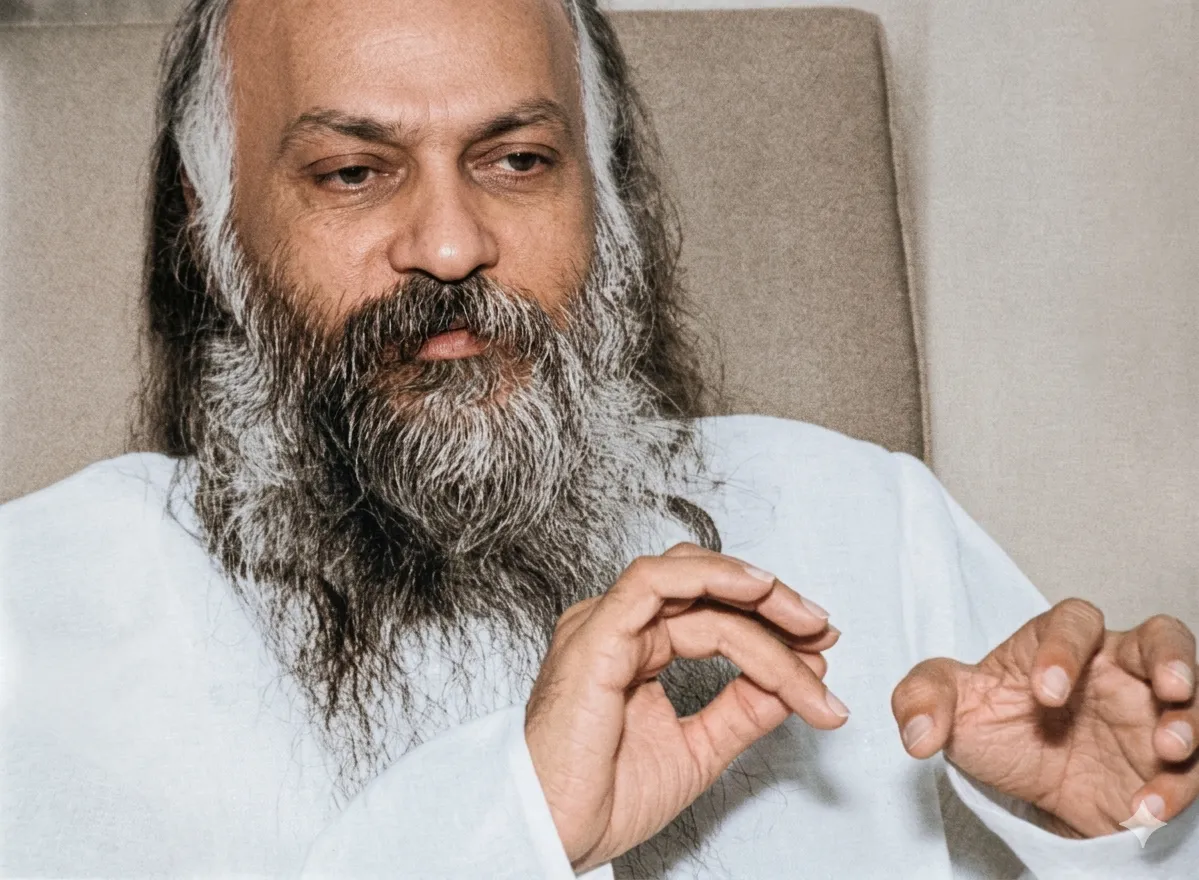
Osho's original Hindi beside Osho Live's English translation, matched passage by passage.
खरोखश तो उठे रास्ता तो चले
मैं अगर थक गया काफिला तो चले
चांद सूरज बुजुर्गों के नक्शे कदम
खैर बुझने दो इनको, हवा तो चले
हाकिमे शहर, यह भी कोई शहर है
मस्जिदें बंद हैं, मयकदा तो चले
बेलचे लाओ, खोलो जमीं की तहें
मैं कहां दफ्न हूं, कुछ पता तो चले
If the true ones would rise, the path would move Even if I grow weary, let the caravan move on The moon and the sun are the elders’ footprints Let them go dark if they must — at least let the wind keep moving Governor of this city — is this even a city? The mosques are shut; then let the tavern stay open Bring spades, open the layers of the earth Where am I buried? Let there be some finding out
आदमी के जीवन की समस्या एक, समाधान भी एक। आदमी के जीवन में बहुत समस्याएं नहीं हैं और न बहुत समाधानों की जरूरत है। एक ही समस्या है कि मैं कौन हूं? और एक ही समाधान है कि इसका उत्तर मिल जाए। जीवन की सारी समस्याएं इस एक समस्या से उठती हैं। यह एक समस्या जड़ है।
The human being’s life has one problem — and one solution. A man’s life is not burdened with many problems, nor does it need many solutions. There is only one problem: Who am I? And there is only one solution: to receive the answer to that. Every other problem rises from this single root. This one question is the root.
और इस समस्या में उलझाव भारी है। उत्तर खोजने वाले भी उत्तर नहीं खोज पाते, उलझाव में भटक जाते हैं। क्योंकि बहुत उत्तर दिए गए हैं। और बाहर से दिया गया कोई भी उत्तर काम नहीं आता। उत्तर आना चाहिए भीतर से और बाहर उत्तरों की कतार खड़ी है। और हर उत्तर तुम्हारा उत्तर बन जाने को आतुर है। हर उत्तर तुम्हें फुसला रहा है, समझा रहा है, राजी करने की कोशिश में संलग्न है--मैं हूं तुम्हारा उत्तर। और स्वभावतः जिसके भीतर समस्या खड़ी हो वह किसी भी उत्तर को पकड़ने लगता है। कहते हैं न कि डूबते को तिनके का सहारा भी बहुत मालूम होता है। हालांकि तिनकों के सहारे कोई कभी बचता नहीं। लेकिन डूबते आदमी के पास तिनका भी आ जाए तो उसी को पकड़ लेता है।
And this question is a maze. Those who go in search of the answer rarely find it; they get lost in the tangle. For so many answers have been offered — and any answer supplied from the outside never works. The answer must arise from within, and yet outside there stands a whole procession of answers — each eager to become your answer. Each answer tries to seduce you, persuade you, convince you: I am your answer. Naturally, the one in whose heart the question has arisen starts grasping at any answer that floats by. It is said, a drowning man clutches at a straw. Though no one has ever been saved by straw, if a drowning man sees one, he grabs it.
ऐसे ही तुमने बहुत तिनके पकड़ लिए हैं। उन तिनकों के पकड़ने से तुम बचोगे नहीं। नाव तुम्हारे भीतर है। जहां से समस्या उठी है, वहीं समाधान छिपा है। समस्या के भीतर ही उतरना है तो समाधान मिलेगा। प्रश्न भीतर और उत्तर बाहर, अगर ऐसा होता तो सभी को उत्तर मिल गए होते। प्रश्न भी भीतर है और उत्तर भी भीतर है। इसलिए जो भीतर जाते हैं वे ही उत्तर पाते हैं।
In just that way you have grasped many straws. But clinging to straw will not save you. The boat is within you. From where the problem arose, there is the solution hidden. Enter the very heart of the problem and the solution will be found. If the question were within and the answer outside, everyone would have found it long ago. The question is within — and the answer is within. So only those who go within find it.
तो पहला ध्यान रखना, मैं कौन हूं, शास्त्रों से इसका उत्तर मत ले लेना अन्यथा तुम सदा को भटक जाओगे। मैं कौन हूं, इसका उत्तर स्वयं से लेना है।
So first, keep this in your awareness: Who am I? Do not take the answer from the scriptures. If you do, you will wander forever. Who am I? The answer must be taken from your own being.
कोई उधार उत्तर काम न आएगा। सब उधार उत्तर झूठे हैं। इसलिए नहीं कि जिन्होंने वे उत्तर दिए थे उन्हें पता नहीं था, बल्कि इसलिए कि यह उत्तर ऐसा है कि कोई दूसरा किसी दूसरे को दे नहीं सकता।
No borrowed answer will work. All borrowed answers are false — not because those who uttered them knew nothing, but because this answer is of such a kind that no one can hand it to anyone else.
मैं जानता हूं फिर भी तुम्हें दे नहीं सकता। और दूंगा तो देने में ही झूठा हो जाएगा। तुम लोगे, लेने में ही बेईमानी हो जाएगी। यह उत्तर ऐसा है जिसकी तलाश करनी होती है। तलाश में ही निर्मित होता है। खोज में ही इसका जन्म है।
I may know and yet I cannot give it to you. And if I try to give, in the very giving it becomes false. If you try to receive it, the receiving itself will be dishonest. This is an answer that has to be sought. In the seeking it is forged; in the search it is born.
कोई हिंदू है, कोई मुसलमान है, कोई ईसाई है। किस कारण तुम हिंदू हो? क्योंकि तुमने कोई उत्तर स्वीकार कर लिया है बाहर से। किस कारण तुम मुसलमान हो? क्योंकि तुमने कोई उत्तर स्वीकार कर लिया है बाहर से। तो न तो हिंदू धार्मिक है, न मुसलमान धार्मिक है; न जैन, न ईसाई, न यहूदी। धार्मिक आदमी वह है जो बाहर से कोई उत्तर स्वीकार नहीं करता। जो अपनी अंतर-खोज में जाता है। जो कहता है, समस्या मेरी है, समाधान भी मुझे खोजना होगा। समस्या मेरे प्राणों के प्राण में उठी है, वहीं से समाधान भी उठना चाहिए। वहीं कहीं समाधान छिपा होगा। अपने उत्तर में जो जाता है उसे जवाब मिलता है। अपने प्रश्न में जो जाता है उसे जवाब मिलता है।
Someone is Hindu, someone Muslim, someone Christian — why? Because you accepted some answer from the outside. Why are you a Muslim? Because you accepted some outside answer. Then neither Hindu nor Muslim is religious; nor Jain, nor Christian, nor Jew. Religious is the one who accepts no answer from the outside, who turns to the inner search, who says: The problem is mine, the solution must be found by me. The question rose in the breath of my own life — from that very source the answer must arise. Somewhere there it lies hidden. The one who goes toward his own answer receives the reply. The one who goes into his own question receives the reply.
लेकिन हम बाहर भटकने के आदी हैं। हम हर चीज बाहर खोजते हैं। हम धन भी बाहर खोजते हैं। हम पद भी बाहर खोजते हैं। हम समाधान भी बाहर खोजते हैं। न धन बाहर है, न पद बाहर है, न समाधान बाहर है। असल में समाधि के ही ये अलग-अलग नाम हैं। धन कहो, समाधि का नाम है।
But we are habituated to wandering outside. We seek everything outside. We seek wealth outside. We seek position outside. We seek the solution outside. Neither wealth is outside, nor position, nor solution. In truth, these are different names for Samadhi. Call it wealth — it is a name of Samadhi.
आज जिस फकीर की चर्चा हम शुरू करते हैं उसका नाम है, धनी धरमदास। कबीर के शिष्य थे धनी धरमदास। बहुत बड़े धनी थे। बहुत धन कमाया, बहुत पद-प्रतिष्ठा थी। कबीर के पास जब भी आते थे तो कभी कबीर उन्हें कुछ और नहीं, धरमदास कह कर ही पुकारते थे। फिर एक दिन फूल खिला। भीतर की आत्मा जगी। गुरु की चोट काम आई। और धरमदास ने सारा धन लुटा दिया। उस दिन कबीर ने उन्हें कहा: धनी धरमदास! अब तू धनी हुआ! अब तेरी आंख भीतर मुड़ी! अब तेरी खोज बाहर नहीं है! अब बाहर पर तेरी पकड़ गई!
Today we begin to speak of a fakir whose name is Dhani Dharamdas. Dharamdas was a disciple of Kabir. He was very wealthy — he had amassed much wealth, had status and prestige. When he came to Kabir, Kabir called him simply ‘Dharamdas.’ Then one day the flower blossomed. The inner soul awakened. The Master’s blow did its work. And Dharamdas scattered all his wealth. That day Kabir said to him: Dhani Dharamdas! Now you have become wealthy. Now your eyes have turned inward. Now your search is no longer outside. Now your clutch on the outer has gone slack.
धन भी भीतर है, पद भी भीतर है क्योंकि परमात्मा भीतर है। उससे बड़ा और क्या पद होगा? इसलिए तो उसे परमपद कहा है।
Wealth is within, position is within — because Paramatma is within. What higher position could there be than That? Hence it is called the supreme station — Parampada.
समाधि भीतर है। और समाधि ही सारे प्रश्नों का, समस्याओं का समाधान है। इसीलिए तो उसे समाधि कहा है--जहां समाधान हो जाए। सब मिल जाता है उत्तर मिल जाने पर। जैसे पानी खिल जाता है कमल खिल जाने पर। कमल के खिलते ही कमल ही नहीं खिलता; उसके आस-पास का सरोवर भी खिल जाता है। जब तुम्हारे भीतर उत्तर का जन्म होता है तो तुम्हारी आत्मा ही नहीं खिलती, तुम्हारी देह भी खिल जाती है। तुम्हारा केंद्र ही नहीं खिलता, तुम्हारी परिधि भी खिल जाती है।
Samadhi is within. And Samadhi is the solution to all questions and problems. That is why it is called Samadhi — where all dissolves into solution. When the answer is found, everything falls into place. As water quivers into bloom when the lotus opens, so when the lotus opens in the lake, the whole lake blooms with it. When the answer takes birth within you, not only your soul blossoms — your body too flowers. Not only your center — your circumference as well.
सब मिल जाता है उत्तर मिल जाने पर। जैसे पानी खिल जाता है कमल खिल जाने पर। तब तुम हुए धनी।
All is attained when the answer is attained. As the water blooms when the lotus blooms. Then you become truly wealthy.
एक ही खोज है कि मैं कौन हूं? और एक ही उपद्रव है कि बाहर सस्ते उत्तर मिल जाते हैं। मुफ्त मिल जाते हैं। बिना कुछ दांव पर लगाए मिल जाते हैं। यह महत उत्तर बिना दांव पर लगाए नहीं मिल सकता।
There is only one quest: Who am I? And only one nuisance: outside, cheap answers are available. Free of cost. With nothing at stake. But this great answer cannot be had without putting your very being at stake.
कल एक युवा संन्यासी ने मुझे आकर कहा--आनंद कबीर ने; विचारशील युवक हैं। कुलीन घर से आते हैं। उनके दादा ख्यातिनाम हैं। उनके दादा के सैकड़ों शिष्य हैं। पुष्ठिमार्ग के अनुयायी हैं। संन्यास ने खलबली पैदा कर दी है। दादा चौरासी वर्ष के हैं और एक विशेष संप्रदाय के विशेष व्यक्ति हैं। वे कबीर को समझाते हैं कि मैं मर जाऊं फिर तू संन्यास ले लेना। फिर तुझे जो करना हो करना, मेरे जीते-जी मत कर। मेरी प्रतिष्ठा को चोट लगती है। कबीर ने आकर कल मुझे कहा कि मैं क्या करूं? बड़ी अड़चन हो गई है। मैंने उनसे कहा कि चौरासी वर्ष तक किसी मार्ग पर चलने के बाद भी अगर व्यक्ति को प्रतिष्ठा का मोह नहीं मिटा है तो कुछ भी नहीं मिला। जाकर अपने दादा को समझाना कि तुम भी संन्यस्त हो जाओ।
Yesterday a young sannyasin came to me — Anand Kabir, a thoughtful youth, from an eminent family. His grandfather is renowned, with hundreds of disciples, a follower of Pushtimarg. Kabir’s taking sannyas has created a commotion. The grandfather is eighty-four — a special person of a special sect. He tells Kabir: Let me die first, then you may take sannyas. Do whatever you want after my death, but not while I live — it hurts my prestige. Kabir asked me: What should I do? It has become a great obstacle. I told him: If after walking a path for eighty-four years a man’s attachment to prestige has not faded, then nothing has been gained. Go explain to your grandfather — you too should take sannyas!
प्रतिष्ठा! नाम! यश! प्रतिष्ठा तो दूसरे देते हैं। दूसरों से दी गई प्रतिष्ठा कोई प्रतिष्ठा है? ज्ञानियों ने आत्मप्रतिष्ठा को प्रतिष्ठा कहा है। जो अपने में ठहर गया उसको प्रतिष्ठित कहा है। जो अब डांवाडोल नहीं होता उसको प्रतिष्ठित कहा है। जिसको अब हवा के झोंके हिलाते नहीं, जो निस्पंद हुआ है, तरंग-शून्य हुआ है। आएं अंधड़, आएं तूफान, लेकिन उसके भीतर लहर नहीं उठती। और फिर जो व्यक्ति जान चुका है वह दूसरे को स्वतंत्रता देगा। ज्ञान का अनिवार्य परिणाम है स्वतंत्रता। वह दूसरे का सम्मान करेगा।
Prestige! Name! Fame! Prestige is given by others — what value is there in that? The wise have called self-resting the true prestige: to be established in oneself. He whose being no longer wavers is established. Whom no gust of wind can shake, who has become unmoving, wave-less. Tempests may come, storms may come, yet no ripple rises within. And one who has come to know will grant freedom to others. Freedom is the inevitable fragrance of knowing. He will honor the other.
लेकिन बाहर के उत्तर सस्ते हैं। आदमी उनको पकड़े-पकड़े मर जाता है। उनसे कुछ हल नहीं होता। सारी उलझन वैसी की वैसी बनी रहती है। आत्मवंचना है बाहर के उत्तर। सावधान रहना बाहर के उत्तरों से।
But outer answers are cheap. People cling to them all their lives. Nothing is resolved; the tangle remains what it was. Answers from outside are self-deception. Beware of them.
धनी धरमदास की भी ऐसी ही अवस्था थी। धन था, पद थी, प्रतिष्ठा थी। पंडित-पुरोहित घर में पूजा करते थे। अपना मंदिर था। और खूब तीर्थयात्रा करते थे। शास्त्र का वाचन चलता था, सुविधा थी बहुत, सत्संग करते थे। लेकिन जब तक कबीर से मिलन न हुआ तब तक जीवन नीरस था। जब तक कबीर से मिलना न हुआ तब तक जीवन में फूल न खिला था। कबीर को देखते ही अड़चन शुरू हुई, कबीर को देखते ही चिंता पैदा हुई, कबीर को देखते ही दिखाई पड़ा कि मैं तो खाली का खाली रह गया हूं। ये सब पूजा-पाठ, ये सब यज्ञ-हवन, ये पंडित और पुरोहित किसी काम नहीं आए हैं। मेरी सारी अर्चनाएं पानी में चली गई हैं। मुझे मिला क्या? कबीर को देखा तो समझ में आया कि मुझे मिला क्या? मिले हुए को देखा तो समझ में आया कि मुझे मिला क्या?
Dhani Dharamdas was in just such a condition. He had wealth, position, prestige. Priests performed worship in his house. He had his own temple. He made many pilgrimages. Scripture recitations were held; all was comfortable; he kept company called satsang. Yet until he met Kabir, life was tasteless. No flower had opened in his life until he met Kabir. The very sight of Kabir created anxiety, stirred trouble; seeing Kabir, it became clear — I am empty, utterly empty. All these rituals, these rites, these priests and pundits have been of no use. All my worships have gone to water. What have I received? Seeing Kabir, he understood what receiving is; seeing one who had received, he knew what receiving means.
इसलिए तो लोग जिसे मिल गया है उसके पास जाने से डरते हैं। क्योंकि उसके पास जाकर कहीं अपनी दीनता और दरिद्रता दिखाई न पड़ जाए। लोग उनके पास जाते हैं जो तुम जैसे ही दरिद्र हैं। उनके पास जाने से तुम्हें कोई अड़चन नहीं होती, चिंता नहीं होती, संताप नहीं होता।
That is why people fear going to one who has found. For in his presence your own poverty and inner beggary may become too visible. People go to those as poor as themselves. There you feel no trouble, no anxiety, no sting.
अब तुम थोड़ा समझना, आमतौर से लोग साधु-संतों के पास संतोष पाने जाते हैं, संताप पाने नहीं। लोग कहते हैं संतुष्ट नहीं हैं हम इसलिए तो जाते हैं। सांत्वना चाहिए। संताप तो वैसे ही बहुत है। लेकिन मैं तुमसे कहूं कि सच्चे साधु के पास जाकर तुम पहली दफा संताप से भरोगे। पहली दफा तुम्हारी जिंदगी में असली चिंता का जन्म होगा। पहली दफा बवंडर उठेगा। पहली दफा आंख खुलेगी कि अब तक जो किया, वह व्यर्थ है। और जो सार्थक है वह तो अभी शुरू भी नहीं हुआ। स्वभावतः प्राण कंप जाएंगे, छाती हिल जाएगी। फिर छाती चाहिए आगे बढ़ने को। लेकिन फिर पीछे भी नहीं लौटा जा सकता है। एक बार किसी ज्ञानी से आंख मिल जाए तो फिर पीछे भी लौटा नहीं जा सकता। इसलिए लोग ज्ञानियों से आंख चुराते हैं, आंख बचाते हैं। जिनके पास कुछ भी नहीं है उनके चरण छूने में कोई अड़चन नहीं है। ज्ञानियों के पास लोग सम्हल-सम्हल कर जाते हैं। उनसे लगाव लगाना खतरे का सौदा है।
Understand this a little: Ordinarily, people go to so-called saints to get consolation, not combustion. They say, we are not content — hence we go. We want comfort. We already have too much distress. But I tell you, when you come to a true sage, for the first time you will be filled with distress of the right kind. For the first time real concern will be born in your life. For the first time a whirlwind will rise. For the first time your eyes will open to the fact that all you have done till now was futile — and what is meaningful has not even begun. Naturally, your breath will tremble, your chest will quake. Then you will need heart to go further. But you will not be able to turn back either. Once your eyes have met those of a knower, you cannot return. Therefore people avert their eyes from the wise; they avoid their gaze. There is no difficulty in bowing at the feet of those who have nothing. But people tread carefully around the knowers. Getting attached to them is a hazardous bargain.
जिस साधु के पास जाकर तुम्हें सांत्वना मिलती हो समझ लेना, वह साधु ही नहीं है। साधु सांत्वना देने को थोड़े ही होते हैं! सांत्वना से तो तुम जैसे हो वैसे के वैसे रहोगे; मलहम-पट्टी हो गई। दर्द था थोड़ा, वह भी भूल गया। घाव था, उसे भी छिपा दिया। चिंताएं थीं, उनको भी हल कर दिया। कम से कम ऐसा अहसास दिला दिया कि हल हो गईं चिंताएं। असली साधु के पास तुम्हारी चिंताएं पहली दफा उमगती हैं। पहली दफा फूट पड़ता है तुम्हारा सारे भीतर का सांत्वना का बना-बनाया संसार, सब बिखर जाता है। तुम पहली दफा अपने को खंडहर की भांति देखते हो। तुम्हारे हाथ में जो धन है वह कचरा; तुम्हारे पास जो ज्ञान है वह कचरा; तुम्हारे पास जो चरित्र है वह दो कौड़ी का। तुम्हारा आचरण, तुम्हारी प्रतिष्ठा, तुम्हारा यश किसी मूल्य का नहीं है। स्वभावतः आदमी घबड़ा जाएगा। लेकिन उसी घबड़ाहट से क्रांति की शुरुआत होती है।
If, by going to a saint, you feel consoled, know this: he is no saint. Saints are not here to give consolation. With consolation you remain what you are — a little bandage, a little balm; the pain was there, now you forget it; the wound was there, now it’s covered; the anxieties were there, they are made to seem solved. In the presence of a real saint your anxieties, for the first time, come flooding up. For the first time your whole inner world of consolations collapses. You see yourself as a ruin. The wealth in your hands — trash. The knowledge you have — trash. Your character — worth two pennies. Your conduct, your prestige, your fame — without value. Naturally one feels afraid. But from that very fear, revolution begins.
साधु के पास सांत्वना नहीं मिलती, संक्रांति मिलती है। और क्रांति हो जाए तो एक दिन सांत्वना आती है। लेकिन वह सांत्वना नहीं है फिर, वह परम संतोष है; वह परितोष है। वह किसी के दिए नहीं आता, वह तुम्हारे भीतर जब कमल खिल जाता है तो सब खिल जाता है। वह ऊपर से आरोपित नहीं होता।
At a saint’s feet you do not get consolation, you get a turning — a revolution. And when the revolution matures, one day consolation arrives too — but then it is no longer consolation; it is supreme contentment, inner fulfillment. It does not come as a gift from someone else. It blossoms from within when the lotus opens — and then all opens. It is not imposed from above.
धनी धरमदास खोजते थे। तीर्थ जाते, साधु-सत्संग करते। खूब सांत्वना बटोरते थे। फिर मथुरा में सौभाग्य से--उस दिन तो दुर्भाग्य ही लगा था--कबीर से मिलना हो गया। कबीर ने तो झंझावात की तरह सब झकझोर दिया। मूर्ति मूढ़ता मालूम होने लगी। सगुण की उपासना अज्ञान मालूम होने लगा। वे पूजा-पाठ, वे यज्ञ-हवन, सब अंधविश्वास थे। कबीर की चोट तो ऐसी पड़ी कि धरमदास तिलमिला गए। मथुरा छोड़ कर भाग गए। अपने घर चले गए वापस। बांधवगढ़ में उनका घर था। लेकिन कबीर जैसे व्यक्ति की चोट पड़ जाए तो तुम भाग नहीं सकते। कहीं भागो, कबीर तुम्हारा पीछा करेंगे। कहीं जाओ, तुम्हारे सपनों में छाया आएगी। आदमी, आदमी जैसा होना चाहिए वैसा पहली दफा देखा था, भूलो भी तो कैसे भूलो! बड़ी बेचैनी हो गई। प्रार्थना फिर भी करते लेकिन प्रार्थना में रस जाता रहा, उत्साह जाता रहा। मंदिर में थाली भी सजाते, पूजा भी उतारते लेकिन हाथों में प्राण न रहे। शास्त्र भी सुनते, लेकिन अब दिखाई पड़ने लगा कि सब कूड़ा-करकट है। दूसरों के उत्तर अपने उत्तर नहीं हैं; नहीं हो सकते हैं।
कबीर ने ऐसी चोट मारी कि नींद लेना मुश्किल हो गया। उदास रहने लगे, चिंता से भरे रहने लगे। और फिर यह भी चिंता पकड़ी कि एक ज्ञानी के पास से भाग आया। कमजोर हूं, कायर हूं। फिर कबीर की तलाश में जाना ही पड़ा। काशी में जाकर कबीर से मिले। कबीर से मिलने की घटना उन्होंने अपनी किताब ‘अमर सुखनिधान’ में गाई है। वह घटना बड़ी प्यारी है। वे वचन धनी धरमदास के समझने जैसे हैं।
धरमदास हरसित मन कीन्हा
बहुर पुरुस मोहि दरसन दीन्हा
Dhani Dharamdas was searching. He traveled to holy places, kept company with saints, collected consolations. Then, in Mathura, by fortune — though it felt like misfortune that day — he met Kabir. Kabir came like a storm and shook everything. The idol began to look like mere stone. The worship of the saguna became revealed as ignorance. Those rituals and sacrifices — blind beliefs. Kabir’s blow fell such that Dharamdas writhed. He fled Mathura, ran home. His home was in Bandhavgarh. But once a blow like Kabir’s has fallen, you cannot really escape. Wherever you run, Kabir will follow you. Wherever you go, his shadow will haunt your dreams. You have, for the first time, seen a man as a man should be — how will you forget? The restlessness grew. He still prayed, but the juice was gone, the enthusiasm was gone. He still set the plate in the temple, performed aarti, but there was no life in his hands. He listened to scripture, but now it became clear it was all rubbish. Others’ answers cannot be my answers.
Kabir’s blow made sleep impossible. He became sad, filled with concern. And another worry appeared: I ran away from a knower. I am weak, a coward. He had to return in search of Kabir. He went to Kashi and met him. He has sung the story of that meeting in his book Amarsukhnidhan. It is a lovely tale; Dharamdas’s words are worth understanding.
जिसको देखा था मथुरा में फिर वही पुरुष का दर्शन हुआ। फिर वही ज्योति, फिर वही आनंद, फिर वही नृत्य।
Dharamdas rejoiced in his heart Once again that Man granted me his darshan
The one I had seen in Mathura — once again I beheld the same. The same light, the same bliss, the same dance.
धरमदास हरसित मन कीन्हा
Dharamdas rejoiced in his heart
मथुरा से तो लौट गए थे बहुत चिंता लेकर, उद्विग्न होकर।
He had left Mathura full of anxiety, agitated.
यहां रोज यह घटता है। कभी कोई आ जाता है भूला-चूका तो उद्विग्न हो जाता है, परेशान हो जाता है। बस जो परेशान हो गया वह आज नहीं कल हर्षित भी हो सकता है। जो यहां से उद्विग्न होकर लौटा, वह आज नहीं कल आएगा। आना ही पड़ेगा। क्योंकि यहां से जो बीमार होकर लौटा उसका इलाज फिर कहीं और नहीं हो सकता।
This happens here every day. Someone stumbles in by mistake and becomes upset. But the one who is disturbed today can be rejoicing tomorrow. The one who goes away agitated will return one day — he has to return. For one who goes away from here sick cannot be healed elsewhere.
जाना ही पड़ा कबीर के पास। कहा: धरमदास हरसित मन कीन्हा! लेकिन इस बार कबीर को देख कर बड़ा हर्ष हुआ। क्या हो गया? वह जो चार-छह महीने भगोड़ेपन में बिताए कबीर से, उन चार-छह महीनों ने सारी धूल झाड़ दी। कबीर ने जो कहा था उसका सत्य दिखाई पड़ा। उसका स्वयं साक्षात्कार हुआ। आधी यात्रा पूरी हो गई।
He had to go to Kabir. He says: Dharamdas rejoiced in his heart! But this time, at the sight of Kabir, great joy arose. What had happened? Those four to six months spent as a fugitive from Kabir shook off all the dust. What Kabir had said grew into a lived truth. He had his own glimpse of it. Half the journey was done.
व्यर्थ व्यर्थ की तरह दिखाई पड़ जाए तो सार्थक को सार्थक की तरह देखना सुगम हो जाता है। व्यर्थ को जब तक हम सार्थक मानते हैं तब तक सार्थक को देखें तो अड़चन होती है। झूठ को सच माना है, सच सामने खड़ा हो जाए तो बेचैनी होती है, क्योंकि जिसे तुमने सच माना था वह झूठ होने लगता है। इतने दिन उसमें लगाए, इतना धन-मन, समय लगाया। तुम्हारा न्यस्त स्वार्थ हो जाता है उसमें। अगर कोई व्यक्ति तीस साल तक एक बात को पकड़े रहा, फिर अचानक कोई और बात सुनाई पड़े जो तीस साल को गलत करती हो, तो बड़ी हिम्मत चाहिए कि मेरे तीस साल व्यर्थ गए इसे स्वीकार कर लूं। आदमी का मन होता है, मेरे और तीस साल व्यर्थ गए? मैं इतना मूढ़ हूं क्या? आदमी रक्षा करता है, बचाने की कोशिश करता है।
When the futile is seen as futile, it becomes easy to see the meaningful as meaningful. As long as you take the futile to be meaningful, the meaningful is hard to perceive. When you have believed the false to be true, the arrival of truth creates unease — because what you took to be true begins to fall apart. You invested in it for so many days — money, mind, time. Your vested interests grow around it. If a man has held one view for thirty years and suddenly hears something that makes those thirty years wrong, it takes great courage to accept that my thirty years went to waste. The mind resists; it tries to defend.
इन चार-छह महीनों में धरमदास ने अपने को बचाने की सब तरह कोशिश की। लेकिन कबीर का टेंड़पा ऐसा है कि पड़ जाए तो सिर खुल गया था। चोट भारी थी। सब दिखाई पड़ने लगा। जो कबीर ने मथुरा में कहा था, वह दिखाई पड़ने लगा कि मूर्ति पत्थर है, किसकी पूजा कर रहे हो? ये पंडित-पुजारी, जिनकी तुम सुन रहे हो, खुद दो कौड़ी के नौकर हैं। इन्हें खुद भी कुछ पता नहीं है। ये दूसरों के कान फूंक रहे हैं, इनके कान अभी परमात्मा ने खुद नहीं फूंके हैं। ये दूसरों को मार्ग दे रहे हैं, इन्हें खुद मार्ग मिला नहीं है। इनके हृदय में अभी फूल खिला नहीं। इनके पास खुद भी सुगंध नहीं। ये सत्य बांटने चल पड़े हैं और सत्य की इन्हें कोई भी खबर नहीं है। यह छह महीने तक जो-जो कबीर ने कहा था, एक-एक बात सही मालूम पड़ी। आधी बात तो पूरी हो गई। अब कबीर की बात सुन कर चोट लगने का कोई कारण नहीं था, अब तो हर्षित होने की बात थी।
Through those months Dharamdas tried every way to defend himself. But Kabir’s blow had been such that the head had split open. The blow was heavy — everything became visible. What Kabir had said in Mathura proved itself: The idol is stone — whom are you worshiping? These priests and pundits you listen to are themselves two-penny hirelings. They themselves know nothing. They whisper into other people’s ears — but Existence has not yet whispered in their own. They guide others; they themselves have no path. No flower has blossomed in their hearts. They have no fragrance of their own. They are distributing truth while having no news of it. One by one, every point Kabir had made proved true over those six months. Half the work was done. Now Kabir’s words could no longer hurt; now they were cause for rejoicing.
धरमदास हरसित मन कीन्हा
बहुर पुरुस मोहि दरसन दीन्हा
Dharamdas rejoiced in his heart Once again that Man granted me his darshan
एक दिन जिससे भाग गए थे भयभीत होकर, आज उसके पास वापस लौटे हैं और इसलिए आनंदित हैं कि कबीर ने उन्हें पुनः दर्शन दिया। कबीर ने फिर वही झलक दी। कबीर ने वही झरोखा फिर खोला।
मन अपने तब कीन्ह बिचारा
इनकर ज्ञान महाटकसारा
The one from whom he had once fled in fear, he now approached again — rejoicing that Kabir gave him darshan. Kabir opened the same window again.
I pondered within my mind His knowing is minted from the royal mint
इस आदमी के पास कुछ है। असली सिक्के हैं। टकसाल से निकले सिक्के हैं। मैं झूठे नकली सिक्कों में पड़ा रहा हूं।
This man has something. The coins are real, struck from the true mint. I have been dealing in counterfeit.
इनकर ज्ञान महाटकसारा
दोई दिन के करता कहाई
I pondered within my mind He who boasts for two days is called a doer None has fathomed his mystery
इनकर भेद कोऊ नहीं पाई
आज पहली दफा प्रेम से भर कर, हर्ष से भर कर कबीर को देखा। पहली बार तो झिझक से देखा होगा, डरते-डरते देखा होगा, अपने को दूर-दूर रखा होगा, बीच में फासला रखा होगा, दीवाल रखी होगी। अपनी धारणाएं, अपने पक्षपात, अपना विचार, अपना सिद्धांत, उन सबकी दीवाल स्वभावतः रही होगी। उसके पार से कबीर को देखा था। आज सब हटा कर देखा। छह महीने में वे सब दीवालें अपने आप हट गईं।
Today, for the first time, he looked at Kabir with love, with joy. The first time he must have looked with hesitation, with fear, keeping a distance, keeping a wall between — his beliefs, his biases, his concepts and doctrines — naturally there was a wall. He had seen Kabir through that wall. Today he looked with all those walls removed. In six months they fell away on their own.
गुरु मिल जाए, उसकी भनक भी पड़ जाए कान में तो फिर मिथ्या गुरु की पकड़ ज्यादा देर नहीं चल सकती। थोड़ी-बहुत देर तुम अपने को धोखा दे लो, दे लो।
If a true guru’s scent even reaches your ear, your hold on the false will not endure long. For a little while you can still deceive yourself — but only for a little while.
None has fathomed his mystery
इनकर भेद कोऊ नहीं पाई
आज पहली दफा आंख भर कर देखा। असीम था सामने। इस छोटी सी देह में जैसे द्वार था असीम का; जैसे अगम का मार्ग खुलता था।
For the first time he gazed to the brim. The Infinite stood before him. In this small body, a doorway to the Vast; a path opens to the Inconceivable.
इतना कह मन कीन्ह बिचारा
तब कबीर उन ओर निहारा
Having said so much and pondering within, Then Kabir looked toward him
पहले कबीर ने जो बातें कही थीं, कह दी थीं। लेकिन गुरु निहार कर तो शिष्य की तरफ तभी देखता है, जब शिष्य हर्ष से प्रमुदित होकर गुरु के पास बैठता है।
What Kabir had said before — he had said. But a Master truly sets his gaze upon the disciple only when the disciple sits near him, rejoicing, over-brimming with love.
जुन्नैद ने कहा है कि मैं अपने गुरु के पास था। तीन साल तक तो उन्होंने मेरी तरफ देखा ही नहीं। बैठा रहता उनके पास मगर वे मेरी तरफ न देखते। और लोग आते, और बातें होतीं, मैं बैठा रहता, बैठा रहता। तीन साल बाद उन्होंने मेरी तरफ निहारा। मैं धन्यभाग हो गया। फिर तीन साल तक ऐसे ही बैठा रहा, बैठा रहा। फिर तीन साल के बाद, उन्होंने मेरी तरफ देख कर मुस्कुराया। फिर और तीन साल बीत गए बैठे-बैठे। फिर एक दिन उन्होंने मुझे छुआ, मेरे कंधे पर हाथ रखा। और तीन साल बीत गए तब उन्होंने अपने गले से मुझे लगाया, आलिंगन किया। बारह साल गुरु के पास बैठे-बैठे आलिंगन की घड़ी आती है।
Junnaid has said: I was with my Master. For three years he did not even look toward me. I sat there, but he would not look. People came, conversations happened. I just sat. After three years he looked at me. I felt blessed. Then I sat three more years. Then, after three more years, he looked at me and smiled. I sat yet three more years. Then one day he touched me, placed his hand on my shoulder. Three more years passed; then he embraced me. Twelve years of sitting at the Master’s feet — and the hour of embrace arrives.
तब कबीर उन ओर निहारा
Then Kabir looked toward him
गुरु देखता ही तब है.इस बात को समझना। गुरु के देखने से मेरा मतलब यह नहीं है कि कबीर पहली दफा जब धरमदास को देखे तो आंख बंद रखे होंगे। कि कबीर को नहीं देखा, कि कबीर को दिखाई नहीं पड़े होंगे धरमदास। देखा था, बस यह ऊपर की आंख से देखा था। एक और आंख है गुरु की, उस आंख से तो कोई तभी देखा जाता है जब कोई तैयार हो जाता है। वह आंख तो तुम्हारे भीतर तभी उतर सकती है जब हर्ष तुम्हारे भीतर द्वार खोल दे। तुम्हारे भीतर चिंताएं खड़ी हैं, बेचैनियां खड़ी हैं, फिकरें खड़ी हैं, सही-गलत का हिसाब खड़ा है, संदेह खड़े हैं, अश्रद्धा खड़ी है, अनास्था खड़ी है, तो गुरु अपनी वह आंख खराब नहीं करता। उस आंख की अभी तुम्हें जरूरत नहीं है। उस आंख की जब जरूरत होती है तभी वह आंख तुममें डाली जाती है। वही आंख वास्तविक दीक्षा है। वही है गुरु के साथ जुड़ जाना। उसी आंख की एक झलक, और जोड़ बन जाता है। फिर जोड़ नहीं टूटते।
इतना कह मन कीन्ह बिचारा
Understand this: when I say ‘the Master looked,’ I do not mean Kabir had kept his eyes closed the first time he saw Dharamdas, that Kabir had not seen him. He had seen him — with the outer eyes. But the Master has another eye. With that eye one sees only when the other is ready. That eye can enter you only when rejoicing opens the door within you. If inside you there are worries, anxieties, calculations of right and wrong, doubts standing guard, distrust and non-belief — the Master will not ‘waste’ that eye upon you. You have no need yet. When the need arises, that eye is placed within you. That glance is the real initiation. That is the joining with the Master. One glimmer of that eye — and the bond is formed; it never breaks thereafter.
इस हर्ष का विचार ही उठा था, यह आनंद का भाव ही उठा था,
तब कबीर उन ओर निहारा
आओ धरमदास पगु धारो
कबीर ने कहा धरमदास को—
आओ धरमदास पगु धारो
चिंहुक-चिंहुक तुम काहे निहारो
ऐसे दूर-दूर से, चिंहुक-चिंहुक! ऐसे डरते-डरते, ऐसे भयभीत.!
Having said so much and pondering within, Then Kabir looked toward him: Come, Dharamdas, place your foot Why do you peep from afar, timidly?
आओ धरमदास पगु धारो
कबीर ने कहा, अब रखो पग। यह खुला मार्ग। मैं हूं मार्ग, रखो पग।
Come, Dharamdas — place your foot. The path is open. I am the path — place your foot.
आओ धरमदास पगु धारो
अब दूर खड़े रहने से न चलेगा। पहली दफा तो कबीर ने खंडन किया था कि मूर्ति गलत, कि पूजा गलत, कि प्रार्थना गलत, कि शास्त्र गलत। पहली दफे तो सारे आकार और सगुण की धारणा का खंडन ही खंडन किया था। इस बार निमंत्रण दिया।
आओ धरमदास पगु धारो
चिंहुक-चिंहुक तुम काहे निहारो
Come, Dharamdas, place your foot Now standing at a distance will not do. The first time Kabir had only demolished: Idolatry is wrong, ritual is wrong, prayer as you know it is wrong, scripture as you clutch it is wrong. He had refuted every image and concept of the saguna. This time he gave an invitation.
अब दूर रहने की कोई जरूरत नहीं। अब दूर-दूर से देखने की कोई जरूरत नहीं। आ जाओ पास, निकट आ जाओ। इस निकट आ जाने का नाम सत्संग है। और धन्यभागी हैं वे जिन्हें गुरु बुला ले और कहे--
आओ धरमदास पगु धारो
चिंहुक-चिंहुक तुम कहो निहारो
कहिए छिमा कुसल हो नीके
Come, Dharamdas, place your foot Why peep from afar, so timid, so afraid! Come near, come close. This coming-near is called satsang. Blessed are those whom the Master calls and says — come, Dharamdas, place your foot. Why peer from afar?
Say then — are you well? All is well?
कबीर कह रहे हैं धरमदास से,
कहिए छिमा कुसल हो नीके?
सब ठीक-ठाक है?
सुरत तुम्हार बहुत हम झींके
Kabir speaks to Dharamdas: Say, are you well? All is good?
कितने-कितने समय से तुम्हारी सूरत की याद कर रहे थे।
We have long remembered your face
सुरत तुम्हार बहुत हम झींके
यह मत सोचना कि शिष्य ही गुरु को खोजता है। गुरु शिष्य से ज्यादा खोजता है। शिष्य की खोज तो अंधी है, अंधेरी है। शिष्य को तो पता नहीं ठीक-ठीक क्या खोज रहा है। गुरु को पता है। इजिप्त के पुराने शास्त्र कहते हैं, जब शिष्य तैयार होता है तो गुरु उसे खोज लेता है। शिष्य तो कैसे खोजेगा? शिष्य तो कैसे पहचानेगा कौन गुरु है? गुरु से मिलन भी हो जाएगा तो भी प्रत्यभिज्ञा नहीं होगी। गुरु सामने भी खड़ा होगा तो भरोसा नहीं आएगा। हजार बाधाएं पड़ेंगी, हजार चिंताएं अड़चन डालेंगी। हजार संदेह उठेंगे। मैं भी इस बात से राजी हूं कि पहला कदम गुरु उठाता है, शिष्य नहीं। पहला निमंत्रण गुरु देता है।
Do not think only the disciple seeks the Master. The Master seeks the disciple even more. The disciple’s search is blind, in the dark. He hardly knows what he seeks. The Master knows. The ancient Egyptian scriptures say: When the disciple is ready, the Master finds him. How can the disciple find? How will he recognize who the Master is? Even if he meets the Master, he will not be able to recognize him. A thousand obstacles and doubts will arise. I too say: the first step is taken by the Master, not the disciple. The first invitation comes from him.
आओ धरमदास पगु धारो
चिंहुक-चिंहुक तुम काहे निहारो
कहिए छिमा कुसल हो नीके?
सुरत तुम्हार बहुत हम झींके
Come, Dharamdas, place your foot Why peer from afar, timidly? Say — are you well, is all good? We have long remembered your face
मथुरा में देखा था धरमदास को। तब धरमदास तो नहीं पहचान सका था अपने गुरु को लेकिन गुरु अपने शिष्य को पहचान लिया था। देखा होगा बीज धरमदास का। देखी होगी संभावना इसके वृक्ष बन जाने की, किसी दिन आकाश में फूल खिल जाने की। देखी होगी इसकी अनंत संभावना। गुरु उसी दिन चुन लिया था। धरमदास को तो उस दिन पता भी नहीं था। धरमदास को तो कुछ पता हो भी नहीं सकता था।
Kabir had seen Dharamdas in Mathura. That day Dharamdas could not recognize his Master, but the Master recognized his disciple. He must have seen the seed — the possibility of a tree, a day when flowers would open to the sky, his infinite potential. The Master had chosen him that day. Dharamdas did not know; how could he?
सुरत तुम्हार बहुत हम झींके
धरमदास हम तुमको चीन्हा
कबीर कहते हैं कि हमने तुम्हें पहचाना।
बहुत दिनन में दरसन दीन्हा
इतनी देर लगाई और हम राह देखते और राह देखते।
बहुत ज्ञान कहसीं हम तुमहीं
We have long remembered your face We have recognized you, Dharamdas Long have we waited to give you darshan We shall speak much wisdom to you And then you too shall recognize me
बहुर के तुम अब चीन्हों हमहीं
हम तो तुम्हें चीन्ह लिए, अब तुम हमें चीन्हो। हम तो तुम्हें पहचान लिए, अब तुम हमें पहचानो। गुरु पहले पहचानता है तभी शिष्य के पहचानने की संभावना प्रगाढ़ होती है। गुरु पहले चुनता है, तब शिष्य चुनता है।
We have recognized you — now you recognize us. The Master recognizes first; then the disciple’s recognition becomes possible. The Master chooses first; then the disciple chooses.
भली भई दरसन मिले बहुरि मिले तुम आए
जो कोऊ मोंसे मिले सो जुग बिछुरि न जाए
Blessed, blessed — you have come again for darshan Whosoever meets me shall not be lost for ages
कबीर कहते हैं, अच्छा हुआ, भली भई दरसन मिले! आ गए तुम। ये बड़े सम्मान से कहे गए वचन हैं। सदगुरु के मन में शिष्य के प्रति बड़ा सम्मान होता है। और जिस गुरु के मन में शिष्य के प्रति सम्मान न हो वह गुरु ही नहीं; उसे पता ही नहीं। क्योंकि शिष्य और गुरु में भेद क्या है? भेद शिष्य की तरफ से होगा, गुरु की तरफ से कुछ नहीं हो सकता। गुरु तो जानता है, जो मेरे भीतर विराजमान है वही शिष्य के भीतर विराजमान है। मेरे भीतर जाग गया, शिष्य के भीतर सोया है। लेकिन सोने-जागने से क्या फर्क पड़ता है? स्वभाव तो एक है। शिष्य को भेद पता चलता है कि मैं कहां, गुरु कहां! मैं अंधेरा-भरा, गुरु रोशन! मुझे कुछ मिला नहीं, गुरु को सब मिला! लेकिन गुरु को तो यह दिखाई पड़ता है न, कि जैसा मुझे मिला वैसा ही तुझे अभी मिल सकता है, इसी वक्त मिल सकता है। तेरी अपनी संपदा है। कहीं मांगने नहीं जाना। कहीं खोजने नहीं जाना। अभी परदा उठा, अभी भीतर झांक और अभी पा ले। क्षण भर की भी देर करने की जरूरत नहीं है। इसलिए गुरु के मन में शिष्य के प्रति उतना ही सम्मान होता है, जितना शिष्य का गुरु के प्रति होता है।
Kabir says: Good — blessed it is that you came! Such respectful words these are. In the Master’s heart there is great respect for the disciple. If a so-called guru has no respect for the disciple, he is no guru at all; he has not understood. For what is the difference between disciple and Master? The difference is only on the disciple’s side — not on the Master’s. The Master knows: that which abides in me abides in him. In me it has awakened; in him it sleeps. But what difference do sleeping and waking make to the nature? The disciple feels the gap: I am where, and the Master where! I am full of darkness, the Master radiant. I have nothing, the Master has all. But the Master sees: what has flowered in me can flower in you — this very moment. It is your own treasure. There is no need to beg. No need to search elsewhere. Raise the curtain now — look within and receive now. Not even a moment’s delay is needed. Therefore the Master honors the disciple as much as the disciple honors the Master.
भली भई दरसन मिले बहुरी मिले तुम आए
फिर से तुम आ गए! मैं राह देखता, मैं प्रतीक्षा करता था। जो कोऊ मोंसे मिले.और जो मुझसे मिल जाता है.सो जुग बिछुरि न जाए! फिर बिछुड़ना संभव नहीं है। अब तुम आ गए तो आओ ही मत, मिल ही जाओ ताकि फिर बिछुड़ना न हो सके।
Blessed, blessed — you have come again You have come! I waited, I kept watch. Whosoever meets me shall not be lost for ages. Once you meet me, do not merely come — become one, so that separation is no longer possible.
और ऐसा ही हुआ। धरमदास फिर न लौटे। लौट कर नहीं देखा। कायर ही लौट कर देखते हैं। हिम्मतवर आदमी आगे देखता है, पीछे नहीं देखता। वहीं से सब लुटवा दिया। घर भी लौट कर नहीं गए। लुटाने को भी नहीं गए। अब उसके लिए भी क्या जाना! वहीं से खबर भेज दी कि सब बांट दो। जो है सब बांट-बूंट दो। जिनको जरूरत है, ले जाएं। सारे गांव को कह दो जिसको जो ले जाना है ले जाए। लौट कर भी नहीं गए। असल में लौट कर भी जाते तो थोड़ी चूक हो जाती। देने के मजे में भी तो अहंकार भरता है। इतना लुटा रहा हूं, इतना दे रहा हूं, यह मजा लेने भी चले गए होते तो थोड़ा अहंकार घना होता। धन का मूल्य तो फिर भी स्वीकार कर लिया होता कि धन बड़ी कीमती चीज है, जाऊं, लुटाऊं, बांट आऊं। धन का कोई मूल्य ही न रहा। इधर कबीर से आंख क्या मिली, सब मिल गया। वहीं से खबर भेज दी। अपने आदमी भेज दिए होंगे जो साथ आए थे कि भाई जाओ, मैं तो गया। तुम जाओ, जो है, सब बांट-बूंट दो। जैसा है निपटा-सिपटा दो। मेरा अब आना न हो सकेगा।
And so it was. Dharamdas never returned. He never looked back. Only cowards look back. The courageous look ahead. From there itself he gave everything away. He did not even return home to give it. What was the need? From there he sent word: Distribute it all. Let whoever needs take it. Tell the whole village: whoever wants, take what you will. He did not go back even to enjoy the pleasure of giving. For even in giving the ego swells — I am giving so much. If he had gone to relish that, a little ego would have thickened again. He would have accepted the value of wealth by going to distribute it — as if it were something precious to hand out. But wealth had lost all value. The moment his eyes met Kabir’s, everything was attained. He must have sent his attendants back: Go, I am gone. You return and share everything out. Settle it as it is. I will not be coming.
जब कबीर कहते हैं: सो जुग बिछुरि न जाए! जो मुझसे आ मिला फिर कभी बिछुड़ता नहीं, तो अब इतना भी बिछोह न सहूंगा। फिर धरमदास कबीर की छाया होकर रहे। कबीर के समाधि-उपलब्ध शिष्यों में एक थे धरमदास। और जिस दिन धरमदास ने सब लुटवा दिया, उस दिन से कबीर ने उनको कहा धनी धरमदास।
When Kabir says: Whosoever meets me shall not be lost for ages — then even this little separation I will not endure. Thereafter Dharamdas remained Kabir’s shadow. Among Kabir’s disciples who attained Samadhi, Dharamdas was one. And the day he gave everything away, Kabir called him Dhani Dharamdas.
एक धन है जो बाहर का है। जिससे कोई आदमी धनी नहीं होता, सिर्फ भिखारी बनता है। और एक धन है भीतर का, जिससे आदमी वस्तुतः धनी होता है। धन की परिभाषा क्या है? धन की परिभाषा है जो बांटने से बढ़े। जो बांटने से घट जाए वह धन नहीं। यह भीतर का धन ऐसा है, जितना बांटो उतना बढ़ता है। इसलिए कबीर ने उनको धनी कहा। अब अटूट धन मिल गया, अखूट धन मिल गया। धनों का धन मिल गया।
There is a wealth outside, by which no one becomes wealthy — only a beggar. And there is the wealth within — by which one becomes truly wealthy. What is wealth? That which increases by sharing. What decreases by sharing is not wealth. This inner wealth is such that the more you share, the more it grows. Therefore Kabir called him Dhani — he had found the inexhaustible treasure, the wealth of all wealths.
शिष्य और गुरु का जहां मिलन होता है वहीं परमात्मा प्रकट होता है। उस मिलन की घड़ी में ही परमात्मा प्रकट होता है। तुमने देखा? एक प्रेमी और प्रेयसी मिलते हैं, एक प्रेमी और प्रेयसी के मिलने पर संभोग का क्षणिक सुख पैदा होता है, जहां शिष्य और गुरु मिलते हैं, वह भी प्रेमी और प्रेयसी का मिलना है--किसी बहुत दूसरे आयाम में, तब वहां समाधि फलित होती है। प्रेमी और प्रेयसी मिलते हैं तो जीवन का आविर्भाव होता है, एक बच्चे का जन्म होता है। जहां शिष्य और गुरु मिलते हैं, वहां ईश्वर का आविर्भाव होता है, वहां जीवन के मूल का आविर्भाव होता है।
Where disciple and Master meet, there Paramatma reveals Himself. In that moment of meeting, God manifests. Have you seen? When lover and beloved meet, a momentary pleasure of union arises; when disciple and Master meet — it too is the meeting of lover and beloved, in a wholly different dimension — then Samadhi flowers. When lovers meet, biological life appears, a child is born. Where disciple and Master meet, God is born — the source of life reveals itself.
सब लुटा कर धरमदास धनी हुए। इनके वचन अपूर्व हैं। उन्हीं के वचनों की यात्रा हम आज शुरू करते हैं।
गुरु मिले अगम के बासी।।
By giving all away Dharamdas became wealthy. His utterances are incomparable. Today we begin the journey through them:
अगम का अर्थ होता है, जहां बुद्धि की गति न हो। जहां तक बुद्धि की गति है वहां तक तो गुरु की जरूरत भी नहीं है, वहां तक तो तुम्हारी बुद्धि ही गुरु है। जहां बुद्धि हारती, थकती, ठहर जाती, ठिठक जाती, जहां से आगे चलने से बुद्धि इनकार कर देती, वहीं से गुरु की जरूरत है। इसलिए बुद्धिमान आदमी अक्सर गुरु से वंचित रह जाते हैं। उन्हें यह भ्रांति होती है कि उनकी बुद्धि सदा उनके काम आती रहेगी। उन्हें यह भ्रांति होती है कि जहां तक बुद्धि ले जाती है बस वहीं तक यात्रा है। उसके आगे कुछ है ही नहीं। जो आदमी कहता है, ईश्वर नहीं है, वह क्या कह रहा है? वह यह कह रहा है कि मेरी बुद्धि के बाहर है। और जो मेरी बुद्धि के बाहर है वह हो कैसे सकता है? मेरी बुद्धि के भीतर जो है, वही है। मेरी बुद्धि कसौटी है अस्तित्व की।
When the Guru is found, he is a dweller of the Unreachable.
Agam means: where the mind has no reach. As far as the mind can go, there is no need of a Master; there your mind itself is your master. Where mind fails, tires, stops, balks — from there the Master is needed. That is why the clever are often deprived of the Master. They live in the delusion that their mind will serve always. They think the journey ends where the mind reaches; beyond it, nothing is. When a man says, There is no God — what is he saying? He is saying: He lies outside my mind. And whatever lies outside my mind — how can it be? Whatever lies inside my mind is all that is. My mind is the criterion of existence.
यह बड़ी मूढ़तापूर्ण बात है। बुद्धि कसौटी नहीं है अस्तित्व की। जीवन में तुम ऐसी बहुत सी बातों को जानते हो जो बुद्धि के बाहर हैं--जैसे प्रेम। तुम्हारा किसी स्त्री से प्रेम हो गया, किसी पुरुष से प्रेम हो गया। बुद्धि के भीतर इसमें कुछ भी नहीं है। बुद्धिमान से बुद्धिमान आदमी जब प्रेम में पड़ता है तो वैसे ही प्रेम में पड़ता है जैसे मूढ़ से मूढ़ आदमी पड़ता है। कुछ भेद नहीं होता। बुद्धिमान से बुद्धिमान आदमी वैसा ही पगला जाता है प्रेम में, जैसा बुद्धू पगला जाता है। इसलिए तो प्रेम को बुद्धिमान अंधा कहते हैं। समझदार प्रेम को नासमझी कहते हैं। लेकिन प्रेम है, इसे तो इनकार न कर सकोगे। बुद्धि के बाहर है, फिर भी है। बुद्धि की पकड़ में नहीं आता, फिर भी है। बुद्धि परिभाषा नहीं कर सकती कि क्या है, फिर भी है। ऐसी ही प्रार्थना है, ऐसा ही परमात्मा है। वे प्रेम के ही और-और ऊंचे रूप हैं। वहां बुद्धि की कोई गति नहीं है। इसलिए उन लोगों को अगम कहा है।
This is utter foolishness. Mind is not the criterion of reality. In life you know many things beyond mind — love, for instance. You fall in love with some woman or some man — there is nothing logical in it. The cleverest man goes mad in love just as the stupidest does. There is no difference. Hence the wise call love blind. The rational call love irrational. But love is — you cannot deny it. It lies beyond the mind — and yet it is. The mind cannot grasp it — and yet it is. The mind cannot define it — and yet it is. Prayer is the same, only higher. So is Paramatma. They are loftier forms of love. There, mind has no movement. Such people have been called residents of the Unreachable — Agam.
जिस व्यक्ति को यह अनुभव शुरू हो जाता है कि मेरी बुद्धि जहां तक ले जाती है वहां अस्तित्व समाप्त नहीं होता, अस्तित्व आगे भी फैला है, आगे भी गया है, तब गुरु की जरूरत अहसास होती है। तो किसी ऐसे का हाथ पकडूं जो आगे गया हो। बुद्धि जहां तक ले आई, ठीक। मैं बुद्धि का दुश्मन नहीं हूं। बुद्धि जहां तक ले जाए वहां तक बुद्धि के साथ जाना। लेकिन जहां बुद्धि कहे कि बस अब मेरी सीमा आ गई, वहीं मत रुक जाना; उसके आगे बहुत कुछ है। असली उसके आगे है। मूल्यवान उसके आगे है। परम उसके आगे है।
When one begins to feel: Wherever my mind can take me, existence does not end there; it stretches beyond — then the need for a Master is felt. Let me take the hand of one who has gone further. I am not an enemy of mind. Where the mind leads, go along with it. But when mind says, Here is my boundary, do not stop there; beyond lies the essential, the valuable, the Ultimate.
गुरु मिले अगम के बासी।।
जब तुम्हें कोई अगम का वासी मिल जाए, जो उस अगम में रहता हो जो बुद्धि के आगे है, तभी समझना कि गुरु मिला। और ऐसा नहीं है कि गुरु सदा जो बातें कहता है वह बुद्धि के विपरीत होती हैं। बुद्धि के अतीत होती हैं, विपरीत होना आवश्यक नहीं है। अतीत होने के कारण विपरीत मालूम हो सकती हैं।
When the Guru is found, he is a dweller of the Unreachable.
When you meet one who dwells in that beyond, then know — the Master is found. It is not that all he says is against the mind; it is beyond the mind — it may look contrary only because it is beyond.
कबीर की बातें तो बुद्धि के विपरीत नहीं हैं। कबीर तो बड़े बौद्धिक व्यक्ति हैं। इस पृथ्वी पर थोड़े से ऐसे बौद्धिक संत हुए हैं जिसके पास तर्क का बड़ा प्रांजल रूप है। कबीर तो एकदम बौद्धिक हैं। जो बुद्धि में न आए, जो बुद्धि में न समाए, ऐसी बात वे कहते नहीं। लेकिन वहीं समाप्त नहीं हो जाते। जहां तक बुद्धि ले जाती है वहां तक तुम्हें बुद्धि के साथ ले जाते हैं, जहां बुद्धि समाप्त हो जाती है वहां वे कहते हैं, अब छलांग लो; अब बुद्धि-अतीत में कूदो। जो बुद्धि-अतीत है वह बुद्धि के विपरीत नहीं है सिर्फ अतीत है, आगे है।
Kabir’s utterances are not opposed to reason. He is a highly rational being. Few saints on this earth have had such a luminous logic. Kabir is utterly lucid. He does not speak what cannot be borne by the mind. But he does not stop there. He takes you with the mind as far as it can go, and when it ends he says: Now leap — into the beyond of mind. What is beyond the mind is not against it — only ahead of it.
बुद्धि की सीमा है, अस्तित्व असीम है। बुद्धि छोटी सी है। एक छोटी सी खोपड़ी, कितना इसमें समाता है; जितना समाता है वह भी चमत्कार है। इतना समझ में आ जाता है वह भी चमत्कार है। जिस व्यक्ति की वाणी में तुम्हें और जिस व्यक्ति के व्यक्तित्व में तुम्हें कुछ पार की बात की झलक मिलती हो उसका साथ पकड़ लेना। उसके पास कुछ राज है। उससे सीख ही लेना राज।
Mind has a boundary; existence is boundless. Mind is small — a tiny skull. How much can fit in there? That even as much as we understand is possible is itself a miracle. If, in a person’s words and in his presence, you glimpse something of the yonder, take hold of him. He has a secret. Learn that secret.
गुरु मिले अगम के बासी।।
उनके चरणकमल चित दीजै
सतगुरु मिले अविनासी।
When the Guru is found, he is a dweller of the Unreachable.
यहां तो सभी मरणधर्मा हैं। उस अर्थ में तो कबीर भी मरणधर्मा हैं। लेकिन जब शिष्य भाव से भर कर झुकता है, गुरु की आंख में आंख डाल कर देखता है, झांकता है; जब मौन और शांति में गुरु को सुनता है, समझता है तो उसे दिखाई पड़ता है कि शरीर तो मरणधर्मा है लेकिन भीतर अमृत का वास है। जिसके भीतर तुम्हें अमृत का वास दिखाई पड़ जाए वही तुम्हारा गुरु।
Set your heart upon his lotus feet; when the Satguru is found, he is deathless.
Here, all are subject to death. In that sense, even Kabir is mortal. But when, filled with discipleship, you sit at the Master’s feet, look into his eyes in silence, then it becomes visible: the body is mortal, but within it dwells the deathless nectar. He in whom you glimpse that nectar — he is your Master.
तुम किसी भांति अपने गुरु चुनते हो? तुम जैन घर में पैदा हुए इसलिए जैन मुनि तुम्हारा गुरु? न तुम्हें अमृत की झलक मिलती है, न तुम्हें अगम का कुछ पता चलता है, लेकिन संस्कारवश जो तुम्हें सिखाया गया है कि ऐसा होना चाहिए, वैसा तुम्हारा मुनि कर रहा है। रात भोजन नहीं करना, तो वह रात भोजन नहीं करता है। बस गुरु हो गए! पानी छान कर पीना, वह पानी छान कर पीता है, गुरु हो गए! कसौटियां क्या हैं तुम्हारी? किस क्षुद्र सी कसौटियों के आधार पर तुम गुरु खोज रहे हो! ब्राह्मण घर में पैदा हुए तो ब्राह्मण गुरु हो गया, मुसलमान घर में पैदा हुए तो मुसलमान गुरु हो गया। इतना आसान है गुरु को खोजना?
How do you choose your master? Born in a Jain home — so a Jain monk is your guru? You do not glimpse nectar, you know nothing of the beyond, yet by conditioning you’ve been taught: This should be so; and he is doing that — not eating at night, filtering water — so he is guru! What standards are these? By what petty measures do you choose your teacher? Born Brahmin — so a Brahmin guru; born Muslim — so a Muslim guru. Is it so easy to find a guru?
अगम का वासी होना चाहिए। फिर हिंदू हो कि मुसलमान कि ईसाई, क्या फर्क पड़ता है! फिर ब्राह्मण हो कि शूद्र, क्या फर्क पड़ता है! अमृत का धनी होना चाहिए। जिसके पास तुम्हें अमृत की झनकार सुनाई पड़ती हो, जिसकी आंखों में झांक कर तुम्हें लगता हो कि कुछ शाश्वत है। और पहले-पहले तो सिर्फ लगेगा ही। सिर्फ प्रतीति होगी, हलकी-हलकी झलक होगी। उसी झलक के सहारे आगे बढ़ोगे तो धीरे-धीरे प्रगाढ़ हो जाएगी अनुभूति।
उनके चरणकमल चित दीजै.
He should be a dweller of the beyond — whether Hindu, Muslim, or Christian — what difference does it make? Brahmin or shudra — what difference? He should be a possessor of nectar. From whose eyes you hear the chime of nectar; into whose eyes you gaze and feel something eternal there. In the beginning, it will only seem so — a slight taste, a faint glimmer. Move on the strength of that glimpse, and gradually the experience will deepen.
Set your heart upon his lotus feet.
गुरु के चरणों को कमल कहा है शास्त्रों ने। क्यों? जिसके मस्तिष्क का कमल खिल गया है, जिसका सहस्रार खिल गया है.सात चक्र योगी कहते हैं। मूलाधार पहला: जहां से काम-ऊर्जा उठती है, जहां से वासना उठती है। अधिकतर लोग वहीं जीते हैं, वहीं मर जाते हैं। और अंतिम चक्र है सहस्रार। जब काम-ऊर्जा उठते-उठते अपनी आखिरी मंजिल पर पहुंच जाती है और तुम्हारे भीतर काम-ऊर्जा का कमल खिलता है। कमल प्रतीकात्मक है। जैसे कीचड़ से कमल खिलता है, ऐसे ही काम-ऊर्जा कीचड़ जैसी है। इसी कीचड़ से उठती है कोई रहस्यमय शक्ति और तुम्हारे पूरे चैतन्य पर कमल की तरह खिल जाती है। हजार पंखुड़ियों वाला कमल कहा है उसे। हजार सिर्फ सूचक है। जिनकी पंखुड़ियों की गिनती न हो सके, यह उसका अर्थ है। असीम का कमल खिलता है। अगम का कमल खिलता है।
The scriptures call a Master’s feet lotuses. Why? Because the thousand-petaled lotus has opened in his head — the sahasrar. Yogis speak of seven chakras. The first is the muladhar — from which sexual energy rises, where desire springs. Most people live there and die there. The last chakra is the sahasrar. When the sexual energy rises and rises to its ultimate height, the lotus opens in the sky of your consciousness. Lotus is a symbol: as from muck the lotus blooms, so sexual energy is like mud; from this mud a mysterious force rises and blossoms on your awareness like a lotus — the thousand-petaled lotus. ‘Thousand’ is only an indicator — petals beyond counting: the lotus of the Infinite, the lotus of the Unreachable.
जिसकी चेतना में अगम का कमल खिल गया है, उसके चरण भी पकड़ लो तो भी धन्यभागी हो। क्यों? क्योंकि जिसका अंतिम खिल गया है उसका प्रथम भी कमल खिल जाता है। इसे थोड़ा समझना। तुम वही होते हो जो तुम्हारे चैतन्य में घटता है। अगर तुम्हारी चेतना में कामवासना ही घूमती रहती है तो तुम्हारे सिर को भी कोई छुए तो भी कामवासना को ही छुएगा। तुम्हारा सिर भी अपवित्र है। तुम्हारे सिर में भी अश्लील विचार घूमते रहेंगे। तुम्हारा सिर भी छूने योग्य नहीं है। जिसकी चेतना में राम का कमल खिल जाए, प्रेम का कमल खिल जाए, परमात्मा का उदय हो, प्रकाश पैदा हो, जो जाग गया हो उसके पैर में भी वही जागृति है। क्योंकि हम इकट्ठे हैं। जो होता है वह हमारे पूरे व्यक्तित्व पर फैल जाता है। उसके पैर से भी तुम्हें परमात्मा की ही भनक सुनाई पड़ेगी।
One in whose consciousness that lotus of the beyond has opened — even his feet, if you take hold of them, you are blessed. Why? Because when the ultimate has blossomed, the first has blossomed too. Understand this: you are a unity. What happens in your consciousness spreads through your whole being. If your awareness is whirling around lust, then even if someone touches your head he is touching lust — your head is impure. In your head obscene thoughts revolve; your head is not worthy of touch. When the lotus of Rama, of love, of God, blooms in one’s consciousness, even his feet carry that awakening. Touching his feet, you will hear the whisper of the Divine.
एक बात कि तुम अखंड हो। काम में होते हो तो तुम पूरे के पूरे काम होते हो। और राम में होते हो तो तुम पूरे के पूरे राम होते हो, इस बात की सूचना।
और दूसरी बात कि शिष्य तो चरण में ही झुक सकता है क्योंकि अभी लेना है। जिसे लेना है उसे झुकना चाहिए। क्योंकि झुकने में ही लेना घट सकता है। जितने तुम झुकोगे उतने ही ज्यादा तुम भर जाओगे। स्वीकार करना है, ग्रहण करना है, तो झुकना होगा।
One point: you are indivisible. In lust, you are wholly lust; in Rama, you are wholly Rama. Another: the disciple can only bow at the feet — for he has to receive. To receive, one must bow. The more you bow, the more you will be filled. To accept, to take in — you have to bend.
उनके चरणकमल चित दीजै
सतगुरु मिले अविनासी।
उनकी सीत प्रसादी लीजै.
और गुरु की झूठन मिल जाए गिरी पड़ी, तो प्रसाद है।
Set your heart upon his lotus feet; the Satguru is deathless.
Take even his cooled leftovers as Prasad.
If even the crumbs of the Master’s leavings fall to you, they are Prasad.
Take his cooled leftovers — and the eighty-four is cut.
उनकी सीत प्रसादी लीजै छुटि जाए चौरासी।
सीत प्रसादी का अर्थ होता है: गुरु का झूठा भी मिल जाए, तो भी अमृत है। अमृत को जिसने छुआ, वह अमृत हो गया।
Seet-prasadi means: even the Master’s remnants are nectar. Whatever nectar has been touched becomes nectar.
ये प्रतीक हैं। ये बड़े प्यारे प्रतीक हैं। और ये इस देश में ही सिर्फ पैदा हुए क्योंकि इस देश ने ही इन ऊंचाइयों पर उड़ान भरी है। पश्चिम से कोई आता है, उसकी समझ में नहीं आता कि किसी के चरणों में क्यों झुका जाए। क्यों? उसे पता ही नहीं है कि चरणों में झुकने की एक कला है। सिर्फ झुक-झुक कर कुछ चीजें हैं, जो पाई जाती हैं।
These are symbols — very lovely symbols born only in this land, for only here has the flight to such heights been taken. A Westerner cannot understand why one should bow at someone’s feet. Because he does not know: there is an art of bowing — certain treasures are found only by bowing.
कुछ चीजें लड़ कर पाई जाती हैं। धन है, पद है, प्रतिष्ठा है, इनमें लड़ना पड़ता है। इनमें झुकोगे तो नहीं मिलेगा। इनमें जूझना पड़ता है। इनमें संकल्प की जरूरत है। इनमें अहंकार की जरूरत है। आक्रमण की जरूरत है, हिंसा की जरूरत है। अब तुम ऐसे झुके-झुके रहोगे तो बाजार में पिट जाओगे। बाजार में तो लड़ने वाला चाहिए, जूझने वाला चाहिए। चाहे पास एक कौड़ी न हो, लेकिन अकड़ कर ऐसा चले कि लाखों बैंक में जमा हैं। उससे काम चलता है। चाहे भीतर कुछ भी न हो, लेकिन बाहर किसी को खबर नहीं होना चाहिए। बाहर तो दीवाली रहे, चाहे भीतर दिवाला हो। कोई फिकर नहीं। क्योंकि दुनिया बाहर के देखे चलती है।
Some treasures are gotten by fighting: wealth, position, prestige — you must struggle for these. If you bow you will not get them. You need a will, you need ego, you need aggression, you need violence. If you go about bowing in the marketplace, you will be crushed. There you must maintain your swagger. Even if you have not a penny, walk as if millions lie in your bank; that works. Even if you have nothing within, let no one know; let Diwali glow outside though there is bankruptcy within. The world runs by outer show.
बैंक उसको लोन देती है जिसको लोन की जरूरत नहीं है। जिसको जरूरत हो उसको नहीं देती। दुनिया बड़ी अजीब है। बैंक का यह नियम है कि जिसको जरूरत नहीं है, बैंक का मैनेजर उसकी तलाश करता आता है कि भाई कुछ ले लो। जिसको जरूरत है वह बैंक के मैनेजर की तलाश करता है। उसको कुछ नहीं मिलता। जिसको जरूरत हो उसको कौन देता है? तो जो होशियार है वह अपने को दीन नहीं बताता बाजार में। बाजार में दीन बताया कि गए, काम से गए! फिर न टिक सकोगे। वहां तो अपनी अकड़ कायम रखनी जरूरी है। वहां तो किसी को कानोंकान खबर न लगे कि तुम्हारी हालत खराब है। वहां तो कुछ भी न हो तुम्हारे पास तो भी दिखाना चाहिए। टेलीफोन न भी हो आफिस में तो ऐसे ही चोर बाजार से टेलीफोन उठा कर लाकर रख लेना। कनेक्शन की उतनी जरूरत नहीं है, मगर लोगों को दिखाई पड़ता रहे कि टेलीफोन है। लाखों से नीचे की बात मत करना। चाहे कौड़ियां न हो घर में, लेकिन बात लाखों की करना। लोग सुनें कि लाखों की बात चलती है। बाजार अहंकार पर खड़ा है।
Banks lend to those who do not need loans. Those who need are refused. It’s a strange world. The manager seeks out the man who doesn’t need money and urges: Please take some. The one in need pursues the manager — gets nothing. Who gives to the needy? So the worldly wise never show their poverty in the bazaar. If you do, you are finished. You cannot survive. There you must stand upon your pride. Let no whisper reach anyone that your condition is bad. There, even if you have nothing, you must display. Even if the telephone is not connected in your office, bring a dummy set and place it on the desk. The line is not needed as much as the look of it. Never talk in thousands — talk in lakhs. Though you have only coppers at home, speak of lakhs. The market stands upon ego.
एक और दूसरी दुनिया है जहां यही बातें बाधाएं हो जाती हैं। गुरु के पास जाकर अगर अपने ज्ञान की अकड़ बताओगे तो चूक जाओगे। क्योंकि गुरु तुम जो दिखाते हो वह नहीं देखता, तुम जो हो वह देखता है। उसकी आंखों से तुम बच न सकोगे। उसकी आंखें पारदर्शी हैं। उसकी आंखें एक्सरे हैं। वह तुम्हारे भीतर देख रहा है। वह देख रहा है कि वहां कुछ भी नहीं है, तुम दीन-हीन हो। उसे तुम्हारा दिवाला दिखाई पड़ रहा है। ये तुम जो दीये हाथ में सजा कर आ गए हो ये उधार दीये हैं। ये दूसरों से तेल मांग लिया और दूसरों की बाती और रोशनी भी किसी और की। ये सब दीये गुरु को धोखा न दे सकेंगे। वहां तो गिर पड़ना। वहां तो घोषणा कर देना कि मैं दीन हूं। तुम्हारी दीनता की घोषणा ही तुम्हारे धनी होने का सबूत होगी। तुम गड्ढे की तरह गुरु के पास जाना ताकि गुरु तुम्हें भर दे। तुम इस अकड़ में मत जाना कि मैं भरा हुआ हूं। नहीं तो भरने की कोई जरूरत ही नहीं है। तो गुरु के पास जो अकड़ कर जाता है वह चूक जाता है। वहां जो दीन होकर जाता है, दरिद्र होकर जाता है, वहां जो भिखारी होकर जाता है, जो कहता है मेरे पास कुछ भी नहीं है; कि मैं एक रिक्त अस्तित्व हूं, मुझे भरो; जो झुकता है।
There is another world where these very things become obstacles. Go to the Master and flaunt your knowledge — you will miss. The Master does not look at what you display — he looks at what you are. You cannot hide from his gaze. His eyes are transparent — X-rays. He sees within. He sees you are empty and poor. Your bankruptcy is visible. The lamps you carry in your hands are borrowed — borrowed oil, borrowed wicks, borrowed light. You cannot deceive the Master with these lamps. There, fall at his feet. Declare your poverty. The declaration of your poverty is the proof of your wealth to come. Go to the Master like a hollow — so that he can fill you. Do not go in the pride of being full, for then there is no room to fill. The one who goes puffed up misses. The one who goes poor, a beggar, saying, I have nothing; I am an empty vessel — fill me, the one who bows...
और अगर गुरु के जूठन का हिस्सा भी हाथ लग जाए--उनकी सीत प्रसादी लीजै! वही प्रसाद है। जिसे गुरु के ओंठों ने छू दिया वही प्रसाद है। जो गुरु बोलता है वही प्रसाद है। उसे सम्हाल कर रख लेना, वह संपदा है। कई बार ऐसा भी लगेगा कि अपने किसी काम की नहीं यह बात। आज न हो काम की, कल हो जाएगी काम की, परसों हो जाएगी काम की। गुरु तुम्हें तैयार कर रहा है अंतिम यात्रा के लिए। कब कौन सी चीज काम पड़ जाएगी नहीं कहा जा सकता। गुरु ने कही है तो काम की होगी ही। तुम अपने हिसाब मत रखना कि मुझे जंचे तो सम्हालूं, मुझे न जंचे तो न सम्हालूं। तुम अपना ही हिसाब रखोगे तो चूकोगे। तुम्हारी बुद्धि इन बातों को नहीं समझ पाएगी। गुरु चोट भी करे तो अनुग्रह से स्वीकार कर लेना। चोट भी तुम्हारे हित में होगी। और गुरु के सामने नग्न हो जाना। सब खुला छोड़ देना। कुछ बचाना मत, कुछ छिपाना मत, जूठन भी मिल जाए। उनकी सीत प्रसादी लीजै! तो स्वीकार कर लेना। वही तुम्हारा भोजन बन जाए। वही तुम्हारी पुष्टि हो। छुटि जाए चौरासी!
And if even a morsel of the Master’s leftover falls into your hand — take his seet-prasadi! That is Prasad. Whatever has been touched by the Master’s lips — that is Prasad. What the Master speaks is Prasad. Keep it with care — it is treasure. Many times it will seem of no use to you. If not today, tomorrow it will be. The Master is preparing you for the ultimate journey. Who can say what will be needed when? If the Master has spoken it, it is of use. Do not keep your own accounts: If it suits me, I will keep it; if not, I will discard it. If you rely on your own reckoning, you will miss. Your mind cannot understand these matters. Even if the Master strikes, accept it as grace. The blow too is for your good. Be naked before the Master. Leave everything open. Hide nothing, save nothing. If you receive even his leftovers — his seet-prasadi — accept it. Let it become your food. Let it nourish you. Then the eighty-four is cut!
फिर तुम्हें बार-बार नहीं आना होगा। जिसने गुरु को पकड़ा उसे फिर बार-बार नहीं आना होगा। उसे यह चक्कर, यह जन्म और मरण की पीड़ा, ये नरकों की यात्रा फिर नहीं करनी होगी। अहंकार करवाता है ये सारी यात्राएं--ये चौरासी कोटि की यात्राएं, ये नरकों का आवागमन अहंकार करवाता है। अहंकार अग्नि है, नरकों में जो जलती है।
There will be no more returns. One who has seized the Master does not return again and again. He is spared this wheel — the agony of birth and death, the long journey through hells. Ego drives these travels — these eighty-four lakh wombs, this coming and going through hells — ego is the fire that burns in hells.
तुमने सुना नरक में अग्नि जलती है, उसमें तुम जलाए जाओगे? उस अग्नि को ईंधन कहां से आता है? तुम्हीं ले जाते हो। तुम्हारा अहंकार ही ईंधन बनता है। और सच तो यह है कि नरक थोड़े ही जाना पड़ता है जलने के लिए! अभी तुम जल रहे हो। जब तक अहंकार है तब तक तुम जल रहे हो। जहां अहंकार है वहां जलन है, वहां पीड़ा है, वहां दुख है।
You have heard that in hell fires burn and you are burned there — where does that fire’s fuel come from? You carry it with you. Your ego is that fuel. The truth is, you need not go to hell to burn — you are burning now. As long as there is ego, there is burning, pain, sorrow.
गुरु के चरण पकड़ने का अर्थ है, अहंकार छोड़ा। समर्पण का और क्या अर्थ होता है! इतना ही कि अब मैं नहीं तुम। कोई एक ऐसा व्यक्ति मिल गया जिसके सामने हम कह सकते हैं अब मैं नहीं, तुम। अब मेरे हृदय में तुम विराजो। मैं हटता हूं, मैं सिंहासन खाली करता हूं, तुम आओ।
To hold the Master’s feet means: ego surrendered. What else does surrender mean but this — Not I, but Thou. One has been found before whom we can say: Not I, but Thou. Abide Thou in my heart. I withdraw. I empty the throne; come, sit.
गुरु के इस सिंहासन पर बिठा लेने का प्रयोजन क्या है? एक ही प्रयोजन है कि इस बहाने अहंकार गिर जाए। गुरु वहां बैठता थोड़े ही है! गुरु तुम्हारे सिंहासन को भरता थोड़े ही है! गुरु तो सिर्फ निमित्त है। वह तो सिर्फ तुम्हारा अहंकार छूट सके इसलिए एक निमित्त है। जैसे ही अहंकार छूट जाता है.गुरु तुम्हारे सिंहासन पर कभी नहीं बैठता। अहंकार छुटाने का उपाय है गुरु। जैसे ही अहंकार छूट जाता है, परमात्मा को तुम अपने सिंहासन पर बैठा हुआ पाओगे। इसलिए तो गुरु को भगवान कहा है। क्योंकि बुलाया था गुरु को, आता भगवान है। गुरु नहीं बैठता। और अगर कोई गुरु तुम्हारे सिंहासन पर बैठ जाए तो फिर चौरासी की यात्रा शुरू हो गई। वह गुरु गुरु ही नहीं था, जो तुम्हारे सिंहासन पर बैठ गया। वह तो सिर्फ एक उपाय था।
Why seat the Master upon the heart’s throne? For one reason only: so that ego may fall. The Master does not sit there. He does not fill your throne. He is only a device — a means for your ego to drop. The moment ego falls, you will find not the Master on the throne but God. Hence the Master is called Bhagwan. You invite the Master — and God comes. The Master never sits there. And if some ‘master’ does sit upon your throne, the eighty-four begins again. That one is no Master, who sits upon your throne. He is only a device to drop the ego. The moment ego is gone, the Master does not sit there — God enters.
Buddha used the word upaya — a device. To place your head at the Master’s feet does not mean his feet take residence in your heart. In the very attempt to enthrone him, ego slips away. The instant ego leaves, Paramatma enters.
Kabir has said: Guru and Govind stand together; whose feet shall I touch first?
बुद्ध ने इस शब्द का उपयोग किया: उपाय। गुरु के चरणों में सिर झुकाने का मतलब यह नहीं है कि अब वे चरण तुम्हारे हृदय में विराजमान हो गए। उनको विराजमान करने की चेष्टा में अहंकार हट जाएगा। अहंकार के हटते ही परमात्मा प्रविष्ट हो जाता है।
कबीर ने कहा न: गुरु गोविंद दोई खड़े, काके लागू पांव।
इधर अहंकार गया कि दोनों एक साथ खड़े होते हैं सामने। गुरु गोविंद दोई खड़े! बलिहारी गुरु आपकी, गोविंद दियो बताए। तो गुरु की बलिहारी वही है कि जैसे ही अहंकार हटा, शिष्य के सामने दोनों खड़े होंगे--गुरु और गोविंद।
और गुरु गोविंद की तरफ इशारा कर देगा कि अब उन्हें बैठने दो। मेरा काम पूरा हो गया। मेरा काम औषधि की तरह था। तुम्हारा अहंकार थी बीमारी, मैं था औषधि, यह रहा स्वास्थ्य। गोविंद आकर खड़े हो गए। बीमारी गई, औषधि भी जाने दो। औषधि को क्या करोगे अब? अब परम स्वास्थ्य उतरता है इसे अंगीकार करो। गुरु संसार से छुड़ाता है, और परमात्मा से मिलाता है। कोटि, एक यात्रा चौरासी कोटियों की अचानक समाप्त हो जाती है। एक दूसरी यात्रा शुरू होती है--अनंत की, अगम की।
अमृत बूंद झरै घट भीतर साध संत जन लासी।
As ego goes, they stand together before you — Guru and Govind. Blessed is the Guru who points toward Govind and says: Now seat Him. My work is done. My work was like a medicine. Your disease was ego; I was the remedy; here is health. Govind has come. The disease is gone; let the medicine go too. What will you do with medicine now? Now perfect health descends — embrace that. The Master frees from the world and unites with the Divine. The journey of countless births ends suddenly — and another journey begins: of the Infinite, of the Unreachable.
Nectar-drops begin to drip within the vessel when one bows to the sainted.
और जैसे ही तुम झुकोगे वैसे ही तुम पाओगे कि तुम्हारे भीतर अमृत की बूंद झरने लगी। अकड़े रहे, जहर से भरे रहोगे। अकड़ की गांठ जहर पैदा करती है। इसलिए अहंकार से भरा हुआ आदमी सदा दुखी है।
As soon as you bow, you will find nectar dripping within your vessel. Remain stiff — you remain full of poison. Stiffness breeds poison. Hence the ego-filled are always unhappy.
अमृत बूंद झरै घट भीतर! जो झुका उसके घट के भीतर अमृत की बूंद झरने लगती है। साध संत जन लासी! यही साधु-संतों का पेय है। यही उनकी लस्सी है। यही उनकी चाशनी है--लासी। वे इसी को पीते, इसी को पी-पी कर मस्त होते हैं। यही उनकी शराब है।
Nectar drips within the vessel! The one who bows finds nectar dripping within. This is the drink of the saints — their lassi, their sweetness. This is their wine.
धरमदास बिनवे कर जोरी सार सबद मन बासी।
Dharamdas prays with folded hands: Let the essence-word abide in the mind.
धरमदास कहते हैं, मैं हाथ जोड़ कर तुमसे प्रार्थना करता हूं, इस ढंग से मैंने पाया, तुम भी पा लो। यह रास्ता था मेरे पहुंचने का, तुम भी पहुंच जाओ।
धरमदास बिनवे कर जोरी सार सबद मन बासी।
Dharamdas says: With hands folded I pray, in just this way I found — you also find. This was the path by which I arrived — you too arrive.
सार शब्द को मन में बसाओ। सार शब्द यानी क्या? जिसने जान लिया, जिसने पा लिया, उसकी ध्वनि को अपने भीतर जाने दो। उसके लिए सब द्वार खुले छोड़ दो। उसकी किरणों को बुलाओ, पी जाओ। गुरु को पीओ। गुरु को पचाओ। सार सबद मन बासी!
Let the essence-word abide in the mind.
What is the Saar Shabd — the essence-word? Allow the resonance of one who has known, who has attained, to enter you. Leave all doors open for it. Invite its rays, drink them in. Drink the Guru. Digest the Guru. Let the essence-word dwell in the mind.
और जैसे-जैसे तुम गुरु को अपने भीतर बसाओगे और उसकी वाणी को अपने भीतर गूंजने दोगे, तुम चकित हो जाओगे। क्या होगा चमत्कार? चमत्कार यह होगा कि गुरु की वाणी जैसे ही तुम्हारे भीतर प्रविष्ट होनी शुरू होती है निर्बाध, वैसे ही तुम्हारे भीतर जो शब्द सोया पड़ा है जन्मों-जन्मों से वह जाग उठता है।
And as you allow the Master to settle within, and allow his voice to echo in you, you will be amazed. What miracle occurs? As the Master’s word begins to enter you unimpeded, the word that has slept within you for lives awakens.
समझो, तुम सो रहे हो। मैं आया और मैंने तुम्हें पुकारा कि उठो। मेरे उठने-उठाने, मेरे शब्द से तुम्हारे भीतर क्या होता है? जो सोया है वह जग जाता है। ‘उठो’ शब्द थोड़े ही काम में आता है! ‘उठो’ शब्द का तो सिर्फ इतना प्रयोजन था कि तुम्हें चौंका गया। लेकिन उसी चौंकने में नींद टूट गई। तुम्हारे भीतर जागरण खड़ा हो गया। जागरण की क्षमता तुम्हारे भीतर है। जागोगे तुम। गुरु के शब्द तुम्हारे भीतर पड़े सार-शब्द को ध्वनित कर देते हैं। गुरु की मौजूदगी, तुम्हारे भीतर वह जो परमात्मा सोया पड़ा है उसकी तुम्हें स्मृति से भर देती है। गुरु बार-बार तुम्हें तुम्हारे ऊपर फेंकता है। चोटें करता है। पुचकारता भी है, भागने भी नहीं देता। हर चेष्टा करता है कि तुम्हारे भीतर जो चेतना दबी पड़ी है, वह बीज की तरह फूट जाए, अंकुरित हो जाए।
Imagine: you are asleep. I come and say, ‘Wake up.’ What happens within? Not my word works — it only startles. In that startling, your own capacity to awaken stirs. The power to wake is within you. You will awaken. The Master’s word only resounds the sleeping word within you. His presence fills you with remembrance of the God asleep within. Again and again he throws you upon yourself — he strikes, he soothes, he does not allow you to flee. He does everything to quicken the seed of consciousness within you into sprout.
Dharamdas prays with folded hands: Let the essence-word abide in the mind.
Such is the nectar of the Name, brother.
धरमदास बिनवे कर जोरी सार सबद मन बासी।
नामरस ऐसा है भाई।।
वह नाम का रस ऐसा है कि अगर पड़ जाए तुम्हारे भीतर तो तुम्हारे भीतर जो राम सोया पड़ा है वह जग जाए।
Naam-ras is such that when it falls into you, the Rama asleep within awakes.
नामरस ऐसा है भाई।।
आगे-आगे दहि चले पाछे हरियल होए।
Such is the nectar of the Name, brother.
यह बड़ा प्यारा वचन है। यह कहता है कि अगर तुम इस रस में डूबोगे तो आगे-आगे तो यह जलाता है, और पीछे-पीछे हरा करता है। यह बड़ा अदभुत वचन है। पहले तो सूली पर चढ़ा देता है। और उसी सूली पर चढ़ने में सिंहासन निर्मित होता है। पहले तो मार डालता है और उसी मृत्यु में नये जन्म का आविर्भाव है--आगे-आगे दहि चले!
First it burns as it moves forward — and then behind, all turns green.
A very lovely saying. If you dive into this nectar, at first it burns you — afterwards it greens you. First it nails you to a cross — and on that very cross the throne is fashioned. First it kills — and in that very death a new birth arises: first it burns, then it greens.
तो गुरु से घबड़ा कर भाग मत जाना। क्योंकि गुरु पहले तो जलाएगा।
So do not flee the Master in fear, for first he will burn you.
मथुरा में वही हुआ था। कबीर से जब मिलना हुआ धरमदास का--आगे-आगे दहि चले! तो कबीर टूट पड़े धरमदास पर। जैसे अंगारों की वर्षा हो गई। जैसे कहा कि सब पाखंड है तेरी यह पूजा और तेरी यह आराधना, और तेरे यह मंदिर और तेरी मूर्तियां और तेरे शास्त्र, सब पाखंड है। आग बरस गई होगी। जो आदमी जीवन भर से मूर्तिपूजा में तल्लीन रहा हो, जिसने बड़ी आवभगत से मंदिर में प्रतिष्ठा की हो भगवान की। जिसने शास्त्रों को सदा सिर पर रखा हो, सिर झुकाया हो, यह सुन कर एकदम चौंक गया होगा। जल गया होगा। भारी चोट खाई होगी। घाव लग गए होंगे। आगे-आगे दहि चले! छह महीने तक वह जलन रही। वह आग जलाती रही। और फिर जब कबीर को देखा जाकर--
That is what happened in Mathura. When Dharamdas met Kabir — first it burned. Kabir poured fire upon him: All is hypocrisy — your worship, your rituals, your temple and your idols and your scriptures — all hypocrisy! Fire must have rained. One who has lived all his life in idol worship, who has installed God in the temple with ceremony, who has kept scriptures upon his head — to hear this shocks and burns, wounds are made. For six months that burning remained. And then when he went to Kabir:
धरमदास हरसित मन कीन्हा
बहुर पुरुष मोहि दरसन दीन्हा
Dharamdas rejoiced in his heart Once again that Man gave me darshan
फिर पीछे हर्ष उदय हुआ, आनंद उदय हुआ। फिर सब हरा हो गया। कहते हैं यह अनूठी प्रक्रिया है; पहले जलाती है और सुखा डालती है। और जब तुम बिलकुल सूख जाते हो तब नये पत्ते लगते हैं, नये फूल लगते हैं। पुराने से मुक्त होना ही पड़ता है तभी नये का जन्म होता है। अतीत से छुटकारा चाहिए तभी कुछ हो सकता है। अन्यथा कुछ भी नहीं हो सकता है। तुम इतने अतीत से दबे हो.इसीलिए दबे हो। अतीत को हटा दो। यह राख हटा दो अतीत की तो तुम्हारा अंगारा प्रकट हो जाए।
Then joy arose, bliss arose. Then all became green. This unique process: first it dries and burns; when you are utterly dry, new leaves and flowers sprout. One must be freed from the old for the new to be born. Otherwise nothing happens. You are crushed under the past — drop that ash of the past and the hidden ember will appear.
Blessed is the tree whose root is cut — and fruit appears.
बलिहारी वा वृक्ष की जड़ काटे फल होए।
मथुरा में मिल कर तो लगा होगा कि कबीर ने जड़ें काट दीं। धर्म की जड़ें काट दीं। यही तो मेरे पास जो पहली दफे आता है उसको लगता है कि धर्म की जड़ें काट दीं। यह तो धर्म का विनाश हो गया।
बलिहारी वा वृक्ष की जड़ काटे फल होए।
In Mathura he thought Kabir had cut his roots — the roots of religion. Those who first come to me think I am cutting the roots of religion. This is the destruction of religion, they say.
पहले तो सोचा था कि जड़ें काट दीं। और अब देखते हैं धरमदास, तो फल लगे हैं; जड़ काट कर फल लगे हैं! यही जीवन का सार सूत्र है। यहां भी जीवन का वृक्ष ऐसा ही है। इसमें जो जीवन के मूल को, जड़ को काट देता है--जीवेषणा। जीवेषणा मूल है, जीवन की जड़ है। जीने की इच्छा--कि जीऊं, और जीऊं, सदा जीऊं, कभी मरूं न। मैं रहूं, और रहूं, और रहूं यह जीवन की जो मूल आकांक्षा है यही जड़ है। इसी जड़ के कारण तुम मरते हो, और मरते हो, और मरते हो। चाहते हो जीओ, चाह के कारण मरते हो। बार-बार मरते हो। पुनः-पुनः मरते हो। जिसने इस जड़ को काट दिया, जीवेषणा को काट दिया, फिर नहीं मरता। फिर अमृत हो जाता है।
Blessed is the tree whose root is cut — and fruit appears.
He first thought the root was cut; now, Dharamdas sees — fruit has appeared. This is the secret of life. Here too the tree of life is such: one who cuts the original root — jiveshna, the craving to live — he tastes freedom. The desire to live — to live and live forever, never to die; to remain, and remain — this basic craving is the root. Because of this very root you die and die again. You want to live — and because of desire you die again and again. One who cuts this root, this jiveshna, dies no more. He becomes nectar.
बात जरा उलटबांसी है, उलटा लगता है। मगर जीवन के बहुत से सत्य ऐसे ही हैं, विरोधाभासी हैं। धन के पीछे दौड़ो और तुम निर्धन बने रहते हो। और धन की तरफ पीठ कर लो, धनी धरमदास! तुम धनी हो गए। सम्मान के पीछे दौड़ो और सम्मान नहीं मिलता, उलटे अपमान मिलता है। उपेक्षा से भर जाओ। और अचानक तुम पाते हो, सम्मान आने लगा। जीवन बड़ा बेबूझ है। बिन मांगे मोती मिलें, मांगे मिले न चून। बड़ा अजीब है जीवन का शास्त्र! यहां जिनके पास सब कुछ है, तुम पाओगे उनके पास कुछ भी नहीं। और कभी ऐसा आदमी मिल जाएगा जिसके पास कुछ नहीं है और सब है। यहां भिखारियों में सम्राट मिल जाते हैं और सम्राटों में भिखारी।
It looks like an upside-down statement — but many truths of life are paradoxical. Run after wealth and you remain poor; turn your back to wealth — Dhani Dharamdas! You become wealthy. Chase respect and you harvest insult; become indifferent — and respect comes. Life is very strange: Bina maange moti mile; maange mile na choon — without asking, pearls are granted; by asking, not even flour. Those who have everything — you will find they have nothing; and some who have nothing have all. You meet emperors among beggars — and beggars among emperors.
यहां जीवन के परम अनुभव को कौन उपलब्ध हुए? जिन्होंने जीवन की आकांक्षा छोड़ दी--कोई बुद्ध, कोई महावीर, कोई कबीर, कोई नानक। जिन्होंने जीवन की आकांक्षा छोड़ दी, ये परम जीवन को उपलब्ध हुए। इनके व्यक्तित्व में जैसा जीवन खिला वैसा सिकंदर या तैमूरलंग या नादिरशाह के व्यक्तित्व में थोड़े ही खिलता है! बुद्ध में जो फूल खिलता है वह एडोल्फ हिटलर में थोड़े ही खिलता है? और मजा यह है कि एडोल्फ हिटलर जीना चाहता है, सदा जीना चाहता है। और बुद्ध, इस क्षण मौत आती हो तो इसी क्षण मरने को तैयार हैं। एक क्षण नहीं टालेंगे। जब मौत आ जाए तब राजी। ये जो मौत के लिए इस भांति राजी हैं इनकी आंखों से अमृत झलकता है। और जो मरने से भयभीत हैं, वे जीते भी क्या खाक जीते हैं! वे रोज मरते हैं, मरते हैं। कहते हैं न, कायर हजार बार मरता है! दिन में हजार बार मरता है। जरा-जरा सी बात उसे मौत की खबर ले आती है।
Who attained life’s supreme experience? Those who renounced the craving for life: a Buddha, a Mahavira, a Kabir, a Nanak. Abandoning the craving, they attained the supreme life. What flowers in their being never blooms in an Alexander or a Tamerlane or a Nadir Shah! What blossoms in Buddha never blossoms in Adolf Hitler. And the wonder is — Hitler wants to live, to live always; Buddha says, If death comes this moment, I am ready — not a moment’s delay. The one who is thus ready for death has nectar trembling in his eyes. The one who fears death — how does he live? He dies every day — the coward dies a thousand deaths.
बलिहारी वा वृक्ष की जड़ काटे फल होए।
जीवन का जो वृक्ष है उसकी जड़ है आसक्ति, जीवेषणा। उसके काट जाने पर मुक्ति का फल लगता है।
Blessed is the tree whose root is cut — and fruit appears.
The root of the tree of life is attachment, jiveshna. Cut it — and the fruit of liberation appears.
अति कडुवा खट्टा घना रे वाको रस है भाई।
At first it is very bitter, very sour, very dense — such is its taste, brother.
लेकिन अपने अनुभव से धरमदास कहते हैं कि अति कडुवा खट्टा घना.। क्योंकि पहले जब चखा था तो बहुत कडुवा था। मथुरा में जब चखा था तो बहुत कडुवा था।
अति कडुवा खट्टा घना रे वाको रस है भाई।
From his own experience Dharamdas says: when first I tasted, it was very bitter. In Mathura, it was very bitter.
सदगुरु जब मिलेगा तो खयाल रखना, पहले तो कडुवा ही लगेगा। जो पहले से मीठा लगे उससे बचना। क्योंकि वह जो पहले से मीठा लग रहा है वह असली फल नहीं है। वह तो मीठा लग रहा है इसीलिए कि तुम्हें फांस लेना चाहता है। उसकी मिठास तुम्हें फांसने के लिए जाल है। उसकी मिठास तो निर्मित है। असली फल तो कडुवा होगा।
At first it is very bitter, very sour, very dense — such is its taste, brother.
When the Satguru is met, keep in mind: at first it tastes bitter. Beware of what feels sweet at the beginning, for that sweetness is a lure. It wants to trap you. That sweetness is fabricated. The real fruit is bitter at first.
ज्ञानी की बात कडुवी लगती है। क्योंकि ज्ञानी कि बात तुम्हारे पैर के नीचे की जमीन खींच लेती है। तुम भले-चंगे चले जा रहे थे और ज्ञानी तुम्हें उलझन में डाल देता है। सब ठीक-ठाक चलता था और मुश्किल खड़ी हो जाती है। पछताते हो कि कहां सुन ली यह बात! किस दुर्भाग्य के क्षण में इस आदमी के पास पहुंच गए। अच्छा होता न गए होते। यह क्या सत्संग हुआ कि दिन और रात का चैन भी गया। अपने चले जाते थे मस्जिद, पढ़ लेते थे कुरान, हो आते थे मंदिर कभी, चढ़ा देते थे दो पैसे, सब ठीक-ठाक चल रहा था। यह संसार भी ठीक चल रहा था, उस लोक को भी सम्हाल रह थे, दे देते थे ब्राह्मण को भोजन, कि कन्या-भोज करवा देते थे कि सत्यनारायण की कथा करवा देते थे। सस्ता था धर्म, सुविधापूर्ण था।
The knower’s word tastes bitter. His word pulls the ground from under your feet. You were walking smoothly — he throws you into confusion. Everything was going nicely — and he creates difficulty. You regret having heard him: What ill-fated moment led me to this man! It would have been better not to have gone. What kind of satsang is this — that even day-and-night peace is gone? You used to visit the mosque, read the Quran, go to the temple, donate a few coins — all went smoothly. The world was fine, the next world managed. Feed a Brahmin, perform a Satyanarayan katha — it was a cheap religion, convenient.
यह क्या बात सुन ली कि सत्यनारायण की कथा से कुछ भी न होगा; कि ब्राह्मण को भोज देने से कुछ भी न होगा कि ब्राह्मण तो ब्राह्मण है ही नहीं। किसी ब्रह्म के जानने वाले को खोजो, तब ब्राह्मण मिला। ब्राह्मण के घर में पैदा होने से कोई ब्राह्मण नहीं होता। यह तो बड़ी मुश्किल हो गई। अब कहां खोजो ब्राह्मण को? अब कहां खोजो ब्रह्मज्ञानी को? तुम्हारे पैर के नीचे से जमीन खिसकेगी, तो कडुवा तो लगेगा।
And now this: Satyanarayan katha will do nothing; feeding a Brahmin will do nothing; many so-called Brahmins are no Brahmins at all — find one who knows Brahman, then you have met a Brahmin. No one becomes a Brahmin by birth in a Brahmin home. This is troublesome. Where to find a true Brahmin, a knower of Brahman? The ground slips from under your feet — so it tastes bitter.
यहां रोज यह घट जाता है। मेरे पास लोग आकर कहते हैं कि हम आए तो सांत्वना के लिए थे, हमारी जो और बची-खुची सांत्वनाएं थीं वे भी टूट गईं। हम तो सोचते थे कि सब ठीक ही चल रहा है, इसी दिशा में थोड़े और आगे चले जाएंगे तो सब ठीक हो जाएगा। लेकिन सब हमारी आधारशिलाएं उखड़ गईं। आपने हमारी बुनियाद हिला दी। अब हम निश्चिंत न हो सकेंगे। अब हम मंदिर में जाएंगे भी, तो घबड़ाहट लगेगी। लगेगी कि मैं यह क्या कर रहा हूं? इसमें कुछ सार नहीं। उत्साह नहीं होगा। जो हमारा धर्म था वह तो आपने नष्ट कर दिया। और आपका धर्म पता नहीं कितने दूर है, कैसा है, हमें मिल सकेगा कि नहीं मिल सकेगा?
This happens here daily. People come and say: We came for consolation; the few consolations we had left were broken too. We thought all was fine — a little further on this path and it would be fine. But our foundations are uprooted. You shook our base. Now we can never be at ease again. Even if we go to the temple, there will be a tremor: What am I doing? There is no essence here. There will be no enthusiasm. You have destroyed our religion; and your religion — who knows how far it is, what it is, whether we can reach it or not.
At first it is very bitter, very sour, very dense — such is its taste, brother.
Practice, practice — and practice ripens; only the intoxicated can eat that fruit.
अति कडुवा खट्टा घना रे वाको रस है भाई।
साधत-साधत साध गए हैं अमली होए सो खाई।।
लेकिन अगर कोई साधता रहे, साधता रहे, साधता रहे, साधते-साधते सध जाता है। और बड़ा अमृत है। अमली होए सो खाई! जिसमें साहस हो और परमात्मा को खोजने का अपूर्व अनुराग हो, जो सत्य को खोजने के लिए हर कीमत चुकाने को राजी हो, अमली हो, वही उस फल को खा सकता है। जो कहे सत्य को खोजने के लिए अगर सब गंवाना पड़ेगा तो राजी हूं, कुछ बचाऊंगा नहीं। वही उस फल को चख पाएगा।
But if one continues to practice, practice ripens the practitioner. Then it is sheer nectar. Only the ‘amli’ — the intoxicated in love for Truth — can eat it, one who is ready to pay any price, who says: To seek Truth, if I must lose all, I am willing; I will save nothing. Only he can taste that fruit.
और उसकी पहली मुलाकात, फल की बड़ी कडुवी है। कडुवी क्यों है? सत्य का फल कडुवा क्यों है? इसे थोड़ा समझो। सत्य का फल वस्तुतः कडुवा नहीं है तुम असत्य के फल को बहुत दिन तक अभ्यास किए हो। वह तुम्हें मीठा लगने लगा है। अभ्यास से चीजें मीठी हो जाती हैं। तुमने कभी पहली दफा शराब पी है? जब पहली दफा शराब पीओगे तो बड़ी तिक्त मालूम पड़ती है। कडुवी मालूम पड़ती है। तुम्हें भरोसा ही नहीं आएगा कि आखिर लोग शराब किसलिए पीते हैं।
मुल्ला नसरुद्दीन शराब पीता। उसकी पत्नी, जैसी सभी पत्नियां शराबियों को समझाती रहती हैं, उनका काम ही यही है। पतियों का काम शराब पीओ, पत्नियों का काम समझाते रहो, ऐसे दोनों की जिंदगी खराब होती है। पत्नी समझाते-समझाते थक गई। एक दिन उसे एक बात सूझी। उसने कहा कि बहुत हो गया। अब और कोई उपाय नहीं है। मुल्ला शराब घर गया था, वह भी पीछे-पीछे पहुंच गई।
वहां मुल्ला पी रहा था मजे से बैठ कर अपने पियक्कड़ों के बीच। वह भी जाकर टेबल पर, कुर्सी पर बैठ गई। मुल्ला बहुत घबड़ाया, कि यह तो कभी आई नहीं थी शराबघर। और यह भला भी नहीं लगता, कि घर में रहने वाली स्त्री, बुर्का पहनने वाली स्त्री और बुर्का उघाड़ कर शराब घर आ गई। और उसने कहा, आज मैं भी पीऊंगी। वह सिर्फ चोट करने के खयाल से उसने कहा था। अब मुल्ला कुछ कह भी न सका। उसकी पत्नी ने तो बोतल से उंड़ेल ही ली गिलास में। पत्नी ने कभी शराब तो पी ही नहीं थी। न उसे सोडा मिलाने का पता था। कि ऐसी खालिस शराब नहीं पी जाती, नहीं तो जल जाओगे बुरी तरह। वह तो पानी ही पीती रही थी और तो उसने पीना कुछ जाना नहीं था। गटागट पी गई। फिर बड़ा मुंह बिगाड़ा, उसने कहा कि यह तो जहर है। मुल्ला ने कहा: और तू समझती थी हम यहां मजा कर रहे हैं? अब तुझे पता चला कि यह मजा नहीं है। यह बड़ी कठिन चीज है।
Why is the fruit of truth bitter at first? In itself it is not. You have been habituated to the taste of untruth. Habit makes even poison seem sweet. The first time you drink alcohol it tastes acrid. You wonder why people drink it at all. Mulla Nasruddin drank; his wife, as all wives do with drunkards, tried to dissuade him. She lectured and lectured. One day she tried another plan. When Mulla went to the tavern, she followed. He was drinking merrily with his companions. She sat at the table. Mulla was nervous — his veiled wife in the tavern! She said: Today I will drink too. She said it to shock him. She didn’t know about mixing with soda. She gulped raw liquor as if it were water — and grimaced: This is poison! Mulla said: And you thought we were enjoying ourselves here? Now you know it is hard stuff!
शराब पहली दफा पीओगे तो कडुवी लगेगी। लेकिन पीते ही रहे तो शराब भी मधुर मालूम होने लगेगी।
असत्य को जन्मों-जन्मों तक पचाया है। असत्य कडुवा है, जहर है, लेकिन जन्मों-जन्मों का अभ्यास--रुचिकर हो गया है। और जिसको असत्य मीठा लगने लगे उसे सत्य कडुवा लगेगा ही। क्योंकि असत्य से सत्य बिलकुल उलटा है। इसलिए शुरू-शुरू में सत्य कडुवा लगता है। इसलिए कबीर कठोर मालूम होते हैं। इसलिए सदगुरु तीर की तरह चुभ जाता है। तुम्हारी गलत आदतों का परिणाम है, और कुछ भी नहीं।
The first time liquor tastes bitter; keep drinking and even liquor grows sweet. You have swallowed untruth for lives. Untruth is poison — but by practice it has become flavorful. And when untruth tastes sweet, truth will taste bitter — for truth is the very opposite. Hence, at first, truth tastes bitter. Hence Kabir seems harsh; hence the Master pierces like an arrow. It is the result of your bad habits — nothing else.
सिगरेट पहली दफा पीओ तो खांसी आती है, आंख में आंसू आ जाते हैं। फिर पीते ही रहो तो खांसी भी बंद हो जाती है, आंख में आंसू भी आने बंद हो जाते हैं, फिर तो बिना पीए नहीं चलता। अभ्यस्त हो गए। जहर का भी अभ्यास हो सकता है। तब जहर में भी माधुर्य मालूम होने लगेगा।
The first cigarette brings cough and tears; keep at it and the cough stops, the tears stop — then you cannot do without. Habit forms even to poison. Then poison seems sweet.
और अगर जन्मों-जन्मों तक अभ्यास चला हो तो जब सत्य तुम्हारे कान में पहली दफे पड़ेगा, तो तुम्हें बिलकुल भी रुचिकर नहीं मालूम होगा। दुर्गंध का अभ्यास हो गया है, सुगंध समझ में नहीं आती। शोरगुल का अभ्यास हो गया है, शांति काटती है। शब्द का बहुत अभ्यास हो गया है, मौन डराता है। भीड़-भाड़ की आदत हो गई है, अकेले नहीं बैठा रहा जाता। भीड़-भाड़ चाहिए। चाहिए ही भीड़-भाड़।
For lives you have practiced untruth. When truth first strikes your ear, you will not find it appealing. You have become accustomed to stench; fragrance does not register. Noise has become your habit; silence feels cutting. You are trained in words; the wordless frightens. The crowd is your comfort; you cannot sit alone. You must have the crowd.
अति कडुवा खट्टा घना रे वाको रस है भाई।
साधत-साधत साध गए हैं अमली होए सो खाई।।
At first it is very bitter, very sour, very dense — such is its taste, brother.
लेकिन अगर कोई साधता रहे, साधता रहे, तो जब जहर भी मीठा हो जाता है साधते-साधते तो अमृत तो मीठा है ही। साधते-साधते हो जाएगा। साधने का इतना ही अर्थ है कि साधते-साधते जहर की आदत छूट जाएगी। और जहर मीठा है यह भ्रांति साफ हो जाएगी। यह भ्रांति मिट जाएगी। उसी दिन अमृत का स्वाद पहली बार मिलेगा। वही स्वाद मुक्ति है।
Practice, practice — and practice ripens; only the intoxicated can eat that fruit.
But keep practicing — when habit can make poison taste sweet, nectar will certainly be sweet. Practice simply means: you will drop the habit of poison; the illusion that poison is sweet will vanish. That day the taste of nectar is known for the first time — that taste is liberation.
Those who merely sniff it go mad — those who drink it, die.
सुंघत के बौरा भए हो पियत के मरि जाई।
प्यारे वचन हैं। धनी कहते हैं: सूंघत के बौरा भए हो! कि जो उसे सूंघ लेता है, उस सत्य के रस को, वह बावला हो जाता है, पागल हो जाता है। क्योंकि जिसको तुमने अभी समझदारी समझी है वह समझदारी नहीं है। तुम जिसे अभी समझदारी कहते हो वह एक तरह का पागलपन है।
क्या है तुम्हारी समझदारी? धन इकट्ठा कर लो और मर जाओ। और धन में से कुछ ले जा न सकोगे। अब यह बड़े मजे की बात है, एक आदमी जिंदगी भर वह इकट्ठा करता है जिसमें से कुछ ले जा न सकेगा। इसको तुम समझदार कहते हो? यह कैसी समझदारी हुई? ऐसी चीज इकट्ठी की, जो ले जा न सकेगा। और इसको इकट्ठा करने में न कभी चैन से सोया, न कभी चैन से बैठा। जिंदगी खराब हुई और बाद में सब पड़ा रह गया। इसको तुम समझदारी कहते हो? यह समझदारी तो नहीं हो सकती। मगर इसी को लोग समझदारी मानते हैं।
Lovely words. Dhani says: Those who only smell this rasa of truth go mad. Because what you call sanity is a kind of madness. What is your sanity? Gather money and die — and take none with you. Spend a life gathering what you cannot carry beyond death — is this sanity? In gathering it you never slept peacefully, never rested; life was spoiled, and all you gathered lay behind. This you call sense? People call this sanity.
इसलिए जब पहली दफा धरमदास ने धन लुटवा दिया होगा तो लोगों ने कहा, पागल हुआ। स्वभावतः उन सबने मिल कर कहा होगा--बाजार के लोगों ने कि गया। भला-चंगा था, भजन-पूजन, कीर्तन करता था, सब ठीक-ठाक चल रहा था, यह कबीर की झंझट में पड़ गया। यह मालूम होता है कबीर से सम्मोहित हो गया। यह पागल हो गया। लोगों ने कहा होगा हम तो पहले ही से जानते थे। लोग सदा यही कहते हैं कि हम तो पहले से ही जानते थे। हमने कहा नहीं था पहले ही कि यह आदमी झंझट में पड़ेगा! यह जाता तीर्थाटन करता, और मेला जाता, और मंदिर जाता, और गलत आदमियों का साथ जोड़ता, उसको सत्संग कहता था। अब फंसा! अब हुआ बरबाद। अब अपने हाथ से अपने पैर पर कुल्हाड़ी मार ली।
तो सांसारिक लोग तो इसे पागल कहेंगे ही। बुद्ध को उन्होंने बुद्धू कहा था; उसी से तो बुद्धू शब्द पैदा हुआ। महावीर को कोई सम्मान नहीं दिया था, पागल कहा था, पत्थर मारे थे। जीसस को सूली पर लटकाया। सुकरात को जहर पिलाया। इतने पागल कि तुम उन्हें बरदाश्त ही न कर सके। अब जीसस किसी का कुछ न बिगाड़ रहे थे। इन्हें सूली देने की क्या जरूरत थी? लेकिन जिन्होंने सूली दी उनके पीछे कारण है। जीसस किसी का कुछ न बिगाड़ रहे थे लेकिन लोगों को यह लगने लगा, इस आदमी के साथ कई लोग पागल हुए जा रहे हैं।
सुकरात को जब जहर दिया गया तो अदालत ने उससे यह कहा था कि तुम्हें हम मौका देते हैं। तुम आदमी अच्छे हो, तुमने कोई ऐसा प्रकट नुकसान किसी का कभी किया नहीं है। तुम एथेंस छोड़ कर चले जाओ। यह नगर छोड़ दो, और इसमें दुबारा मत आना। तो हम तुम्हें छोड़ दे सकते हैं। तो तुम्हारी मृत्यु बच सकती है।
So when Dharamdas gave his wealth away, people said: He has gone mad. The market said: He’s finished. He used to do bhajan, kirtan — it was all fine. Then he got entangled with Kabir — hypnotized by him — and went mad. People always say: We knew it from the beginning! He went to fairs and temples and to what he called satsang with wrong people. Now he is ruined. He has struck his own foot with an axe.
सुकरात ने पूछा: क्या फिर मैं कभी नहीं मरूंगा? अदालत ने कहा: यह तो बात फिजूल की कर रहे हो। मरना तो पड़ेगा ही। हम तुम्हें अभी मारने से रोक सकते हैं अपने को, लेकिन मौत तो आएगी ही। तो सुकरात ने कहा: जब मौत आनी ही है तो आज कि कल, क्या फर्क पड़ता है? फिर तुम्हारी दया, और तुम्हारी भिक्षा क्या मांगनी? फिर मौत से बचने के लिए एथेंस छोड़ कर क्या जाना? फिर कायरता क्या करनी? फिर भगोड़ापन क्या करना, फिर आने दो। जब आनी ही है तो दिन दो दिन और ज्यादा जीए, उससे क्या सार है?
अदालत को बड़ी दया थी। क्योंकि आदमी यह प्यारा था। ये आदमी सब प्यारे थे। सुकरात हो, कि मंसूर हो, कि जीसस हो, कि बुद्ध, कि महावीर, ये प्यारे लोग थे। इनसे प्यारे लोग जमीन पर और कहां हुए? लेकिन जमीन पर बसे लोगों को ये बेचैन तो करते थे। इनकी मौजूदगी कांटे की तरह चुभती थी।
अदालत ने कहा: हम दूसरा विकल्प देते हैं, एथेंस में ही रहो, मगर अब तक तुम जो बातें लोगों से करते थे वे बातें करना बंद कर दो। सुकरात ने कहा: यह तो और भी मुश्किल है। क्योंकि जो मुझे मिला है वह मुझे बांटना है। उसके मिलने में ही बांटना आ गया है। वह मुझे बांटना ही पड़ेगा। वह मेरा दायित्व है, परमात्मा के प्रति। नहीं तो मैं वहां गुनहगार हो जाऊंगा। तुम्हारी अदालत में गुनहगार होने से मुझे कोई अड़चन नहीं है। लेकिन उसकी अदालत में मैं गुनहगार नहीं होना चाहता। जो मुझे मिला है, मुझे बांटना पड़ेगा। उसके साथ ही यह शर्त जुड़ी है कि बांटो। तो सत्य बोलना मैं नहीं रोक सकता। वह तो मेरा धंधा है। सत्य तो मैं बोलूंगा, तुम्हें मारना हो तुम मारो।
लेकिन सत्य बोलने वाले लोग इतने हमें बेचैन क्यों करते हैं कि हमें जहर देना पड़ता है? हमारा असत्य डगमगाता है। उनकी मौजूदगी से हमारे भीतर हीनता पैदा होती है। उन्हें देख कर हमें लगता है होना तो ऐसा चाहिए था, और हम हो क्या गए! उनके कारण हमारे अहंकार को कचोट होती है। मिटा दो इन्हें, हटा दो इन्हें, तो हम निश्चिंत हो जाते हैं। हम घोषणा करते हैं कि ये लोग पागल हो गए हैं और इनसे बचो। इनके पास मत जाओ।
बड़ा मजा है। संसारी समझते हैं संन्यासियों को पागल। और संन्यासी समझते हैं कि संसारी पागल हैं। और अगर दोनों में विचार करोगे तो तुम एक दिन पाओगे कि संसारी ही पागल है। क्योंकि संन्यासी वह जोड़ता है जो मौत में भी साथ जाएगा। वह ध्यान इकट्ठा करता है, धन नहीं। ध्यान उसका धन है। वह पद नहीं जोड़ता, प्रेम जोड़ता है। प्रेम उसका पद है। वह इस संसार की व्यर्थ चीजें इकट्ठी नहीं करता, वह सिर्फ परमात्मा को पाने की पात्रता जुटाता है। वह अपने पात्र को खालिस करता है, शुद्ध करता है, परिशुद्ध करता है कि किसी दिन परमात्मा उसमें बरसे तो वह तैयार रहे। वह जीवन में जो महत्वपूर्ण है वही करता है। अब ऐसा ही समझो कि तुम गए समुद्र के तट पर, वहां हीरे भी पड़े थे, और कंकड़-पत्थर भी पड़े थे। तुम कंकड़-पत्थर बीनते रहे, और संन्यासी ने हीरे बीन लिए। हालांकि तुम उसे पागल कहोगे क्योंकि तुम अपने कंकड़-पत्थरों को हीरा समझते हो। और वह तुम्हें पागल कहेगा। क्योंकि वह जानता है, हीरा क्या है।
The worldly will call sannyasins mad. And sannyasins will call the worldly mad. And if you ponder deeply, you will see: the worldly are mad. For the sannyasin gathers what remains even in death — meditation, not money; attention is his treasure. He does not collect status; he collects love — love is his status. He does not stockpile the trivial; he prepares the vessel to receive God. He purifies himself so that when God pours, he is ready. He does only what is essential. Imagine you go to the seashore — there lie diamonds and there lie pebbles. You pick pebbles; the sannyasin picks diamonds. You will call him mad because you think your pebbles are diamonds. He will call you mad because he knows what the diamond is.
और एक बात खयाल रखना, संन्यासी संसार का भी अनुभव रखता है, तुम संन्यास का अनुभव नहीं रखते। तुम्हारी बात उतनी महत्वपूर्ण नहीं हो सकती। उसने दोनों बातें जानी हैं। उसने संसार जाना है और संन्यास जाना है। ऐसा ही समझो कि एक जवान आदमी है, और बूढ़ा आदमी है। हम बूढ़े आदमी की बात का ज्यादा मूल्य क्यों मानते हैं? इसीलिए कि उसने जवानी भी जानी और बुढ़ापा भी जाना। तुमने सिर्फ जवानी जानी है। तुम्हें अभी दूसरे पहलू का कुछ पता नहीं है। इसलिए जवान आदमी की बात का कोई बहुत मूल्य नहीं माना जाता। पहले जवानी को जाने दो। पहले इसका उतार भी देखो। अभी तुमने वसंत ही देखा है, पतझड़ भी देखो। फिर तुम जो कहोगे उसमें ज्यादा संतुलन होगा। ऐसे ही हमने इस देश में ब़ूढे को आदर दिया। क्योंकि बूढ़े का अनुभव जवान से ज्यादा है। जवान को हम आदर देते हैं बच्चे से ज्यादा, क्योंकि बच्चे से जवान का अनुभव ज्यादा है।
और हम संन्यासी को ज्यादा आदर देते हैं संसारी की तुलना में। क्योंकि उसका अनुभव--इस जगत का और उस जगत का, बाहर का और भीतर का।
साधत-साधत साध गए हैं अमली होए सो खाई।
Remember also: the sannyasin knows the world too; you do not know sannyas. His word has greater weight. He has known both. Like a young man and an old one: we honor the old because he has known youth and old age; the young know only youth. So we honor the sannyasin over the worldly — his experience is of this world and that, of outer and inner.
सूंघत के बौरा भए हो.
Practice, practice — and practice ripens; only the intoxicated can eat that fruit.
धनी धरमदास कहते हैं कि सूंघते ही पागल हो जाते हैं लोग। ऐसी बात है यह।
.पियत के मर जाई।
Those who merely sniff it go mad — those who drink it, die.
और जो इसको पी लेते हैं वे मर जाते हैं। मगर ध्यान में पागल हो जाना बुद्धिमत्ता की अंतिम ऊंचाई पा लेना है। और ध्यान में मर जाना अमर जीवन की शुरुआत है। सूली ही पुनर्जन्म है।
To go mad in meditation is to attain the ultimate intelligence. To die in meditation is the beginning of immortal life. The cross is rebirth.
Those who merely sniff it go mad — those who drink it, die.
सूंघत के बौरा भए हो पियत के मर जाई।
इसलिए तो मैं कहता हूं, मैं मृत्यु सिखाता हूं। क्योंकि मृत्यु के द्वारा ही तुम जीवन को जान पाओगे।
Therefore I say — I teach death. Only through death will you know life.
He who drinks the nectar of the Name — his head vanishes from his trunk.
नाम रस जो जन पीए धड़ पर सीस न होई।
और जिसने भी नाम का रस पीआ, वह अचानक पाता है कि धड़ तो बचा, शीश नदारद हो गया। शीश नदारद हो गया अर्थात अहंकार खो गया। अब अकड़ न रही। सिर तुम्हारी अकड़ है।
Whosoever drinks Naam-ras finds suddenly that the body remains but the head is gone. Head gone — meaning: ego gone. No more stiffness. The head is your stiffness.
नाम रस जो जन पीए धड़ पर सीस न होई।
He who drinks the nectar of the Name — his head vanishes from his trunk.
और इस संबंध में यह भी खयाल रख लेना जरूरी है कि कबीर का एक ध्यान-प्रयोग है, जो वह अपने शिष्यों को कराते थे। वह प्रयोग बड़ा महत्वपूर्ण है। तुम्हारे भी काम का है इसलिए उसे समझ लेना चाहिए। वह अपने शिष्यों को कहते थे, दर्पण के सामने खड़े हो जाओ। दर्पण में अपने सिर को देखो और एक ही भाव अपने भीतर करो कि मेरा कोई सिर नहीं है। मैं सिर नहीं हूं। यह सिर दिखाई पड़ रहा है लेकिन है नहीं, यह भ्रांति है। इस भाव में गहरे उतरो कि सिर भ्रांति है, है नहीं। मेरे सिर है ही नहीं। दो-चार-छह महीने के निरंतर अभ्यास से तुम चकित हो जाओगे। एक दिन दर्पण में तुम देखोगे, सिर दिखाई नहीं पड़ रहा है। घबड़ा भी जाओगे।
In this connection, remember Kabir’s meditation experiment for his disciples. It is significant and useful for you. He told them: Stand before a mirror. Look at your head in the mirror and create a single inner feeling: I have no head. This head that appears — is not. It is a hallucination. Go deep into this feeling: the head is illusion, not there. I have no head. With two, four, six months of steady practice, you will be astonished — one day in the mirror, the head will not appear. You will be frightened.
अगर तुम्हें भरोसा न हो तो स्वभाव वहां पीछे बैठे हैं, स्वभाव से तुम पूछना। यह प्रयोग मैंने स्वभाव को दिया था। फिर एक दिन बहुत घबड़ाहट आ गई। सिर खो गया! दर्पण के सामने खड़े रहोगे, सिर दिखाई नहीं पड़ेगा तो घबड़ाहट तो आएगी ही कि यह हुआ क्या! हो गए पागल, अब हुए पागल। वह तो स्वभाव के घर के लोग समझते हैं कि गया काम से। पागल हो गया!
If you do not believe me, ask Swabhav sitting there behind. I gave him this experiment. One day great panic arose — the head was gone. If you stand before the mirror and the head does not appear, you will panic — What has happened! Now I am mad. The family will say: He is finished. He has gone insane.
लेकिन एक बार तुम्हें समझ में आ जाए, दिखाई पड़ जाए कि सिर है ही नहीं, परम शांति फल जाती है। भीतर सब शांत हो जाता है। फिर अकड़ नहीं होती।
But once you see that the head is not, a supreme peace descends. All becomes silent within. Then there is no stiffness.
इसलिए तो गुरु के चरणों में सिर रखते हैं कि ले लो मेरा अहंकार; कि मैं थक गया हूं। उतार लो मेरे अहंकार को। यह मेरा सिर रहा। इसलिए सिर गंवाने की हिम्मत हो तो ही कोई संन्यासी होता है।
That is why we place the head at the Master’s feet: Take my ego. I am tired. Remove my ego. The head has to be lost — only those who dare to lose it become sannyasins.
Those who merely sniff it go mad — those who drink it, die.
सूंघत के बौरा भए हो पियत के मर जाई।
नाम रस जो जन पीए धड़ पर सीस न होई।
संत जवारिस सो जन पावै जाको ज्ञान परगासा।
He who drinks the nectar of the Name — his head vanishes from his trunk.
He alone attains the saints’ panacea whose knowledge is illumined.
Dharamdas has drunk and been filled to overflowing — let some slave come and drink from me too.
धरमदास पी छकित भए हैं और पीए कोई दासा।।
संत जवारिस सो जन पावै जाको ज्ञान परगासा।
He alone attains the saints’ panacea whose knowledge is illumined.
इतने पागल होने की हिम्मत हो, इतना दुस्साहस हो अपना सिर गंवाने का तो ही वह परम औषधि मिलती है। जवारिस का अर्थ होता है: परम औषधि, समाधि। जिसमें सारी व्याधियां खो जाती हैं; इसलिए उसका नाम औषधि।
संत जवारिस जो जन पावै.
यह उसी को मिलती है जो इस दुनिया की आंखों में पागल होने को तैयार है। यह उसी को मिलती है जो दुनिया की आंखों में शून्य होने को तैयार है। यह उसी को मिलती है जो अपने हाथ से सूली पर चढ़ने को तैयार है। यह उसी को मिलती है जो अपने हाथ से अपने सिर को उतार कर रख देता है।
One must have the courage to be mad in the world’s eyes, the audacity to lay down one’s head. Only then is that supreme medicine attained — javarish: the panacea, the Samadhi in which all diseases disappear; hence it is called the medicine.
संत जवारिस सो जन पावै जाको ज्ञान परगासा।
और जब यह समाधि फलती है, यह परम औषधि भीतर उतरती है, यह संजीवनी आती है, तो प्रकाश होता है। वही प्रकाश ज्ञान है। ज्ञान शास्त्र से नहीं आता, उस समाधि के दीये के जलने पर जो प्रकाश भीतर होता है उसका नाम ज्ञान है--जाको ज्ञान परगासा!
He alone attains the saints’ panacea whose knowledge is illumined.
When this Samadhi flowers, this supreme remedy descends, this Sanjivani arrives — there is light. That light is called knowing. Knowing does not come from scripture. When the lamp of Samadhi is lit within, the light that arises is knowledge — illumination.
ज्ञान जानकारी नहीं है, ज्ञान अनुभव है। तुम्हारा साधारणतः जिसे तुम ज्ञान कहते हो वह तो अंधे के द्वारा प्रकाश के संबंध में सुनी गई बातों जैसा है। या बहरे के द्वारा संगीत के संबंध में पढ़ी गई बातों जैसा है। उसका कोई मूल्य नहीं है। अंधे की आंख खुले--जाको ज्ञान परगासा! तब प्रकाश होता है, तब प्रकाश का अनुभव होता है। और अनुभव से ही जानना है। इसलिए मैंने तुमसे शुरू में कहा, कि एक ही सवाल है: मैं कौन हूं? और एक ही उत्तर है। मगर उत्तर तुम्हारे भीतर है और तुम बाहर खोजते हो, इसलिए नहीं पाते हो।
Knowing is not information; it is experience. What you ordinarily call knowledge is like an account of light told to a blind man, or music described to the deaf — it has no value. Let the blind man’s eyes open — then there is light. And only experience is knowing. Therefore I told you at first: there is one question — Who am I? And one answer. But the answer is within you, and you look outside, hence you do not find it.
धरमदास पी छकित भए हैं.
धरमदास कहते हैं: मैंने पीआ। मेरी सुनो। मेरी गुनो। मैं पीआ और छक गया। ऐसा भर गया लबालब, भरपूर, कोई कमी न रही, कोई छिद्र न रहे, कोई आकांक्षा न रही। परितृप्त हो गया हूं।
धरमदास पी छकित भए हैं और पीए कोई दासा।
Dharamdas says: I have drunk and am overflowing. Let some servant come and drink from me too.
और धरमदास कहते हैं कि मैं तो ऐसा भर गया हूं लबालब, ऊपर से बहा जा रहा हूं। अगर किसी और की हिम्मत हो तो वह भी आए और मुझसे पी ले।
I am overflowing, brimming, spilling over. If someone else has the courage, let him also come and drink from me.
.और पीए कोई दासा।
लेकिन तैयारी चाहिए परमात्मा के दास होने की। वहां मालकियत नहीं चलती। वहां संकल्प नहीं चलता, वहां समर्पण चलता है। वहां झुकने में जीत है, वहां हारने में जीत है। तुमने सुना न, बार-बार लोगों को कहते कि प्रेम की हार जीत है। और परमात्मा के साथ तो परम प्रेम का संबंध है, तो परम हार का संबंध है। वहां तो तुम बिलकुल हार जाओगे, सर्वहारा हो जाओगे, सब हार दोगे वहां। चरणों में पड़ जाओगे बिलकुल सूने होकर; वहीं जीत फलित हो जाएगी।
But one must be ready to be the servant of God. Ownership does not work there. Will-power does not work there — surrender works. There, victory lies in bowing; victory lies in defeat. You have heard it said often: In love, defeat is victory. And with God there is the supreme love — there is the supreme defeat. There you will lose utterly; become the poorest of the poor; lose everything; fall at His feet empty. There victory blossoms.
Dharamdas has drunk and is overflowing — let some humble servant come and drink too.
धरमदास पी छकित भए हैं और पीए कोई दासा।
तुममें भी जो दास होने के लिए तैयार हों उनके लिए निमंत्रण है।
For those among you ready to be servants, this is the invitation.
धरमदास के ये वचन तुम्हारे जीवन में क्रांति का कारण बन सकते हैं। इन्हें सुनना जाग कर, हृदयपूर्वक, तन्मय होकर।
These words of Dharamdas can become a cause of revolution in your life. Listen to them awake, with the heart, in deep absorption.
आज इतना ही।
Enough for today.