
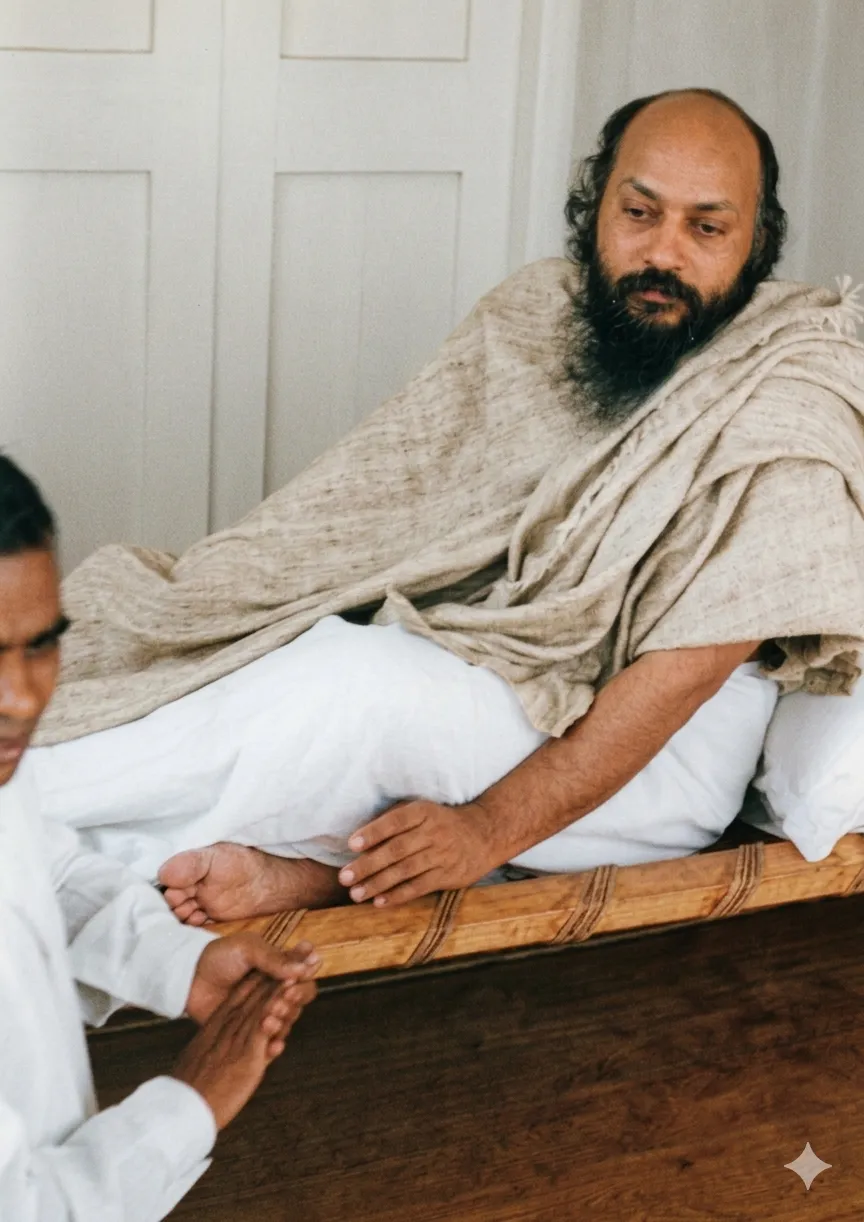
Osho's original Hindi beside Osho Live's English translation, matched passage by passage.
एक ज्ञान है, जो सीखने से मिलता है और एक ज्ञान है जो अनसीखने से मिलता है। जो सीखने से मिले, वह कूड़ा-करकट है। जो अनसीखने से मिले, वही मूल्यवान है। सीखने से वही सीखा जा सकता है, जो बाहर से डाला जाता है। अनसीखने से उसका जन्म होता है, जो तुम्हारे भीतर सदा से छिपा ही है।
There is a knowing that comes by learning, and a knowing that comes by unlearning. Whatever is gained by learning is rubbish; what comes through unlearning alone is precious. By learning, only that can be learned which is poured in from the outside. By unlearning, that is born which has always been hidden within you.
ज्ञान को अगर तुमने पाने की यात्रा बनाया, तो पंडित होकर समाप्त हो जाओगे। ज्ञान को अगर खोने की खोज बनाया, तो प्रज्ञा का जन्म होगा।
If you make the journey a pursuit to acquire knowledge, you will end as a pandit, a scholar. If you make it a quest to lose knowledge, prajna is born.
पांडित्य तो बोझ है; उससे तुम मुक्त न होओगे। वह तो तुम्हें और भी बांधेगा। वह तो गले में लगी फांसी है, पैरों में पड़ी जंजीर है। पांडित्य तो कारागृह बन जाएगा, तुम्हारे चारों तरफ। तुम उसके कारण अंधे हो जाओगे। तुम्हारे द्वार-दरवाजे बंद हो जाएंगे। क्योंकि जिसे भी यह भ्रम पैदा हो जाता है कि शब्दों को जान कर उसने जान लिया, उसका अज्ञान पत्थर की तरह मजबूत हो जाता है।
Punditry is a burden; it will not free you. It binds you even more. It is a noose around the neck, chains around the feet. Punditry becomes a prison surrounding you. Through it you become blind. Your doors and windows close. For the moment the illusion arises that by knowing words one has known, ignorance hardens like stone.
तुम उस ज्ञान की तलाश करना जो शब्दों से नहीं मिलता, निःशब्द से मिलता है; जो सोचने विचारने से नहीं मिलता, निर्विचार होने से मिलता है। तुम उस ज्ञान को खोजना, जो शास्त्रों में नहीं है, स्वयं में है। वही ज्ञान तुम्हें मुक्त करेगा, वही ज्ञान तुम्हें एक नये नर्तन से भर देगा। वह तुम्हें जीवित करेगा। वह तुम्हें तुम्हारी कब्र के ऊपर बाहर उठाएगा। उससे ही आएंगे फूल जीवन के। और उससे ही अंततः परमात्मा का प्रकाश प्रकटेगा।
Seek that knowing which is not obtained from words but from the wordless; not by thinking and brooding, but by becoming without thought. Seek that knowing which is not in the scriptures, but in oneself. That alone will free you; that alone will fill you with a new dance. It will make you alive. It will lift you out from over your own grave. From it the flowers of life will bloom; and from it, ultimately, the light of Paramatma will be revealed.
पंडित जानता है और नहीं जानता। लगता है कि जानता है। ऐसे ही, जैसे बीमार आदमी बजाय औषधि लेने के, चिकित्साशास्त्र का अध्ययन करने लगे। जैसे भूखा आदमी पाकशास्त्र पढ़ने लगे।
The pandit knows, and does not know. It seems as if he knows. Just as a sick man, instead of taking medicine, begins to study medicine; as a hungry man reads cookbooks.
ऐसे सत्य की अगर भूख हो, तो भूल कर भी धर्मशास्त्र में मत उलझ जाना। वहां सत्य के संबंध में बहुत बातें कहीं गई हैं, लेकिन सत्य नहीं है। क्योंकि सत्य तो कब कहा जा सका है? कौन हुआ समर्थ जो उसे कह सके? इसलिए गुरु ज्ञान नहीं देता, वस्तुतः तुम जो ज्ञान लेकर आते हो उसे भी छीन लेता है। गुरु तुम्हें बनाता नहीं, मिटाता है। तुम्हारी याददाश्त के संग्रह को बढ़ाता नहीं, तुम्हारी याददाश्त, तुम्हारे संग्रह को खाली करता है। जब तुम पूरे खाली हो जाते हो, तो परमात्मा तुम्हें भर देता है। शून्य हो जाना पूर्ण को पाने का मार्ग है।
If you are hungry for truth, then do not, even by mistake, get entangled in theology. There much is said about truth, but truth is not there. For when has truth ever been said? Who has been capable of saying it? That is why the guru does not give knowledge; in fact, he takes away even the knowledge you bring. The guru does not make you, he unmakes you. He does not increase the storehouse of your memory; he empties your memory, your store. When you become completely empty, Paramatma fills you. Becoming shunya is the way to receive the Poorna.
कोई बीस वर्ष पहले, मैं एक वर्ष तक रायपुर में रहा था। जिस मकान में मैं रहता था, एक बूढ़ा आदमी उसी मकान के पड़ोस में रहता था। वह दांत का मंजन बेचने का काम करता था। जब मेरा उससे परिचय हो गया तो मैंने उससे पूछा कि दांत तो तुम्हारे एक भी नहीं। तुमसे दांत का मंजन कौन खरीदता होगा? तुम अपने दांत नहीं बचा सके और तुम तख्ती लगा कर बैठते हो बाजार में कि ये मंजन से दांत मजबूत हो जाते हैं, दांत गिरने से बच जाते हैं और तुम्हारा एक दांत नहीं है। कौन तुमसे मंजन खरीदता होगा? और किस हिम्मत से तुम मंजन बेच आते हो?
Some twenty years ago I lived a year in Raipur. In the house where I lived, an old man lived next door. He sold tooth-powder. When I had come to know him, I asked, “You do not have a single tooth. Who buys tooth-powder from you? You could not save your own teeth and yet you put up a board in the marketplace: ‘This powder strengthens the teeth; prevents them from falling out.’ You have not a single tooth. Who buys from you? And with what courage do you sell it?”
उस बूढ़े ने थोड़ी नाराजगी से कहा: इससे क्या फर्क पड़ता है? कई लोग पुरुष होते हुए भी चोलियां बेचते हैं, साड़ियां बेचते हैं, चूड़ियां बेचते हैं। मैं उससे राजी हुआ, तो उसने इतनी बात और जोड़ी, और उसने कहा कि फिर लोग अपने दांतों में उत्सुक हैं। मेरे दांत की तरफ देखते कहां? वस्तुतः उस बूढ़े आदमी ने कहा कि आप मेरे पहले पूछने वाले हैं, जिसने यह संदेह उठाया। लोग अपने दांत की चिंता कर रहे हैं। दंतमंजन का डिब्बा देखते हैं। मेरे दांत की कौन फिकर करता है?
The old man, a little annoyed, said, “What difference does it make? Many men sell women’s blouses, saris, bangles.” I agreed; then he added, “People are interested in their own teeth, not in mine. They look at the tin of tooth-powder; who cares about my teeth? You are the first to raise such a doubt.”
तुम पंडितों के दांतों की थोड़ी फिकर करो। वे जो बेच रहे हैं, वह उन्हें भी नहीं बचा सका। वे जो तुम्हें समझा रहे हैं, उससे उनकी भी समझ नहीं जागी। वे जो तुम्हें दे रहे हैं, उससे उन्हें भी कुछ मिला नहीं है। उनके जीवन को थोड़ा परखो। तुम वहां उदासी पाओगे। एक रिक्तता पाओगे। भारी तुम पाओगे उन्हें। वजन से दबे हुए पाओगे, लेकिन तुम्हें वह नृत्य वहां न दिखाई पड़ेगा जो कबीर कह रहे हैं--‘पाइबो रे पाइबो रे ब्रह्मज्ञान।’
Have a little concern for the pandits’ teeth. What they are selling has not saved even them. What they explain to you has not awakened understanding in them. What they give to you has given them nothing. Examine their lives a little. You will find sadness there, a void, a heaviness. You will find them weighed down—but you will not find that dance of which Kabir sings: Paibo re, paibo re Brahmajnana—“I shall attain, I shall attain Brahma-knowledge.”
नाच उठता है हृदय, जब ज्ञान की पहली किरण उतरती है। मोर को नाचते देखा? आषाढ़ के प्रथम दिवसों में आकाश में मेघ घिरने लगते हैं और मोर पंख फैला देता है और नाचता है। वैसा ही ब्रह्मज्ञानी भी नाचता है, जब उसके जीवन में परमात्मा के मेघ घिर जाते हैं। आषाढ़ का दिन आ जाता है। वर्षा होने के करीब हो जाती है। जन्मों-जन्मों की छाती प्यासी थी। मेघ घिर उठे, आषाढ़ का दिवस आ गया। नाच उठता है मन-मयूर। तुमने कोयल को गाते देखा है? पुकारती है प्यारे को, पुकारती रहती है।
When the first ray of knowing descends, the heart breaks into dance. Have you seen the peacock dance? In the first days of Ashadh, clouds gather in the sky, the peacock spreads its tail and dances. So too does the knower of Brahman dance when the clouds of Paramatma gather in his life. The day of Ashadh arrives. The rains near. The chest that had been thirsty for lifetimes—clouds have gathered, the day has come, the mind-peacock dances. Have you heard the cuckoo sing? She calls her beloved; she calls and keeps calling.
विरह की वैसी ही अग्नि खोजी को जलाती है, जब तक कि प्रेमी मिल ही न जाए। मिलन पर बड़ी गहन शांति, बड़ा गहन आनंद।
Such a fire of longing burns the seeker until the lover is found. Upon union, a profound peace, a deep bliss.
ज्ञानी का अस्तित्व बदलता है। पंडित की केवल स्मृति भरती है। स्मृति तो यंत्र मात्र है। उसका कोई मूल्य नहीं। तुम्हारा पूरा अस्तित्व अहोभाव से भर जाए। तुम्हारा रोआं-रोआं धन्यवाद देने लगे। तुम्हारे सब द्वार-दरवाजों से उस परमात्मा का प्रकाश भीतर आ जाए। सब तरफ से तुम्हें आपूर परमात्मा घेर ले। आकंठ तुम भर जाओ। बाढ़ आ जाए उसकी कि तुम समझ ही न पाओ, कैसे धन्यवाद दें। शब्द खो जाएं, बोलने को कुछ न बचे। तुम्हारा पूरा अस्तित्व ही बोलने लगे। वाणी छोटी पड़ जाए। आनंद लक्षण है। सच्चिदानंद लक्षण है। पंडित के दांत खुद ही टूटे हुए हैं। और तुम उससे सीख ले रहे हो।
The knower’s being changes; the pandit’s memory merely fills. Memory is only a mechanism; it has no value. Let your whole being be filled with wonder. Let every pore begin to offer thanks. Let the light of that Paramatma enter through all your doors and windows. Let the all-pervading Divine surround you on every side. Let you be filled to the brim. Let a flood come so vast you do not know how to thank. Words fall away; nothing remains to be said. Your entire being begins to speak. Speech is too small. Bliss is the hallmark. Satchidananda is the hallmark. The pandit’s own teeth are fallen, and you are learning from him.
आनंद को कसौटी समझो, अन्यथा तुम धोखा खाओगे। शब्दों के धनी बहुत हैं, आनंद का धनी खोजो। जिसके जीवन में सब शांत और परिपूर्ण हो गया हो। जिसे कुछ पाने को न बचा हो, वही तुम्हें कुछ दे सकेगा। वही गुरु हो सकता है। पंडित तो तुम्हारे ही साथ है। तुमसे थोड़ा ज्यादा जानता है, तुम थोड़ा कम जानते हो। तुम भी थोड़ी मेहनत करो, तो थोड़ा ज्यादा जान लोगे। पंडित में और तुम में कोई गुणात्मक भेद नहीं है। मात्रा का भले हो, गुण का नहीं है। ज्ञानी और तुम में गुणात्मक भेद है।
Make bliss your touchstone; otherwise, you will be deceived. There are many lords of words—seek the lord of bliss. In whose life all has become silent and fulfilled; who has nothing left to gain—only such a one can give. Only such a one can be a guru. The pandit is with you; he knows a little more, you a little less. If you labor a little, you too will know a little more. Between you and the pandit there is no qualitative difference—only quantitative. Between the knower and you there is a qualitative difference.
जैसे दो आदमी सोते हों, एक आदमी सपना देखता हो कि चोर है; और एक आदमी सपना देखता हो कि साधु है। क्या तुम सोचते हो, उन दोनों में कोई गुणात्मक भेद है? दोनों सो रहे हैं। दोनों सपना देख रहे हैं। दोनों के हाथ में सत्य नहीं है। और एक तीसरा आदमी जागा हुआ पास ही बैठा है। जागा हुआ है, सपना नहीं देख रहा है। इस आदमी में और उन दो सोए आदमियों में गुणात्मक भेद है। इसकी चेतन-दशा ही अलग है। यह जागा हुआ है।
Imagine two men asleep: one dreams he is a thief; another dreams he is a saint. Do you think there is any qualitative difference between them? Both are asleep; both are dreaming; neither holds truth in his hands. A third man sits nearby, awake. Awake, not dreaming. Between this man and the two sleepers there is a qualitative difference. His state of consciousness is different; he is awake.
सपने इसे नहीं सताते हैं। क्योंकि सपने तो गहन तंद्रा में ही आते हैं। जब तुम बेहोश होते हो, तभी सपने तुम्हें आते हैं। जागे हुए व्यक्ति को वासना नहीं सताती, क्योंकि वासना एक स्वप्न है। जागे हुए व्यक्ति को लोभ नहीं सताता, क्योंकि लोभ एक स्वप्न है। जागे हुए व्यक्ति को पाप नहीं सताता, क्योंकि पाप एक स्वप्न है। और मैं तुमसे कहता हूं, जागे हुए व्यक्ति को पुण्य भी नहीं सताता, क्योंकि पुण्य भी एक स्वप्न है। अशुभ तो सताता ही नहीं, शुभ भी नहीं सताता। न तो जागा हुआ आदमी शैतान होने की कामना करता है, और न साधु होने की कामना करता है। जागा हुआ आदमी, जागा हुआ आदमी है। अब इन स्वप्नों से कुछ लेना-देना नहीं है।
Dreams do not harass him; dreams come only in deep torpor. When you are unconscious, then dreams arise. The awakened one is not plagued by desire, for desire is a dream. The awakened one is not harassed by greed, for greed is a dream. The awakened one is not tormented by sin, for sin is a dream. And I tell you: the awakened one is not troubled by merit either, for merit too is a dream. The inauspicious does not trouble him, nor does the auspicious. The awakened one does not desire to be a devil, nor to be a saint. The awakened one is simply awake; he has nothing to do with these dreams.
और जब जीवन सारे द्वंद्व के पार जागता है, तभी कोई कबीर की तरह खड़ा हो सकता है मेघों के नीचे--‘पाइबो रे पाइबो रे ब्रह्मज्ञान।’
And when life awakens beyond all dualities, only then can someone, like Kabir, stand beneath the clouds and sing: Paibo re, paibo re Brahmajnana.
यह महानतम घटना है। लक्षण है आनंद। जहां तुम्हें आनंद दिखाई पड़े, भला उस आदमी में पांडित्य भी न हो, तो भी तुम पीछे उस आदमी के दौड़ना। उसके पास कोई सुवास है। और भला कोई आदमी कितने ही ज्ञान से भरा हो और उसके चेहरे पर और उसकी आंखों में तुम्हें आनंद की पुलक, रहस्य का भाव, कुछ ऐसे महत्वपूर्ण को पाने की प्रतीति न हो, जो शब्दों में कहा नहीं जा सकता, कुछ ऐसी गूढ़ता का बोध न हो, जो हृदय में तो लबालब है, लेकिन शब्द उसे बाहर नहीं ला पाते, जिसके पास बैठ कर तुम्हें किसी शांत झील का अनुभव हो, जिसके पास आकर तुम्हें सूर्य के प्रकाश का अनुभव हो, जिसके पास बैठ कर तुम्हें चांद की शीतलता मिले, अपरिचित फूलों की गंध आए, जिसके पास कोई अनजान वीणा बजने लगे, तुम्हारे हृदय के तार भी जिसे दोहराने लगें।
This is the greatest happening. Its hallmark is bliss. Wherever you perceive bliss—even if that person lacks scholarship—run after him. He carries a fragrance. And however much someone is stuffed with knowledge, if on his face and in his eyes you do not see the thrill of bliss, the sense of mystery, the taste of something significant that cannot be said; if you do not feel an intimation of a depth that fills the heart to the brim but cannot be brought into words; if sitting near him you do not taste a still lake; if his presence does not feel like sunlight; if by him you do not receive the coolness of the moon, the fragrance of unknown flowers; if by him some unknown veena does not begin to sing and the strings of your heart do not begin to answer—
क्या तुम्हें पता है? संगीतज्ञ एक बड़े अनूठे अनुभव को कहते हैं। एक वीणा को रख दिया जाए कक्ष के एक कोने में, कोई छुए भी न; और कुशल संगीतज्ञ दूसरी वीणा पर गीत बजाए, राग उठाए तो तुम्हें पता है, एक अनूठी घटना घटती है--कि पहली वीणा जो कोने में रखी है, धीरे-धीरे उसी धुन को बजाने लगती है। मगर बड़ा कुशल संगीतज्ञ चाहिए। एक वीणा तो वह बजाता है। उससे उठती हुई झंकार दूसरी वीणा के तारों को छूती है। उससे उठती हुई स्वर-लहरी दूसरी वीणा पर चोट करती है। धीरे-धीरे दूसरी वीणा के तार भी कंपायमान होने लगते हैं। एक धीमी सिहरन उनमें दौड़ जाती है। तानसेन या बैजू बावरा जैसे संगीतज्ञों के संबंध में कथाएं हैं कि दूसरी वीणा ठीक वही दोहराने लगती है, जो पहली वीणा कर रही है।
Do you know? Musicians speak of a wondrous experience. Place a veena in the corner of a room, untouched. Let a master musician play another veena; then a strange thing happens—the first veena, in the corner, slowly begins to sound the same melody. But a great master is needed. He plays one veena; the resonance that rises touches the strings of the other; the wave strikes the second, and slowly its strings start to tremble. A delicate shiver runs through them. There are tales of Tansen and Baiju Bawra: the second veena repeats exactly what the first is doing.
और अब तो इस पर वैज्ञानिक शोध हुई है और पाया गया कि यह सच है। इसको वैज्ञानिक कहते हैं: लॉ ऑफ सिन्क्रानिसिटी। अगर एक चीज बज रही हो एक ढंग से, तो उसके चारों तरफ तरंगों का एक जाल पैदा होता है। उस जाल में उसके समान-धर्मा कोई भी मौजूद हो, तो उसके भीतर भी उसी तरह की ध्वनि कंपित होने लगती है।
And now science has researched this and found it true. They call it the law of synchronicity. When something vibrates in a certain pattern, it creates a mesh of waves around it; anything of similar nature within that field begins to vibrate in the same way.
ज्ञानी तो वही है, जिसके पास बैठ कर तुम्हारे हृदय की वीणा कंपित होने लगे। उसका स्वर जाग गया। उसकी वीणा बज रही है, अनंत-अनंत हाथों से परमात्मा उसकी वीणा पर खेल रहा है। तुम उसके पास जाओगे, तुम्हारे हृदय के तार झंकृत होने लगेंगे। यह कोई बुद्धि का संबंध न होगा। यह एक हार्दिक संबंध होगा। इसका तालमेल प्रेम से ज्यादा होगा, ज्ञान से कम होगा। इसका तालमेल श्रद्धा से ज्यादा होगा, सोच-विचार से कम होगा। समान-धर्मा तुम्हारी आत्मा भी कंपित होने लगेगी। तुम्हारे भीतर की वीणा भी जागेगी, हिलेगी, उठेगी।
The knower is one in whose presence the veena of your heart begins to vibrate. His note is awake; his veena is being played—by the infinite hands of Paramatma. Come close to him and the strings of your heart begin to ring. This is no relationship of intellect; it is of the heart. Its alignment is more with love, less with knowledge; more with trust, less with thought. Your alike-in-nature soul begins to vibrate. The veena within you awakens, stirs, rises.
गुरु वही है, जिसके पास शिष्य रूपांतरित होने लगे।
Guru is one by whose side the disciple begins to be transformed.
कबीर के इन वचनों को बहुत ध्यानपूर्वक समझने की कोशिश करें।
Let us try to understand Kabir’s words with great care.
अब मैं पाइबो रे पाइबो रे ब्रह्मज्ञान।
“Now I shall attain—now I shall attain—Brahma-knowledge.”
ये शब्द भी बड़े मिठास से भरे हैं--‘पाइबो रे।’ अब मैंने पा लिया! अब मैंने पा लिया!
Even the words are sweet: “Paibo re.” Now I have found! Now I have found!
“In effortless Samadhi I dwell in bliss; the rest of countless aeons is attained.”
सहज समाधें सुख में रहिबो, कौटि कलप विश्राम।
घट गई वह घटना, जिसे सहज समाधि कहते हैं।
The event has occurred which is called sahaj Samadhi—effortless Samadhi.
समाधियां दो तरह की हैं। एक तो समाधि है जो चेष्टा से घटती है, प्रयास से घटती है, आयोजन से घटती है, यत्न, श्रम से घटती है। ऐसी समाधि को पूरी समाधि नहीं कहा जा सकता।
Samadhi is of two kinds. One is born of effort, of striving, of arrangement, of labor. Such Samadhi cannot be called complete.
क्यों? क्योंकि तुम्हारे प्रयास से जो घटी है उसमें तुम्हारा कुछ न कुछ बाकी रह ही जाएगा। तुम्हारा प्रयास तुमसे ऊपर कैसे जा सकता है? तुमने जो किया, उसमें तुम्हारी छाप रह ही जाएगी। तुम्हारे हस्ताक्षर उसमें मौजूद रहेंगे ही। तुम्हारा प्रयास तुम्हीं हो। तो तुम्हारे प्रयास से आई समाधि, तुमसे पार नहीं जा सकती। वह परमात्मा तक नहीं पहुंच सकती।
Why? Because whatever has come through your effort will retain something of you. How can your effort go beyond you? Whatever you do will bear your imprint, your signature. Your effort is you. Samadhi born of your effort cannot transcend you; it cannot reach Paramatma.
एक तो समाधि है, जो प्रयत्न से फलित होती है। हां, तुम थोड़े शांत हो जाओगे। तुम थोड़े तनाव से मुक्त हो जाओगे। तुम्हें नींद ठीक आने लगेगी। तुम्हारे जीवन में थोड़ा संतुलन आ जाएगा। भटकाव कम हो जाएगा। व्यर्थ की बातों में तुम कम उलझोगे। लोभ, क्रोध तुम्हें कम आकर्षित करेंगे। कामवासना वैसी प्रगाढ़ न रह जाएगी, जैसी पहले थी। लेकिन फिर भी मोडिफाइड, थोड़े से रूपांतरित--रहोगे तुम पुराने ही।
One Samadhi ripens through effort. Yes, you will become a little quiet, a bit free of tension. Sleep will become sound. Your life will gain some balance. Distraction will lessen. Greed and anger will have less pull. Lust will not be as thick as before. But still, modified, somewhat transformed—you remain the old.
जैसा कोई पुराने मकान को रेनोवेशन कर लेता है। पुराने मकान को थोड़ा टीम-टाम सजा लेता है। जरा-जीर्ण मकान को यहां-वहां ठीक-ठाक करके, थोड़े नये पत्थर जोड़ कर, थोड़ी दीवालों को नया पोत कर, रंग-रोगन लगा कर, नये का ढंग दे देता है। लेकिन भीतर तो जरा-जीर्ण मकान, जरा-जीर्ण ही रहेगा।
As someone renovates an old house. He tidies it up, repairs here and there, adds a few new stones, paints the walls, gives it a fresh look. But within, the house remains time-worn.
यत्न से जो समाधि आती है, वह ऐसा ही है जैसे किसी ने जरा-जीर्ण मकान का पुनरुद्धार कर लिया। वह नया भवन नहीं है। उसका पुराने से संबंध नहीं टूटा। सातत्य जारी रहा। वह पुराने का ही सिलसिला है। उसे तुमने कितना ही संवार लिया हो, भीतर से वह जरा-जीर्ण ही है।
So is the Samadhi that comes by effort: a renovation of the old. It is not a new edifice. Its continuity with the past is not broken. However you adorn it, inwardly it remains dilapidated.
पुराना बिलकुल टूट जाए और समग्ररूपेण नये का जन्म हो। सिलसिला ही टूट जाए, सातत्य ही टूट जाए। पुराने और नये के बीच कोई जोड़ ही न बचे। इधर पुराना गया, उधर नया आया। दोनों के बीच कोई संबंध ही न हो। तभी समाधि परम होगी।
Let the old break utterly; let the new be born in totality. Let the continuity snap; let there be no bridge between the old and the new. Here the old goes, there the new arrives—with no link between them. Only then is Samadhi supreme.
लेकिन वैसी समाधि तुम कैसे लाओगे? क्योंकि तुम लाओगे, तो तुम्हारा सातत्य जारी रहेगा। तुम्हारी समाधि, लाई गई समाधि, चेष्टित, कितनी ही तुम्हें शांत कर दे, तुम्हें पुलक और आनंद से नहीं भर सकेगी। क्योंकि आनंद तो परमात्मा का है। मनुष्य की गहनतम से गहनतम संभावना शांत होने की। उससे ऊपर मनुष्य नहीं जा सकता।
But how will you bring such Samadhi? If you bring it, the continuity remains yours. Your Samadhi—brought, contrived—however much it quiets you, will not fill you with rapture and bliss. Bliss belongs to Paramatma; man’s utmost possibility is silence. Beyond that man cannot go.
और वैसी शांति कभी भी खंडित हो सकती है। क्योंकि जिसे आनंद न मिला हो, उसकी शांति का बहुत भरोसा नहीं है। क्योंकि शांति एक नकारात्मक स्थिति है। अशांत तुम कम हो गए हो, इसलिए शांत लगते हो। लेकिन प्रकाश नहीं जला है। आनंद की वर्षा नहीं हुई है।
And even such silence can be broken, any time. For where bliss has not poured, silence is not trustworthy. Silence is a negative state. You have become less unquiet, so you appear silent. But no lamp has been lit; there has been no rain of bliss.
जिसके जीवन में आनंद की वर्षा हो जाती है, उसके अशांत होने की संभावना समाप्त हो जाती है। और जिसके जीवन में आनंद खिल जाता है वह सिर्फ शांत नहीं होता, क्योंकि शांत तो बड़ी निष्क्रिय अवस्था है। शांत तो नकारात्मक स्थिति है। वह विधायक आनंद से भरा होता है। उसकी समाधि नाचती हुई होती है। उसकी समाधि में एक गीत होता है। एक सतत प्रवाह होता है, एक सृजनात्मक, सक्रिय ऊर्जा होती है। उसकी समाधि अशांति का हट जाना नहीं है, आनंद का उतर आना है। उसकी समाधि बीमारी का मिट जाना नहीं है, स्वास्थ्य का आर्विभाव है।
Where the rain of bliss happens, the possibility of restlessness ceases. And where bliss blossoms, one is not merely silent—for silence is a passive state, negative. He is filled with affirmative bliss. His Samadhi dances. There is a song in his Samadhi; a continuous flow; a creative, active energy. His Samadhi is not the removal of disturbance, but the descent of bliss. It is not merely the disappearance of disease, but the arrival of health.
कबीर कहते हैं:
Kabir says:
सहज समाधें सुख में रहिबो, कौटि कलप विश्राम।
“In effortless Samadhi I dwell in bliss; the rest of countless aeons is attained.”
वह जो अनंत-अनंत कल्पनाएं थीं, पीड़ाएं थीं, विकल्प थे, सबसे विश्राम हो गया। वे सब जा चुके। अब कोई सताता नहीं। न लोभ द्वार पर दस्तक देता है, न मोह, न राग, न क्रोध--‘कौटि कलप विश्राम।’ वे सब विकल्प जा चुके।
Those endless imaginations, torments, alternatives—all rest. They have gone. Now nothing harasses—no greed knocks at the door, no attachment, no passion, no anger. Countless alternatives have vanished.
“In effortless Samadhi I dwell in bliss...”
सहज समाधें सुख में रहिबो,...
और एक महासुख का अवतरण हुआ है। लेकिन वह अवतरण सहज समाधि में होता है। यत्नपूर्वक जो समाधि है वह असहज समाधि है। सहज समाधि का अर्थ: स्वस्फूर्त; अपने आप उतर आई।
A great bliss has descended. But that descent happens only in sahaj Samadhi. The Samadhi born of effort is not sahaj. Sahaj means self-arising; it descends by itself.
लेकिन यह कैसे होगा? अपने आप उतर आई तब तो तुम्हारे करने में कुछ बचा नहीं। क्या करोगे? तुम्हें तो चेष्टा करनी पड़ेगी असहज समाधि की। शांति तो तुम्हें लानी पड़ेगी। आनंद आता है। शांति तो केवल तैयारी है कि आनंद उतर सके। जगह खाली करनी है। सारा योग शांत समाधि तक ले जाता है। इसलिए जिन्होंने उस परम समाधि को पाया वे कहेंगे, गुरु कृपा से, प्रभु कृपा से, प्रसाद से। क्योंकि दूसरी समाधि तो तुम नहीं ला सकते। वह तो आएगी।
But how will this be? If it comes by itself, nothing remains for you to do. What will you do? You will, of course, have to strive for the non-sahaj Samadhi. Silence must be brought; bliss comes. Silence is only the preparation so that bliss can descend. One must make room. All of yoga leads up to silent Samadhi. Hence those who have known the supreme Samadhi say: by the guru’s grace, by the grace of the Divine, as prasada. For the other Samadhi you cannot bring; it comes.
ऐसा ही, जैसे बाहर सूरज उगा है। तुम द्वार बंद किए भीतर बैठे हो। सूरज भीतर नहीं आ सकता। प्रकृति, परमात्मा आक्रामक नहीं है। वह तुम्हारे द्वार पर दस्तक भी न देगा। बाहर खड़ा रहेगा। उसकी किरणें तुम्हारे द्वार को हिलाएंगी भी न, तुम्हें चेताएंगी भी न कि मैं आ गया हूं, द्वार खोलो। और द्वार को छेद कर भी सूर्य की किरणें भीतर प्रकाश न करेंगी। अगर तुम अंधेरे में रहने को राजी हो, तो यह तुम्हारी स्वतंत्रता है। यह तुम्हारा चुनाव है। जबर्दस्ती नहीं की जा सकती।
Just as the sun has risen outside and you sit inside with doors closed. The sun cannot enter. Nature, Paramatma, is non-aggressive. It will not even knock. It remains outside. Its rays will not shake your door; they will not warn you: “We have come. Open.” Nor will the rays pierce the wall to enter. If you choose the dark, that is your freedom, your choice. No force can be applied.
तुम द्वार खोल देते हो, सूर्य की किरणें भीतर आ जाती हैं। द्वार खोलना यत्नपूर्वक समाधि है। लेकिन सूरज का आना तुम्हारे यत्न से नहीं होता, सूरज अपने आप आता है। तुम थोड़े ही किरणों के घसीट कर भीतर लाते हो! तुम थोड़े ही बाहर जाकर किरणों को हांकते हो कि चलो भीतर! तुम थोड़े ही बाहर जाकर किरणों को कहते हो कि आओ भीतर, स्वागत है! नहीं, कुछ भी नहीं करना पड़ता है। तुम सिर्फ द्वार खोल दो।
Open the door—the sunlight enters. Opening the door is the Samadhi born of effort. But the entry of the sun does not happen by your effort; the sun comes on its own. You do not drag the rays in; you do not drive them inside; you do not invite them at the threshold. You simply open the door.
इसका अर्थ हुआ कि तुम सिर्फ बाधा मत बनो। तुम सिर्फ प्रतिरोध मत खड़ा करो। दरवाजा खोल दो, सूरज अपने से भीतर आता है। वह आगमन सहज है। तुम्हें उसके लिए कुछ भी न करना होगा।
Meaning: do not be a hindrance; do not raise resistance. Open the door; the sun comes in of its own accord. That coming is effortless; you need do nothing for it.
योग का अर्थ है: यत्नपूर्वक समाधि। इसलिए पतंजलि योगशास्त्र तुम्हें सविकल्प समाधि तक ले जाएगा। निर्विकल्प समाधि तो घटेगी। द्वार खुल जाएगा सविकल्प समाधि से। निर्विकल्प समाधि आएगी। तुम तैयार होओ, तुम्हारे तैयार होते ही परमात्मा एक क्षण भी देरी नहीं करता। तुमने द्वार खोला, वह मौजूद है। वह भीतर आ जाता है। और जब परमात्मा भीतर आता है तब स्वभावतः तुमने कुछ भी तो नहीं किया था उसे पाने को। तुम कैसे कहोगे कि यह मेरे कारण भीतर आया? कार्य-कारण की श्रृंखला टूट जाती है। इसे तुम आगे समझोगे कबीर के वचनों में। कार्य-कारण की श्रृंखला टूट जाती है। अब तुम यह नहीं कह सकते कि मैंने दरवाजा खोला, इसलिए सूरज भीतर आया। तुम इतना ही कह सकते हो कि मैं दरवाजा न खोलता, तो सूरज भीतर नहीं आ सकता था। मेरे दरवाजे खोलने से, दरवाजा ही खुलता है। सूरज का आना, दरवाजे के खुलने से जुड़ा ही नहीं है। सिर्फ अवरोध हट जाता है। सूरज तो आ ही रहा था, सिर्फ बीच का अवरोध हट जाता है।
Yoga means: the Samadhi of effort. Hence Patanjali’s Yoga Sutras can take you to savikalpa Samadhi. Nirvikalpa Samadhi will happen. The door opens through savikalpa; nirvikalpa arrives. The moment you are ready, Paramatma delays not even for a moment. You opened the door—He is present. He enters. And when Paramatma enters, naturally you had done nothing to obtain Him. How can you say, “It came because of me”? The chain of cause and effect breaks. Kabir will say this again: the chain of cause and effect breaks. You can no longer say, “Because I opened the door, the sun came in.” You can only say, “Had I not opened the door, the sun could not have entered.” By the opening of the door, only the door opens. The sun’s coming is not caused by the door opening. The sun was already coming; only the obstruction was removed.
तुम भर बीच से हट जाओ। और परमात्मा प्रतिपल बरस रहा है। आषाढ़ की प्रतीक्षा करने की जरूरत नहीं, उसके मेघ सदा ही घिरे हैं। वह कोई मौसम नहीं है कि आता है और चला जाता है। सदा जो मौजूद है, सदा ही उसके मेघ आकाश को घेरे हैं। तुम जिस दिन हृदय-पट के द्वार खोल दोगे, उसी दिन सहज समाधि घटित हो जाएगी। लेकिन सहज समाधि के लिए तो कुछ किया नहीं जा सकता।
Step out from the middle. Paramatma is showering every moment. There is no need to await Ashadh—the clouds are forever gathered. It is not a season that comes and goes. Ever-present, the sky is ringed with His clouds. The day you open the doors of the heart’s curtain, that very day sahaj Samadhi will happen. But for sahaj Samadhi nothing can be done.
फिर तुम क्या करोगे?
Then what will you do?
तुम यत्नपूर्वक शांत होने की चेष्टा करो। ये जो ध्यान के सारे प्रयोग हैं, ये सिर्फ दरवाजा खोलना है। अगर ठीक समझो, तो इनको ध्यान कहना भी ठीक नहीं। इनको तो ध्यान की पूर्व तैयारी कहना चाहिए। जैसे माली घास-पात को उखाड़ता है, जमीन को साफ करता है; लेकिन इसको कोई बगीचा लगाना थोड़े ही कहोगे! क्योंकि यह भी हो सकता है कि माली घास-पात उखाड़ दे, जमीन को साफ कर दे और नये बीज न बोए और बगीचा कभी पैदा न हो। घास-पात उखाड़ कर फेंक देना, जमीन को तैयार कर लेना, कंकड़-पत्थर से मुक्त कर देना, सिर्फ पूर्व तैयारी है। भूमिका है। अब बीज बोने पड़ेंगे। भूमिका तुम तैयार करो, बीज परमात्मा बोता है। तुम हृदय को तैयार करो, वर्षा उसकी तरफ से हो जाती है।
Make a deliberate effort to become quiet. All the so-called meditations are only the opening of the door. Strictly speaking, even to call them meditation is not right; call them the preparation for meditation. As a gardener pulls out weeds, clears the ground—yet this is not the planting of a garden. The gardener may uproot the weeds, clear the soil, and still never sow; the garden may never arise. Clearing weeds, preparing the soil, removing stones is only preface. Now the seeds must be sown. You prepare the ground; the seeds are sown by Paramatma. You ready the heart; the rain comes from Him.
इजिप्त की एक बहुत पुरानी पुस्तक कहती है कि तुम एक कदम चलो, परमात्मा हजार कदम तुम्हारी तरफ चलता है। मगर पहला कदम तुम्हें उठाना पड़ेगा। क्योंकि परमात्मा आक्रामक नहीं है। जब तुम दर्शाओगे प्यास, जब तुम दिखाओगे मुमुक्षा, जब तुम उठोगे और एक कदम चलोगे, तत्क्षण तुम पाओगे, परमात्मा हजार कदम करीब आ गया। इधर तुमने तैयार किया भूमि को, उधर बीज आने शुरू हो गए। इधर तुमने द्वार खोला, उधर प्रकाश आया।
An ancient Egyptian book says: take one step, and Paramatma walks a thousand steps toward you. But the first step you must take—for Paramatma is non-aggressive. Show your thirst, your longing; rise and take one step, and instantly you will find the Divine a thousand steps nearer. You prepared the earth, and the seeds began to arrive; you opened the door, and the light came.
सहज समाधें सुख में रहिबो,...
“In effortless Samadhi I dwell in bliss...”
जिसे तुम सुख कहते हो, कबीर उस सुख की बात नहीं कर रहे हैं। क्योंकि उस सुख में रहना हो ही नहीं सकता। वह आया भी नहीं कि गया हो जाता है। आ भी नहीं पाया कि जा रहा है। इधर तुम देख रहे थे कि मुंह था अपनी तरफ, तुम ठीक से पहचान भी न पाए थे कि सुख आ रहा था कि देखा कि पीठ हो गई, जा रहा है।
By “bliss,” Kabir is not speaking of what you call pleasure. For in that you cannot dwell. It comes only to go. It can hardly arrive before it starts leaving. You were just seeing that its face was turned toward you—before you recognized it, its back had already turned.
क्षण भर के सुख में कैसे रहोगे? होश आते ही क्षण खो जाता है। और फिर सुख--जिसे तुम सुख कहते हो--जब आता है, तब भी मन दुख से ही भरा रहता है। क्योंकि तुम जानते हो कि यह टिकेगा नहीं। तब भी भीतर एक गहरी उदासी घेरे रहती है चित्त को। तुम जानते हो भलीभांति कि यह लहर की तरह आया, और लहर की तरह चला जाएगा। यह लहर तट पर सदा रुकने वाली नहीं है। जैसी आई है, वैसी चली जाएगी। यह ज्वार जल्दी ही भाटा हो जाएगा।
How will you dwell in pleasures that vanish in a blink? The moment awareness comes, the moment is gone. And when your so-called pleasure comes, the mind is still filled with sorrow—because you know it will not last. Even then, a deep sadness pervades within. You know well it has come like a wave and will go like a wave. This wave is not going to stay at the shore. As it came, so it will go. The tide will soon be ebb.
स्वभावतः जब सुख आता है, और पता चलता रहता है कि गया...गया...गया। कैसे तुम सुख में रह सकते हो? सुख आता है, तो तुम पकड़ने की कोशिश से भर जाते हो। रहना तो बहुत मुश्किल है, पकड़ते हो। रोक लें थोड़ी देर और, एक क्षण और, उस पकड़ने में ही वह क्षण खो जाता है, जो कि जीने का क्षण हो सकता था। सुख आता है, तब कहीं चला न जाए, यह चिंता मन में व्याप्त हो जाती है। दुख होता है, तब तुम दुख से पीड़ित। दुख होता है, तब तुम इस चिंता से पीड़ित कि कैसे जाए। सुख होता है, तो तुम इस चिंता से पीड़ित कि कहीं चला न जाए। कि अब गया--कि अब गया। कैसे बांध लूं।
Naturally, when pleasure comes, you sense: going… going… going. How can you dwell in it? Pleasure comes and you are filled with grasping. Dwelling becomes difficult; you clutch. “Let me hold it a little longer, just one more moment.” In the very clutching, the moment that could have been lived is lost. Pleasure arrives, and the worry arises that it may slip away. When there is pain, you are tormented by pain; and also tormented by the worry: how to get rid of it. When there is pleasure, you are tormented by the worry: how to keep it. “Now it is going… now it is going. How to bind it?”
रह कैसे पाओगे? सुख में रहना तो तभी हो सकता है, जब सुख आए और जाए न। आ गया, फिर जाने को न हो। तुम्हारा स्वभाव हो जाए, चित्त की वृत्ति नहीं। चित्त की वृत्ति तो लहर की तरह आती है और चली जाती है। तुम जिसको सुख कहते हो, वह चित्त की एक तरंग है। कबीर जिस सुख की बात कर रहे हैं, वह अस्तित्व की अवस्था है। वह आत्मा की भाव-दशा है। स्वभाव फिर जाता नहीं।
How will you dwell? To dwell in bliss is possible only when bliss comes and does not go. It arrives, and then is never about to depart. It becomes your nature, not a modification of the mind. A mental modification is like a wave—coming and going. The bliss of which Kabir speaks is a state of being; it is the mood of the soul. Nature does not depart.
बोधिधर्म चीन गया: एक बहुत महत्वपूर्ण संन्यासी, बौद्ध भिक्षु। चीन के सम्राट ने उससे पूछा कि क्रोध आता है, लोभ आता है, अशांति आती है, क्या करूं? तो बोधिधर्म ने कहा: आंख बंद कर। मुझे बता, अभी क्रोध है? सम्राट ने कहा: अभी तो नहीं। तो बोधिधर्म ने कहा: जो चौबीस घंटे और सदा नहीं है, वह तेरा स्वभाव नहीं है। आता है, जो चला जाता है, वह तू कैसे हो सकता है? तू तो सदा है। क्या तू यह भी कह सकता है कि कभी-कभी तू होता है और कभी-कभी नहीं भी हो जाता है? नहीं, उस सम्राट ने कहा, मैं तो चौबीस घंटे हूं, चाहे क्रोध हो, चाहे अशांति हो, चाहे शांति हो, चाहे सुख हो, चाहे नींद हो, चाहे जागरण हो, मैं तो सतत हूं। तो बोधिधर्म ने कहा: वह जो सतत है, उसकी फिकर कर। उसको जान। और जो कभी आता है और कभी चला जाता है, वह तो बाहर की तरंग है। किनारे को छूती है, लौट जाती है। उस पर ज्यादा ध्यान मत दे।
Bodhidharma went to China, a great sannyasin. The emperor asked him, “Anger comes, greed comes, restlessness comes—what should I do?” Bodhidharma said, “Close your eyes. Tell me—right now, is there anger?” The emperor said, “Not now.” Bodhidharma said, “What is not twenty-four hours present is not your nature. That which comes and goes—how can it be you? You are the one who always is. Can you say you sometimes are and sometimes are not?” The emperor said, “I am always, whether there is anger or restlessness or peace or pleasure or sleep or waking.” Bodhidharma said, “Then care for that which is constant. Know that. What comes and goes is only an outer wave—it touches the shore and returns. Do not give it much attention.”
न तो सुख मूल्यवान है तुम्हारा, न दुख मूल्यवान है तुम्हारा। तुमने बहुत ध्यान उन पर दिया, इसलिए तुम बुरी तरह उलझ गए हो। वे ध्यान देने योग्य भी नहीं हैं। उपेक्षा के अतिरिक्त उनके प्रति दूसरा भाव नहीं चाहिए। सुख आए तो उपेक्षा रखना, क्योंकि वह जाने ही वाला है। दुख आए तो उपेक्षा रखना कि जानते हो कि कितनी देर टिकेगा! कभी दुख सदा नहीं टिकता। तो फिर क्या इतनी परेशान होने की जरूरत है? रह लेने दो थोड़ी देर।
Neither your pleasure nor your pain is valuable. You gave them too much attention; hence your entanglement. They are not even worth attention. Except for indifference, no other attitude is needed. If pleasure comes, be indifferent—it is going anyway. If pain comes, be indifferent—how long can it stay? Pain never stays forever. Why be so troubled? Let it be a while.
आ गया है पक्षी उड़ कर तुम्हारे कमरे में, दुख का हो या सुख का, क्षण भर फड़फड़ाएगा, दूसरी खिड़की से निकल जाएगा। कोई सदा रहने को नहीं है। एक खिड़की से प्रवेश कर जाता है पक्षी, क्षण भर फड़फड़ाता है, दूसरी खिड़की से निकल कर फिर अनंत यात्रा पर निकल जाता है। तुम तो वह भवन हो, जहां पक्षी थोड़ी देर उड़ा--वह रिक्तता, वह खाली जगह; उसी से अपना तादात्म्य करो, तो तुम समझ पाओगे कबीर किस सुख की बात कर रहे हैं! जो आता है, और जाता नहीं। आया कि आया, फिर जाने का नाम नहीं लेता। वह कोई मेहमान नहीं है, वह तुम ही हो। वह कोई अतिथि नहीं है, वह स्वयं आतिथेय है। मेहमान नहीं, मेजबान। वह तुम ही हो। वह कोई किनारे पर आने वाली तरंग नहीं, वह किनारा ही है।
A bird has flown into your room—of sorrow or pleasure—it will flutter a moment and fly out the other window. None has come to stay. Through one window a bird enters, flutters a little, and flies out again on its endless journey. You are the house where for a while it flew—the emptiness, the empty space. Make your identity with that; then you will understand what bliss Kabir speaks of—the one that comes and does not go. It comes, and then takes no name of going. It is no guest—this is you. Not a guest, but the host. It is you. Not a wave touching the shore, but the shore itself.
सहज समाधें सुख में रहिबो, कौटि कलप विश्राम।
“In effortless Samadhi I dwell in bliss; the rest of countless aeons is attained.”
गुरु कृपाल कृपा जब कीन्हीं, हिरदै कंवल विगासा।
जब गुरु का प्रसाद मिला, जब गुरु की कृपा हुई, जब उसकी अनुकंपा बरसी, तो हृदय का कमल विकसित हुआ।
“When the compassionate guru showered his grace, the lotus of the heart bloomed.”
खुद की चेष्टा से भूमि तैयार होती है। इसलिए जो लोग खुद की चेष्टा को ही सब-कुछ समझ लेते हैं, भटक जाते हैं। खुद की चेष्टा ऐसी ही है, जैसे कोई अपने जूतों के बंदों को पकड़ कर खुद को उठाने की कोशिश करे। थोड़ा-बहुत उछल-कूद मचा सकता है। क्षण दो क्षण को, फीट दो फीट छलांग भी लगा सकता है। लेकिन कितनी देर यह छलांग टिकेगी? उछल भी न पाएगा कि पाएगा कि फिर जमीन पर खड़ा है।
By one’s own effort the ground is prepared. Those who mistake their effort for the all go astray. One’s effort is like trying to lift oneself by one’s own shoelaces—some hopping and skipping may happen for a moment; you might jump a foot or two—but how long will you remain in the air?
आदमी की सामर्थ्य कितनी! बड़ी छोटी सामर्थ्य है। उस छोटी सामर्थ्य से विराट को खोजने हम जाएं, तो हम विराट को भी रंग डालेंगे। वह विराट भी हम जैसा ही छोटा हो जाएगा, इसलिए तो हमारे सब भगवान छोटे हो गए हैं। छोटे आदमी का भगवान बड़ा कैसे हो सकता है?
How great is man’s power? Very small. With such small power if we set out to find the Vast, we will color the Vast too; it will become as small as us. That is why all our gods have shrunk. How can the small man have a great God?
तुम राम को बनाओगे, तो अपनी ही शक्ल में बनाओगे। कितने ही धनुष वगैरह दे दो, कितनी ही मूर्ति सुंदर बनाओ, लेकिन होगी आदमी की ही मूर्ति। तुम्हारी ही मूर्ति का प्रतिफलन होगा। तुम कृष्ण का जीवन पढ़ोगे, तुम क्या पढ़ोगे? तुम अपने को ही पढ़ लोगे। बुद्ध को तुम, महावीर को, गौर से देखो! या तो तुम्हारे चेहरे उन में प्रकट हुए हैं, या तुम्हारी आकांक्षाएं--ज्यादा से ज्यादा तुम्हारी आकांक्षाएं, अभीप्साएं, जैसे तुम होना चाहोगे। लेकिन तुमसे बाहर कुछ भी नहीं जा सकता। तुम जो भी करोगे, तुम उसे घेर लोगे। वह तुम्हारी प्रतिध्वनि होगी।
If you make a Rama, you will make him in your image. However many bows you give him, however beautiful the statue, it remains a human image—your projection. You read the life of Krishna—what will you read? You will read yourself. Look closely at Buddha, at Mahavira—either your own face is cast there, or your aspirations, at best your desires of what you would like to be. But nothing can go beyond you. Whatever you do, you encircle it. It will be your echo.
इसलिए कबीर कहते हैं:
Hence Kabir says:
“When the compassionate guru showed his compassion, the lotus of the heart bloomed.”
गुरु कृपाल कृपा जब कीन्हीं,...
गुरु से अर्थ है: जो जाग गया। जो जाग गया, वह तुम्हारे और परमात्मा के बीच कड़ी बन सकता है।
Guru means: one who has awakened. He can become the link between you and Paramatma.
इसे थोड़ा समझो।
Understand this a little.
गुरु एक द्वार है; और द्वार से ज्यादा कुछ भी नहीं। उस द्वार के एक तरफ तुम हो और दूसरी तरफ परमात्मा है। तुम परमात्मा को समझने में असमर्थ हो। क्योंकि वह भाषा बिलकुल अपरिचित। वह रूप अनचीन्हा। वह राग अनसुना। तुम्हारे कान उस संगीत के लिए तैयार नहीं हैं। तुम्हारा हृदय उस स्पर्श के लिए तैयार नहीं। तुम्हारी भूमि घास-पात से भरी है। वे बीज तुममें गिर भी जाएं, तो भी अंकुरित न हो पाएंगे।
The guru is a door—nothing more. On one side of that door, you are; on the other, Paramatma. You are unable to understand the Divine—its language is utterly unfamiliar; its form unrecognized; its music unheard. Your ears are not ready for that music, your heart not ready for that touch. Your field is full of weeds. Even if those seeds fall in you, they will not sprout.
फिर तुम द्वार की तरफ पीठ किए खड़े हो। परमात्मा की तरफ तुम उन्मुख नहीं हो, परमात्मा से विमुख हो। संसार की तरफ जितनी उन्मुखता होगी, उतनी परमात्मा की तरफ विमुखता होगी, पीठ होगी। तुम मुंह तो एक ही तरफ कर सकते हो--या संसार की तरफ या परमात्मा की तरफ।
Moreover, you stand with your back to the door. You are not oriented toward Paramatma, you are dis-oriented. The more you face the world, the more your back is toward the Divine. You can face only one way at a time—either toward the world or toward Paramatma.
संन्यासी का इतना ही अर्थ है: जिसने संसार की तरफ पीठ कर ली और मुंह परमात्मा की तरफ कर लिया। गृहस्थ का अर्थ है, जिसने पीठ परमात्मा की तरफ की और मुंह संसार की तरफ किया। बस, उनके खड़े होने के ढंग का जरा सा फर्क है। एक जहां पीठ किए है, दूसरा वहां मुंह किए है। बस, इतना ही फर्क है। जरा सा मुड़ना, एक सौ अस्सी डिग्री घूम जाना--और गृहस्थ संन्यासी हो जाता है। एक क्षण में! और एक क्षण में संन्यासी गृहस्थ हो सकता है।
Sannyas means only this: to turn your back to the world and your face to Paramatma. A householder means: back toward the Divine, face toward the world. Merely a slight difference in posture. Turn one hundred and eighty degrees—and the householder becomes a sannyasin. In a single moment. And in a single moment, the sannyasin can become a householder.
मुंह कहां है? प्रभु-उन्मुखता, संन्यास है। लेकिन तुम्हारी पीठ द्वार की तरफ... और उस द्वार के पार जो अनंत फैला हुआ है, वह तुम्हारी परिभाषाओं में नहीं आता है। तुमने जो भी जाना है, उससे उसका कोई मेल नहीं है। तुम्हारा सब जानना व्यर्थ है। गुरु का अर्थ है: जो कभी तुम जैसा था। पीठ किए खड़ा था द्वार की तरफ। फिर उसने द्वार की तरफ मुंह किया।
Where is your face? To be turned to the Divine is sannyas. But your back is toward the door… and that which spreads infinitely beyond the door does not fit your definitions. Nothing you have known matches it. Your knowing is useless. Guru means: one who once was like you, standing with his back to the door, and then turned his face to it.
गुरु का अर्थ है: जो तुम्हारी भाषा भलीभांति समझता है। जो तुम्हारे बीच से ही आया है। जिसका अतीत तुम्हारे जैसा ही था। लेकिन जिसका वर्तमान भिन्न हो गया है। जिसके जीवन में परमात्मा की थोड़ी सी किरण उतर गई है। वह परमात्मा की भाषा को भी थोड़ा समझा है। वह अनुवाद का काम कर सकता है।
Guru means: one who knows your language well, who has come from among you, whose past was like yours but whose present has become different; in whose life some ray of Paramatma has descended. He understands His language a little. He can do the work of translation.
गुरु एक अनुवादक है, एक ट्रांसलेटर। वह परमात्मा को समझता है, उसकी भाषा को। वह तुम्हें समझता है, तुम्हारी भाषा को। वह परमात्मा को तुम्हारी भाषा में लाता है। वह परमात्मा को तुम्हारे अनुकूल... जिसे तुम सह सको। वह छानता है तुम्हारे लिए। रस लग जाए, तो तुम छलांग ले लोगे। लेकिन रस इतना बड़ा न हो कि उस आघात में तुम मिट जाओ। वह धीरे-धीरे तुम्हें तैयार करता है।
The guru is a translator. He understands the Divine and its language. He understands you and your language. He brings Paramatma into your language; in a form you can bear. He filters it for you. So that a taste may catch you; and not so much that its impact destroys you. He prepares you gently.
एक छोटे पौधे को तो सुरक्षा की जरूरत होती है। बड़े हो जाने पर किसी बागुड़ की कोई जरूरत नहीं रहती। वह तुम्हारे छोटे से पौधे को सम्हालता है। छोटे से पौधे पर तो मेघ भी बरस जाए, तो मौत हो सकती है। मेघ से भी बचाना पड़े। छोटे पौधे पर तो सूरज भी ज्यादा पड़ जाए, तो मृत्यु हो सकती है। सूरज जीवनदायी है। लेकिन छोटे पौधे के लिए मृत्यु हो सकती है। जरूरत से ज्यादा है। छोटा पौधा उतना लेने को, उतना आत्मसात करने को तैयार नहीं।
A small sapling needs protection; once it is grown, no fence is needed. The guru guards your little plant. If heavy rain falls on a little plant, death can happen; one must protect it even from the clouds. If too much sun falls on a small shoot, it can die. The sun is life-giving, yet for a small plant it can be death—too much. It is not ready to receive and assimilate.
गुरु की सारी चेष्टा इतनी ही है कि वह परमात्मा को तुम्हारे योग्य बना दे और तुम्हें परमात्मा के योग्य बना दे। परमात्मा को उसे थोड़ा रोकना पड़ता है कि थोड़ा ठहरो, इतनी जल्दी नहीं। इतनी जोर से मत बरस जाना। वह आदमी मिट ही जाएगा।
और तुम्हें उसे तैयार करना पड़ता है कि घबड़ाओ मत, थोड़ी प्रतीक्षा करो। जल्दी ही वर्षा होने को है। अगर एक बूंद गिरी है, तो पूरा मेघ भी गिरेगा। घबड़ाओ मत। तुम्हें तैयार करता है ज्यादा लेने को, परमात्मा को तैयार करता है, कम देने को। और जब तुम्हारे दोनों के बीच एक संतुलन बन जाता है तो गुरु की कोई जरूरत नहीं रह जाती।
The guru’s whole effort is only this: to make Paramatma suitable to you, and you suitable to Paramatma. He must restrain the Divine a little: “Wait a little, not so fast. Do not shower so hard; the man will be gone.” And he must prepare you: “Do not panic; wait a little. The rain is close. If one drop has fallen, the whole cloud will fall. Do not fear.” He prepares you to receive more; prepares the Divine to give less. And when a balance is established between the two, the guru is no longer needed.
गुरु तो सिर्फ एक द्वार है। तुम उससे पार हो जाते हो। वह तुम्हें रोकता भी नहीं। क्योंकि द्वार किसी को कभी रोकता है? तुम उससे पार हो जाते हो। गुरु तो सिर्फ मध्य की कड़ी है। और अगर तुम गुरु के साथ संबंध न जोड़ पाओ, तो तुम्हारी हालत ऐसी होगी कि तुम हिंदी जानते हो, दूसरा आदमी जापानी जानता है। वह जापानी बोलता है, तुम हिंदी बोलते हो। दोनों के बीच कोई तालमेल नहीं बनता। एक आदमी चाहिए, जो जापानी भी जानता हो और हिंदी भी जानता हो। जो तालमेल बिठा दे। गुरु तालमेल बिठा देता है।
The guru is only a door. Doors do not stop anyone. You pass through. He does not obstruct. He is the middle link. Without a guru, your condition is like this: you speak Hindi, the other knows Japanese. He speaks Japanese; you speak Hindi. No communion happens. A man is needed who knows Japanese and Hindi—who can bring harmony. The guru brings harmony.
पर कबीर कहते हैं:
But Kabir says:
गुरु कृपाल कृपा जब कीन्हीं,...
“When the compassionate guru showed his compassion…”
पर गुरु की कृपा भी अर्जित करनी होगी। वह भी मुफ्त नहीं मिल सकती। मुफ्त कुछ मिलता ही नहीं। और जो लोग मुफ्त लेने की चेष्टा में होते हैं, वे सदा भिखारी रह जाते हैं। मुफ्त कुछ मिलता ही नहीं। धर्म तो कभी नहीं। वहां तो तुम्हें अपने को पूरा ही दांव पर लगाना पड़े, तो ही मिल सकता है।
Even the guru’s grace must be earned; it cannot be had for free. Nothing can be had for free. Those who try to get for free remain beggars. Nothing—least of all religion—comes free. There, you must put your whole being at stake.
गुरु की कृपा का क्या अर्थ? जो शब्द उपयोग किए कबीर ने बड़े अदभुत हैं।
गुरु कृपाल कृपा जब कीन्हीं,...
कहते हैं: गुरु तो स्वयं कृपा है, वह तो कृपाल है। यह पुनरुक्ति क्यों?
गुरु कृपाल कृपा जब कीन्हीं,...
गुरु तो स्वयं कृपा है, अनुकंपा है, करुणा है। लेकिन वह करुणा भी तुम पर तभी बरस सकती है, जब तुम तैयार हो जाओ। वह करुणा तो सदा ही है गुरु, लेकिन तुम अगर औंधे रखे घड़े हो, तो वह करुणा तुम पर बरसती भी रहे, तो भी तुम न भर पाओगे। तुम्हें पता भी न चलेगा।
What does the guru’s grace mean? Kabir’s words are wondrous: “The guru, who is compassion itself, when he bestowed compassion…” Why this seeming repetition? The guru is compassion, anukampa, karuna. Yet even that compassion can shower upon you only when you are ready. The guru is always grace, but if you are an upturned pot, even if compassion showers, you will not be filled. You won’t even know.
बुद्ध ने कहा है: मुझे जब लोग सुनने आते हैं तो मैं जानता हूं कि उसमें कुछ तो ऐसे हैं, जो उलटे घड़े की तरह हैं। उन पर कितना ही डालो, उनके भीतर कुछ पहुंच ही नहीं सकता। क्योंकि उनका मुंह ही जमीन पर टिका है।
कुछ हैं, जो फूटे घड़े की तरह हैं। मुंह उनका चाहे सीधा भी हो, डालो, छू भी नहीं पाता कि बाहर निकल जाता है।
कुछ हैं, जो डांवाडोल घड़े की तरह हैं--कंपित, चंचल। कुछ पड़ता है, कुछ गिर जाता है, कुछ बचता है। पूरा कभी नहीं बच पाता।
कुछ जो सधे हुए, सीधे घड़े की तरह हैं। न तो फूटे हैं, न उलटे हैं, न चंचल हैं। उनमें जितना डालो, उतना तो सुरक्षित होता ही है, लेकिन उनके सधे होने के कारण वह बढ़ता है। बीज डालो, अंकुर हो जाता है। जितना डालो, उतना ही नहीं रहता, वह बढ़ता है। घटता तो है ही नहीं; विकासमान होता है।
Buddha said: When people come to hear me, I know some are like upside-down pots. Pour as you may—nothing reaches within, for the mouth rests on the ground. Some are like cracked pots; their mouth may be upright, but whatever is poured escapes at once. Some are like wobbly pots—trembling, fickle: something stays, something spills; never the whole. And some are steady, straight pots—neither cracked, nor overturned, nor shaky. In them, whatever is poured is safe, and because of their steadiness it grows—put in a seed and it sprouts. It never diminishes; it develops.
कबीर कहते हैं:
...हिरदै कंवल विगासा।
हृदय का कमल खिल गया। जब कृपावान गुरु ने कृपा की। गुरु तो कृपावान है। वह तो सदा कृपा कर ही रहा है। लेकिन जब तक शिष्य राजी न हो जाए, तब तक उससे कृपा का संबंध न जुड़ेगा। कृपा बरसती रहेगी, चांद उगा रहेगा, तुम आंख बंद किए बैठे रहोगे।
Kabir says: “The lotus of the heart blossomed.” When the compassionate guru bestowed grace. The guru is compassionate—it is always raining. But until the disciple consents, there is no connection with grace. The moon has risen, you sit with eyes closed.
गुरु की कृपा को पाने के लिए क्या तैयारी करनी होगी? उसको ही समस्त धर्मों ने श्रद्धा कहा है। शिष्य की श्रद्धा और गुरु की कृपा इनका मिलन होता है। जब शिष्य की श्रद्धा पूरी होती है, तब गुरु की कृपा पूरी हो जाती है। एक तरफ श्रद्धा चाहिए, दूसरी तरफ कृपा, तब कहीं हृदय का कमल खिलता है।
What preparation is needed to receive the guru’s grace? All religions have called it shraddha—trust. The meeting of the disciple’s trust and the guru’s grace—when trust is complete, grace becomes complete. On one side, shraddha; on the other, kripa—then the lotus of the heart opens.
श्रद्धा बड़ी दूभर घटना है। बड़ी कठिन है। करीब-करीब असंभव। इसलिए मैं धर्म को असंभव क्रांति कहता हूं। बड़ी मुश्किल से घटती है। क्योंकि इसका मौलिक आधार ही असंभव जैसा मालूम पड़ता है। संदेह तो मन के लिए स्वाभाविक है। श्रद्धा मन के लिए बिलकुल अस्वाभाविक मालूम होती है। संदेह तो सुरक्षा मालूम पड़ता है। श्रद्धा में खतरा मालूम पड़ता है कि पता नहीं!... और पता तो है नहीं। जिसके साथ जा रहे हैं, वह कहीं ले जाएगा कि भटका देगा। जिसका हाथ पकड़ा है, वह हाथ पकड़ने योग्य भी है या नहीं, इसका भरोसा कैसे आए? अनुभव के बिना भरोसा नहीं हो सकता। और धर्म कहता है, श्रद्धा के बिना अनुभव नहीं हो सकता। बड़ी असंभव बात मालूम पड़ती है: कैसे करें श्रद्धा?
Trust is a rare happening; difficult—almost impossible. That is why I call religion the impossible revolution. For doubt is natural to the mind. Trust appears unnatural. Doubt seems safety; trust seems risky—who knows? And you do not know. With whom you go—will he lead you or mislead you? The hand you hold—how to trust it without experience? But religion says: without trust there is no experience. It appears impossible: “How shall I trust?”
और सारा जीवन संदेह का शिक्षण है। जीवन भर हम संदेह सीखते हैं। क्योंकि संसार में श्रद्धा अगर करोगे तो लुट जाओगे। यहां तो संदेह ही आत्मरक्षा है। यहां तो हर वक्त अपनी जेब को पकड़ कर रखना है। अपनी तिजोड़ी पर ताला डालना है। द्वार पर ताला लगाना है। यहां तो हर आदमी पर संदेह रखना है कि चोर है। यहां तो हर आदमी को मान कर चलना है कि दुश्मन है, प्रतिस्पर्धी है, प्रतियोगी है। यहां तो किसी को मित्र नहीं मानना। इस जीवन का तो पूरा शास्त्र ही मैक्यावली और चाणक्य का है। मैक्यावली ने लिखा है, अपने मित्र का भी इतना भरोसा कभी मत करना कि उससे सभी बातें कह दो। मित्र से भी इसी तरह बात करना, जैसे वह कभी हो जाने वाला दुश्मन है। कभी भी मित्र दुश्मन हो सकता है। फिर पछताना पड़ेगा। तो मैक्यावली कहता है कि मित्र से भी ऐसी ही बातें कहना, जो तुम अपने दुश्मन से भी कह सकते हो। क्योंकि कल यह दुश्मन हो सकता है। और दुश्मन के भी खिलाफ ऐसी बातें मत कहना, जो तुम अपने मित्र के खिलाफ न कह सको। क्योंकि कौन जाने, कल दुश्मन मित्र हो जाए। फिर पछतावा होगा।
All life long we are trained in doubt. In the world, trust and you will be looted. Doubt is self-protection. Hold on to your pocket; lock your safe; lock your door. Doubt every man as a thief. Take everyone as an enemy, competitor, rival. Do not take anyone as a friend. The scripture of this life is Machiavelli and Chanakya. Machiavelli wrote: never trust even a friend so much that you tell him everything. Speak to your friend as you would to a future enemy. A friend can become your enemy; then you will regret it. And do not speak of your enemy what you could not speak of your friend—for who knows, tomorrow the enemy may become your friend.
चालाकी शास्त्र है संसार का। दिल्ली के राजनीतिज्ञों ने जो नगरी बसाई है राजनीतिज्ञों की, उसका नाम चाणक्य नगरी रखा है। बिलकुल ठीक रखा है। क्योंकि सारे बेईमान, चोर, सब वहां इकट्ठे हैं। वह चाणक्य नगरी बिलकुल ठीक है। चाणक्य भारतीय मैक्यावली है। ये दो आदमी मैक्यावली और चाणक्य वैसे ही हैं संसार के लिए; जैसे बुद्ध, महावीर, कृष्ण, क्राइस्ट, मोहम्मद, धर्म के लिए। ये महर्षि हैं संसार के। किसी पर भरोसा मत करना।
The scripture of the world is cunning. In Delhi the politicians built a quarter and named it Chanakya Nagar—rightly so, for all the cunning gather there. Chanakya is India’s Machiavelli. These two are to the world what Buddha, Mahavira, Krishna, Christ, Mohammed are to religion—world-sages: trust no one.
मैक्यावली की किताब ‘द प्रिन्स’ का इतना प्रभाव पड़ा यूरोप में, सभी सम्राट और राजा उससे प्रभावित हुए। क्योंकि वह राजाओं के लिए लिखी गई किताब है, राजनीतिज्ञों के लिए। लेकिन प्रभाव इतना पड़ा कि मैक्यावली को कोई आदमी वजीर बनाने को राजी नहीं था, क्योंकि यह आदमी इतना चालाक है और इतना जानकार है, मैक्यावली गरीब आदमी मरा। उसको नौकरी नहीं मिली। हालांकि कोई भी सम्राट उसको नौकरी देने को उत्सुक हो जाता, क्योंकि वह आदमी सच में चालबाज था।
लेकिन उसकी किताब का तो प्रभाव बहुत पड़ा। किताब तो सबने पढ़ी। लेकिन जिसके द्वार पर भी उसने दस्तक दी, लोगों ने कहा क्षमा करो। क्योंकि तुम्हारी किताब से जो हम सीखे, उसी का उपयोग कर रहे हैं। तुम्हें करीब लेना खतरनाक है। तुम जरूरत से ज्यादा जानते हो आदमी की बेईमानी के संबंध में। तुम्हारा भरोसा नहीं किया जा सकता।
Machiavelli’s The Prince so influenced Europe that all kings were impressed. Yet no one wanted to appoint Machiavelli as a minister—“This man knows too much of cunning; he is dangerous.” He died poor, jobless. But his book had great effect. People used what he taught, and then said to him, “Forgive us—we cannot bring you near.”
संदेह शास्त्र है संसार का। और मन की तैयारी संदेह के लिए की जाती है। स्कूल, कालेज, युनिवर्सिटी संदेह सिखाते हैं। विश्वास तो तब करना, जब संदेह की कोई जगह न रह जाए। यह सूत्र है संसार का। लेकिन संदेह की जगह तो सदा रहेगी।
Doubt is the world’s scripture; the mind is trained for doubt. Schools, colleges, universities teach doubt: believe only when no doubt remains. That is the world’s formula. But doubt always finds a place.
और आत्मा के जगत में तो संदेह की जगह बहुत बड़ी है। वहां तो तुम अनजान रास्ते पर जा रहे हो। अनुभव तुम्हारा कोई भी नहीं है। और श्रद्धा की मांग है, खतरा है। श्रद्धा तुम कर न सकोगे, अगर संदेह के मन को तुमने जारी रखा।
And in the inner world, the place of doubt is vast—you tread an unknown path, with no experience. Trust is demanded; it is risky. If you carry on the mind of doubt, trust will not happen.
इसलिए श्रद्धा केवल वे ही लोग कर सकते हैं जो अति दुस्साहसी हैं। साहसी भी नहीं कहता, अति दुस्साहसी। जिन्होंने जीवन का सब राग-रंग देख लिया। संदेह भी करके देख लिया, चालाकी भी करके देख ली और पाया कि हाथ में राख के सिवाय कुछ भी नहीं लगता। बेईमानी भी करके देख ली, चोरी भी करके देख ली, सारी दुनिया को दुश्मन मान कर भी देख लिया और पाया कि हाथ में सिवाय राख के और कुछ भी नहीं लगता। जिनके जीवन का विषाद गहन हो गया है, और जिन्होंने संदेह की असमर्थता देख ली, और अब जो तैयार हैं श्रद्धा में छलांग लगाने को।
श्रद्धा तो अंधी है। संदेह वाले व्यक्ति को श्रद्धा अंधी दिखाई पड़ेगी। जो कूदने को तैयार है, जो इस बात के लिए राजी है कि ज्यादा से ज्यादा मौत ही होगी। तो जीवन भी देख लिया, वहां भी मौत के सिवाय कुछ भी न पाया। ज्यादा से ज्यादा मिट जाऊंगा। तो जिंदगी देख ली, वहां मिटने के सिवाय कुछ और न हुआ। बहुत जन्मों से मिट-मिट कर देख लिया। जो तैयार है, जो इतना परिपक्व है कि जो कहता है मिट जाएंगे, ठीक है। अब अंधे होने की तैयारी। आंख से चल कर देख लिया, कहीं न पहुंचे। अब आंख बंद करके भी चल कर देख लें। शायद पहुंच जाएं।
Only the supremely daring can trust—not merely bold, but reckless in the highest sense—those who have tasted all the colors of life and found only ashes in hand: tried doubt, tried cunning, considered the world the enemy and found nothing but dust; whose sadness has ripened, who have seen the impotence of doubt, and are ready to leap into trust. To the doubter, trust looks blind. But the one ready to leap, who says, “At worst I will die”—and life too has been nothing but deaths; “I will be annihilated”—and life has been nothing else; “Enough. Now I am ready to be blind”—for eyes took me nowhere; “let me walk with eyes closed—perhaps I’ll arrive.”
और बड़े मजे की बात यह है कि जो आंख बंद करके चलने को तैयार होता है, उसकी भीतर की आंख तत्क्षण खुल जाती है। श्रद्धा, संदेह से देखे जाने पर अंधी है और अनुभव से देखे जाने पर उससे बड़ी कोई आंख नहीं। वही दृष्टि है। लेकिन वह उसी को मिलती है, जो छलांग लेता है।
And the wonder is: the one willing to walk with closed eyes finds that the inner eye opens at once. To doubt, trust seems blind; to experience, there is no greater eye than trust. It is vision itself. But it comes only to the one who jumps.
तुम्हारी दशा वैसी है कि तुम नदी के तट पर खड़े हो, और मैं तुमसे कहता हूं कि आओ, उतर आओ। तैरना सीख लो। तुम कहते हो, पहले हम तैरना सीख लें। पानी का क्या पता? खतरा हो, जान चली जाए। बात आपकी ठीक होगी, लेकिन हम पहले तैरना सीख लें, तभी पानी में उतरेंगे।
बात तुम्हारी भी ठीक है। क्योंकि खतरा पानी में उतरने का तभी लेना चाहिए जब तैरना आता हो। संदेह का शास्त्र यही कहता है कि पहले सीख लो, समझ लो, फिर उतरो।
Your condition is like this: you stand on the riverbank. I say, “Come down. Learn to swim.” You say, “First let us learn to swim; only then will we enter the water. Who knows what the water will do? It is risky.” You are right. But how will you learn to swim without entering the water? Slowly, carefully—enter. Place your steps with care, but enter. Once in, learning to swim is not difficult.
लेकिन तुम तैरना सीखोगे कैसे अगर तुम पानी में उतरने को राजी ही नहीं? तुम्हें पानी में उतरना ही पड़ेगा, बिना तैरना सीखे। क्योंकि तैरना भी पानी में उतरने से ही आएगा। धीरे-धीरे उतरो, आहिस्ता-आहिस्ता, उतरो। सम्हाल-सम्हाल कर कदम रखो, पर उतरो। पानी में तुम उतर गए, तैरना सीखने में बहुत कठिनाई नहीं है।
वस्तुतः गुरु कुछ ज्यादा नहीं सिखाता। तुम में साहस हो, तो गुरु की शिक्षा बहुत थोड़ी है। वह तुम्हें तैरना सिखा देता है। तैरना तो सभी को आता है। यह तुम जान कर चकित होओगे। तैरना सभी को आता है, तुमने सिर्फ अपनी संभावना की परीक्षा नहीं की है। तैरना तो सभी को आता है। सीखना नहीं है, सिर्फ स्मरण करना है। पानी में उतर कर तुम हाथ-पैर फेंकना शुरू कर दोगे। वह तैरना है--थोड़ा अकुशल। दो चार दिन में कुशलता से तुम हाथ फेंकने लगोगे। वह वही का वही है। पहले दिन जो तुमने हाथ फेंके थे, उस हाथ फेंकने में और आखिरी दिन, जिस दिन तुम कुशल तैराक हो जाओगे, हाथ फेंकने में फर्क नहीं है। थोड़ी व्यवस्था का फर्क है।
और वह फर्क भी बहुत गहरा नहीं है। वस्तुतः थोड़ी आस्था का फर्क है। पहले दिन आस्था न थी, घबड़ाहट में फेंके थे। अब तुम आस्थावान हो। जानते हो कि हाथ फेंकने से बच जाते हो। कोई खतरा नहीं, पानी कितना ही गहरा हो। तैरने वाले को क्या फर्क पड़ता है कि पानी दस गज गहरा है कि दस मील गहरा है? कोई फर्क नहीं पड़ता। एक बार कला आ गई, फिर तो हाथ भी फेंकने की जरूरत नहीं रह जाती। आदमी ऐसे ही पड़ा रह जाता है पानी में, तिरता है; तैरता भी नहीं। क्या हो गया? आस्था बड़ी गहन हो गई। अब वह जानता है कि डूब तो सकता ही नहीं।
In truth, the guru teaches very little. If you have courage, the guru’s teaching is minimal: he helps you remember swimming. Everyone knows how to swim; you have not tested your potential. Enter the water, you will begin flailing your hands and feet—that is swimming, a little unskilled. In a few days you will stroke with skill. The movement is the same: the difference is only of order and trust. On the first day there was no trust—you flailed in panic. Now you are trusting. You know that by stroking you are saved. It does not matter whether the water is ten yards deep or ten miles—once the art is known, even stroking is not needed; you can simply lie back and float. What has happened? Trust has deepened. You know you cannot sink.
अब यह बड़े मजे की बात है कि आदमी, जिंदा आदमी हो, तैरना न जानता हो, तो डूब कर मर जाता है। लेकिन जब मर जाता है तो पानी के ऊपर आकर तैरने लगता है। मुर्दे भी जानते हैं, कैसे तैरना। और जिंदा आदमी डूब जाता है।
मुर्दों को कोई कला आती है, जो जिंदा को नहीं आती। मुर्दे का संदेह समाप्त हो गया। मुर्दे की घबड़ाहट मिट गई। मुर्दा अब और क्या होगा? जो होना था, हो चुका। अब यह नदी भी क्या करेगी? अब यह सागर भी क्या मिटा लेगा, मिटना खतम हो गया। तत्क्षण नदी उसे ऊपर उठा देती है।
क्योंकि तुम्हारे शरीर में इतनी वायु है ही कि तुम पानी पर तिर सकते हो। लेकिन तुम्हें सिर्फ स्मरण नहीं है। तुम पानी से हलके हो। क्योंकि तुम्हारे रोएं-रोएं में वायु भरी है। तुम एक गुब्बारे की तरह हो, जो पानी पर तिर जाता है बिना हाथ पैर फड़फड़ाए। वस्तुतः जो लोग डूबते हैं, वे तैरना न जानने की वजह से नहीं, जरूरत से ज्यादा हाथ-पैर फड़फड़ा देते हैं। उसी में डुबकी खा जाते हैं। पानी मुंह में भर जाता है। श्वास अवरुद्ध हो जाती है, प्राण निकल जाते हैं। हर एक तैरना जान कर ही पैदा हुआ है।
Strangely, a living man who does not know how to swim drowns; but once he is dead, he floats. The dead know how to float; the living sink. The dead man’s doubt is gone, his panic has ended. What more can the river do? What more can the ocean do? At once the river lifts him. Your body holds enough air for you to float; you are lighter than water. But you do not remember. Those who drown, drown not for lack of the art, but for excess flailing; water fills the mouth, breath is blocked, life departs. Everyone is born knowing how to swim.
यह जो मैं तुमसे कर रहा हूं, इसलिए कि ध्यान को तुम जानते हुए ही पैदा हुए हो। समाधि तुम्हारा स्वभाव है। सिर्फ स्मरण! थोड़ी श्रद्धा करो। और जो समाधि के सागर में तुम्हें बुला रहा हो, उसके पास जाओ। छोड़ो संदेह, बहुत दिन तक किनारे और संदेह से बंधे रहे। उतरो पानी में। उतरते ही श्रद्धा बढ़ेगी। लेकिन उतरने के पहले भी श्रद्धा चाहिए। फिर श्रद्धा प्रगाढ़ होगी। मजबूत होगी। एक घड़ी आती है, तुम हंसोगे। तुम हंसोगे और तुम कहोगे यह तो बिना गुरु के भी हो सकता था।
This is why I say: you are born knowing meditation. Samadhi is your nature. Only remembrance is needed. Trust a little—and go to the one who calls you to the ocean of Samadhi. Drop doubt. Long enough you have been bound to the bank by doubt. Enter the water. Upon entering, trust will grow. But even to enter, a little trust is needed; then it deepens. A moment comes—you will laugh and say, “This could have happened without the guru too.”
मेरे गांव में जो व्यक्ति लोगों को तैरना सिखाते थे, वे कुछ खुद भी बड़े तैराक न थे। उन्होंने ही मुझे भी तैरना सिखाया था। और उनकी कला कुल इतनी थी कि उठा कर बच्चे को फेंक देते थे पानी में। उन्होंने मुझे भी फेंक दिया था। लेकिन वे किनारे पर खड़े हैं, इसलिए कोई डर न था। हाथ पैर फड़फड़ा कर मैं वापस आ गया। उन्होंने दुबारा फेंका, आस्था बढ़ती गई। वे कभी पानी में उतरे नहीं, कभी उन्होंने मुझे हाथ पकड़ कर सिखाया नहीं। सिर्फ किनारे से मुझे पानी में फेंका। लेकिन घबड़ाहट में डुबकी खाने में आदमी भागता है वापस किनारे की तरफ।
पर वे खड़े हैं। जरूरत होगी, तो बचा लेंगे। वे खड़े हैं इसलिए कोई चिंता नहीं। उन्होंने सैकड़ों बच्चों को तैरना सिखाया। बहुत छोटे-छोटे बच्चों को तैरना सिखाया। और कभी वे नीचे उतर कर किसी को सिखाने नहीं गए। वे किनारे पर ही बैठे रहते। अपना कपड़ा धोते रहते, या मालिश करते रहते शरीर की, और उठा कर बच्चे को फेंक देते और देखते रहते कि बच्चा आ रहा है। बस इतना भरोसा कि कोई बचाने को मौजूद है, काफी है।
In my village, the man who taught swimming was not much of a swimmer himself. He taught me as well. His whole method was to pick up the child and throw him into the water. He threw me in; he stood on the bank, so there was no fear. I flailed and returned. He threw me again; trust grew. He never entered the water, never held my hand. He sat on the bank washing his clothes or oiling his body, threw the child in, and watched him return. The mere assurance that someone is there to save you is enough.
श्रद्धा भीतर जन्म जाए, तो गुरु की कृपा तो सदा मौजूद है। कृपा और श्रद्धा का मिलन हो जाए, क्रांति की चिनगारी पैदा हो जाती है। असंभव क्रांति भी घटती है। इसलिए मैं असंभव कहता हूं तो यह मत समझना कि संभव नहीं है। असंभव कहता हूं सिर्फ इसलिए, अति दूभर है, अति कठिन है। करीब-करीब असंभव है। घटती तो है, असंभव भी घटता है। असंभव भी संभव है।
गुरु कृपाल कृपा जब कीन्हीं, हिरदै कंवल विगासा।
When trust is born within, the guru’s grace is ever-present. When grace and trust meet, the spark of revolution is struck. The impossible revolution happens. I call it impossible only because it is supremely arduous—almost impossible. Yet it happens. The impossible too is possible.
“When the compassionate guru showed his compassion, the lotus of the heart bloomed.
भागा भ्रम दसों दिसि सूझ्या,...
एक क्षण में सारा भ्रम टूट गया। दसों दिशाएं सूझने लगीं।
The illusion fled; all ten directions were seen;
...परम ज्योति परगासा।
परम ज्योति प्रकट हुई।
Supreme Light shone forth.”
एक क्षण में घट जाती है घटना।
मेरे पास लोग आते हैं। वे कहते हैं, जन्मों-जन्मों का कर्मों का जाल है। आप कहते हैं, एक क्षण में घट जाती है घटना, यह कैसे घटेगा? पाप, पुण्य जो किए हैं, उनका क्या होगा?
वे सब तुमने स्वप्न में किए हैं। वे तुमने सब बेहोशी में किए हैं, उसकी कोई जिम्मेवारी तुम पर नहीं है। एक आदमी शराब पीकर किसी को मार दे, अदालत भी क्षमा कर देती है। एक आदमी पागल हो, पत्थर फेंक कर किसी की खिड़की तोड़ दे, अदालत भी माफ कर देती है। छोटा बच्चा चोरी कर ले, अदालत क्षमा कर देती है। बेहोश का भी कोई दायित्व है? और परमात्मा बेहोश को क्षमा न करे, तो अन्याय हो जाए। मैं तुमसे कहता हूं कि कोई कर्म बाधा नहीं है। एक क्षण में तुम जाग सकते हो।
तुम यह मत कहो कि मैं रात भर सोया रहा, तो एक क्षण में तुम मुझे उठाओगे कैसे? रात भर सोया रहा, तो उठाने में इतना ही तो वक्त लगेगा, जितना मैं सोया रहा। नींद गहरी हो गई। लेकिन हम जानते हैं कि एक झटके में उठाए जा सकते हो। नींद बाधा नहीं बनेगी। तुम जन्मों-जन्मों से सोए रहे हो, इससे कोई फर्क नहीं पड़ता। सिर्फ तुम राजी हो जाओ कि कोई तुम्हें हिलाए, तो तुम श्रद्धा से उठ आओ।
भागा भ्रम दसों दिसि सूझ्या, परम ज्योति परगासा।
एक क्षण में खिल गया हृदय का कमल। परम ज्योति प्रकट हुई। एक क्षण में ही घट जाता है। जैसे चकमक को रगड़ो, और एक क्षण में आग पैदा हो जाती है। और यह हो सकता है कि चकमक के दोनों पत्थर करोड़ों साल से पड़े रहे हों, और आग पैदा न हुई हो। करोड़ों साल से दोनों पत्थर पास ही पास पड़े रहे हों, टकराए न हों, तो क्या तुम सोचते हो, करोड़ों वर्ष ने कोई बाधा डाल दी? अब तुमको करोड़ों वर्ष तक रगड़ना पड़ेगा, तब कहीं आग पैदा होगी? आग तो एक क्षण में पैदा हो जाएगी। करोड़ों वर्ष तक पैदा न हुई, क्योंकि रगड़ न हुई। श्रद्धा और कृपा की रगड़ हो जाए, बस। वे दो चकमक के पत्थर हैं--तत्क्षण...!
In a single instant the whole deception cracks. The ten directions become clear. The Supreme Light is revealed. The happening is instant—like striking flint and the fire leaps out. The two stones might have lain together for millions of years without fire; not because time was needed, but because the strike was missing. When trust and grace strike, they are two flints—instant fire!
“The dead arose, bow in hand; Death took to flight.”
...परम ज्योति परगासा।
मृतक उठ्या धनक कर लीए,...
पर जो कल तक मरा हुआ पड़ा था, वह पुनरुज्जीवित हो गया, परम-ऊर्जा से भरा हुआ, धनुषबाण लिए। जो कल तक मरा हुआ पड़ा था...
मृतक उठ्या धनक कर लीए, काल अहेड़ी भागा।
और उसकी जीवन-ऊर्जा को देख कर मृत्यु भाग खड़ी हुई।
That which lay dead till yesterday is resurrected, filled with supreme energy, armed with the bow; and beholding that life-energy, Death flees.
“The sun rose; the night took to its journey.”
उद्या सूर निस किया पयाना,...
सुबह हो गई, सूरज उगा, रात्रि भाग गई। रात्रि ने एक क्षण भी रुक कर चेष्टा न की कि थोड़े पैर जमा कर खड़ी रहे। रात ने यह भी न कहा कि यह कैसा अन्याय है! सदा से मैं यहां हूं। और अचानक तुम आ गए आज? मेहमान की तरह ठीक, लेकिन मुझे घर से तो मत भगाओ।
Morning came; the sun rose; the night fled. Night did not even pause for a moment to brace herself. She did not protest: “This is injustice. I have lived here forever and you arrive suddenly today. Be a guest if you must, but do not drive me out of my home.”
मैंने सुना है, बड़ी पुरानी कथा है कि अंधेरे ने जाकर परमात्मा को कहा कि तुम्हारे सूरज को तुम रोक लो। सदा-सदा से मुझे परेशान करता रहा है। और मैंने इससे कभी कोई छेड़छाड़ नहीं की। ऐसा कुछ मेरे ऊपर नहीं कि मैंने इसे कभी सताया है, या परेशान किया है, या कोई दुख दिया है। लेकिन मैं सो भी नहीं पाती, विश्राम भी नहीं कर पाती और यह सुबह आकर परेशान कर देता है। और फिर मुझे भगाता रहता है दिन भर।
परमात्मा ने अंधेरे को कहा कि बात ठीक है, लेकिन तुम दोनों का साथ-साथ मौजूद होना जरूरी है; तभी फैसला किया जा सकता है। क्योंकि सूरज की भी तो बात सुननी पड़ेगी, वह क्या कहता है। रात की सुन ली, अंधेरे की सुन ली, सूरज की भी सुननी पड़ेगी।
कहते हैं, इस बात को कई-कई कल्प, महाकल्प बीत गए, अंधेरा अब तक सूरज को लेकर अदालत में मौजूद नहीं हो पाया। क्योंकि यह हो ही नहीं सकता। ये दोनों साथ नहीं हो सकते। इसलिए फैसला अटका है। फाइल में पड़ा है। वह कभी हल नहीं होगा। वह फाइल में ही रहेगा। वह फाइल दिल्ली की फाइल है। यह हो ही नहीं सकता। कैसे सूरज को अंधेरा लेकर मौजूद होगा? और स्वभावतः जब तक दोनों दल मौजूद न हों, दोनों पक्ष मौजूद न हों, परमात्मा भी कैसे निर्णय करे? सूरज से भी तो पूछना जरूरी है।
There is an ancient tale: Darkness went to the Divine and said, “Stop your sun. He torments me every day. I have never troubled him. I cannot even rest.” The Divine said, “Your complaint is just, but both of you must be present together for a decision; I must hear the sun too.” Ages have passed; darkness has not been able to bring the sun to court—how could they appear together? They cannot coexist. The case remains in the files—like a Delhi file—never to be decided.
ऐसी मैंने सुनी है अफवाह कि उसने सूरज से कभी एकांत में पूछा कि अदालत में मुकदमा है, कभी न कभी मौजूद होना ही पड़ेगा, लेकिन तुमसे मैं निजी एकांत में पूछता हूं कि क्यों अंधेरे के पीछे पड़े हो? क्यों परेशान करते हो? सूरज ने कहा, कौन अंधेरा? मैं तो जानता भी नहीं। मेरा कभी मिलना नहीं हुआ। मेरी पहचान ही नहीं है, किस अंधेरे की बात कर रहे हैं? मैंने कभी अंधेरे को देखा नहीं। सब जगह घूम आया हूं। अंधेरे से मेरी कोई मुलाकात न हुई। अगर आपकी मुलाकात कभी हो जाए, तो मुझे मिला देना।
परमात्मा भी वह नहीं कर सकता। कहते हैं, परमात्मा सभी कुछ कर सकता है, लेकिन यह तो नहीं कर सकता। कहते हैं, वह सर्व शक्तिशाली है। शक की बात है। यह तो नहीं कर सकता कि अंधेरे को सूरज के सामने खड़ा कर दे। कैसे करेगा?
अंधेरा सूरज का अभाव है। तो अभाव और भाव एक साथ तो नहीं हो सकते। मैं यहां हूं, या नहीं हूं। दोनों तो एक साथ नहीं हो सकता इस कुर्सी पर। या तो हूं और या नहीं हूं। दोनों एक साथ कैसे होऊंगा? अंधेरा सूरज का अभाव है, गैर-मौजूदगी है, अनुपस्थिति है, एबसेंस है। तो सूरज की मौजूदगी और सूरज की गैर-मौजूदगी दोनों तो साथ-साथ नहीं हो सकती।
It is said the Divine asked the sun privately, “Why do you harass darkness?” The sun replied, “Which darkness? I do not even know it. I have never met it. I have roamed everywhere, but never encountered darkness. If you ever meet it, introduce me.” Even God cannot do that. He may be all-powerful, but He cannot place darkness before the sun; because darkness is the absence of the sun. Presence and absence cannot be together. Either I am on this chair, or I am not; both cannot be true at once.
जैसे ही भीतर का सूरज उगता है, वह जो अंधेरी रात थी जन्मों-जन्मों की, भाग जाती है।
The moment the inner sun rises, the night of lifetimes vanishes.
“The sun rose; the night set out. From sleep, when I awoke.”
उद्या सूर निस किया पयाना, सोवत थें जब जागा।
जब जगा दिया गुरु ने, नींद टूटी, सब अंधेरा, सब रात, सब पाप, सब पुण्य, सब कर्मों का जाल जा चुका। एक क्षण में सभी दिशाएं दिखाई पड़ने लगीं।
When the guru awakened me, sleep broke; all the darkness, all night, all sin and merit, the net of karma—gone. In one instant, all directions were seen.
“I saw the Unknowable, the Unthinkable, the Incomparable—yet it cannot be said.”
अविगत अकल अनूपम देख्या,...
जो कभी नहीं देखा था। जिसे कभी जाना न था। अज्ञात, अविगत, जो पूर्ण है, समग्र है, परिपूर्ण है, अकल्प है, जो अद्वितीय है, बेजोड़ है, अनुपम है, उसे देखा।
...कहंता कह्या न जाई।
अब उसे कहना बहुत मुश्किल है। क्योंकि उस जैसा कोई भी नहीं, जिससे तुलना हो सके।
What was never seen has been seen; the Unknown, the Perfect, the Whole, the Incomparable. And it cannot be said—because there is nothing like it with which to compare.
तुमको अगर मैं कहूं गुलाब के फूल के संबंध में कुछ। हो सकता है, तुमने गुलाब का फूल न देखा हो, तो मैं किसी और फूल की तुलना कर सकता हूं। लेकिन तुमने फूल ही न देखें हों, तो फिर गुलाब के फूल को समझाना मुश्किल है।
हो सकता है, तुमने कभी शक्कर न चखी हो लेकिन गुड़ चखा हो, तो समझाया जा सकता है कि शक्कर गुड़ का ही शुद्धतम रूप है। लेकिन तुमने मिठास ही न जानी हो, न शक्कर, न गुड़, न मधु, तुमने मिठास ही न जानी हो, तो फिर समझाना मुश्किल है। परमात्मा अकेला है। जिन्होंने जाना, जाना; और जिन्होंने नहीं जाना, नहीं जाना। दोनों के बीच सब सेतु टूट जाते हैं। भाषा काम नहीं आती। किस ढंग से समझाएं? कोई उपमा काम नहीं करती। कोई प्रतीक सार्थक नहीं मालूम होता।
अविगत अकल अनूपम देख्या, कहंता कह्या न जाई।
सैन करे मन ही मन रहसे, गूंगे जान मिठाई।
If I speak to you of a rose, and you have never seen a rose, I might compare it with another flower. But if you have never known any flower, I cannot make you understand the rose. If you have never tasted sweetness—neither sugar, nor jaggery, nor honey—how will I explain sugar? Paramatma is solitary. Those who have known, have known; those who have not, have not. Between the two, all bridges fall. Language fails. What metaphor will do? What symbol will suffice?
“I saw the Unknowable, the Unthinkable, the Incomparable—yet it cannot be said.
गूंगे ने मिठाई खा ली है। हाथ से सैन करता है। मन ही मन स्वाद लेता है। हाथ का इशारा करता है कि गजब की चीज है। लेकिन सैन से कहीं मिठास का पता चलता है? सभी संत सैन करते रहे हैं। इशारा करते हैं, भीतर स्वाद भरा है। सब तरफ से तुम्हें समझाते हैं। हर तरह से उपाय करते हैं कि किसी तरह बात तुम तक पहुंच जाए, तुम्हारे कान में पड़ जाए। क्योंकि तुम भी तड़फ रहे हो उसी प्यास के लिए। वही पानी तुम्हें भी चाहिए। और पानी किसी को मिल गया है। वह इशारे करता है। गूंगे के इशारे। स्वाद भीतर भरा है, तृप्ति भरपूर है। आकंठ पूरा हो गया है, लेकिन कैसे तुमसे कहे?
I gesture, secretly savoring within; the mute alone knows the sweet.”
The mute has eaten the sweet. He gestures with his hand; within he savors. Hand-signs he can make—but can signs convey sweetness? All the saints have gestured. They hint; within is full of taste, of fulfillment. They try in every way that somehow the whisper reaches your ear—for you too thirst for the same water. Someone has found the water; he gestures—the mute’s gesture. The taste is within, brimming to the throat; but how to tell?
सैन करे मन ही मन रहसे,...
लेकिन जो है वह तो भीतर रह जाता है। सैन में पहुंच नहीं पाता। अंगुली में आ नहीं पाता स्वाद। अनुभव अंगुली में उतर ही नहीं पाता है।
...गूंगे जान मिठाई।
“I gesture, secretly savoring within… the mute alone knows the sweet.”
पहुप बिना एक तरुवर फलिया, बिन कर तूर बजाया।
“A tree bore fruit without flowering; a trumpet sounded without hands.”
बिना फूल के एक वृक्ष में फल आ गए हैं। यह बड़ा रहस्यपूर्ण वचन है। इनको कबीर की उलटबांसिया कहा गया है। ये कबीर के अनूठे शब्द हैं। इन शब्दों के द्वारा कबीर ने यह कहने की कोशिश की, जो मैं थोड़ी देर पहले तुमसे कह रहा था; कि उस परमात्मा का अनुभव अकारण है। तुम्हारे किसी उपाय से नहीं घटता। कार्य-कारण की श्रृंखला टूट जाती है।
A most secret utterance—Kabir’s ulatbansi, his upside-down song. He is saying what I said earlier: the experience of Paramatma is acausal—it does not happen through your doing. The chain of cause and effect snaps.
“A tree bore fruit without flowering…”
पहुप बिना एक तरुवर फलिया,...
बिना फूल के किसी वृक्ष में फल नहीं लग सकते। क्योंकि फूल पहली अवस्था है। फिर फूल ही तो फल में रूपांतरित होता है। फूल कारण है, फल कार्य है।
पहुप बिना एक तरुवर फलिया,...
और कबीर कह रहे हैं, अब यहां सब उलटा हो गया है मामला। यहां बांसुरी उलटी बज रही है। यहां मैंने कुछ किया नहीं। और सब कुछ हो गया है। कारण था नहीं, और कार्य हो गया है। फूल लगे ही नहीं और फल आ गया है।
पहुप बिना एक तरुवर फलिया, बिन कर तूर बजाया।
Normally, fruit cannot come without flower—the flower is the cause, the fruit the effect. But Kabir says, here everything is reversed. The flute sounds upside-down. I did nothing—and all happened. There was no cause, and the effect appeared. No flowers, yet fruit.
अब कोई तुरही बजाए तो हाथ में पकड़नी पड़ती है, तुरही तो बज रही है और मेरे हाथ तो हैं ही नहीं, जिनमें मैं तुरही को पकड़ लूं। मेरे कारण नहीं हो रहा है। मेरे हाथों से नहीं हो रहा है, हो रहा है। मैं ज्यादा से ज्यादा साक्षी हूं। कर्ता नहीं हूं।
“The trumpet sounded without hands.”
If you play the trumpet, you must hold it in your hands; but the trumpet is sounding and my hands are not there to hold it. It is not happening through me. I am at most a witness, not the doer.
“The pot filled with water without a woman at the well.”
नारी बिना नीर घट भरिया,...
समझ में आता है कि नारी एक घट लेकर जाती है, भरती पानी, डुबाती घड़े को पानी में, लेकिन नारी तो चाहिए। कबीर कहते हैं, यहां मैं बड़ी अनघट घटना देख रहा हूं। नारी तो दिखाई नहीं पड़ती, भरने वाला तो दिखाई नहीं पड़ता और घट भर गया है। कर्ता दिखाई नहीं पड़ता और घटना घट गई है।
Ordinarily, a woman fills the pot—she dips it in the river. Kabir says, here I witness a strange event: no one is seen filling, and the pot is filled. The doer is not seen, and the deed is done.
सहज समाधें सुख में रहिबो, कौटि कलप विश्राम।
“In effortless Samadhi I dwell in bliss; the rest of countless aeons is attained.”
जब बिना कर्ता के समाधि फलित हो जाती है, तब सहज-समाधि। जब तुम्हारे बिना किए हो जाती है।
When Samadhi ripens without the doer, it is sahaj Samadhi—happening without you.
नारी बिना नीर घट भरिया, सहज रूप सो पाया।
“The pot filled with water without a woman at the well; thus the effortless was found.”
अब उसे पा लिया जो सिर्फ सहज रूप से ही मिलता है। क्योंकि वह मिला ही हुआ है। उसे पाने के लिए कुछ भी करना नहीं है। करने की भ्रांति छोड़ देनी है। कर्ता को थोड़ा शांत करना है। बस, इतना ही करना है। कर्ता को कहना है, ज्यादा मत कर। बैठ। तेरे करने से उपद्रव हो रहा है, तू कर ही मत, तू विश्राम कर। थोड़ी देर बिना किए रह जाना है। और जो व्यक्ति भी बिना किए रह जाता है, उसके जीवन में सहज समाधि फलित होने लगती है।
That alone is found which is found effortlessly. Because it is already given. Nothing is to be done to get it. Only the delusion of doing has to be dropped. Quiet the doer a little—that is all. Say to the doer, “Do not do so much. Sit. Your doing is causing the trouble. Do not do—rest a while.” When one abides awhile in non-doing, sahaj Samadhi begins to flower.
अकर्म ध्यान है। अक्रिया ध्यान है। कुछ न करने की अवस्था को उपलब्ध कर लेना ध्यान है। फिर वर्षा शुरू हो जाती है। मेघ तो घिरे ही थे। आषाढ़ तो सदा से ही था। एक क्षण को भी वे गए न थे। तुम प्यासे थे तो अपने कर्ता के कारण, अहंकार के कारण। तुम करने में लगे थे। तुम परमात्मा के सामने दिखाने में लगे थे कि मैं करके दिखा दूंगा। वहीं भूल हो गई थी। छोड़ो कर्तापन। अकर्तापन से राजी हो जाओ।
Akarma is meditation. Akria is meditation. To attain the state of doing-nothing is meditation. Then the rain begins. The clouds have always been gathered. Ashadh has always been present. They had not gone even for a moment. Your thirst was because of the doer, the ego. You were busy doing, showing to the Divine, “I will do it.” There the mistake happened. Drop doership. Consent to non-doing.
“Glass became gold before my eyes; without words the mind consented.”
देखत कांच भया तन कंचन,...
और कल तक जो शरीर कांच का था, इस परम-प्रकाश में अचानक स्वर्ण का हो गया। अनघट घटने लगा।
...बिन बानी मन माना।
और किसी ने समझाया न, किसी ने सांत्वना न दी, किसी ने संतोष न बंधाया, किसी ने तर्क-विचार न किया, और मन मान गया।
और लाख समझाने वाले मिले, और मन न माना। और मन तर्क उठाए चला गया। और लाख सिद्धांत जांचे, संदेह न मरा। लाख शास्त्र पढ़े, लेकिन भीतर की शंका, दुविधा न गई। और आज कोई समझा नहीं रहा है। बस आंख खुल गई, नींद टूट गई।
Till yesterday this body was of glass; in the Supreme Light it suddenly became gold. The impossible began to happen. And no one explained, no one consoled, no one argued—the mind agreed without words. A thousand explainers came and the mind would not agree; it raised arguments, examined doctrines, read scriptures—yet the inner doubt did not go. Today no one is explaining—the eyes simply opened, sleep broke.
“Without words the mind consented.”
“The bird flew off; I could not find it again—like water merging in water.”
...बिन बानी मन माना।
उड़या विहंगम खोज न पाया,...
और पक्षी उड़ गया। कहां, पता नहीं। किस दिशा में, पता नहीं। क्योंकि यह पक्षी शून्य का है। इस पक्षी में कोई अहंकार नहीं, कोई रूप नहीं, कोई नाम नहीं।
The bird flew. Where? Who knows. In which direction? Who knows. This bird belongs to the void—no ego, no form, no name. Like a drop falling into the ocean, becoming one. Where to look now?
Searching, searching, O friend, Kabir remained lost:
उड़या विहंगम खोज न पाया, ज्यूं जल जलही समाना।
जैसे बूंद सागर में गिर गई और एक हो गई; अब कहां खोजूं?
“The drop has merged into the ocean—where can it be sought?”
हेरत हेरत हे सखि, रह्या कबीर हिराइ।
बुंद समानी समुंद में, सो कत हेरी जाइ।।
उड़या विहंगम खोज न पाया, ज्यूं जल जलही समाना।
“The bird flew off; I could not find it again—like water merging in water.”
परमात्मा मिलता है जिस क्षण, उसी क्षण तुम खो जाते हो। तत्क्षण! युगपत! यह एक ही साथ घटती हैं घटनाएं--तुम्हारा खोना और उसका होना। जब तक तुम हो, वह न हो पाएगा। मिटो! वही पा लेने का सूत्र है।
The moment Paramatma is found, in that very moment you are lost. Instantly. Simultaneously. Two events happen together: your disappearance and His appearance. As long as you are, He cannot be. Die! That is the key to finding.
उड़या विहंगम खोज न पाया, ज्यूं जल जलही समाना।
“The bird flew off; I could not find it again—like water merging in water.”
“I shall not worship idols again; I bathe no more in pilgrim waters.”
पूज्या देव बहुरि नहिं पूजौ,...
बहुत पूजे देवता, मंदिर, मस्जिद, गुरुद्वारे, अब नहीं। अब किसकी पूजा? अब तो पूज्य और पुजारी दोनों एक हो गए।
...न्हाए उदिक न नाऊं।
बहुत तीर्थयात्राएं कीं। बहुत स्नान किए गंगाओं में। अब कोई जरूरत न रही। परम स्नान हो गया। परम तीर्थ मिल गया।
भागा भ्रम ये कहीं कहंता,...
Long were the gods worshiped, the temples, mosques, gurudwaras visited—no more. Whom to worship now? The worshiped and the worshiper have become one. Many pilgrimages were made, many baths in holy rivers—no need now. The supreme bathing has happened; the supreme pilgrimage is found.
“Illusion fled, saying as it fled: ‘I shall not come again.’”
और सारा भ्रम, सारा अज्ञान, सारी माया भागी यह कहते हुए--आए बहुरि न आऊं! बहुत आए हम तेरे पास। अब न आएंगे।
भागा भ्रम ये कहीं कहंता, आए बहुरि न आऊं।
अब न आएंगे। बात खत्म हो गई। भ्रम भाग गया, यह कहते हुए कि अब न लौटूंगा।
All delusion, all ignorance, the whole maya fled, saying, “We have come to you so many times—now we shall not return.”
बुद्ध को ज्ञान हुआ। तो बुद्ध ने जो पहले वचन कहे, वे ये थे--कहा, अपने अज्ञान से, कहा अपनी वासनाओं से, कहा अपने वासना के मूल काम से कि अब तू विश्राम कर सकता है। अब तुझे दुबारा आने की जरूरत नहीं। तूने बहुत घर मेरे लिए बहुत बार बनाए। अब तुझे घर बनाने की जरूरत नहीं। अब तू मुक्त है। अब तू जा सकता है। अब तेरी चाकरी समाप्त हुई। धन्यवाद! तूने बहुत शरीर मेरे लिए धारण किए और बहुत नामरूप। अब कोई जरूरत न रही।
Buddha’s first words after enlightenment were to his ignorance, to his desires, to the root desire called sex: “Now you can rest. You need not come again. You built many houses for me, many times. No need now. You are free. Go. Your service is over. Thank you. You gave me many bodies and many names and forms. No need now.”
कबीर दूसरी तरफ से वही बात कह रहे हैं:
Kabir says the same from the other side:
“Delusion fled, saying as it fled: ‘I shall not come again.’”
भागा भ्रम ये कहीं कहंता, आए बहुरि न आऊं।
खुद भ्रम भागने लगा दूर और कहता गया भागते-भागते, बहुत बार आए, अब न आऊंगा।
Delusion ran far, saying as it ran, “We came many times; now we shall not come.”
आपै में तब आपा निरख्या, अपन पै आपा सूझ्या।
कुछ और बचा नहीं। खुद ही देखने वाला, खुद ही दिखाई पड़ने वाला, खुद ही दर्पण के सामने खड़ा, खुद ही दर्पण, खुद ही दर्पण में बनी तस्वीर। बस, खुद के सिवाय कुछ भी न पाया। जिस क्षण तुम पा लोगे कि खुद के सिवाय कुछ नहीं, उसी क्षण खुदा को पा लिया। ‘खुदा’ शब्द बड़ा प्रीतिकर है। कबीर के इस वचन में खुदा की व्याख्या है। खुदा का अर्थ है, खुदी को इस भांति पा लेना कि उसके सिवाय कुछ भी न बचे। स्वयं को इतना जान लेना समग्रता में कि उस स्वयं में सब समा जाए।
“Within oneself, the Self was seen; upon oneself, the Self was known.”
Nothing else remained. The seer himself, the seen itself; oneself before the mirror, oneself the mirror, oneself the image in the mirror. Nothing found but oneself. The moment you find that nothing but self is, you have found Khuda. “Khuda” is a sweet word. Here Kabir defines Khuda: to find the self so totally that nothing remains outside it—to know the self in such wholeness that all is contained in it.
“Within oneself, the Self was seen; upon oneself, the Self was known.
आपै में तब आपा निरख्या, अपन पै आपा सूझ्या।
आपै कहत सुनत पुनि अपना...
Oneself speaking, oneself hearing; the mute alone knows the sweet.
अब कोई दूसरा है ही नहीं। खुद कह रहे हैं, खुद ही सुन रहे हैं।
Oneself speaking and hearing again, upon oneself, the Self was known.”
There is no other left—one speaks, one hears.
सैन करे मन ही मन रहसे, गूंगे जान मिठाई।
आपै कहत सुनत पुनि अपना, अपन पै आपा सूझ्या।
अपने परिचै लागी तारी, अपन पै आप समाना।
“For the recognition of oneself, the tari descended; upon oneself, the Self dissolved.
कहे कबीर जो आप विचारै, मिट गया आवन जाना।
और जिसने इस आप को पहचान लिया, इस आत्मा को, उसका आना-जाना मिट गया।
Says Kabir: whoever contemplates the Self—his coming and going is ended.”
अपने परिचै लागी तारी,...
‘तारी’ कबीर का बड़ा प्यारा शब्द है और बड़ा सूक्ष्म। बड़ा अर्थपूर्ण, बड़ा रहस्य से भरा हुआ। तारी ऐसी नींद का नाम है, जब तुम सोए भी नहीं होते, जागे भी नहीं होते, तब तारी लग गई। ऐसा कहते हैं। भीतर तुम जागे भी रहते हो। बाहर तुम सोए भी रहते हो। शरीर विश्राम में होता है, लेकिन चेतना का दीया जलता रहता है। तारी, निद्रा और जागरण के ठीक मध्य की अवस्था है। जहां जागरण है पूरा और निद्रा का विश्राम भी पूरा।
“Tari”—Kabir’s beloved, subtle word. Tari is that state when you are neither asleep nor awake; then “tari has come,” they say. Inside, you remain awake; outside, you are asleep. The body rests; the flame of awareness stays lit. Tari is the exact midpoint of sleep and wakefulness—where wakefulness is complete and the rest of sleep is also complete.
पतंजलि ने योग-सूत्रों में कहा कि समाधि सुषुप्ति जैसी है, नींद जैसी है, सिर्फ एक फर्क के साथ कि नींद में बेहोशी है और समाधि में होश है।
‘तारी’ कबीर का शब्द है। तारी का मतलब है: जागे भी पूरे, विश्राम से भरे भी पूरे। और ‘तारी’ शब्द में एक तरह की मादकता का भी भाव है। जैसे कोई शराब पी गया--परमात्मा की शराब! एक गहन नशा छा गया।
Patanjali says: Samadhi is like deep sleep, with one difference—sleep has unconsciousness; Samadhi has consciousness. “Tari” is Kabir’s word: fully awake, fully rested; and there is also a divine intoxication—like one has drunk the wine of God. A deep inebriation spreads.
उमर खय्याम की रुबाइयात, कबीर की तारी की पूरी व्याख्या है। जिसमें उमर खय्याम मधु और मधुशाला की बात करता रहता है, वह सूफी ग्रंथ है। और सारे अनुवादों ने उसे भ्रष्ट कर दिया है। पश्चिम में फिट्जराल्ड ने उसका अनुवाद किया। और फिट्जराल्ड ने समझा कि यह शराब की ही बात है।
यह शराब की बात नहीं है। यह तो परमात्मा के नशे की बात है। और उमर खय्याम एक सूफी फकीर है, जिसने शराब कभी छुई नहीं। लेकिन शब्द भ्रांति में डाल देते हैं। फिर फिट्जराल्ड के अनुवाद से सारी दुनिया में अनुवाद हुए। और मधुशाला, मधुशाला मालूम होने लगी। पियक्कड़ सच में ही पियक्कड़ मालूम होने लगे। लेकिन बात खो गई। बात कुछ और ही थी।
यह किसी और ही मधुशाला की बात थी। यह किसी और ही मधु और साकी और किन्हीं और ही पियक्कड़ों की बात थी--परमात्मा के पियक्कड़! कबीर के शब्द तारी में बड़ा रहस्य है। समाधि! सुषुप्ति जैसी। लेकिन इतना ही नहीं कि जागरण और नींद का विश्राम; पर एक मस्ती भी--एक विधायक मस्ती, एक नशा, एक आनंद, एक अहोभाव।
अब मैं पाइबो रे पाइबो रे ब्रह्मज्ञान।
Omar Khayyam’s Rubaiyat is a full exposition of Kabir’s tari: where Omar speaks of wine and tavern, it is a Sufi scripture. Translators have corrupted it. In the West, FitzGerald translated it and took it as worldly wine. It is not about liquor; it is about the intoxication of the Divine. Omar Khayyam was a Sufi fakir who never touched alcohol. But words mislead; and then all translations followed FitzGerald—turning it into a drinker’s song. The truth was other: a different tavern, a different wine, a different cupbearer, different drunkards—drunk on God! In Kabir’s tari there is great mystery: Samadhi—like deep sleep, yet not only the rest of sleep and the wakefulness of awareness, but a jubilant ecstasy, a sacred intoxication, a bliss, an ahobhava.
“Now I shall attain—now I shall attain—Brahma-knowledge.
For the recognition of oneself, tari descended; upon oneself, the Self dissolved.
अपने परिचै लागी तारी, अपन पै आप समाना।
कहे कबीर जो आप विचारे, मिट गया आवन जाना।
Says Kabir: whoever contemplates the Self—his coming and going is ended.”
आज इतना ही।
Enough for today.