
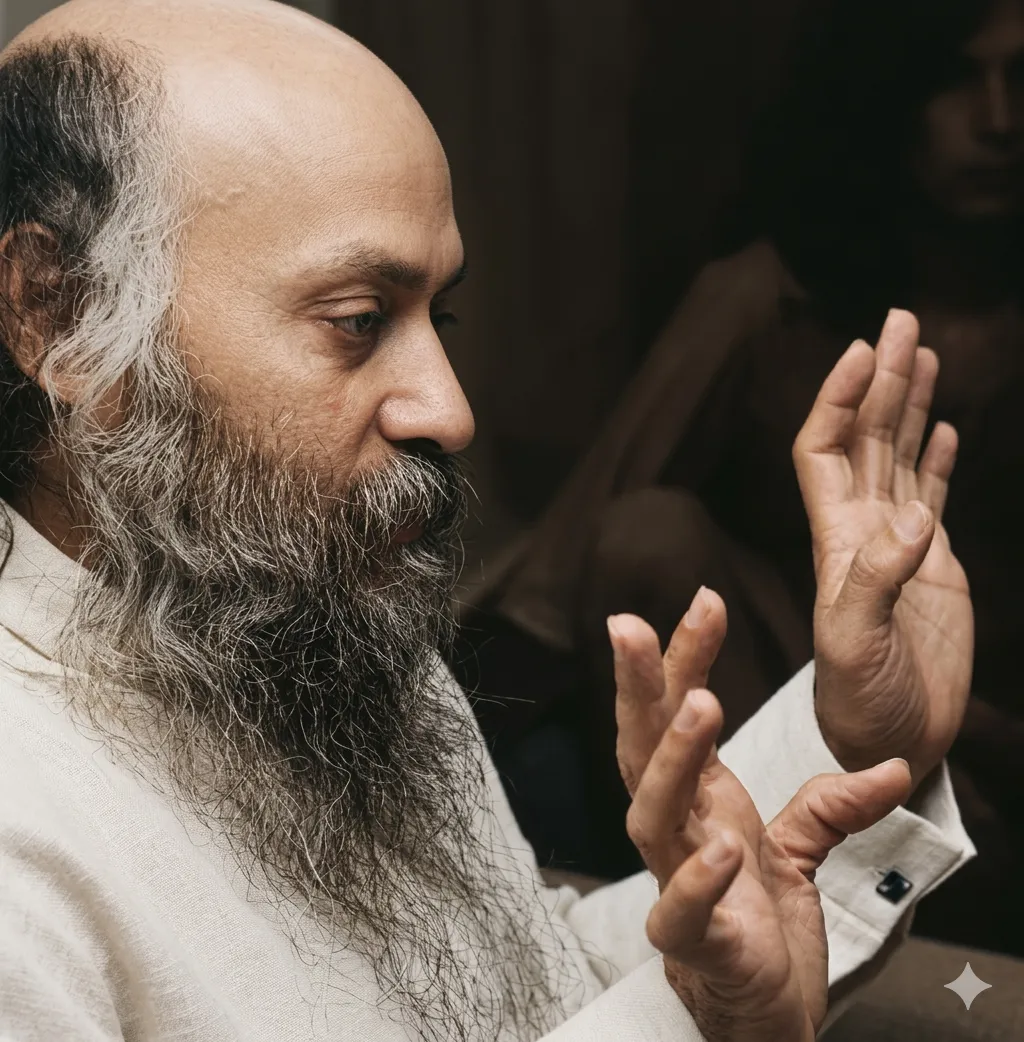
Remembering death all the time makes you stop clinging to fake stuff and live honestly, here and now.
From the Discourses
Passages where Osho speaks to this question — each links to the complete discourse.
In this same context, I said yesterday that to know the truth of life, a continuous awareness of death is necessary. So the question is: Osho, if there is a continuous awareness of death, won’t the effort to bring heaven to earth and our creativity decline? It won’t be encouraged. For this “negative,” subjective process, can there not be some different, constructive collective program?
What I said—awareness of death—is not something negative. Death is not false, nor is it imaginary. There is no truth greater than death. What could be more positive than death? What could be more constructive than death? Everything else may be doubtful; death alone is undoubted. All other things may or may not happen; all events may or may not occur—but death alone is beyond doubt. Then why do you call death negative? What could be more positive, more creative, than the one certain fact? But we are people frightened of death; that is why it seems to us that if we remember death everything will become negative. It is not a question of remembering death; you are already standing in death. You are standing in it. Whether you remember it or not is irrelevant—it is not that you are being asked to force some remembrance. You are standing within…
इसी संदर्भ में पूछा है, मैंने कल कहा कि जीवन के सत्य को जानने के लिए मौत का सतत बोध आवश्यक है। तो पूछा है: ओशो, अगर मौत का सतत बोध होगा, तो धरती पर स्वर्ग लाने की चेष्टा, सृजनशीलता का तो ह्रास हो जाएगा, उसको तो प्रोत्साहन नहीं मिलेगा। क्या इस निषेधात्मक व्यक्तिनिष्ठ प्रक्रिया के लिए उससे भिन्न विधायक सामूहिक कार्यक्रम नहीं हो सकता है?
यह जो मैंने कहा, मृत्यु का बोध, यह कोई निषेधात्मक बात नहीं है। मृत्यु कोई, कोई झूठी और कोई काल्पनिक बात नहीं है। मृत्यु से बड़ा सत्य कुछ नहीं है। मृत्यु से ज्यादा पाजिटिव और क्या है? मृत्यु से ज्यादा विधायक और क्या है? और सब चीजें संदिग्ध हो सकती हैं, मृत्यु भर असंदिग्ध। और सब चीजें की हुई, न की हुई हो सकती हैं, और सारी घटनाएं घटें, न घटें, लेकिन मृत्यु भर असंदिग्ध है। तो मृत्यु को निगेटिव क्यों कहते हैं आप? मृत्यु से ज्यादा पाजिटिव और क्या है? उससे ज्यादा विधायक और क्या है? वही तो निश्चित तथ्य है। लेकिन मृत्यु से हम डरे हुए लोग हैं, इसलिए हमें लगता है कि मृत्यु की याद करेंगे तो सब निषेधात्मक हो जाएगा। मृत्यु की याद करने का सवाल नहीं है, आप मृत्यु में खड़े ही हुए हैं। आप मृत्यु में खड़े ही हैं। याद करें या न करें, यह थोड़े ही, कोई जबरदस्ती याद करने को थोड़े ही कहा जा रहा है। आप उसमें खड़े हुए हैं, आपको चारों तरफ से मृत्यु घेरे हुए है। इसे देखना जरूरी है।
Osho, you said the truth of life is death. Then what is the truth of death?
Buddha called this the state of suchness—accepting what is, as it is. No yes-and-no. No imposing your desire that it be like this or like that. As it is, let it be as it is. Kabir said: Just as it is—accept it as such. Because as long as you reject, you are fighting life—you are contending with God. You are trying to impose your will. You are not a seeker of truth; your ego is still thick. In accepting what is, as it is, the ego dissolves; there remains no place for it. The struggle is gone, the ego is gone. Ramana lay down. He consented: If death comes, it comes. What is in my hands? “Jih vidhi rākhe Rām, tih vidhi rahiye”—In whatever way Ram keeps you, remain that way. If death has come, it has come. This is how Ram wishes to take me—so be it. He was…
पहला प्रश्न: ओशो, आपने कहा कि जीवन का सत्य मृत्यु है। फिर मृत्यु का सत्य क्या है?
इसको बुद्ध ने तथाताभाव कहा है। जो हो, उसे वैसा ही स्वीकार कर लेना। उसमें ना-नुच न करना। ऐसा हो, वैसा हो, ऐसी अपनी आकांक्षा न डालना। जैसा हो, वैसा का वैसा। कबीर ने कहा है--जस का तस, जैसा का तैसा, वैसा ही स्वीकार कर लेना। क्योंकि जब तक तुम अस्वीकार करते हो, तब तक तुम जीवन से लड़ रहे हो, तब तक तुम परमात्मा से संघर्ष कर रहे हो। तब तक किसी न किसी भांति तुम अपनी आकांक्षा आरोपित करना चाहते हो। तब तक तुम सत्य के खोजी नहीं हो। तब तक तुम्हारा अहंकार प्रगाढ़ है। जो है, जैसा है, उसे वैसा ही स्वीकार कर लेने में अहंकार समाप्त हो जाता है। अहंकार के खड़े होने की जगह नहीं रह जाती। संघर्ष गया, अहंकार गया। रमण लेट गए। राजी हो गए, मौत आती है तो मौत आती है! अपने बस क्या है! जिहि विधि राखे राम तिहि विधि रहिए। अब मौत आ गयी तो मौत आ गयी। अब इसी विधि राम ले जाना चाहते हैं तो ठीक, यह उनकी मर्जी। वे चलने को तैयार हो गए। इसको लाओत्सू ने कहा है--नदी की धार में बहना, नदी की धार के खिलाफ लड़ना नहीं।
Question: Osho, A dervish was on a sea voyage. As per custom, all the passengers came to him one by one and asked for wise counsel. The dervish told everyone the same thing: “Keep awareness of death until you come to know death itself.” It was a dervish’s meditation aphorism. But it did not appeal to any of the travelers. A little later a terrible storm arose at sea. Panic swept the whole ship. The sailors and the passengers all fell to their knees and began praying to God to save the ship. Yet amid this terror the dervish sat unperturbed and serene. Then the sea, too, grew calm. A fellow traveler asked the dervish, “Did you not see that during that dreadful storm there was nothing between us and death but a plank?” “Yes, I knew,” the dervish replied, “that at sea it is always so.
एक दरवेश समुद्र-यात्रा पर था। परिपाटी के अनुसार सभी यात्री एक-एक करके उसके पास गये और नेक सलाह मांगी।
Someone asked Osho's views on death and dying.
There is nothing as sure as death. Where there is life, there is bound to be death. He who bears not this fact in mind, wastes life, whereas he who knows this truth, obtains that which is immortal. I do not feel depressed at anybody's death, because there is no need to feel anything about it. However, it is a matter of sorrow, no doubt, if I see a life wasted. We have not to grieve after a dead body, but over a wasted life. You know, King Janak was called 'videh', i.e., without or beyond the body. Once, a young minister of his asked him, 'Your Excellency! How can you be considered without a body, when you do have a physical body? The king smiled but said nothing. After a few days, however, the king invited the minister for lunch. Such an invitation from the king himself was a…
Osho, when I was young I never even thought of death, and now that I have grown old, death keeps frightening me all the time. What should I do? Is it possible to get rid of death?
Ramnath, Freedom from death is not possible. But who told you that you will die? You have never died before, nor can you die now. The one who dies is not you; it is someone else. The body dies—that is merely a sheath. The mind dies—that is a subtler sheath. Within these two peripheries sits the master, the indweller, who is neither born nor dies. This life has happened many times. You are not new. You have come many times and gone many times. But the one seated within is eternal. Neither birth touches it, nor death touches it. Until you know and recognize that inner witness, this fear will go on tormenting you. When a person is young, naturally the worry about death does not take hold. Why should it? Human vision is not far-seeing. Our sight is shallow, small. We see just a few steps ahead. We have…
दूसरा प्रश्न: ओशो, मैं युवा था तो कभी मृत्यु का विचार भी नहीं करता था और अब जब वृद्ध हो गया हूं तो मृत्यु सदा ही भयभीत करती रहती है। मैं क्या करूं? क्या मृत्यु से छुटकारा संभव है?
रामनाथ, मृत्यु से तो छुटकारा संभव नहीं है। लेकिन यह तुमसे कहा किसने कि तुम मरोगे? तुम न तो पहले कभी मरे हो, न अब मर सकते हो। जो मरता है वह तुम नहीं हो, कोई और है। देह मरती है, वह तो आवरण है। मन मरता है, वह सूक्ष्म आवरण है। इन दोनों परिधियों के भीतर जो बैठा है, जो मालिक, वह न तो जन्मता है, न मरता है। बहुत बार यह जीवन घटा है। कुछ तुम नये नहीं हो। बहुत बार आए और बहुत बार गए हो। लेकिन भीतर जो बैठा है, वह शाश्वत है। न उसे जन्म छूता है, न मृत्यु उसे छूती है। जब तक तुम उस भीतर के अंतर्यामी को न जान लोगे, न पहचान लोगे, तब तक यह भय सताएगा। और जब व्यक्ति युवा होता है तो स्वभावतः मृत्यु की चिंता नहीं पकड़ती। क्यों पकड़े! आदमी इतना दूरदृष्टि नहीं है। आदमी की दृष्टि बड़ी ओछी है, बड़ी छोटी है। बस जरा सा देखता है दो-चार कदम आगे। दीये की रोशनी है उसके पास, चार कदम देखता है। मृत्यु इतनी दूर मालूम पड़ती है कि भरोसा ही नहीं आता, कि होगी। और मन बड़ा चालबाज है। …