
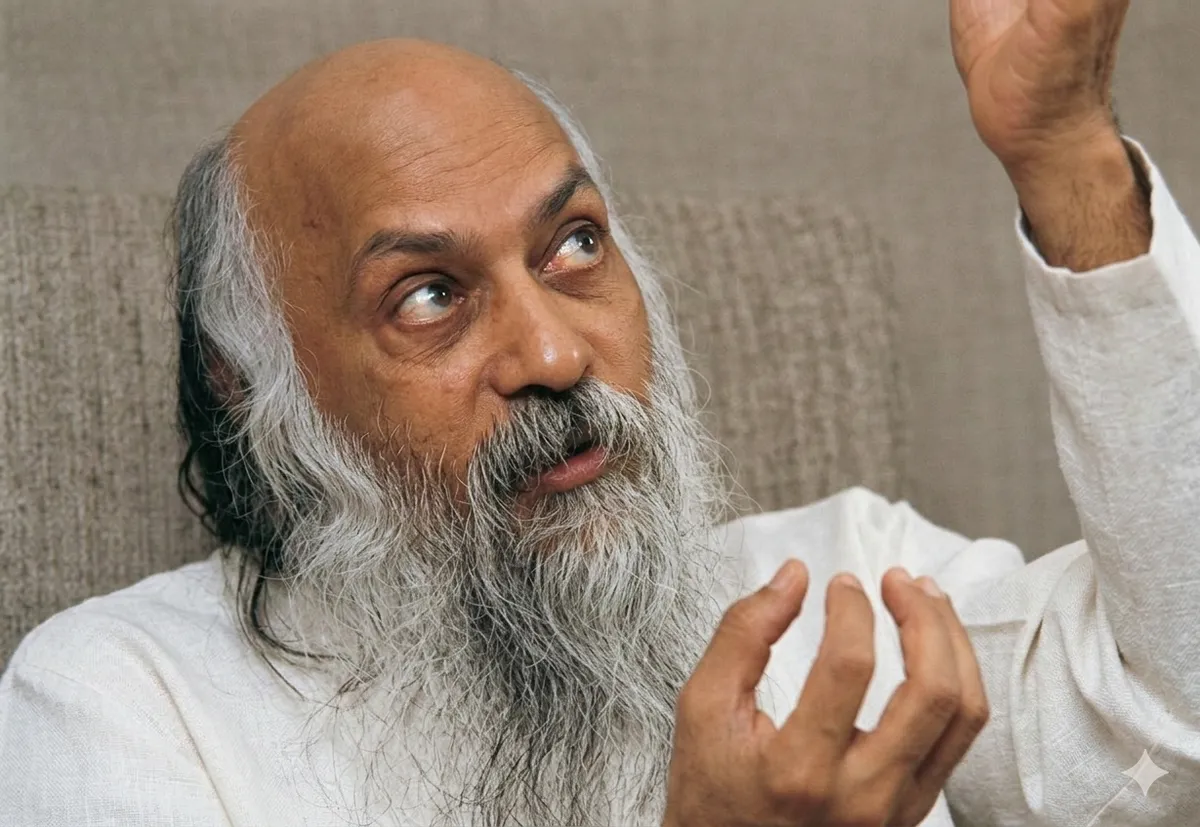
Osho's perspective on Compassion
When Osho Spoke About Compassion
Passages from the discourses where this theme comes alive.
Another friend has asked: How do you differentiate among compassion, nonviolence, pity, and love? Don’t they all mean the same?
Pity does not bring revolution; that is why revolution has not come to India. Pity rather blocks revolution. Because pity gives a beggar two coins, but it does not go in search of why beggars are produced in the first place. And when the beggar gets two coins, he too feels relief. He too does not reach that limit where he grabs the donor by the neck and says, “We will not take this charity. First you pick our pockets and then you give us alms. First you make us beggars and then you arrive to give us charity. First you suck our blood and then you build hospitals for us where ‘blood donation’ is conducted. What kind of net is this?” No, pity does not allow even this to happen. Pity becomes a consolation. And the poor feel that the rich are so “pitiful.” Nothing has shielded the rich…
Beloved Osho, you said that you lie out of compassion, and we, your sannyasins, can understand what you are saying. But can the outside world ever understand? Won't it create more misunderstanding about you, about rajneeshism, about your sannyasins? Please comment.
Compassion knows no conditions. It can do anything, it knows no right and no wrong. Compassion can lie to help you. In fact, in your sleep you can only understand lies, you cannot understand the truth. Many things are involved. First, the experience of enlightenment, awakening, illumination, happens when there is no mind present. Enlightenment is a no-mind experience. Words are not there, language is not there. In fact, you are not there either. It is such a silence, so profound and infinite, it cannot be expressed without lying. The moment the truth is said, it is no longer true. Just the process of saying it makes it a lie. To bring the wordless experience into words is to change the very quality of the experience. So in fact, anything that is great -- if it has been experienced at any time, by any individual -- out of sheer necessity…
In this same context, please also explain how a seeker can distinguish between a command arising from violent tendencies and a teaching arising from compassion?
A seeker will not be able to distinguish—and should not. It makes no difference to the seeker. Understand this well. Even if the master gives an order with a feeling of violence, if there is violence, it will be on the master’s head. The disciple should simply obey the order. He will be transformed whether the order was given out of compassion or out of a violent impulse. Whether I enjoy changing someone because there is a thrill in breaking and demolishing, or I give an order because there is the joy of a new birth, the compassion of creating the new—demolishing the old may carry violence; creating the new is compassion. Whatever the reason I am giving an order—that is my affair. For the one who receives the order, it makes no difference. A house has to be pulled down and rebuilt. It may be that I am taking…
Another friend has asked: Osho, what is the relationship between the method of meditation and jati-smaran (recollection of past lives)?
But the one who becomes skilled in this—who can fully awaken any day’s memory up to the age of five—will find that the memories begin to awaken completely. And you should test it. As today passes, note down some events and lock them up. After two years, try to recall today. Most of it will have been forgotten. Then remember—and after remembering, break the lock and compare whether what you recalled matches what you had written. You will be amazed—astonished—that besides what you wrote, many more details have come back which you did not even note at the time. They will all be there in memory. Buddha called this alaya-vijnana. There is a corner of the human mind he called the storehouse of consciousness. Like a junk room in the house where we keep all the odds and ends, there is a storehouse that collects memories—where everything from birth after…
"Realization births service; true compassion flows effortlessly when the 'I' dissolves and the divide between self and other vanishes."
"Compassionate lying is not deceit; it is a bridge to awaken the sleeping, for sometimes the ultimate truth must be veiled to stir the soul towards inquiry."
"Embrace the truth of what is, for speculation and comforting assumptions only cloud the clarity of understanding. Acknowledge your not-knowing rather than disguise it with illusions."
"True understanding of a master’s compassion arises only when you shed dependence; in freedom, gratitude blooms and enlightenment reveals the depth of love that was always present."
"Let your life be a celebration, for true gratitude is not in words but in the ecstasy of living each moment as a song."
"Total surrender is the path to transformation; if you cannot fully obey, then leave with reverence, for half-heartedness only breeds confusion."
"Choose love's creativity and compassion's participation over the ego of pity and the passivity of nonviolence."
"Compassion arises when we see our shared suffering, for in understanding 'what is,' the illusion of separation dissolves and only love remains."
"True compassion arises only when you are centered and free, for to save another against their will is to impose your own domination. Help only when invited, empowering them to find their own light."
"True compassion arises not from belief, but from the direct knowing of the divine within; without this realization, our kindness remains incomplete and often rooted in the ego."
Is this a story about a master's compassion and equanimity in the face of trust being abused?
definition"A true master’s love remains unbroken, welcoming even the betrayer back with open arms, for compassion is the acceptance of the present moment and the unwavering trust in the potential of the soul."
"Blood is merely a bodily fluid; it does not carry the essence of the soul. What truly matters is your inner acceptance and freedom from fear, for illness can deepen your awareness."
"Compassion can take many forms; sometimes it manifests as fierce action to protect the innocent and cleanse corruption. An awakened being's love is not bound by gentleness alone but flows through the circumstances of the moment."
"True caring and compassion blossom effortlessly from the wellspring of self-love; when you nurture your own heart, your love naturally overflows to all, transforming service into a fragrant expression of joy rather than a burdensome duty."
"Heal yourself first; only then can your presence become a medicine for the deeply unhappy. When you embody joy, love and compassion flow naturally, transforming not just yourself but those around you."
"Compassion blossoms when we unleash our creative energy, turning away from glorifying violence and embracing the divine within us all."
"Transforming passion into compassion means letting love flow freely, untainted by possessiveness, so that it becomes a radiant presence that enriches all who encounter it."
"True compassion does not merely alleviate suffering; it seeks to eradicate the causes of suffering, transforming the world instead of exploiting it."
"When you feel compassion, love, or playfulness, remember that the true blessing is your own flowering; in giving, you bloom, and in receiving, you are given the chance to grow."
"True compassion is selfless; it gives without seeking acknowledgment, for in the absence of ego, love flows freely and creates genuine connection."
"When compassion is misunderstood, it can provoke anger and defensiveness, for the ego feels wounded; yet, continue to share your love freely, for truth often stirs the deepest falsehoods within."
"When you wish for the happiness of all beings, you become a vessel for grace; only by mending your inner cracks can you truly share in the bliss of existence."
What is compassion for a rebellious man?
definition"Rebellion is the highest form of compassion, for it dares to defy the past and awaken humanity to a beautiful future."
What is compassion?
definition"Compassion is not a feeling or a virtue; it is your very nature when duality disappears, a spontaneous overflow of joyous being where you simply are compassion."
"Compassion arises from inner silence and joyful acceptance, allowing life’s contradictions to surface and dissolve, transforming the path to enlightenment into a gentle fragrance of love rather than a forced achievement."
Profound Quotes on Compassion
Explore our structured collection of meaning-mapped quotes regarding Compassion.
Open Quotes Library →