
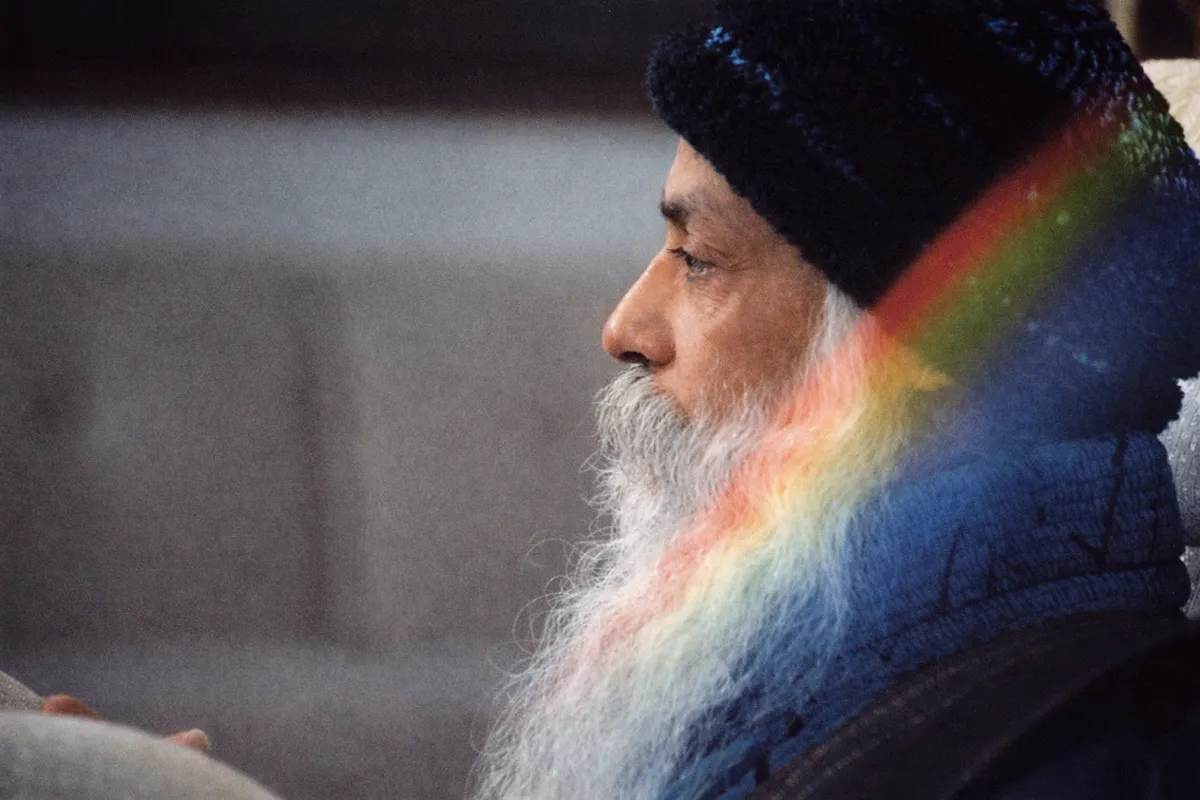
We talk nicely about people after they die because we’re no longer competing with them and we’re a bit scared of the dead, so we play it safe and show respect.
From the Discourses
Passages where Osho speaks to this question — each links to the complete discourse.
Osho, Why does everyone praise a person after he dies—even those who spent his whole life condemning him? What’s the secret?
You ask, “Why do people praise a person after he dies?” They have to. That’s why at weddings people offer blessings and congratulations. The elders send blessings, contemporaries send best wishes—because the poor fellow is as good as dead! Finished! The end has come. They say when an ant is about to die it grows wings—well, the wedding wings have sprouted; the ant is near its end! Henceforth no future. Only darkness ahead. So give all the congratulations and blessings now. Bid a final farewell: “Brother, from here on, it’s between you and God!” That’s why you honor mahatmas and saints so much—the poor fellows are dead! Already dead! Walking corpses! If you don’t respect them, what else can you do? There’s nothing else left to do with them. If they were alive, there would be other ways to relate. Now all you can do is show as much reverence…
Why do we praise the dead? Psychologists say: out of fear. Humanity has always been afraid of the dead—of ghosts and spirits. A leader dies—he harassed us all his life. Now we fear: now we’re really in trouble; he is free of the body, he could pass through walls, come sit on our chest at night—so we say, Sir, please don’t do that! We praise the dead out of fear. There is an ancient fear: who knows what the dead might do now? A husband tormented his wife all his life; now he dies—she beats her chest and cries; inside, she is also glad: good riddance; she had prayed all along that Rama take him away—now Rama has taken him, and she weeps; but she is afraid too, trembling: he was wicked alive, and now dead—he will be invisible; he might barge in at night and...
The buddha said: evil-doers who denounce the wise resemble a person who spits against the sky. The spittle will never reach the sky but comes down on himself. Evil-doers again resemble a man who stirs up the dust against the wind. The dust is never raised without doing him injury. Thus the wise will never be hurt but the curse is sure to destroy the evil-doers themselves.
THE BUDDHA SAID: IF YOU ENDEAVOUR TO EMBRACE THE WAY THROUGH MUCH LEARNING, THE WAY WILL NOT BE UNDERSTOOD. IF YOU OBSERVE THE WAY WITH SIMPLICITY OF HEART GREAT INDEED IS THIS WAY. THE BUDDHA SAID: THOSE WHO REJOICE IN SEEING OTHERS OBSERVE THE WAY WILL OBTAIN GREAT BLESSING. A SHRAMANA ASKED THE BUDDHA: 'WOULD THIS BLESSING EVER BE DESTROYED?' THE BUDDHA SAID: IT IS LIKE A LIGHTED TORCH WHOSE FLAME CAN BE DISTRIBUTED TO EVER SO MANY OTHER TORCHES WHICH PEOPLE MAY BRING ALONG. AND THEREWITH THEY WILL COOK FOOD AND DISPEL DARKNESS, WHILE THE ORIGINAL TORCH ITSELF REMAINS BURNING EVER THE SAME. IT IS EVEN SO WITH BLISS OF THE WAY. <q>THUS THE WISE WILL NEVER BE HURT BUT THE CURSE IS SURE TO DESTROY THE EVIL-DOERS THEMSELVES.</q> So remember it as a fundamental rule that whatsoever you do to others you are really doing to yourself --…
Osho, after sannyas it is as if everything has changed. I have changed, the world has changed. The birds’ voices have turned into music. The drops rising and falling in the fountain appear to dance. When I sit in Sufi meditation, it seems as if everything is happening to please me. Inside, an unprecedented bliss is felt. It seems the outer music is arising from within me. As if, become a goddess, I am seeing everything. Is this some new direction of madness, or tiny steps moving toward light? Please shed light!
Asha Satyarthi! When sannyas happens, of course everything changes. Sannyas is not just changing clothes. Sannyas is an inner transformation. It is a new way, a new method of seeing life. It is a new dimension of living. The old sannyas was anti-life. So it brought no benefit to the world. It harmed the world—certainly harmed it. Who knows how many homes were ruined, how many families destroyed. Who knows how many women became widows while their husbands were still alive. Who knows how many children became orphaned while their fathers still lived—fatherless. Surely, millions of children must have begged. And who knows how many women became prostitutes. The burden of all this lies on old sannyas. On the head of old sannyas is a large bundle of sins. And the irony is: in return for so much sin, what did old sannyas gain? Dry, shriveled people, devoid of the…
Osho, there is a Talmudic saying: “Beyond what is commanded to you, higher than that, conduct yourself in holiness.” Please tell us its meaning.
Narendra! Adishta—“what is commanded”—means what the noble ones have told you. But what another tells you is borrowed. It has no roots in your own experience. It may shape your conduct, but not your conscience. You will start walking, yes. If Buddha says something, he must be saying it rightly; there is no reason to think him wrong. On Buddha’s utterance there is the stamp of his authenticity, his signature. One who falls in love with Buddha, who becomes acquainted with his aura, will follow his words. Even so, it has come from the outside, not welled up from within. It is not a flower of your own soul. You bought that flower in the market, made a garland of it, put it around your neck. But it did not blossom in the garden of your being. Therefore the Talmud says: the commanded is fine—follow what has been enjoined—but do…