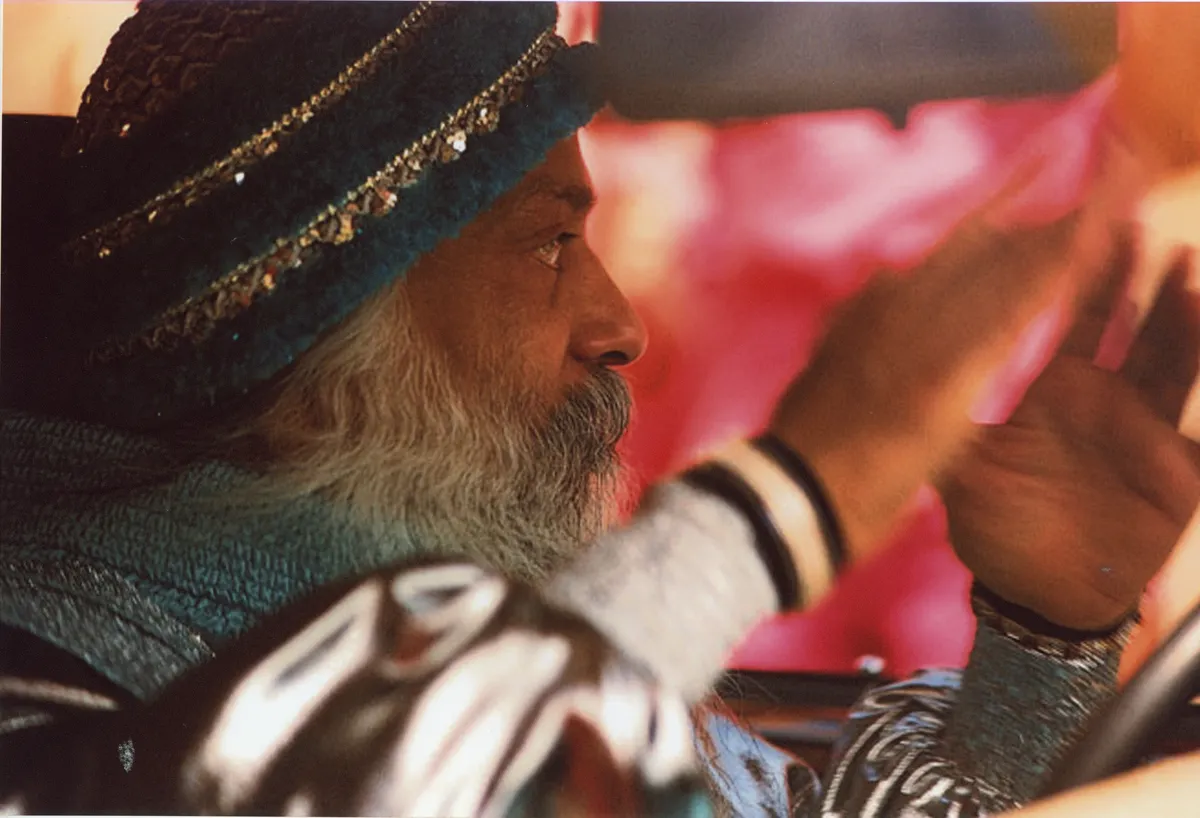
Explore Osho’s teachings across key topics such as meditation, love, ego, and awareness. Each topic contains structured questions, quotes, and insights derived from discourses.
Desirelessness, as Osho suggests, does not impede progress; rather, it refines it, fostering a serene mind that embraces creativity and ethical abundance, where true wealth emerges as a natural byproduct of inner fulfillment rather than frantic pursuit.
Renaming a sannyasin symbolizes a profound shedding of the old self, heralding an inner rebirth, while the mala, with its 108 beads representing diverse meditation paths and a single pendant bead signifying the ultimate unity, serves as a poignant reminder of this transformative journey beyond conditioning and division.
True listening transcends mere retention, transforming words into the essence of your being, allowing spontaneous responses to life’s calls; in this dance of attention, consciousness flourishes, guiding genuine transformation beyond the confines of memory.
In the spirit of Osho's teachings, true dialogue blossoms not from incessant questioning but from a profound silence that allows us to listen deeply; it is in this stillness that genuine understanding unfolds, revealing answers from within.
In the spirit of Osho's teachings, Krishna embodies a transcendent awareness where theism and atheism converge, revealing that profound seekers, regardless of their labels, ultimately grasp the same nondual truth, inviting us to transcend superficial debates and embrace the entirety of existence.
In the spirit of Osho's teachings, color transcends mere attributes of objects; it emerges from the interplay of light, perception, and awareness, revealing that what we deem solid is a dynamic dance of consciousness, urging us toward humility and liberation from fixed notions.
In the dance of existence, where belief in an immortal soul intertwines with the shadows of fear and ignorance, humanity conjures ghosts, embodying our primal anxieties and the yearning for connection beyond death, as Osho might suggest, blurring the lines between reality and illusion.
Embracing the present moment invites us to become a mirror, practicing the art of witnessing meditation, where we observe thoughts of past and future drift by like currents in a river, allowing silence and clarity to unveil the divine reality of now.
In the serene presence of a seer, the self-conscious ego gently recedes, and like a soothing breeze, his silent peace unveils the true essence of refuge, reminding us that in moments of forgetfulness—among birds or by a river—existence itself becomes our sanctuary.
Homosexuality represents a natural stage in the evolution of sexuality, yet Osho emphasizes that true liberation lies not in clinging to any identity, but in transcending all sexual definitions to embrace love, awareness, and a spiritually fulfilled existence.
In the spirit of Osho, the unknown invites you into a realm of personal exploration, where a true master refrains from providing the final answer, allowing your awareness and freedom to blossom as you seek the truth within yourself through direct experience.
In the spirit of Osho's teachings, the Upanishads unveil ultimate reality as a profound paradox—both distant and intimately close, transcendent yet immanent—revealing that when the ego dissolves, the witnessing consciousness awakens to its own essence, experiencing true darshan.
Pride, an egoic affliction born from comparison that insists on superiority, fosters a relentless cycle of hurt and competition, while true self-respect embodies a humble dignity that honors the uniqueness of all, standing firm without aggression, asserting its worth without need for swagger.
In the spirit of Osho, sannyasins embrace their essence by declaring 'Brahman' as their caste and 'Shunya' as their religion in the census, affirming that true seekers, free from societal labels, resonate with the soundless music of the divine within.
In the essence of Osho's wisdom, the true power of mantras lies not in the words we chant but in the silent, eternal melody of the ajapa that resonates within, effortlessly connecting us to the Divine when all external sounds fade away.
In the essence of the Bhagavad Gita lies a profound truth: true dialogue unfolds in the intimacy of one soul speaking to another, as Krishna does with Arjuna, awakening the divine within, for religion thrives not in the collective, but in the personal journey of self-discovery.
In the spirit of Osho's teachings, one discovers that true spirituality lies not in renouncing possessions but in shedding the clinging attachment to them, embracing only what is essential for the journey while remaining unbound and ready to let go.
In the dance of existence, where nature's forces weave both bounty and chaos, wisdom emerges when we embrace the entirety of life—acknowledging that joy and suffering, like the river's flood and fire's warmth, coexist in a harmonious balance beyond our self-imposed labels.
Samskaras dissolve not by merely swapping bad habits for good, but through the awakening of the witness within, where one recognizes their separation from impulses; in this vigilant awareness, actions arise from mastery, leaving no new imprints and allowing one to navigate life’s tendencies with sovereign grace.
In the spirit of Osho's teachings, the Indian sadhu embodies a duality: the genuine seeker embarking on a profound inner journey, and the impostor who capitalizes on the sacred image of enlightenment, revealing that authenticity and imitation are intertwined, urging us to cultivate discernment.
Immorality pervades our existence not due to Osho’s teachings but because ancient moral codes have faltered; his insights illuminate the hypocrisy embedded in these impositions, urging a shift from external dictates to an inner awakening where true virtue blossoms through heightened awareness and genuine consciousness.
A smile, as Osho might suggest, embraces the paradox of our word-bound existence, transcending the burdens of speech to reveal a profound silence; it emerges in the stillness between words, reminding us that true understanding lies beyond the confines of language.
Wholeness emerges not through relentless seeking or thought, but in the profound stillness of non-doing, where the ego dissolves and the self surrenders, creating a sacred space for the complete to reveal itself in the quiet embrace of emptiness.
In the dance of existence, Zorba's earthy vitality nurtures the roots of sensuality, while Buddha's blossoming awareness and compassion reveal the sacred unity of life; embracing both the seed and the flower transforms raw energy into love and insight, honoring the wholeness of being.
Don't have an account? Sign up