
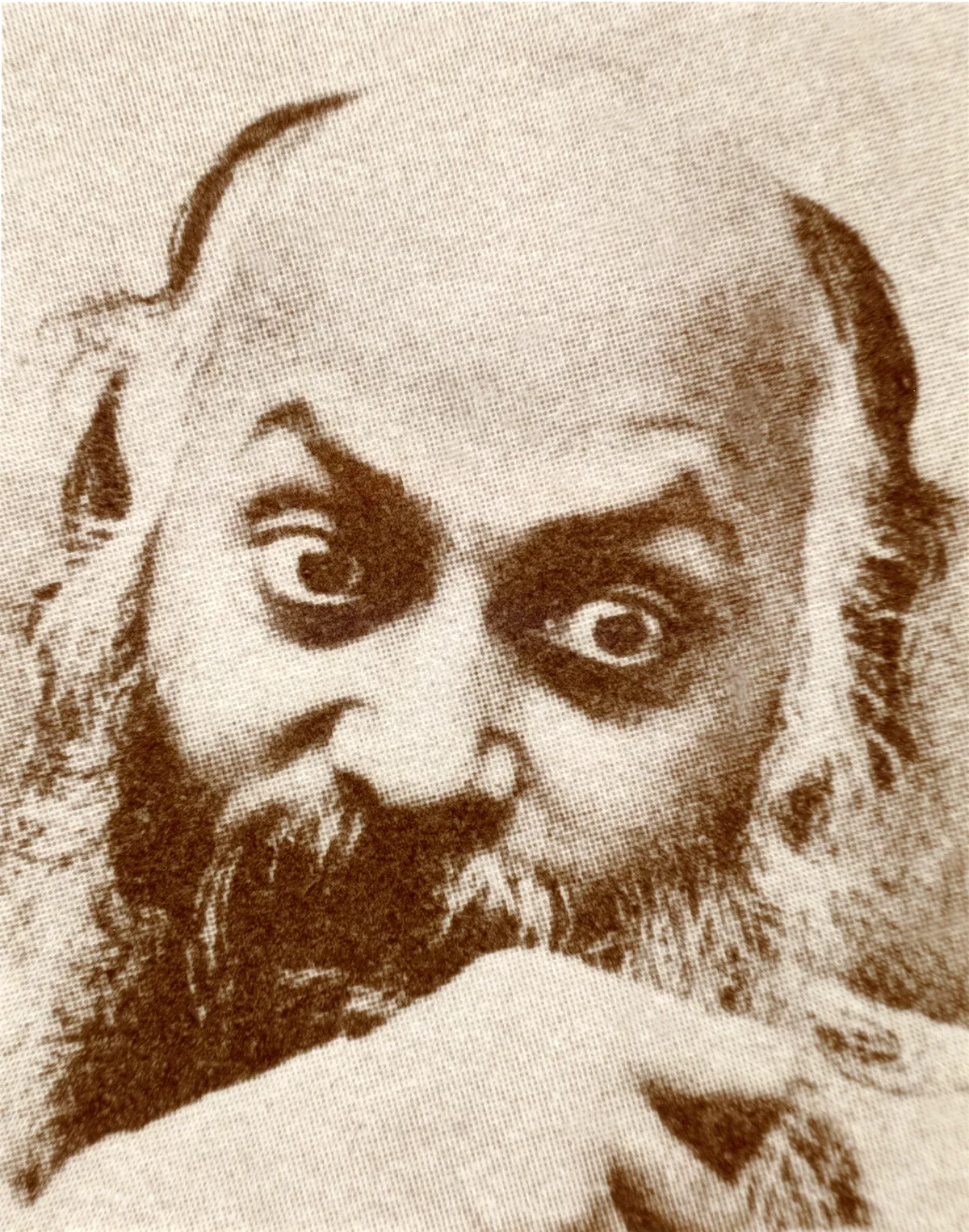
Sometimes your mind goes blank because it’s stunned or tired; real meditation is when you’re wide awake and simply stop feeding thoughts—like choosing quiet, not being knocked silent.
From the Discourses
Passages where Osho speaks to this question — each links to the complete discourse.
I don't understand—what is the difference?
Yes, there is a difference. You can be without thoughts; that is not the same as thoughtlessness. Being without thoughts can happen once in a while. The whole reason for that kind of thought-free state is simply this: a kind of numbness sets in—of the brain. Understand this difference. You are sitting, not walking; another person is also sitting, not walking. But he is paralyzed—he too is not walking. Both are seated. Yet I would say he is not really “sitting”; he is being made to sit. You are sitting. He is only paralyzed. Though both people’s legs look the same—he is sitting, you are sitting—no one could tell by looking who is truly sitting. You are sitting because you could also get up and walk. He cannot walk at all; so what is the point of calling it “sitting”? Do you get what I mean? I wouldn’t even say…
Osho, in the thought-free state you describe, consciousness would have to be passive in its very being. So if the conscious mind becomes completely thoughtless and inactive, what difference remains between that and inert existence? When there is nothing to do and mere being is the goal, is there any difference between such a state and dead stillness? What purpose could the existence of consciousness have for us? Please explain the difference between the existence of a wooden chair and a thought-free, inactive human existence.
Then Huxley wrote that that day it occurred to him: LSD itself does nothing; it is a consciousness-expanding drug. For a few moments your awareness expands a little. And with just that small expansion, the chair became alive! So Huxley wrote, “Now I can believe those who looked at a stone and bowed as if before God; their consciousness must have had some other expansion.” He also wrote, “Now I can believe someone like Van Gogh, who painted a chair.” Why paint a chair? Can you imagine sitting down to paint and choosing a chair? And a unique painter like Van Gogh labors for months to paint a chair—must he be mad? Is a chair worth painting? But Huxley said that until then he had never understood why Van Gogh painted a chair; then he understood Van Gogh must have seen this chair in another moment of consciousness, which he…
Osho, what is the fundamental anguish of human life?
There is only one anguish: that a human being cannot become what he was born to be. There is only one anguish: that the seed remains a seed and does not bloom like a flower; that it cannot scatter its fragrance to the infinite winds; cannot converse with the moon and stars; cannot offer its colors to the sky; cannot be expressed. If the poem within the poet cannot be revealed—anguish. If the painter cannot paint—anguish. If the dancer cannot dance—if chains lie on his feet—anguish. Anguish means only this: that what we are meant to be—our innate nature and destiny—does not come to fruition, and we are forced to be something else. Then anguish is born. Then melancholy gathers over life. And all those countless people you see burdened with sorrow, living in a kind of hell—the reason is only this: each has come carrying the seed of becoming…
Osho, I too have begun to feel that it is not valuable.
If you decide to do social service—uplift the “Harijan,” redistribute land, do this and that—and you think self-realization will result, you are mistaken. Self-realization will not come from that. You may become a good and popular person; you will taste a subtle pleasure of ego—and nothing more. You will enjoy the pleasure of being “a servant,” but you will not taste the joy of service. The pleasure of the role of “servant” is one thing; the joy of service is entirely another. But if you enter religious practice, which is utterly personal, then a day will come when that sadhana will transform your life into service. Now life is self-interest; then life will be service. In self-ignorance, life is self-centered; whatever you do, some form of self-interest is present. In self-knowledge, life is service; whatever you do, self-interest cannot remain. For me, religion is fundamental; its result will surely come.…
Therefore I have said: thought is not the path. Naturally the question arises: then is non-thought the path? Has the dull ignoramus, in whom no thought arises, attained truth? If someone lies in a stupor, under morphia, has he attained truth—because no thoughts arise? Everywhere I am asked: you say thought cannot give truth, then will non-thought give it? Has the dull-witted attained? Has the intoxicated, the unconscious man attained? Certainly, when I say thought is not the path, I do not mean non-thought is the path. Non-thought is not the path either. But because it is said so often that thought is not the path, people conclude: then let us cultivate non-thought, and truth will be ours. Even by cultivating non-thought, truth is not found. Endless methods of non-thought have spread across the world. All the varieties of concentration, all kinds of one-pointedness—these are paths of non-thought.