
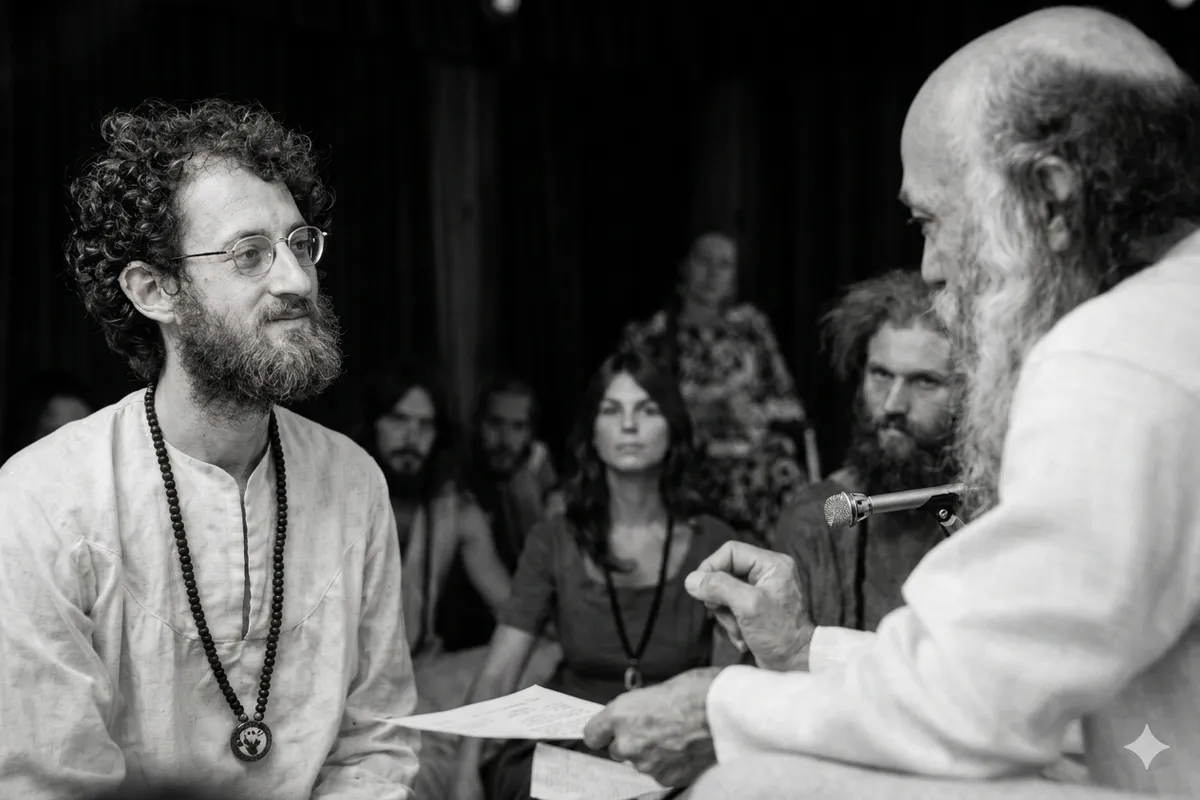
If you’re truly calm and steady inside, you already get it and don’t need meditation; if you’re still upset, use meditation like medicine to grow real understanding.
From the Discourses
Passages where Osho speaks to this question — each links to the complete discourse.
Osho, despite all you say, many of your sannyasins still do not meditate; they say understanding is enough. Is their understanding enough?
The intellect keeps getting subtler, the soul keeps getting darker! Just by listening and listening to me, it is not certain that understanding grows; cleverness grows, the idea of understanding grows, thinking gets sharper. The intellect keeps getting subtler. But beware: this intellect will become a costly bargain if you don’t also remember that the soul keeps getting darker, that inside the self is being lost in darkness, awareness fades, unconsciousness spreads. Remember: certainly, understanding is enough -- but only if there is understanding! Then there is no need for meditation, because understanding is meditation. There is no greater meditation than that. But only if it is truly there. Each must examine within himself. It is not anyone else’s business, nor for anyone else to worry about. If someone’s understanding has awakened, the matter is finished. Why should anyone else fret over whether he meditates or not? It is his…
A friend has asked, Osho, why should we be religious when neither the beginning nor the end is known, and there is no trace of God or soul? The enlightened ones speak of truth—if that truth is real, why can’t they make everyone experience it?
No one is telling you to be religious—at least Lao Tzu would not. The so-called religious people have created so much disturbance that it is better you do not become one of them. Lao Tzu does not say, “Be religious.” He simply says: be what you are. You may ask, why should I be what I am? Because that is the only thing you can be. There is no way to be anything else. Yes, you can try to be something else—and in that trying your life can be wasted. You may then say, why not waste life? No one can stop you. And precisely for this reason even the enlightened ones are defeated and cannot give you the knowledge of truth—because you say, why should we know the truth? What can the enlightened do? They can speak. They can try to awaken in you the thirst for the joy…
Osho, you say the same thing in countless ways. But when I listen to you, it feels as if I am hearing it for the first time. And I feel so much joy that I don’t feel like going back home. What should I do—what can I do—so that I can just keep listening to you!
You will feel as if you have been made to rise out of season, before time—as if you were not yet to go and yet had to go. And if you go in that way, your home will become even more desolate than before. I do not want to make your home desolate; I want to make your home a temple. I want that when you go home, your home’s new form is revealed. I do not want to tear you away from home, from the world, from family life. That is the newness of my sannyas: I do not want to sever you from the world; I want to join you to the world in such a way that your connection with the world becomes a connection with the Divine. Let the world no longer be a barrier between you and the Divine; let it become a means. If…
Osho, Patanjali and all the enlightened ones have spoken of samadhi. But Krishnamurti speaks of understanding. From samadhi it seems understanding can flower; but how can samadhi flower from understanding? Can the state of buddhahood be attained by understanding alone? Osho, please explain this properly.
Krishnamurti says there is no need to meditate separately. He is right. Those who said “do it separately” also know there is no real need to separate it. But they do not expect that you can be aware for twenty-four hours yet. Krishnamurti trusted you a little too much; Patanjali doesn’t trust you that much. Therefore Patanjali managed to take some of you to samadhi; Krishnamurti perhaps almost no one. He trusted you too much. You were crawling on your knees; Krishnamurti assumed you could run. Krishnamurti said what he had to say from his own standpoint; he did not take care of you. Patanjali speaks with your welfare in view—lifting you one step at a time. Patanjali has placed stairs; Krishnamurti speaks of a leap. You cannot gather the courage even to climb steps—what leap will you take! And it often happens that those who cannot muster the courage…
Osho, is it possible to grasp the poignant meaning of an enlightened one’s words without having attained meditation? Is there a deep relationship between essential knowing and the state of meditation? Kindly shed light on this.
Seeing a singer sing, you remember your own throat: a voice, after all, I have too. Seeing a dancer dance, you remember your feet: I have feet too—if I wish, I can also dance. Seeing a painter paint, you remember: if I wish, I too can paint. In just the same way, seeing a Buddha, you remember: if I wish, I too can attain Buddhahood. This very wishing—this is not the whole understanding—this is the beginning of thirst. A kind of light spreads. However it may be, every time passes by, The gist remains, but the heap scatters. In sorrow burns the heat of the Vaishakh sun, In such a season even the ocean recedes. All day long we journey through darkness, Come evening, a kind of light spreads. Every continuity breaks, friends, Sometimes such a moment passes. Some hope flashes forth as a ray, For a little while every…