Explore Osho’s teachings across key topics such as meditation, love, ego, and awareness. Each topic contains structured questions, quotes, and insights derived from discourses.
The rebel transcends all existing categories, embodying a new essence of absolute freedom, love, and creativity; unbound by the past, he embraces the present and an open future, inspiring a transformative shift in humanity through his authentic existence.
Doubt obscures the truth that home is not a distant ideal but a profound presence within; as we release self-condemnation and the notion of a distant God, we awaken to our intrinsic worth, allowing gratitude to illuminate our lives as divine abodes in the here and now.
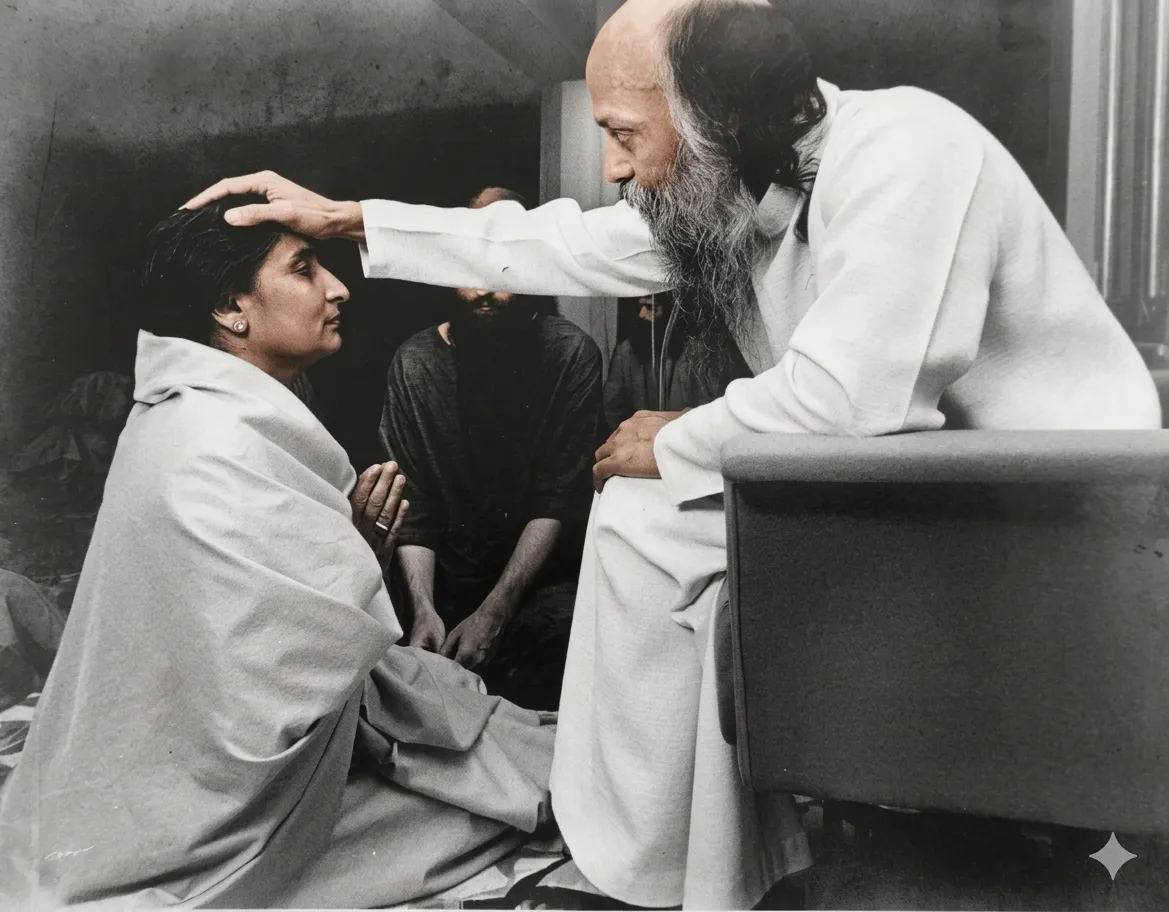
In the presence of an awakened being, a Buddhafield emerges—a radiant energy that ignites the dormant kundalini within receptive seekers, transforming their consciousness into a vibrant network of reflections, each unique yet united in the pursuit of awakening.
Osho suggests that true spiritual growth transcends dietary restrictions, emphasizing that consciousness is paramount; as awareness deepens, dietary choices may naturally evolve without the constraints of fanaticism, reflecting one's inner state rather than rigid rules.
Enlightenment, as Osho beautifully illustrates, is a personal journey that cannot be bestowed by even the wisest master; instead, it flourishes within the seeker, nurtured by the loving presence of a guide and the supportive energy of the community.
Osho illuminates that while religion and meditation may not drive economic prosperity, they cultivate an inner richness—awakening awareness and serenity that transcend superficial wealth, guiding us toward a more meaningful existence rooted in fulfillment rather than material gain.
Embracing the wisdom of Osho, one discovers that the journey to self-awareness unveils the divine essence within; by transcending duality and recognizing our unity, we unlock profound love and healing, revealing that the true remedy resides in our own hearts.
In the dance of decision-making, true freedom blossoms when you recognize that no external authority dictates your choices; instead, it is your own awareness and will that shape your path, liberating you from the chains of societal expectations and divine interventions.
Gandhi’s reliance on women as a protest against tradition, while noble in intent, reveals a misunderstanding of male-female dynamics; as Osho suggests, true honor lies in celebrating the unique strengths of each, rather than forcing them into unnatural roles.
Regret, a product of ignorance, robs us of the vibrant present, binding us to an unchangeable past; by releasing self-reproach and embracing the richness of now, we truly awaken to life’s fleeting beauty, savoring each moment without the weight of what was.
The Geeta's essence transcends the literal words of Krishna, revealing a profound truth that resonates with the awakened consciousness, much like the Ganges flows from an unseen source, inviting us to embrace its living message over mere historical authorship.
Embracing the divine experience requires a surrender to effortless awareness, where the pursuit of it only hinders our connection; by relinquishing the 'I' and immersing ourselves in egoless stillness, we find grace flows back to us naturally.
In the practice of pranayama, one discovers a sacred rhythm where each out-breath expands the spirit toward the infinite, while the in-breath gently guides us back to the profound emptiness, inviting us to dance gracefully between creation and dissolution, and ultimately awaken to the divine essence that unites them.
Orgasm embodies the nonsexual essence of unity, where male and female polarities dissolve into a singular energy, transcending thought and time, revealing pure awareness; this insight mirrors meditation, allowing us to access that same timeless consciousness independently.
In the spirit of Osho's teachings, the essence of humanity transcends superficial distinctions of race and nationality, urging us to abandon ego-driven labels and embrace our shared existence, recognizing diversity as mere variations within one unified family.
In the embrace of uncertainty, when action eludes us, surrendering to stillness allows existence to unfold its wisdom, revealing clarity and effortless action, much like spring’s gentle awakening of life from the depths of winter.
In the stillness of silence, where the influence of others fades, authenticity thrives; as Osho suggests, true honesty emerges when we speak only what is essential, liberated from the shackles of approval and societal roles.
In the dance of existence, the ache of loneliness emerges from a yearning for connection, while true aloneness shines as a radiant state of self-contentment; embrace provisional comforts to soothe your journey, but ultimately, revel in the joy of your own company.
Osho reminds us that the essence of a living temple transcends the mere presence of trickling water over its images; true vitality lies not in external signs, but in the profound spiritual energy that resonates within, regardless of superficial appearances.
Completeness unfolds through a deep, nonjudgmental embrace of life's vibrant hues and melodies, where conscious living nurtures understanding, allowing attachments to dissolve naturally, much like water transforming into steam in the dance of awareness and longing.
Om transcends mere sound, embodying the universe's heartbeat and the essence of existence; as one resonates with its profound silence, the journey unfolds through three intonations of Shantih, leading to the ultimate dissolution of self into the eternal stillness where beginnings and endings converge.
In the stillness of the heart, beyond the mind's relentless chatter of indulgence and renunciation, lies a profound emptiness; here, clarity emerges, allowing the essence of the Whole to transcend dualities and illuminate our true nature.
True enjoyment emerges when we transcend the ego's demands for attention, for in the moment we release our attachment to self, joy blossoms effortlessly, unshackled from the childhood conditioning that equates misery with worth.
Repentance, as Osho might suggest, unfolds as a rich tapestry of meaning—inviting genuine remorse for sins, a call to responsibility in the divine dialogue, and a return to one's true essence, reminding us that rigidity can obscure the sacred poetry of existence.
Don't have an account? Sign up