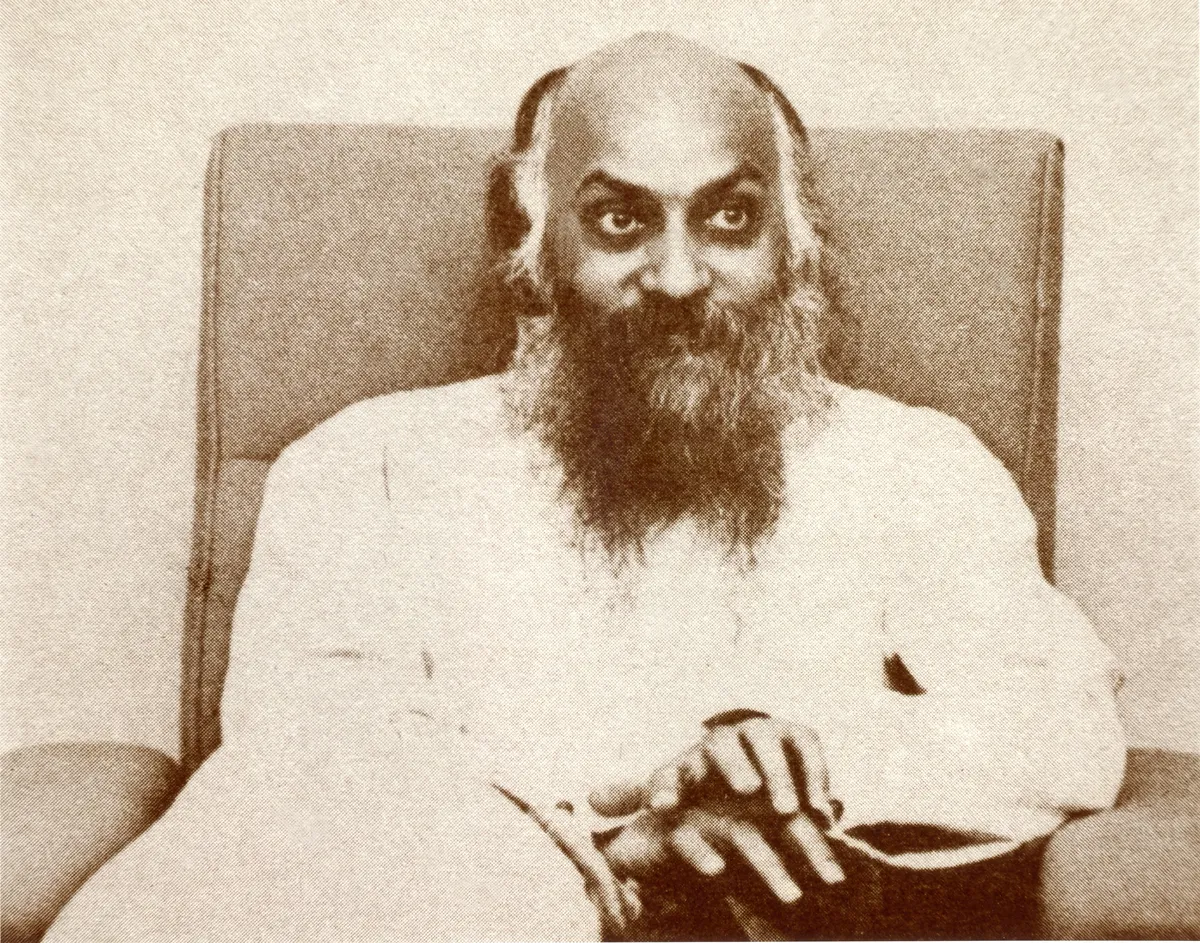
Explore Osho’s teachings across key topics such as meditation, love, ego, and awareness. Each topic contains structured questions, quotes, and insights derived from discourses.
In the harmonious union of male and female energies, a transformative balance emerges, reflecting the androgynous essence of Brahman, where one transcends gender duality and discovers an inner wholeness, embodying both and neither in a state of pure being.
In the embrace of vulnerability, tears become a sacred expression of innocence and gratitude, cleansing the heart and mind; they invite us to rejoice in our raw emotions, deepening joy, washing away sadness, and revealing the divine within.
In the dance of energy through the six chakras, each embodies a cycle of wakefulness and rest, while the seventh, Sahasrar, transcends this duality, embodying pure awareness; thus, the yogi awakens to a profound stillness, experiencing deeper, more tranquil states of being.
In the dance of existence, memories neither confine nor define us; rather, they serve as a reservoir of experiences, allowing us to engage with each moment anew while drawing on the wisdom of the past, much like Osho's vision of a spontaneous, vibrant life.
Osho's admiration for Saint Francis of Assisi resonates deeply, reflecting a profound respect for the purity of Francis’s spirit, inviting seekers to embrace and be inspired by those whose lives authentically embody sincerity and spirituality.
In the realm of spiritual intercourse, lovers transcend mere physicality, merging in consciousness to create a profound union; this sacred connection, exemplified by Krishna's divine conception, illuminates the transformative power of love infused with awareness, reverence, and unity.
Embracing monk-like robes as the epitome of scientific attire, Osho illustrates that true freedom and ease arise not from external labels, but from a conscious choice of garments that reflect the inner essence of spirituality and identity.
In the dance of masculine nature, women embodying a potent male essence often find themselves in the paradox of dominance, yearning for a partner who embodies strength, yet struggling against their innate feminine depth, leading to a cycle of dissatisfaction and tension.
Osho profoundly contrasts drugs and meditation, asserting that while drugs plunge one into unconsciousness and numb pain, meditation awakens the spirit, cultivating bliss; thus, endorsing drugs would betray the very essence of his path toward inner awakening.
Life values, ever-evolving and shaped by the passage of time, remind us that yesterday's truths may not hold today; embracing the present as sacred allows us to shed inherited burdens and adapt fluidly to change, which is the essence of a vibrant existence.
Feminine energy, akin to the vast, deep darkness that nurtures and restores, embodies the earth’s calming essence, inviting introspection and balance; in this harmonious dance between light and dark, we discover the profound unity that Osho so eloquently celebrated.
In the spirit of Osho, new beginnings flourish when individuals embrace their shared experiences without succumbing to rigid structures, fostering a vibrant unity that celebrates freedom and individuality, while vigilantly guarding against the perils of institutionalization.
Stinginess stems from a deep-seated fear of confronting our inherent emptiness, leading us to hoard wealth, power, and knowledge in a futile quest for fulfillment; true transformation arises when we embrace this emptiness, unveiling it as the divine essence of our being.
In the spirit of Osho's teachings, coordinators serve as vital catalysts in the dynamic journey of sannyas, fostering open dialogue and embracing diverse perspectives, while guiding the group toward a shared understanding that honors reason over dogma and tempers ego in collective decision-making.
In the spirit of Osho's insights, preaching often arises from a deep-seated fear of one's own ignorance, as individuals cling to borrowed wisdom, seeking the comfort of false certainty while masking their true journey toward self-discovery. This performative display serves to bolster the ego, leading to unsolicited advice that disregards the unique context of each listener.
In the realm of meditation, the act of visualization often disrupts the profound silence essential for connecting with one's true essence, as any image or thought merely reflects what is already known; instead, one should embrace a vigilant detachment, allowing images to drift away while sinking deeper into the vastness of existence.
In the dance of existence, Osho illuminates that the distinction between good and evil emerges from values rather than appearances; true goodness nurtures freedom and potential, while evil thrives on control and the illusion of promised liberation.
Osho illuminates the paradox of the inferiority complex, revealing that it often springs from an unacknowledged superiority complex; when our grandiose self-image crumbles under the weight of reality, the chasm between who we think we are and who we truly are breeds a profound sense of worthlessness.
Pativratā transcends mere social role, embodying a complex interplay of power and virtue, where a wife's commitment to her husband's moral discipline—through fasting and vows—reveals the subtle dynamics of freedom and control reminiscent of Osho's exploration of human relationships.
In the spirit of Osho's insights, the Jain tradition, having once overflowed with love, became arid as later generations, mistaking doctrine for depth, severed their ties to love itself, forgetting that true realization blooms from within, not from rigid austerity.
Embracing the essence of Osho's wisdom, true intelligence blossoms not from borrowed concepts but from the richness of direct experience; it is in living authentically that we awaken our inner truth, transcending the confines of mere intellectualism.
In the spirit of Osho's teachings on authenticity, the destruction of the Charvaka corpus reveals how the threat of true skepticism can unsettle those who cling to fragile theism, compelling them to silence the very doubts that could lead to genuine faith.
Embracing the essence of impermanence reveals that only change endures, as all forms, identities, and beliefs ebb and flow; true wisdom lies in flowing with life's river, finding ease in witnessing transformation without clinging.
In the spirit of Osho's teachings, prana-pratishtha embodies the reawakening of a sacred bond, transforming an image into a vibrant conduit of presence through sacred rites and the subtle recognition of a realized adept, ensuring that a true temple, alive and resonant, cannot be diminished.
Don't have an account? Sign up