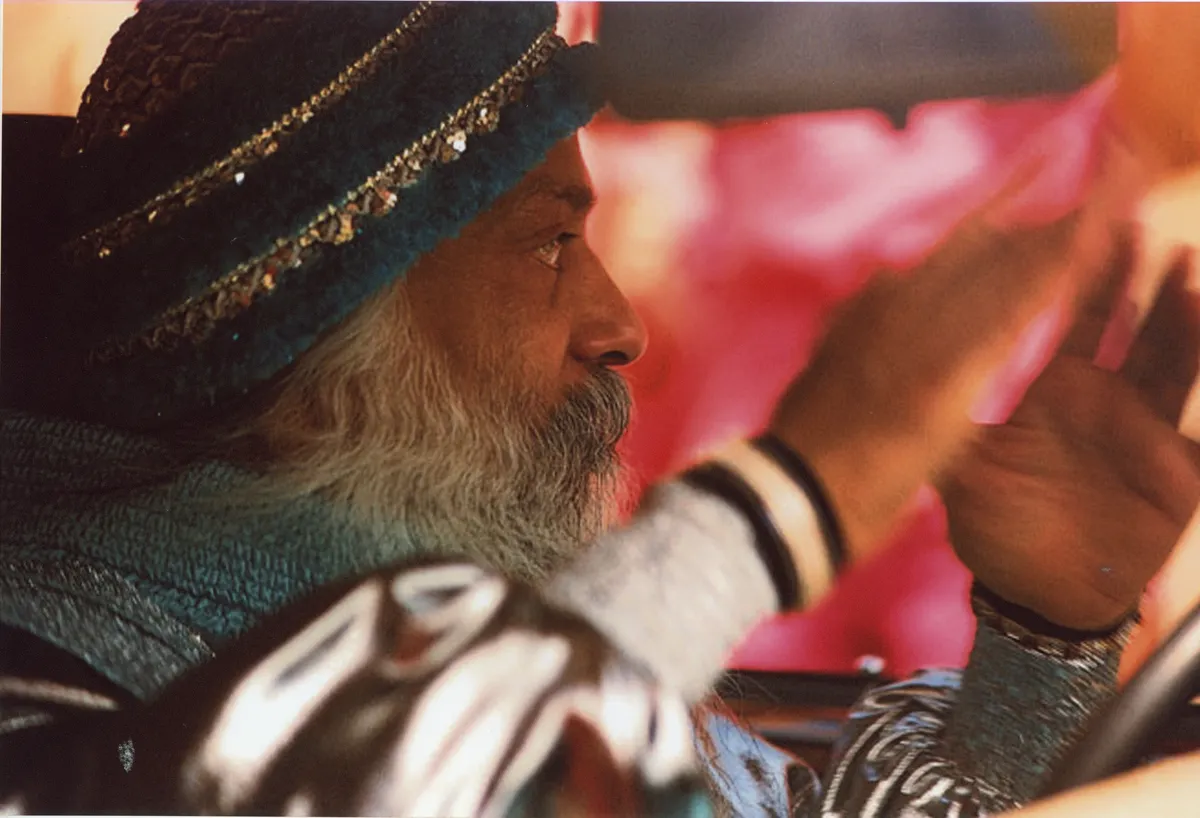
Explore Osho’s teachings across key topics such as meditation, love, ego, and awareness. Each topic contains structured questions, quotes, and insights derived from discourses.
In the essence of Osho's wisdom, true spiritual practice transcends the pursuit of outcomes, revealing that when the desire for results fades, one discovers the profound simplicity and freedom of pure awareness, untouched by expectation.
The allure of the devil emerges from centuries of repressing the darker, destructive aspect of the divine, a shadow cast by the one-dimensional portrayal of God in Christianity; embracing the full spectrum of existence—creation and destruction, light and dark—reveals that both are integral to the divine, dispelling Satan's seductive glamour.
In the dance of existence, the essence lies not in the dichotomy of marketplace and forest, but in the purity of choice; true freedom emerges through choiceless awareness, where surrender transforms every decision into a spontaneous embrace of life’s wonder.
In the throes of war, the surge of collective intensity and thrill offers a stark contrast to the inner emptiness that often drives individuals toward suicide and crime, revealing how shared experience can dissolve personal despair.
Osho invites us to recognize that knowing is a deeply personal journey, shaped by the soul's unique essence; thus, each encounter—be it a scientist, poet, or painter—reveals not an objective truth, but a reflection of individual consciousness, forever elusive and beautifully distinct.
Heaven and hell reside within us; where complete fearlessness embodies heaven and overwhelming fear defines hell, liberation blooms through direct engagement with life—embracing every sensation and experience fully until courage triumphs over craving.
Osho illuminates the idea that understanding flourishes in the embrace of opposition, where the friction of contrasts sharpens our awareness, revealing truths that remain obscured without the dynamic interplay of light and shadow, joy and sorrow.
Osho illuminates how intolerance toward other religions springs from childhood conditioning that binds us to rigid identities; by recognizing this hypnotic grip and embracing our shared humanity, we can dissolve hostility and celebrate the beauty of difference.
Nudity, as envisioned by Osho, transcends mere exposure, dissolving societal conditioning to reveal our authentic selves, yet in a world bound by practical constraints, the choice to don clothing becomes a means to nurture inner nakedness amidst external limitations.
Neurosis flourishes in the chaos of an overloaded mind, where unlearned lessons compel us to repeat past mistakes; true healing lies in harmonizing action with stillness, thought with meditation, allowing us to inwardly digest experiences and shed what no longer serves us.
Totality emerges not from extremes but from a harmonious balance, where the dissolution of opposites—love and hate—gives rise to compassion, allowing an undivided awareness to flourish in its wholeness without leaning toward any duality.
In the profound silence of the void, where words and thoughts dissolve into futility, one finds liberation not through method, but by ceasing to pedal against the current, allowing the mind’s momentum to unravel and reveal effortless openness.
Osho reflects on Buddha's six years of austerity as a paradox where relentless striving, though ultimately futile, cultivates the readiness to surrender, revealing that true enlightenment blossoms in the stillness of profound cessation rather than in mere effort.
When the heart resonates with the presence of a master in satsang, tears emerge not from helplessness but as a sacred expression—an innocent prayer that signifies the awakening of love and bliss, akin to a refreshing rain falling from the clouds of longing.
In the dance of existence, where we are but rays of one sun, giving emerges as the sacred flow from the ultimate source, inviting us to shed the ego's veil and embrace the boundless abundance that replenishes the soul.
Osho insightfully reveals that frustration stems from our expectations, which, when clung to, stifle the vibrancy of love, work, and spirituality; by embracing a playful approach to life without demands, we unlock the door to fulfillment and bliss.
While psychoanalysis can provide a foundation by alleviating tensions and offering insights, it merely aligns the mind with societal norms; true self-discovery, as Osho suggests, emerges through meditation, which elevates us from the ordinary to the authentic realm of being.
In the transcendence of good and bad lies a harmonious alignment with existence, where the doer dissolves into the divine rhythm of being, allowing actions to flow effortlessly and innocently, untainted by the dualities of heaven and hell.
Words hold profound power when they emerge from deep, meditative awareness, resonating with the 'perfume of the beyond'; thus, while silence may be elusive for many, let your speech be a precise, essential expression of presence rather than noise.
In the essence of Rajneeshism, what remains is not a structured religion but a vibrant fragrance of freedom, love, and awareness—an ineffable presence that transcends dogma, inviting each individual to savor and embody joy in their own unique journey.
Osho beautifully illuminates the paradox of abundance, revealing that true wealth lies not in hoarding but in sharing; as we lavishly give our joy, love, and insights, we cultivate a garden of connection, where our own delight flourishes in the joy of others.
Hell exists not as a distant realm but as a psychological state shaped by fear and greed—forces wielded by those in power. In this inner landscape, anger and anxiety create turmoil, while love offers liberation; true spirituality guides us to moksha, a profound freedom from these chains.
In the tapestry of existence, as Osho might suggest, the arrival of three distinct souls—a French model, a Rajneesh sannyasin, and a Jain nun—reveals storytelling's power to illuminate transformation over denial, where liberation dances with the sacredness of experience.
A long beard holds no spiritual weight, as it is but a bodily adornment; true essence transcends form, echoing the Zen koan about Bodhidharma, urging us to see beyond our projections and connect with the witness that resides within.
Don't have an account? Sign up