
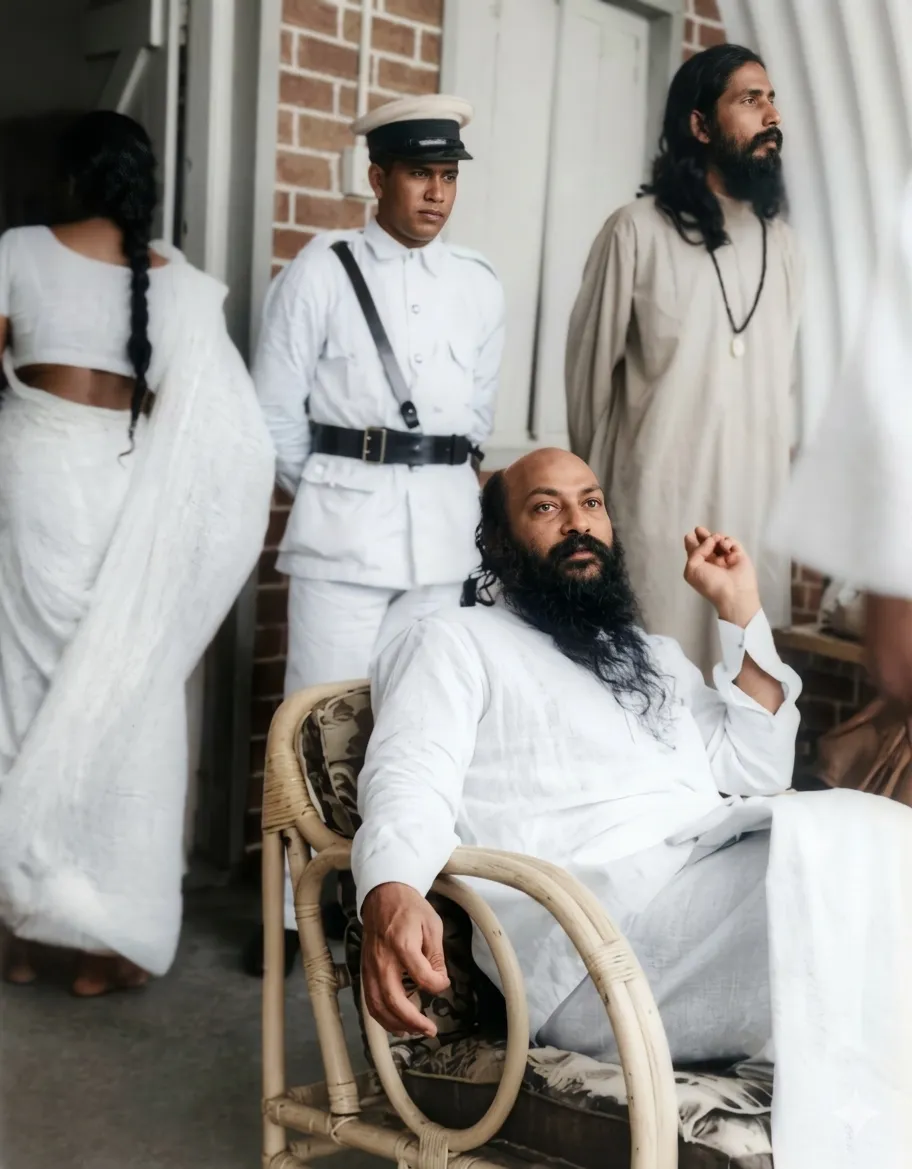
Understand yourself and stay open so right actions grow naturally, instead of forcing yourself with the ego’s rules.
From the Discourses
Passages where Osho speaks to this question — each links to the complete discourse.
You said that those who want to attain need discipline and effort at first. Is that not a thing of the ego, and will it not become more strengthened? I have always been hard on myself and missed much of the joys of life. Please explain the difference between discipline and control.
A student learns the word, the dead word; a disciple just learns the secrets of understanding, and when he has his own understanding, he goes on his own way. He pays his respect to Lao Tzu and says: Now I'm ready, I'm grateful, I go my own way. He will always be grateful to Lao Tzu -- and this is the paradox: people who have been deadly following Jesus, Buddha or Mohammed can never forgive them. If you miss your joys of life because of them how can you forgive them? How can you really be in gratitude? In fact you are deeply in anger. If you come across them you will kill them, you will murder them because these are the people who have forced you into a controlled life; these are the people who didn't allow you to live as you would have liked to live; these are…
For example you look into anger: one time, ten times, a hundred times you look into it. Now, the ordinary decision is to decide that because anger brings misery to you and to others, it is horrible, nightmarish, creates anguish, guilt, disturbs you, is of no use, you will force yourself not to be angry. Next time it comes. you will force it into the stomach, repress it. You will breathe in a shallow way and control yourself... will contract yourself so that you can control yourself. This is the ordinary way of disciplining oneself -- whether it concerns anger or greed or whatsoever. This is a dangerous thing to do. This is how the whole humanity has become a madhouse.
Question: 5. TAMING THE BULL THE WHIP AND ROPE ARE NECESSARY, ELSE HE MIGHT STRAY OFF DOWN SOME DUSTY ROAD. BEING WELL TRAINED, HE BECOMES NATURALLY GENTLE. THEN, UNFETTERED, HE OBEYS HIS MASTER. COMMENT: WHEN ONE THOUGHT ARISES, ANOTHER THOUGHT FOLLOWS. WHEN THE FIRST THOUGHT SPRINGS FROM ENLIGHTENMENT, ALL SUBSEQUENT THOUGHTS ARE TRUE. THROUGH DELUSION, ONE MAKES EVERYTHING UNTRUE. DELUSION IS NOT CAUSED BY OBJECTIVITY; IT IS THE RESULT OF SUBJECTIVITY. HOLD THE NOSE RING TIGHT AND DO NOT ALLOW EVEN A DOUBT. 6. RIDING THE BULL HOME MOUNTING THE BULL, SLOWLY I RETURN HOMEWARD. THE VOICE OF MY FLUTE INTONES THROUGH THE EVENING. MEASURING WITH HAND-BEATS THE PULSATING HARMONY, I DIRECT THE ENDLESS RHYTHM. WHOEVER HEARS THIS MELODY WILL JOIN ME. COMMENT: THIS STRUGGLE IS OVER; GAIN AND LOSS ARE ASSIMILATED. I SING THE SONG OF THE VILLAGE WOODSMAN, AND PLAY THE TUNES OF THE CHILDREN.
Beloved Osho, is sitting silently, doing nothing, watching the grass grow -- and maybe falling asleep -- really enough? I once heard you say about freud that he probably was not able to create himself. Or I heard you say that we create our own lives, our own hells and miseries, and that we are responsible. If sitting silently really is enough, where does the word `effort' or `discipline' come in? Then, if we are doing something, what are we `doing'? Can we do anything at all, or am I dreaming that I am doing something? Somewhere I am so tired of it. But then also am I going to end up in a stat
The people who have been exploiting humanity have created great philosophies, theologies, disciplines. Without the support of all this philosophical, theological, religious framework, it would be impossible to create the false personality. The word `discipline' comes from these people, and the word `effort' also comes from these people. They have created such a world emphasizing work, effort, endeavor, struggle, achievement, that they have turned almost everybody into a workaholic -- which is worse than an alcoholic, because the alcoholic at least feels that he is doing something wrong. The workaholic feels he is doing the right thing, and those who are not workaholics are lazy people, worthless; they don't have any right even to exist, because they are a burden. They have destroyed beautiful words, given them new connotations, new meanings. For example, `discipline'. Discipline does not mean what you have heard that it means. The word `discipline' comes from…
Beloved master, what is the relationship between mastery over the self and control?
Nasruddin said, "I am a poor sinner, my dream was very ordinary -- very ordinary, not worth even telling. But because you insist and because we have agreed, I will tell you. In my sleep God appeared and he said, 'You fool! What are you doing? Eat the halva!' So I have eaten it -- because how can I deny his order? There is no halva left now!" Self-control gives you the subtlest ego. Self-control has more self in it than anything else. But self-mastery is a totally different phenomenon; it has no self in it. Control is cultivated, practiced; with great effort you have to manage it. It is a long struggle, then you arrive at it. Mastery is not a cultivated thing, it is not to be practiced. Mastery is nothing but understanding. It is not control at all. For example, you can control anger, you can repress…