
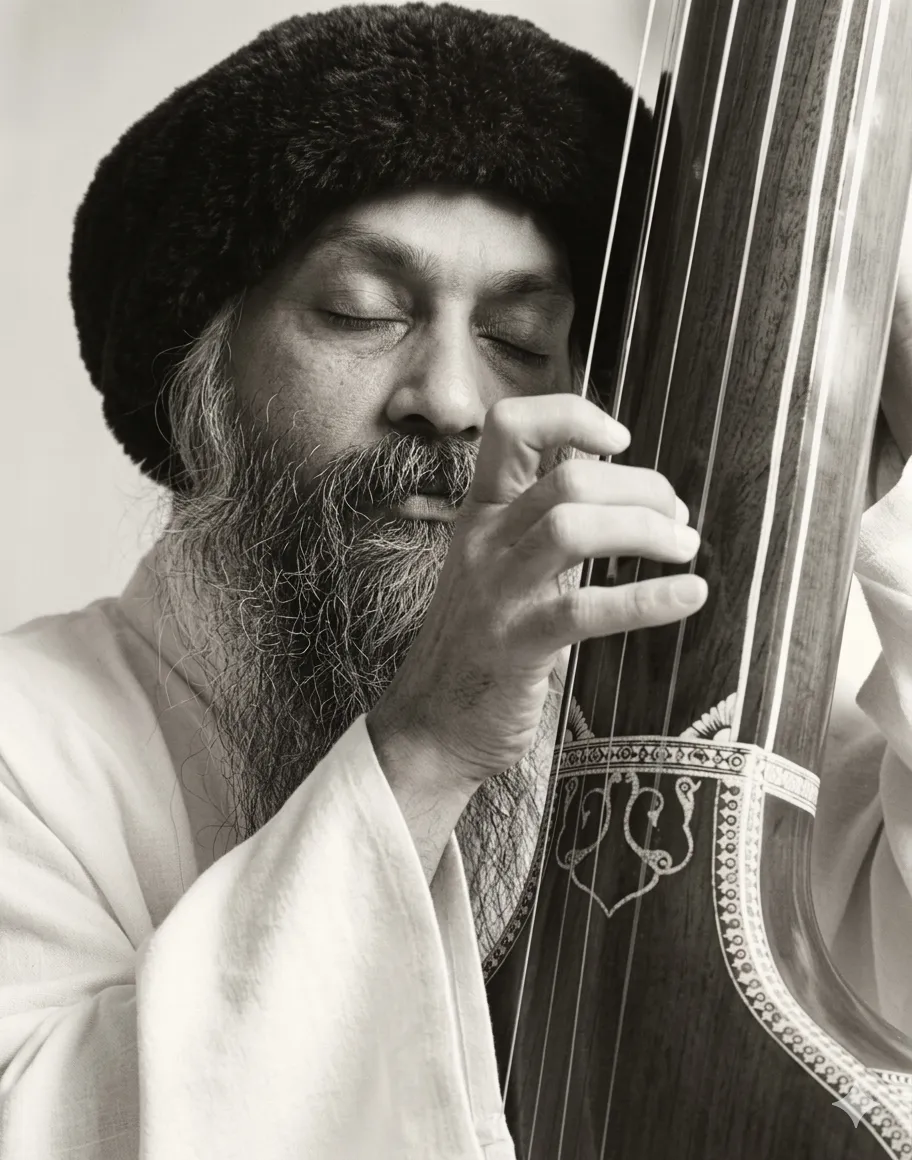
If someone says they’re a special divine person above others, that’s ego; true spirituality drops the “I” and sees the same divinity in everyone.
From the Discourses
Passages where Osho speaks to this question — each links to the complete discourse.
Osho, you said that it is ego, isn’t it, when someone takes oneself to be an avatar?
Yes, that is the ultimate, extreme form of ego. Otherwise, there is no reason for it. The moment a person attains perfect samadhi, he will not even know “I am,” let alone that I am separate from you. He will not even know that he is separate from you. But things are like this. Claims are very strange. Rama Tirtha went to America—a sadhu from Punjab. He became very renowned; his writings became very renowned; his lectures were quite remarkable, and he spoke on Vedanta there with great passion. He returned to India and stayed in Kashi. There, a pandit remarked, “He keeps harping on Vedanta, and he can’t even speak two words of Sanskrit!” He certainly did not know Sanskrit; he had been educated in Persian. At just this remark he became so enraged...! For fifteen years no one had seen anger in Rama Tirtha. People believed he had…
What is the ego?
The MacGregor of Scotland were all big, husky, country men. They knew the wilds of their own surroundings, but had little use for the finer aspects of civilization. When a problem arose with respect to their land rights, the head of the clan -- known as The MacGregor -- sent to the university in Edinburgh for an attorney. The city lawyer was pale and slight next to the clansmen, but he had the expertise they needed, so he was generously thanked and invited to share the MacGregor' gargantuan dinner. Entering the huge dining hall, the lawyer was pointed to one end of the table overflowing with food. The lawyer, not wanting to usurp the master's place at the head of the table, said, "Oh, sir, I could not sit in the chair of The MacGregor himself." "You may sit," The MacGregor assured him, "since it is he himself who invites…
Osho, whenever someone tells you that such-and-such is happening in meditation and you say, “Good, that is auspicious,” the ego grows even more. And at all other times the ego keeps raising its head. Even while writing this question the ego thought a lot about it, and still...?
And I tell you: only the shadow remains with you; you have lost the soul. Imagine what your plight must be! Losing a shadow caused such trouble; you have lost the soul and kept only the shadow. But perhaps you don’t notice much trouble because those among whom you live have also lost their souls. The truth is, if you gain your soul, the trouble begins—those without souls become your enemies. Otherwise, why would people stone Mahavira, insult Buddha, crucify Mansoor, poison Socrates, kill Jesus? The crowd is without soul. Whenever a soul-full person stands among them, they become very uneasy. What foolishness! They should learn from the soulful how to become soulful. But seeing a soulful person, they get anxious. They say, “His presence proves we failed to become what we should have become. We lost.” Anxiety arises: “Our life is wasted. Remove this man; his presence is a…
Is it possible to be conscious of enlightenment, and be enlightened? Can the thought of being enlightened create ego in one? Kindly explain.
THE first thing to be understood is: what is ego. The ego is not very substantial. In fact it is not. It is just an idea, a substitute without which it will be difficult for you to live. Because you don't know who you are, you have to create a certain idea about yourself; otherwise you will simply go mad. You have to fix some indicators so that you can know, "Yes, this is me." I have heard, once a fool came to a big city. He stayed in a dharmasala. There were many people there; he had never slept before with so many people. He was a little worried and scared. The fear was that when he will fall asleep, in the morning when he will be awake again, how will he recognize that he is really himself. So many people. He had always slept in his room, alone,…
While recounting the characteristics of a person who is established in the tao, lao tzu says that such a person makes no declaration about himself. But mansoor said, "analhaq." the rishis of the upanishad said, "aham brahmasmi". Jesus said, "I am the son of god." meher baba said, "I am the avatar." how are these declarations connected with lao tzu's above mentioned words?
No man is a criterion for anyone else in this world. One who thinks he is commits a grave violence; he is a criminal. It is very possible that what seems foolishness to me may be giving immense joy to another, and what seems the ultimate knowledge to me may seem foolish to another. The other is of no consequence in this matter; my own self is what matters. I have to seek out the way that leads me to bliss, no matter how foolish it seems to the rest of the world. Therefore Krishna has said, "One's own nature is best. One should leave the other to his own." But we are forever imposing our religion on others. Those who prefer the language of negation will find Lao Tzu interesting and will understand him. Those who prefer positive language will not understand Lao Tzu. There is no need to.…