
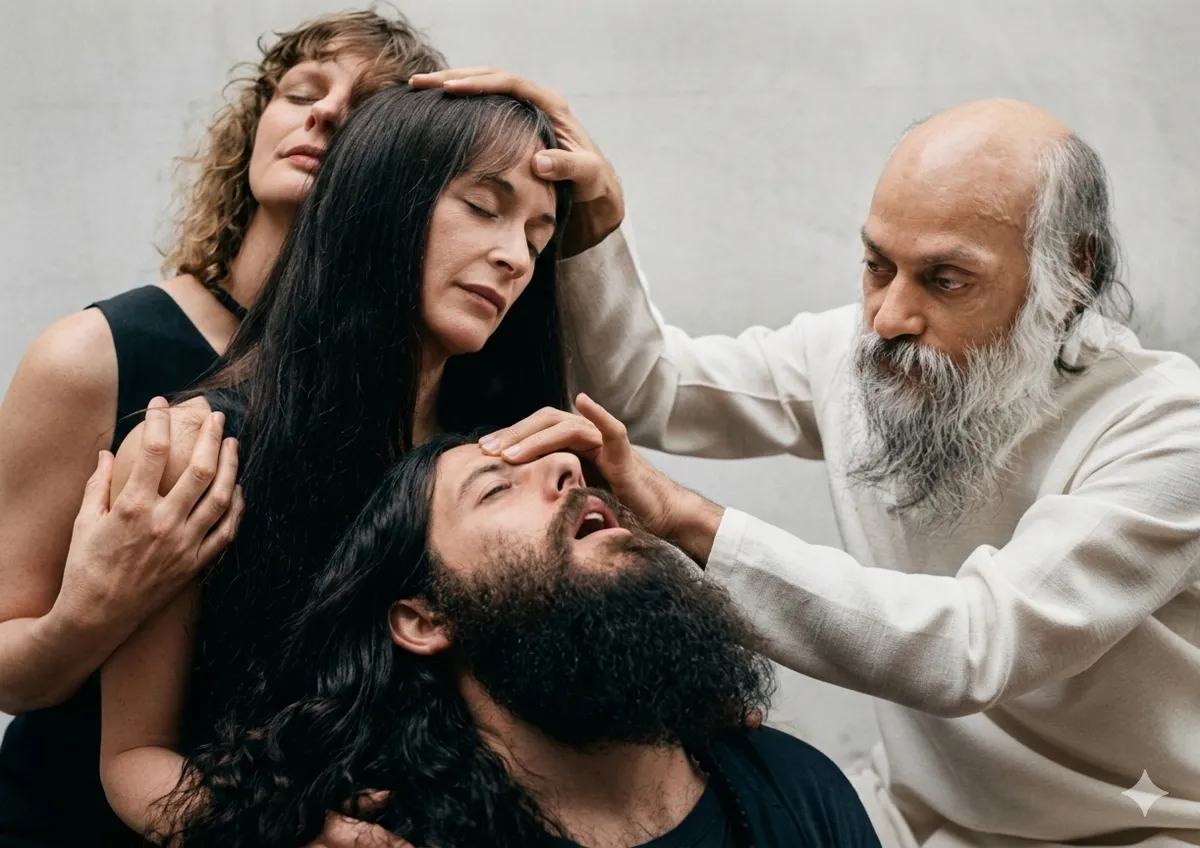
According to Osho, Mahavira calls true manliness—and the essence of Kshatriya dharma—not outer aggression but inner awakening: breaking the slumber of unconsciousness. There is no higher courage than to be aware, to remain wakeful against the mind’s sleep. All other heroism is secondary; awareness alone is the supreme valor and the sole authentic strength.
Real bravery is waking up inside and staying aware, not fighting others.
From the Discourses
Passages where Osho speaks to this question — each links to the complete discourse.
Does Mahavira regard this very awareness as manliness and the Kshatriya dharma, or is there some other manliness too?
Only this. There is no greater manliness than this. There is no manliness greater than breaking the slumber.
Verse (Sanskrit): सूत्र सीह-गय-वसह-मिय-पसु, मारूद-सुरूवहि-मंदरिदुं-मणी। खिदि-उरगंवरसरिसा, परम-पय-विमग्गया साहू।।96।। बुद्धे परिनिव्वुडे चरे, गाम गए नगरे व संजए। संतिमग्गं च बूहए, समयं गोयम! मा पमायए।।97।। ण हु जिणे अज्ज दिस्सई, बहुमए दिस्सई मग्गदेसिए। संपइ नेयाउए पहे, समयं गोयम! मा पमायए।।98।। भावो हि पढमलिंगं, ण दव्वलिंगं च जाण परम त्थं। भावो कारणभूदो, गुणदोसाणं जिणा बिंति।।99।। भावविसुद्धिणिमित्तं, बाहिरगंथस्स कीरए चाओ। बाहिरचाओ विहलो, अब्भंतरगंथजुत्तस्स।।100।। देहादिसंगहिओ, माणकसाएहिं सयलपरिचत्तो। अप्पा अप्पमि रओ, स भावलिंगी हवे साहू।।101।। Transliteration: sūtra sīha-gaya-vasaha-miya-pasu, mārūda-surūvahi-maṃdariduṃ-maṇī| khidi-uragaṃvarasarisā, parama-paya-vimaggayā sāhū||96|| buddhe parinivvuḍe care, gāma gae nagare va saṃjae| saṃtimaggaṃ ca būhae, samayaṃ goyama! mā pamāyae||97|| ṇa hu jiṇe ajja dissaī, bahumae dissaī maggadesie| saṃpai neyāue pahe, samayaṃ goyama!
Innumerable shapes arise and dissolve, yet it remains without shape. So—among men I am Purushatva! In this sutra he says other things too, precious things. He says: I am the virya of the valiant—free of vasana, free of kama. I am the strength of the strong—without lust, without craving. I am valor—free of desiring. A man, sunk in vasana, can perform great acts of bravery. But Krishna says: the virya, the seed-energy that arises within man, I am that only when there is no kama, no vasana there. Let me remind you. Mahavira’s birth-name was Vardhaman. Later he was given the name Mahavira—“great warrior”—because of the very courage Krishna is speaking of. Mahavira fought with no one. Far from fighting, he placed his feet so softly that not even an ant be crushed. No rivalry with anyone, no competition with anyone. What kind of courage is this?
He came, of His own will He came. And understand this too. Wherever you are, you are by your own will. If you are in the world, it is by your own will. The Divine within you chose this. There is nothing to be troubled about. You are not here against your will. You are here by your own cause, your own longing. And this is great good fortune—that it is not against your will. Because the day you will, that very day the door of home is open—you can return. As long as you wish, you can go far. The very day you decide, that very day the return will begin. Brahmin culture is the tale of the Divine’s expansion. Shramana culture is the tale of the Divine’s return home. Surely, the one who had grown tired in aloneness will be tired in the crowd as well.
Osho, in this connection someone has asked: Mahavira was a champion of equality, yet why was the order of nuns neglected in his sangha?
The entire mind of woman is poetic—of dreams, of imagination. It is passive: it cannot do, it can only imagine. There are reasons for this too. In truth, a poet means a passive mind. He can sit and imagine; he cannot do anything. He can build palaces—but only in imagination! Palaces that can be built sitting—those he can build. The ones that require standing up, breaking stones, collecting bricks—that is not his capacity. He can build palaces of words, because that can be done sitting. More interesting still: in science one has to do—one discovers; the masculine mind discovers, uncovers what is covered. The poet does not discover; he simply sits silently. In fact, when a great poem descends into him, he is utterly passive, totally feminine. Something descends into him. Rabindranath says, “What did I sing? When I am not, O God, you sing through me. When I am…