
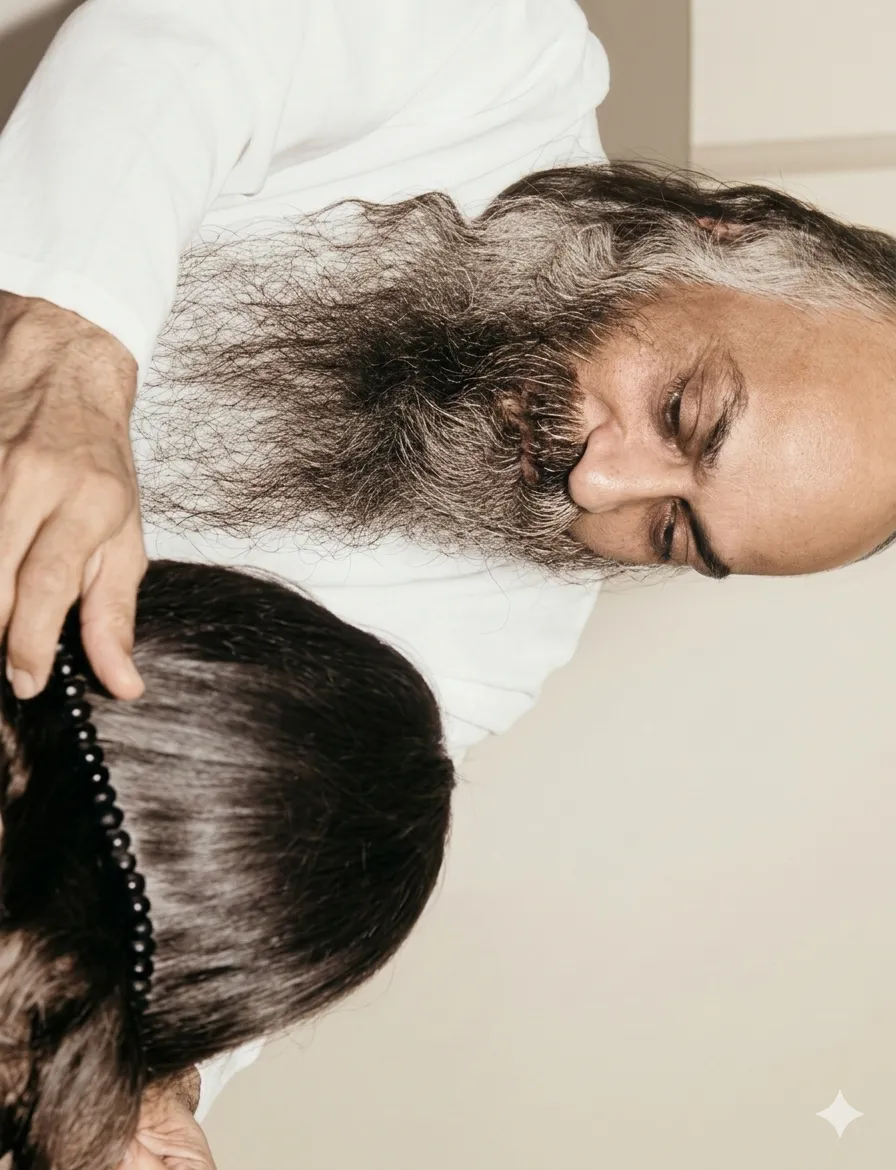
According to Osho, enlightened beings withhold nothing; the very nature of Truth is inexpressible. Masters wish to give all, yet words carry only shells while meaning stays behind. What seems ‘secret’ flowers only in silent communion—when a receptive disciple meets the Master’s consciousness. Scriptures can hint, but realization is a wordless transmission that births the disciple anew.
Masters aren’t hiding anything; truth is too deep for words and is caught from their presence when you’re ready.
From the Discourses
Passages where Osho speaks to this question — each links to the complete discourse.
Is it true that the enlightened and the Masters do not reveal all knowledge in the scriptures they speak or write? Are some precious keys kept hidden, to be told in secrecy to deserving disciples?
No, the enlightened one hides nothing; but it is the very nature of truth to remain hidden. The sage wants to tell everything, yet even with all his wanting he cannot. Truth does not come into expression; it does not lend itself to articulation. Bind it, bind it—words come out, but the meaning is left behind. Therefore Lao Tzu says: that which can be said is not the Dharma, not the Truth, not the Tao. That which cannot be said—that alone is the Truth. So the Master wants to give everything. That a Master would be miserly in giving—this is not to be believed. Even if you are not yet a worthy vessel, he wants to pour himself out. But there is something which, even when given, cannot be given. It happens only when you become a vessel. No one gives, no one takes—it happens. Let me remind you again…
Why, Osho, isn't knowledge of the scriptures helpful in finding the truth?
Maneeshi, KNOWLEDGE IS NOT YOURS, THAT'S WHY. It is borrowed. And can you borrow truth? Truth is untransferable; nobody can give it to you. Not even an alive Master can transmit it to you. You can learn, but it cannot be taught. So what to say about dead scriptures, howsoever holy they may be? They must have come from some original source; some Master, someone awakened must have been at the very source of them -- but now they are only words. They are only words about truth, information about truth. To be with Krishna is a totally different matter from reading the Bhagavad Gita. To be with Mohammed, attuned, in deep harmony, overlapping with his being, allowing his being to stir and move your heart, is one thing. And just to read the Koran is a far, faraway cry; it is an echo in the mountains. It is not…
Question: BELOVED OSHO, BEFORE SEEKING YOU'VE INDICATED YOU WANT ME TO INSTRUCT YOU BY LETTER IN THE DIRECT ESSENTIALS. THIS VERY THOUGHT OF SEEKING INSTRUCTION IN THE DIRECT ESSENTIALS HAS ALREADY STUCK YOUR HEAD INTO A BOWL OF GLUE. THOUGH I SHOULDN'T ADD ANOTHER LAYER OF FROST TO THE SNOW, NEVERTHELESS WHERE THERE'S A QUESTION IT SHOULDN'T GO UNANSWERED. I ASK YOU TO ABANDON AT ONCE ALL THE JOY YOU'VE EVER FELT IN READING THE WORDS OF THE SCRIPTURES YOURSELF OR WHEN BEING AROUSED AND INSTRUCTED BY OTHERS. BE TOTALLY WITHOUT KNOWLEDGE AND UNDERSTANDING, AS BEFORE, LIKE A THREE-YEAR-OLD CHILD. THOUGH THE INNATE CONSCIOUSNESS IS THERE, IT DOESN'T OPERATE. THEN CONTEMPLATE WHAT'S THERE BEFORE THE THOUGHT OF SEEKING THE DIRECT ESSENTIALS ARISES: OBSERVE AND OBSERVE.
Beloved Osho, is it true that whatsoever the master says or does is simply a device to transform the disciple?
Gautam Buddha speaks; the same words have been repeated for twenty-five centuries by thousands of Buddhist monks, but those same words don't create the same impact. What is missing? If it was only the words, then whether Buddha speaks or Tom, Dick, Harry; whoever speaks, it makes no difference -- just a gramophone record, "His Master's Voice" -- the master is not there. But why don't those words create the same ringing of bells in your heart? When Jesus spoke, or Zarathustra spoke, the words were the same. Every day you use those words, but unless you have the experience your words are empty -- they may be scholarly, they may be that of a great pundit, they may be of a great rabbi. This word `rabbi' always reminds me of rubbish; I cannot get rid of that. They know the scriptures. Sometimes perhaps they are better orators than Krishna,…
Osho, why did Buddha not speak about chakras and kundalini?
You ask why Buddha did not speak about chakras and kundalini? In truth, not everything Buddha spoke was recorded. Do you see? That is the big problem. And of what was recorded, much was deliberately left out. What Buddha said was written down five hundred years after his death; it was not recorded at the time. For five hundred years the monks who held that knowledge refused to put it into writing. After five centuries a moment came when those monks who knew began to disappear. Then a great council was convened, and it was decided: Now it is difficult—if these few remaining monks are lost, the whole treasure of knowledge will vanish. So it should be written down. As long as it could be preserved in memory, they stubbornly refused to write it. This happened with Jesus too, and with Mahavira. And it was necessary; there were reasons. These…