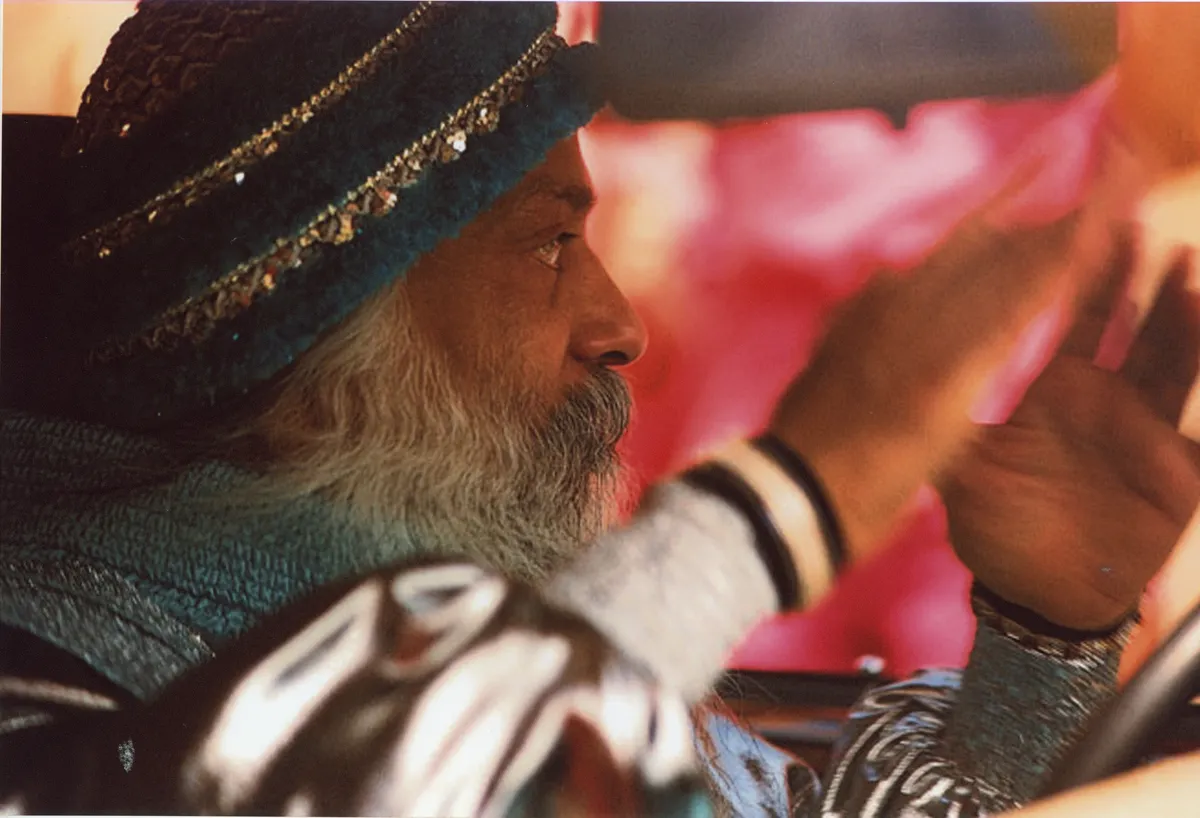
Explore Osho’s teachings across key topics such as meditation, love, ego, and awareness. Each topic contains structured questions, quotes, and insights derived from discourses.
In the wisdom of Osho, the 'gap' emerges when we take the present for granted, drifting in complacency until absence ignites urgency, revealing the chasm between being awake to opportunity and the chaos of delayed action.
Gachchhamis flourish when approached with the vibrant spirit of living choices rather than mere obligations, serving as self-commitments that awaken our consciousness; it is our heartfelt presence and childlike curiosity that infuse each recitation with life, transforming it into a conscious choice for awareness, echoing Osho's celebration of authentic existence.
In the spirit of Osho, the names Boring, Fossil, and Grim Drive reflect a collective stagnation, yet existence invites joyful souls to transform this deadness into vibrant life, renaming reality with laughter, love, and ecstasy, turning the mundane into the miraculous.
In the graceful dance of Hanumana, a disciplined devotion unfolds, echoing the order of Rama’s command, yet it stands in stark contrast to the unrestrained ecstasy celebrated by Osho, revealing the tension between structured spirituality and the liberating abandon of true transcendence.
In the realm of universal consciousness, love flourishes in its most liberated form, transcending ego and time; as attachments dissolve, what remains is a profound essence, allowing only those pure, grateful connections to resonate in true recognition.
In the spirit of Osho, when the call of sleep beckons during a discourse on dreams, surrender to that need without guilt; embrace your authenticity while honoring the shared space, allowing both your truth and sensitivity to flourish harmoniously.
In the essence of Vimalkirti, one discovers the profound stillness of nirvana—an exquisite fullness of no-thingness, where the weight of desire and action fades, allowing for a serene merging with existence, echoing Osho's celebration of silent being and the divine trust in the cosmos.
In the shadows of democracy, where power concentrates, the essence of fascism reveals itself as a hidden authoritarianism, a dance of puppetry that, much like a mirage, masks the inevitable drift from freedom to control, echoing the wisdom of Osho on the nature of power and corruption.
In the dance of consciousness, restraint and imposed celibacy become mere crutches for the blind; true awareness blossoms when we transcend artificial controls, allowing spontaneous order and natural discipline to emerge from within.
Embodying Osho's wisdom, the notion of 'not taking support' emphasizes that the inner journey is inherently solitary; even as a teacher offers pointers, true liberation arises only when one sheds all dependencies, including the guidance itself, to discover the truth within.
In the midst of cataclysm, the age-old human drama unfolds anew—wars, politics, and greed, all intensified by the ego's desire for significance; rather than succumbing to hysteria, we are invited to turn inward, uncovering the timeless essence that remains unshaken amidst the chaos.
Homesickness embodies a duality: a trivial yearning for familiar discomfort and a deeper, mystical longing for the divine source, echoing Osho's insight that our cells remember a lost wholeness, urging us toward awakening and our true home.
In the vision of Osho, the journey from potential to ultimate is not a linear progression but a profound leap of consciousness where the essence of reality transforms, revealing that the first step is simultaneously the last, as perception shifts from the material to the divine.
In the journey to grasp the authentic AUM, one discovers that its resonance cannot be externally measured; instead, it emerges as an all-encompassing sound from within, dissolving the self and transforming life into a profound rebirth, where past and present intertwine in the cosmic embrace.
In the spirit of Osho's teachings, true compassion flows like nectar, unburdened by expectations; when we share our light and words freely, even if just one soul awakens, it is a profound miracle that transcends the odds.
In the essence of Hari-katha, one discovers a divine narrative flowing through an egoless vessel, akin to music emanating from a hollow flute, where true devotion transcends personal opinion, allowing the Divine to resonate freely, as beautifully illustrated in Krishna’s Gita.
Navigating the psychic stages is an inherent journey, one that unfolds effortlessly, yet through Dynamic Meditation, this evolution can happen so swiftly that it goes unnoticed; only the desire for psychic powers ensnares us, urging us to linger, while true liberation lies in witnessing without attachment.
Prarabdha transcends the illusion of an external destiny, revealing that what we perceive as fate is merely the accumulated momentum of our choices, inviting us to embrace responsibility and reshape our path in the present moment.
The timing of your return rests solely in your hands, for true liberation arises from within; the soul, embracing its boundless freedom, navigates through suffering and turmoil, choosing to return only when it is ready, guided by personal responsibility and awareness.
In the essence of Osho's teachings, the misinterpretation of Buddha's wisdom in Eastern cultures transforms the profound truth of suffering into a passive acceptance, where the allure of outward desires persists, cloaked in a veneer of spirituality that stifles the authentic journey toward inner joy and awakening.
Embracing the essence of Osho's wisdom, true tranquility arises when we transcend the restless identity of the 'doer,' allowing meditation to unveil the watcher within; in this space, action and stillness harmonize, dissolving the ego and inviting effortless flow.
The concept of a prophet, rooted in ego, inevitably gives rise to false prophets who, in their quest for validation, create illusions of truth by projecting their flaws onto others; true spirituality, as Osho suggests, flourishes in the uncharted territory of personal exploration, free from dogma and authority.
Embracing the presence of a living Sadguru is a daring journey that ignites an intense awakening, urging one to soar toward the sun, where the ego and borrowed beliefs cannot endure; in this transformative fire, the essence of existence and divinity unfurls.
In a gathering where the British presence is minimal—“fortunately not many, only three”—Prem Lisa’s reserved nature and sensitivity to humor reveal how deeply national conditioning and judgmental attitudes endure, starkly contrasting with the melting openness Osho invites.
Don't have an account? Sign up