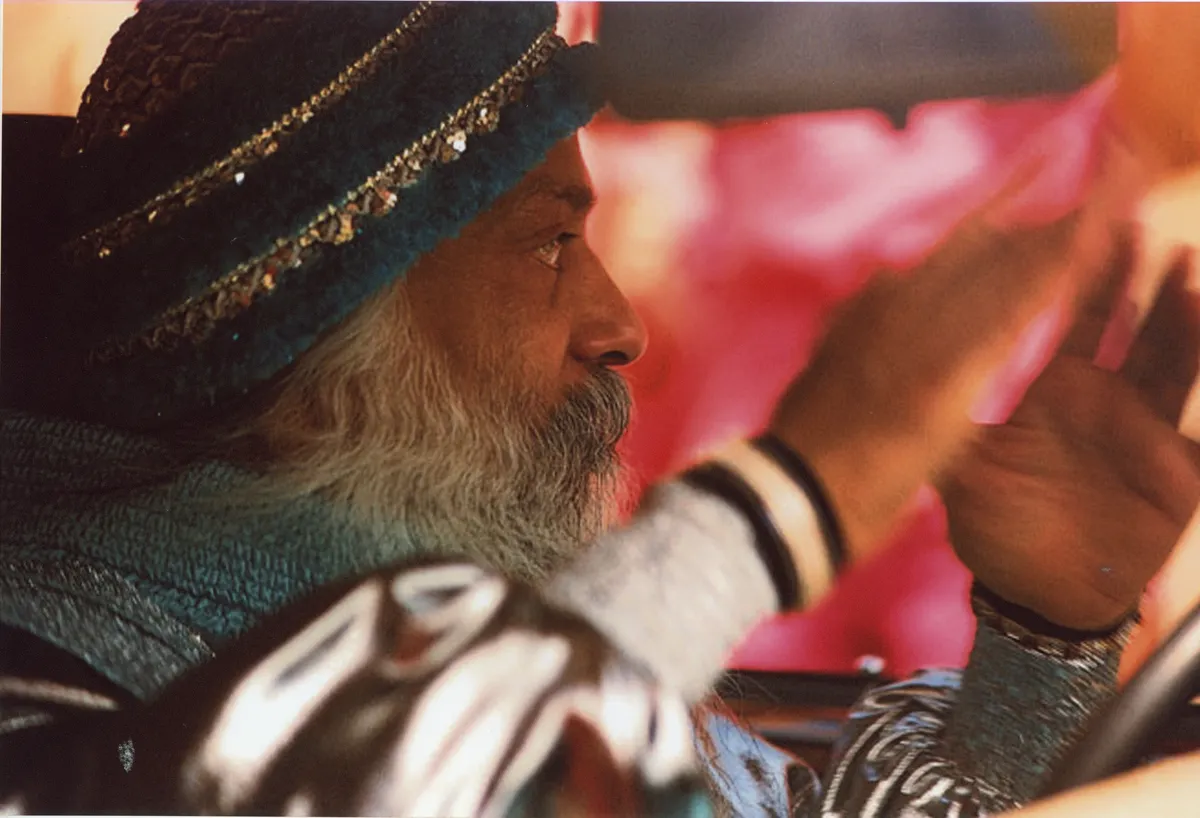
Explore Osho’s teachings across key topics such as meditation, love, ego, and awareness. Each topic contains structured questions, quotes, and insights derived from discourses.
Awakening unfolds through the dance of openness, where embracing the unknown and surrendering to love invites a profound vulnerability; in this surrender, the ego dissolves, paving the way for true intelligence and the joyous celebration of existence.
Osho illuminates the idea that while wealth can soften life's harshness, true happiness emanates from within, transcending material possessions; he draws from his own journey, recognizing that richness enhances life, but genuine joy is independent of external circumstances.
Trust, as Osho suggests, flourishes not in blind acceptance but in the courage to question everything, including the teacher and the teachings, for true spiritual growth arises from personal inquiry and the awakening of one’s own intelligence.
In the dance of existence, the dissolving ego fades into invisibility, while true being finds its rootedness; by embracing the stillness of non-doing, we navigate the dark night of the soul, allowing our deeper essence to emerge with grace.
In the essence of Osho's wisdom, the songs of saints and the words of the enlightened emerge not from a mere experience of bliss but from bliss itself, revealing our true nature as sat-chit-ananda, where the dissolution of the knower leaves only the spontaneous flow of expression—be it silence, song, dance, or stillness.
In the essence of Osho's teachings, true witnessing unfolds not as a means to an end, but as the entirety of the journey itself; by observing our actions, thoughts, and subtle feelings without judgment, we dissolve the mind's insatiable cravings and embrace a profound, living awareness that transcends dogma.
In the essence of Osho's teachings, Buddhism reveals that while love, wealth, fame, and failure flow like a river shaped by external forces, true Buddhahood lies within, an intrinsic state awaiting our remembrance, where awakening unveils the seer beyond the fleeting dreams of existence.
Kundalini sadhana, a dance of the psyche that intertwines the subtle threads of body and mind, serves as a vital springboard, where breath, nourishment, and thought converge, guiding the seeker toward the profound depths of the soul’s spiritual essence.
Sex, while rooted in our animal nature, transcends mere instinct through the awakening of human consciousness; when infused with awareness and love, it transforms into a sacred bridge, leading us toward the divine rather than a descent into mere desire.
Osho eloquently reveals that beneath the myriad discussions of love, meditation, and society lies a singular, nameless Reality; every metaphor serves merely as a doorway to the Divine, urging us to focus on essence over transient forms.
In the essence of Osho's philosophy, true perception emerges when seeing and experiencing converge into a singular, unfiltered moment, where the observer and the observed dissolve into oneness, untouched by the distortions of thought and interpretation.
A master, in the spirit of Osho, transcends boundaries, inviting all seekers—believers and nonbelievers—to a boundless journey of enlightenment, free from rigid ideologies and disciplines, where the essence of true discipleship flourishes in a non-political, spiritual embrace.
In the dance of karma, where pleasure and pain, gain and loss, intertwine as mere illusions, one finds true equanimity; by relinquishing the delusions of doership and salvation, we embrace total acceptance, dissolving sin and virtue into the bliss of the present moment.
Attachment reveals itself as the absence of self-realization, akin to darkness yearning for light; in our quest to fill an inner void with external validations, we invite fear and suffering, yet by turning inward to uncover our true wealth, the need to cling effortlessly dissipates.
In the journey of self-discovery, the essence lies in embracing the profound question “Who am I?” with silent awareness, allowing the fire of introspection to dissolve the mind's clutter, ultimately unveiling the pure, answerless presence of one’s true nature.
In the dance of marriage, true wisdom reveals itself through the paradox of desire; while some find liberation in union, others discover clarity in solitude, urging each soul to embrace its unique path rather than conform to borrowed beliefs.
In the dance of society, one finds wisdom in embracing the Confucian respect for collective order while nurturing a Taoist spontaneity in the private sphere, allowing love and responsibility to intertwine harmoniously, embodying both authenticity and inner freedom.
In the dance of duality, where the lover and beloved exist until the final breath, true liberation emerges as the dissolution of separation, revealing a profound oneness that transcends all paths, culminating in pure being and devotion.
Sufism reveals that most of humanity operates like machines, trapped in the cycles of unconscious habits and automatic reactions, yet true awakening occurs when awareness pierces through these patterns, transforming mere existence into a profound, conscious experience of being.
Shaktipat, akin to Osho's insights, serves as a fleeting spark rather than a lasting flame, igniting the inner potential already within, enhancing clarity and resolve, while reminding us that true realization demands our own persistent effort.
Wisdom emerges not from the accumulation of knowledge but from an innocent clarity free of ego, where an empty mind, like a dustless mirror, reflects the essence of reality; it is a living insight that can only be awakened in the silent company of the wise, ever unfolding in its depth.
Creativity unfolds as a paradox of relaxed awareness, a state where one becomes a hollow bamboo, allowing the divine flow to pass through; in this surrender, as the ego and overthinking fade, life transcends mere survival, harmonizing beautifully with nature.
In the dance of existence, where the masculine embodies the initiating force and the feminine radiates receptive depth, Osho illuminates how the master-disciple dynamic reflects our gendered energies, revealing a history rich with women as profound disciples yet fewer as outward masters.
Embracing emptiness opens the door to the Whole, inviting the Divine to enter as the ego dissolves; though fear may rise like a wave, surrendering to this void transforms non-being into samadhi, where darkness gracefully gives way to light, a celebration of profound fortune.
Don't have an account? Sign up