
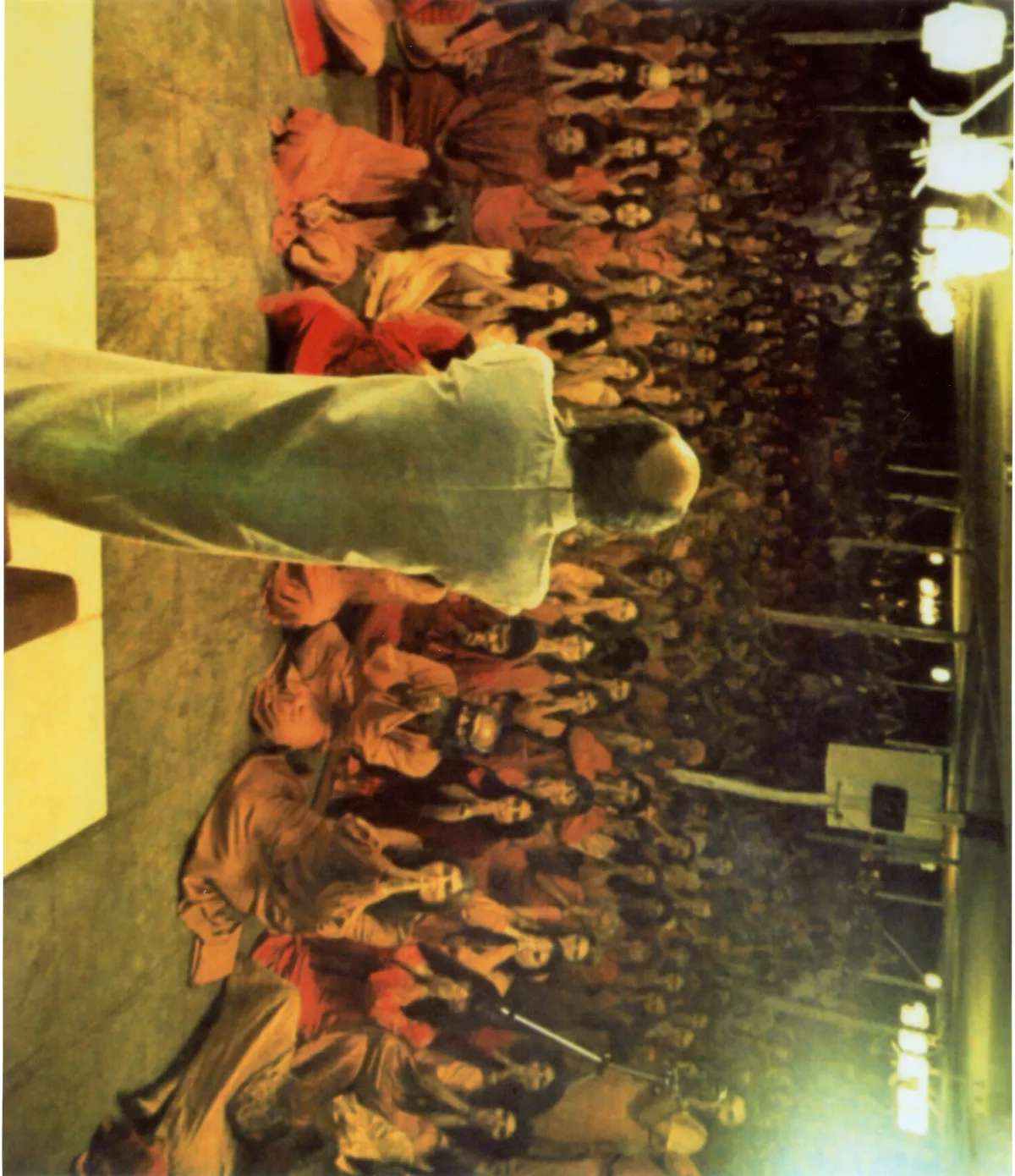
If someone you loved chose another, wish them well, don’t try to own them, and keep your happiness inside yourself.
From the Discourses
Passages where Osho speaks to this question — each links to the complete discourse.
Osho, I was in love with a young woman. She deceived me and became someone else’s. I am living on, but life has lost all taste. What should I do?
There can’t have been much sap. You are in the illusion that there was. Does sap vanish like that? You don’t even know what sap is. Those who know have said: “Raso vai sah.” They defined God as rasa—essence, sap, joy. They recognized only God as the true savor; nothing else has any lasting savor. Had you gotten the woman, the savor would also have gone—and being tied to her would be another matter. Then it would be hard to get free. Ask the one she has married—what is his condition? Know his griefs too; you’ll find great consolation, great reassurance. A politician once went to visit a madhouse. One man was tearing his hair, beating his chest, holding a woman’s photo, tears streaming—hugging the photo to his chest. He was behind bars. The politician asked the superintendent, “What happened to this man? What is he doing? Whose photo is…
Osho, you say love is God, but I have been so singed by love that even the word “love” irritates me. Please guide me.
Do not remain like that—untasted. Drink the essence of life. Break these little cups. And if but once His glance falls upon you, your life will be transformed. “Among millions you made it worthy of being chosen— The heart you looked upon, you made into a heart.” Just place yourself at His feet. Bow a little. Let but one glance of His fall upon you, one ray touch you—and you are transformed. Iron becomes gold. In the dust, flowers of nectar bloom. “What was in that last cup, O cupbearer? Whoever drank it fell silent—and remained silent.” Here you have drunk many kinds of cups. I speak of the last cup. “What was in that last cup, O cupbearer? Whoever drank it fell silent—and remained silent.” Drink that, and a profound stillness will happen. All quiet, all empty, all silent. Within, not even a ripple of thought will arise. That…
Osho, you tell us to love. I too loved; I was defeated, and the wounds have still not healed. Society did not like that love, and my beloved was weak; she bowed before society. I cannot even forgive her. And yet you still tell us to love?
I do not tell you to do love—I tell you to be love. Doing is a small, petty thing. There, only defeat and wounds will come to your hand. And it is good that society put an obstacle in your way; otherwise, as in the story I just told you, by now you would be celebrating your silver jubilee. Society showed you great kindness. Thank society. Take it as grace. And you cannot forgive that woman! What kind of love is this that cannot forgive! What kind of love is this that is full of revenge! And these wounds are not precious wounds. They do not go very deep. They are on the surface—like scratched skin. They are no deeper than the skin. All these heal. Time heals them. Do not sit clutching them. Friend, do not be disheartened! Affairs have often kept forming and breaking. Why those starry tears…
Question: Final question: Osho, I have come to you, defeated in love. That’s why this land, over centuries, distilled this essence: we need freedom from the coming-and-going. But note: you must first come—only then can you be free of going. As for going, anyone is eager; but you’ll be back again. There must be a method such that there is no return. That I call sannyas, meditation—the real dying: the death of the ego. The soul cannot die. Try all you will—no one has ever killed the soul. Krishna is right: na hanyate hanyamane sharire. Destroy the body—it doesn’t die. Burn it—it doesn’t burn. Pierce it with weapons—it isn’t pierced. The soul is immortal; there’s no way to kill it. But the ego can be killed. It is the ego that is born and dies. That is the wheel of birth and death.
Someone has asked—the second question: Osho, yesterday you said that the other can never make anyone happy. But the joy, the bliss, and the sense of awe one experiences when one is immersed in love with a beloved—what is that?
I have heard: Mulla Nasruddin was sitting with a friend. He told his son, “Go to the cellar and bring the bottle of wine.” The boy went and returned. He had poor eyesight and a condition in which one thing appears as two. He said, “Shall I bring both bottles, or just one?” Nasruddin was troubled: there was only one bottle. If he said in front of the guest, “Bring just one,” the guest might think him stingy. If he said, “Bring both,” where would the boy find a second—there was only one. And if he told the guest, “My son sees double,” it would be needless disgrace; he still had to marry the boy off. So he said, “Do this—bring one and break the other. Smash the one on the left and bring the one on the right; the left one is useless anyway.” The boy went and smashed…