
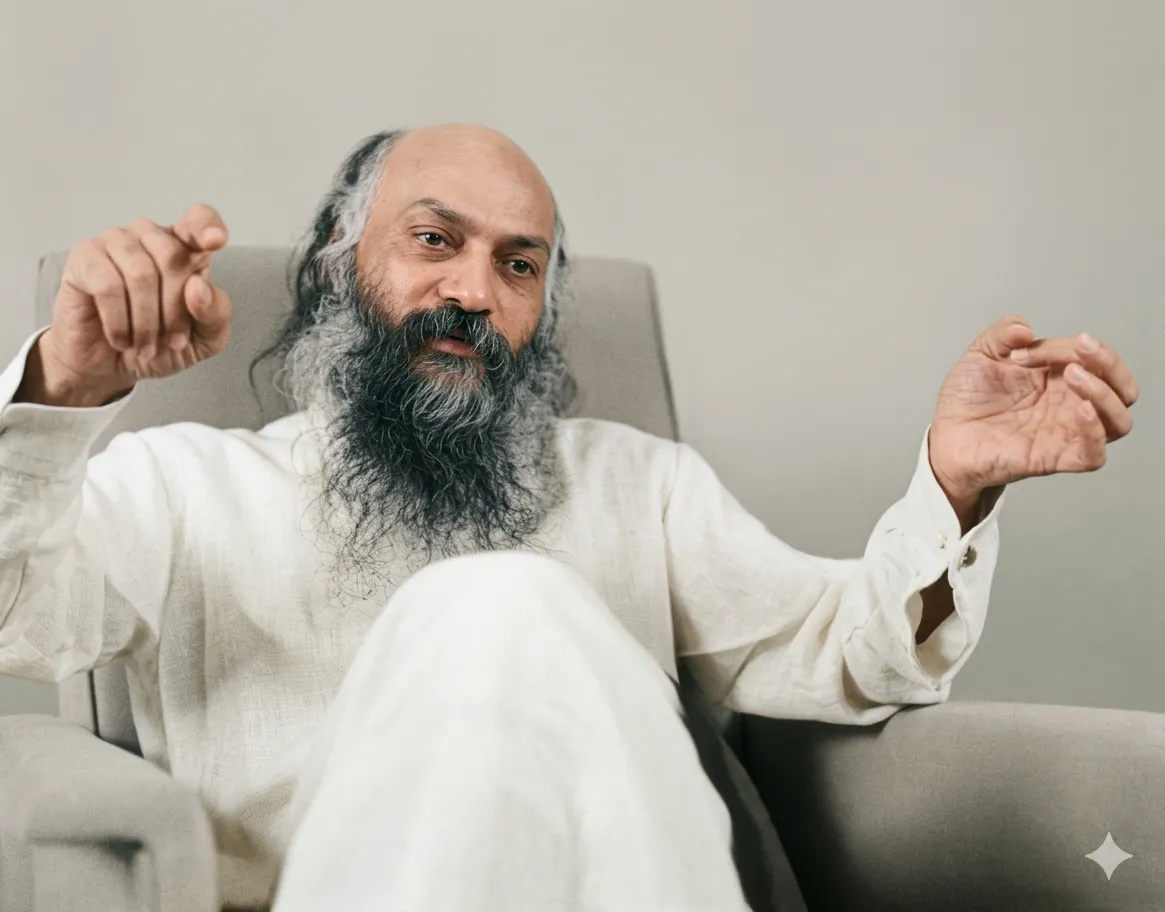
According to Osho, Mayoku’s seemingly strange, iconoclastic acts are Zen devices to shatter borrowed beliefs and conceptual fuss, bringing disciples to a direct, present-centered seeing. Such gestures affirm that awakening is not in titles, scriptures, or ascetic renunciation but in a spontaneous, total response to the moment. Mayoku embodies the master’s compassionate ruthlessness: cutting through mind so the disciple discovers self-nature here and now.
He did surprising things to snap students out of thinking and wake them up to this very moment.