
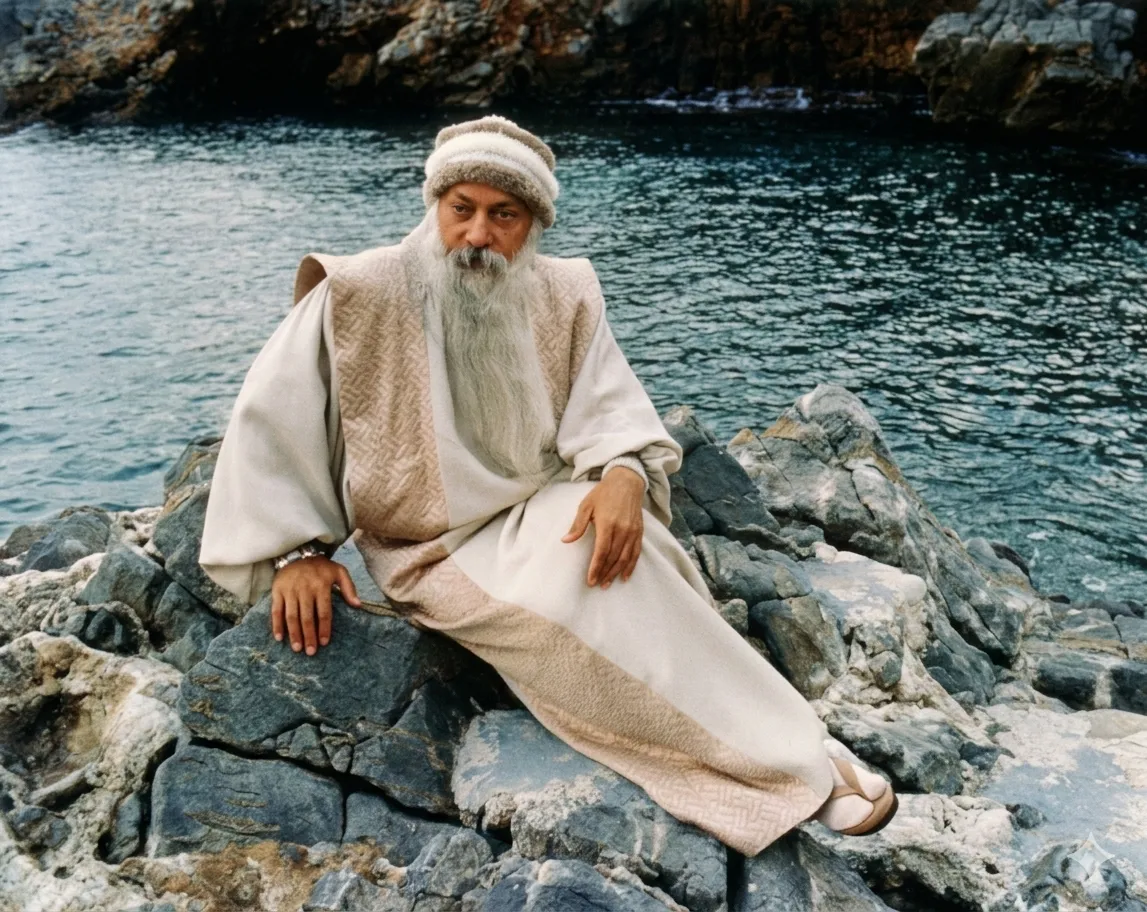
Trying to look important to feel safe makes you more scared of losing it; accept that things change, and both the showing off and the fear calm down.
From the Discourses
Passages where Osho speaks to this question — each links to the complete discourse.
Osho, today I would like to invite your views on the issue of vanity and fear. To me, sir, this issue also seems valuable to analyze. As I have understood it: immaturity brings vanity; vanity brings pride; pride brings prejudices; prejudices ultimately result in comparison; comparison results in divisions and ends in destruction. Sir, this vicious circle appears very decisive and destructive to humanity at large. Many scholars have said that this culture of mankind is very ancient. Would you please enlighten us on this aspect of life?
Fear is certainly man’s deepest and most fundamental problem. Nothing is more important than fear, because our whole culture, civilization, religion, education—the entire arrangement of our life—has been made to avoid fear. And a precious formula of life is: whatever we try to escape, we never escape. We hoard wealth to avoid fear; we gather friends to avoid fear. We marry, we build families. We form societies and nations to avoid fear. But fear does not end through these; rather, new fears arise. There is prayer in the temple, namaz in the mosque, and a call to God in the church—behind all of it, our fear is working. Wealth is from fear, and religion too is from fear. One becomes a householder out of fear; and if one becomes a renunciate, that too is out of fear. One commits sin from fear—that if he does not, he will fail, he…
ओशो, टुडे आई शैल प्रिपेयर टु इनवाइट योर व्यूज़ ऑन दि इस्यू ऑफ वेनिटी एण्ड फियर। टु मी सर, दिस इस्यू आलसो अपइर्स टु बी वैल्युएबल टु बी एनालाइजड। एज आई हैव बीन गिवन अंडरस्टैंडिंग सर, इम्मैच्योरिटी ब्रिंग्स वेनिटी, वेनिटी ब्रिंग्स प्राइड एण्ड प्राइड ब्रिंग्स प्रिज्युडिसिस, प्रिज्युडिसिस अल्टिमेटली रिजल्ट्स इन कंपेरिजन एण्ड कंपेरिजन रिजल्ट्स इन डिवीजंस एण्ड एण्ड्स इन डिस्ट्रकशंस। सर, दिस विसियस सर्किल अपियर्स टु बी वेरी डिसीसिव एण्ड डिस्ट्रायस दि ह्युमैनिटी एट लार्ज। इट हैज बीन स्टेटड बाई दि मैनी-मैनी स्कालर्स दैट दिस कल्चर ऑफ मैनकाइंड इ़ज वेरी एनसिएंट वन। वुड यू प्लीज एनलाइटन ऑन दिस आस्पेक्ट ऑफ ल
भय निश्चित ही मनुष्य की सबसे गहरी और बुनियादी समस्या है। भय से ज्यादा महत्वपूर्ण और कुछ भी नहीं है क्योंकि सारी संस्कृति, सभ्यता, धर्म, शिक्षा, हमारे जीवन की सारी व्यवस्था भय से बचने के लिए ही हमने की है। और जीवन का एक कीमती सूत्र यह है कि जिससे हम बच कर भागते हैं उससे हम कभी नहीं बच पाते हैं। भय से बचने के लिए धन इकट्ठा करते हैं, भय से बचने के लिए मित्र जुटाते हैं। पति-पत्नी, परिवार बसाते हैं। भय से बचने के लिए समाज और राष्ट्र बनाते हैं। लेकिन इनसे भय मिटता नहीं बल्कि नये भय खड़े हो जाते हैं। मंदिर में प्रार्थना है, मस्जिद में नमाज है, चर्च में पुकार लगी है परमात्मा की। उस सब के पीछे हमारा भय ही काम कर रहा है। धन भी भय से और धर्म भी भय से। गृहस्थी भी आदमी बन रहा है भय से और संन्यासी बन रहा है तो भय से। पाप कर रहा है तो भय के कारण कि अगर वह पाप नहीं किया तो असफल हो जाएगा, हार जाएगा जीवन की दौड़ में और पुण्य कर रहा है तो भय के कारण कि कहीं नरक न चला जाए, कहीं आगे के जीवन में भटक न जाए। …
Osho, today I would like to invite your views on the issue of vanity and fear. To me, sir, this issue also seems valuable to analyze. As I have understood it: immaturity brings vanity; vanity brings pride; pride brings prejudices; prejudices ultimately result in comparison; comparison results in divisions and ends in destruction. Sir, this vicious circle appears very decisive and destructive to humanity at large. Many scholars have said that this culture of mankind is very ancient. Would you please enlighten us on this aspect of life?
Fear is certainly man’s deepest and most fundamental problem. Nothing is more important than fear, because our whole culture, civilization, religion, education—the entire arrangement of our life—has been made to avoid fear. And a precious formula of life is: whatever we try to escape, we never escape. We hoard wealth to avoid fear; we gather friends to avoid fear. We marry, we build families. We form societies and nations to avoid fear. But fear does not end through these; rather, new fears arise. There is prayer in the temple, namaz in the mosque, and a call to God in the church—behind all of it, our fear is working. Wealth is from fear, and religion too is from fear. One becomes a householder out of fear; and if one becomes a renunciate, that too is out of fear. One commits sin from fear—that if he does not, he will fail, he…
ओशो, टुडे आई शैल प्रिपेयर टु इनवाइट योर व्यूज़ ऑन दि इस्यू ऑफ वेनिटी एण्ड फियर। टु मी सर, दिस इस्यू आलसो अपइर्स टु बी वैल्युएबल टु बी एनालाइजड। एज आई हैव बीन गिवन अंडरस्टैंडिंग सर, इम्मैच्योरिटी ब्रिंग्स वेनिटी, वेनिटी ब्रिंग्स प्राइड एण्ड प्राइड ब्रिंग्स प्रिज्युडिसिस, प्रिज्युडिसिस अल्टिमेटली रिजल्ट्स इन कंपेरिजन एण्ड कंपेरिजन रिजल्ट्स इन डिवीजंस एण्ड एण्ड्स इन डिस्ट्रकशंस। सर, दिस विसियस सर्किल अपियर्स टु बी वेरी डिसीसिव एण्ड डिस्ट्रायस दि ह्युमैनिटी एट लार्ज। इट हैज बीन स्टेटड बाई दि मैनी-मैनी स्कालर्स दैट दिस कल्चर ऑफ मैनकाइंड इ़ज वेरी एनसिएंट वन। वुड यू प्लीज एनलाइटन ऑन दिस आस्पेक्ट ऑफ ल
भय निश्चित ही मनुष्य की सबसे गहरी और बुनियादी समस्या है। भय से ज्यादा महत्वपूर्ण और कुछ भी नहीं है क्योंकि सारी संस्कृति, सभ्यता, धर्म, शिक्षा, हमारे जीवन की सारी व्यवस्था भय से बचने के लिए ही हमने की है। और जीवन का एक कीमती सूत्र यह है कि जिससे हम बच कर भागते हैं उससे हम कभी नहीं बच पाते हैं। भय से बचने के लिए धन इकट्ठा करते हैं, भय से बचने के लिए मित्र जुटाते हैं। पति-पत्नी, परिवार बसाते हैं। भय से बचने के लिए समाज और राष्ट्र बनाते हैं। लेकिन इनसे भय मिटता नहीं बल्कि नये भय खड़े हो जाते हैं। मंदिर में प्रार्थना है, मस्जिद में नमाज है, चर्च में पुकार लगी है परमात्मा की। उस सब के पीछे हमारा भय ही काम कर रहा है। धन भी भय से और धर्म भी भय से। गृहस्थी भी आदमी बन रहा है भय से और संन्यासी बन रहा है तो भय से। पाप कर रहा है तो भय के कारण कि अगर वह पाप नहीं किया तो असफल हो जाएगा, हार जाएगा जीवन की दौड़ में और पुण्य कर रहा है तो भय के कारण कि कहीं नरक न चला जाए, कहीं आगे के जीवन में भटक न जाए। …
Osho, what is fear made of? It is always there behind a corner, but when I turn to face it, it is only a shadow. If it is non-substantial, how does it manage to have such a power over me?
Fear is the shadow of 'I', and because the 'I' is always alert somewhere deep down that "I will have to disappear in death".... The basic fear is of death; all other fears only reflect the basic one. And the beauty is that death is as nonexistential as ego, and between these two non-existentials -- the ego and death -- the bridge is fear. Fear is very impotent, it has no power. You say, "If IT IS NON-SUBSTANTIAL, THEN HOW DOES IT MANAGE TO HAVE SUCH A POWER OVER ME?" YOU want to believe in it -- that's its power. You are not ready to take a plunge into your inner depth and to face your inner emptiness -- that is its power. Otherwise it is impotent, utterly impotent. Nothing is ever born out of fear. Love gives birth, love is creative; fear is impotent. Mr. and Mrs. Smith were…
Beloved Osho, why is it that we are all so afraid of a hit from the master? When it is happening, it is proof that it is just what we needed, yet the fear remains. Is cowardice an essential part of the ego?
The more egoist a person is the more he has to remain lonely. And to be lonely is miserable, but one has to pay. You have to pay for a non-existential ego to appear real -- with your misery, with your pain, with your anguish. And anyway, even if you succeed in not allowing anybody to be close to you, you yourself know perfectly well that it is just a soap bubble -- a small pinprick, and it will disappear Napoleon Bonaparte was one of the great egoists in the history of egoism, but he got defeated, and the reason he was defeated is something worth consideration. When he was a small child, just six months old, the nurse who was his caretaker left him in the garden and went for something in the house, and a wild cat jumped on the child. Now a six-month old baby... the cat…
Osho, ever since I took initiation from you, I have also begun to feel afraid of you. Earlier this fear was not in me, though I have been afraid all my life. I also know that the love and freedom I have found in your presence I never found even around my parents. And if, even in the shade of a master as utterly love-filled as you, I do not become free of fear, then where else will I? How is this freedom from fear possible?
Take this as a touchstone: if the reason for which you went to the master is the very reason he accepts and works upon, he too is standing in darkness. You have come to me because of fear—I know. But it is not my task to lessen your fear; it is to awaken abhaya. You did not come for abhaya. You came for nirbhayata, a little courage to fight—you would be satisfied with that. You are easily satisfied; your discontent is not very deep. A drowning man is content with a straw. You are looking for a straw; I know that no one is saved by a straw. Perhaps because of the straw you will drown—whoever takes a straw for a boat stops looking for a real boat. Whoever mistakes a false shore will find the true shore very far. Whatever reason you have come with is not my concern.…
प्रश्न: ओशो, जब से आपसे दीक्षित हुआ हूं, तब से आपसे डरने भी लगा हूं। उसके पहले यह डर नहीं था मुझमें; यद्यपि मैं आजीवन भयभीत रहा हूं। मुझे यह भी पता है कि जो प्रेम और स्वतंत्रता मुझे आपके सान्निध्य में मिली है, वह मां-बाप के गिर्द भी कभी नहीं मिली। और यदि आप जैसे आत्यंतिक प्रेम-पूर्ण गुरु की छाया में भी मैं भयमुक्त न हुआ, तो और कहां हो पाऊंगा? यह भयमुक्ति कैसे संभव है?
तुम भय के कारण मेरे पास आए हो, उसे मैं जानता हूं। लेकिन तुम्हारे भय को कम करना मेरा कृत्य नहीं, अभय को जगाना है। अभय के लिए तुम आए भी नहीं थे। निर्भयता के लिए आए हो, बहादुरी आ जाए, लड़ सको, उतना; तुम तृप्त हो उतने से। तुम बहुत थोड़े से तृप्त हो जाते हो, तुम्हारी अतृप्ति बहुत गहरी नहीं है। डूबते को तिनके का सहारा हो जाता है। तुम तिनके का सहारा खोज रहे हो और मैं जानता हूं कि तिनके से कोई बच नहीं सकता। शायद तिनके के कारण ही तुम डूब जाओ। क्योंकि जिसने तिनके को नाव समझ लिया, वह फिर नाव की खोज बंद कर देगा। और जिसने झूठे किनारे को देख लिया, उसका असली किनारा फिर बहुत दूर है। …