
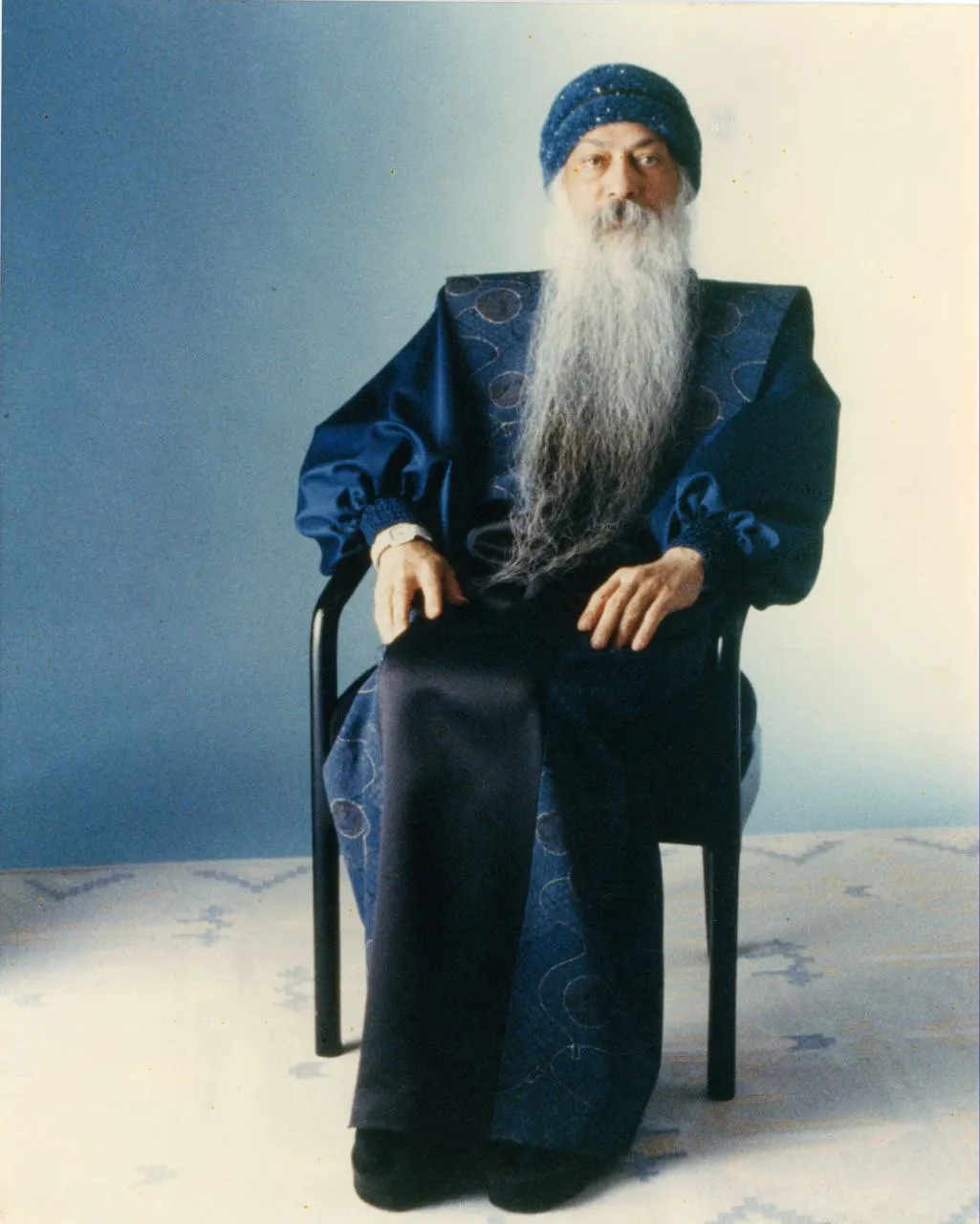
Truth isn’t a hard rock that stays the same; it’s a flowing river you must meet anew each moment.
From the Discourses
Passages where Osho speaks to this question — each links to the complete discourse.
Osho today you said to be constant is to be stupid. The truth cannot change it remains for ever constant. Now what?
Always remember... we have to use nouns because otherwise it will be very difficult to explain things to each other. For centuries we have used nouns. But whenever you use the word 'love', remember it is 'loving' -- it is a process. It is not a thing, constant. If you have loved, Zareen, you will know: morning it has one colour, afternoon it has another colour, by the evening it is a totally different phenomenon. Sometimes the river is very deep and sometimes it is very shallow. And sometimes it makes much noise, and sometimes it is very silent. So is love. Sometimes it is sad, and sometimes it is a rejoicing. It changes its moods constantly. So the only constant thing is change. But you say: THE TRUTH cannot change... WHO HAS ORDAINED IT, THAT TRUTH CANNOT CHANGE? What do you mean by it? Have you known anything in…
Why are you not consistent in your statements?
I cannot be. The purpose of my statements is totally different than that of ordinary statements. I am not telling the truth, because truth cannot be told. Then what am I doing here? If you take my statements as true or untrue, you will miss the whole point. I am using the statements to awaken you. They are neither true nor untrue. They are either useful or useless, but they have nothing to do with truth. They have a certain utility. It is just as if you are fast asleep, and I start ringing a bell; there is nothing of truth or untruth in ringing the bell. To ask the question would be utterly irrelevant. But there is something useful in it: if it helps you wake up, it has been useful. Buddha is reported to have said, "Truth is that which has utility." Truth is a device. It does…
Osho, what is the first experience of samadhi like?
You will know only when it happens. It cannot be said; at most a few hints can be given. It is as if, in the dark, a lamp is suddenly lit. Or as if a dying patient, right at the edge of death, suddenly finds a medicine that works; life’s wave, life’s thrill spreads again—so it is. As if a corpse becomes alive—such is the first experience of samadhi. It is the taste of nectar. The experience of the ultimate music. But it will be only when it happens; and only then will you understand. You will not understand by my saying it. It is as with love. How can anyone explain it? To someone who has never loved, never known love, no matter how many explanations you offer—he will hear it all and still ask, “I haven’t understood; please explain a little more.” It is like explaining light to…
Osho, while refuting Adi Guru Shankaracharya’s aphorism “the world is illusory, Brahman alone is true,” you said the world is true and Brahman is true. But the definition of truth is: that which is not perishable. Since the world is perishable, how can it be true? It must be illusory. Brahman is imperishable, therefore true. I request you to define truth and shed light on this aspect.
Call a rose “rose,” or give it another name—there are thousands of languages, so the rose has thousands of names. Does the rose care? Call it beautiful or ugly—does it change the rose? Fashions change daily. A hundred years ago, who would imagine you would place a cactus in your drawing room, that a cactus would be called beautiful? Tell a villager today that a cactus is beautiful—he will stare: “What nonsense!” He plants cactus as a fence to keep animals and thieves out. He cannot imagine putting it in his house. He’ll say, “Am I mad?” Roses were beautiful—but now to insist “the rose is beautiful” sounds old-fashioned. The modern, cultivated people keep cactus. New poetry sings of cacti; new painters paint them. The rose has become passé. Nobility is out; the cactus is the proletariat. This is the age of socialism. To praise roses—aren’t you ashamed? Kings are…
Osho, you say you don’t speak for the crowd, that you won’t speak merely to please them. But people are saying that whenever someone speaks against Gandhi or against the Congress, people like it, and that’s why such large crowds gather.
For all of India—more so for Gujarat, of course, but certainly for the whole of India. There isn’t much distance between us and him yet; the generation that lived close to him is still alive. And for India’s future, decisions will have to be taken in some relation to Gandhi—whether in support or in opposition. Gandhi will remain significant for the next hundred years in India—that’s my understanding—whether for or against is another matter. Therefore Gandhi should be thought about very clearly. That was one reason. Second, it seems to me that not only in India but outside India too, reflection on Gandhi has begun—sometimes it even seems that people outside India are thinking more. In this country, reflection has almost stopped. So Gandhi is just a beginning. I would say we should also try to reawaken reflection on Mahavira and the Buddha. But there is a great distance between…